Artwork
Een takje kruisbessen op een stenen plint
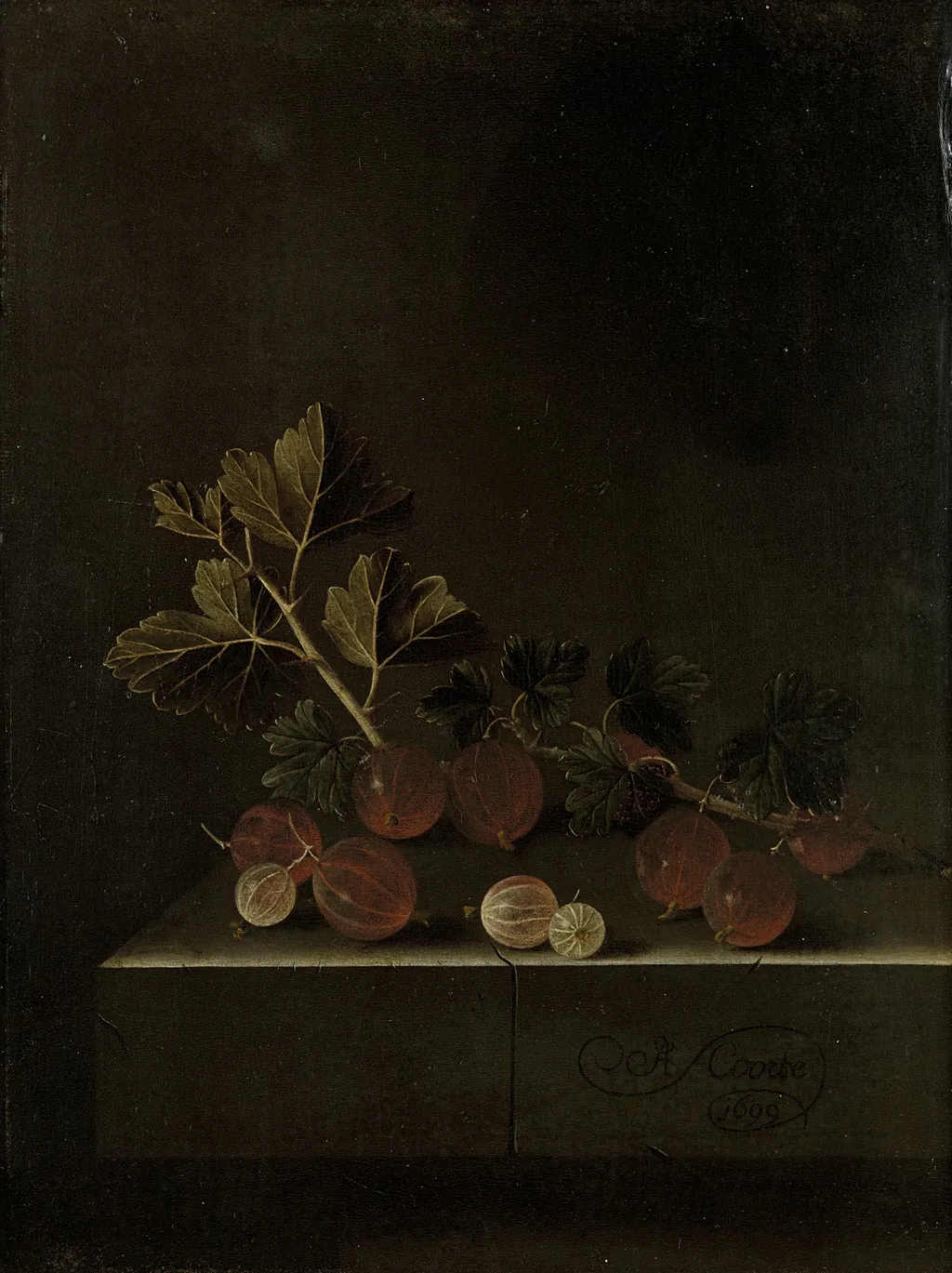
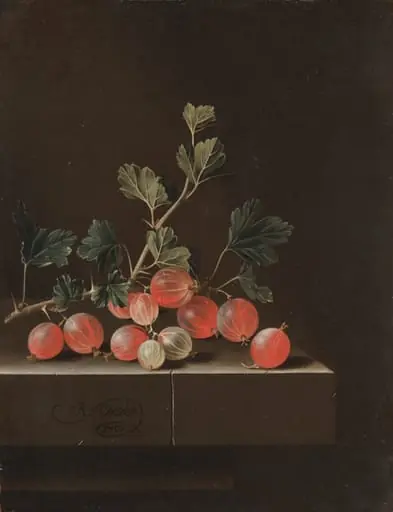
Een takje kruisbessen op een stenen plint is an unspecified painting by the Dutch Golden Age artist Adriaen Coorte. It dates from 1700 and is held in the collection of the Rijksmuseum.
About this work
This painting shows a small bunch of plump, reddish-brown fruits and green leaves on a dark shelf.
This painting shows a small bunch of plump, reddish-brown fruits and green leaves on a dark shelf. The fruits look ripe, some with tiny stems still attached. A few are split open, revealing their seeds. The background is almost all black, making the colors stand out.
The artist signed it in the corner with the year 1699. The dark background helps the fruits look even more real.
Look up Adriaen Coorte to see more of his detailed fruit paintings.
Overview
Adriaen Coorte’s small oil painting, titled *Een takje kruisbessen op een stenen plint*, was executed around the turn of the eighteenth century, bearing the date 1699 on its lower corner. The work belongs to the Rijksmuseum’s collection and exemplifies the modest scale and quiet concentration that characterize Coorte’s still‑life output during the final phase of his career.
Subject & Meaning
The composition presents a modest sprig of gooseberries, their reddish‑brown skins and green leaves arranged on a dark stone ledge. A few berries are split, exposing their seeds, which draws attention to the fleeting ripeness of the fruit. The stark contrast between the dark background and the vivid produce emphasizes the transience of nature’s bounty without overt symbolism.
Technique & Style
Coorte employs a restrained palette and precise brushwork, allowing the textures of skin, leaf, and stone to emerge with subtle gradations of light. The nearly black backdrop eliminates distractions, focusing the viewer’s eye on the tactile qualities of the fruit. This approach reflects a continuation of early‑seventeenth‑century still‑life conventions, even as contemporary tastes were shifting toward more elaborate arrangements.
History & Provenance
Created in 1700, the painting remained in private hands before entering the Rijksmuseum’s holdings, where it is displayed as part of the Dutch Golden Age collection. Its attribution to Coorte rests on the signed date and stylistic parallels with his other documented works, confirming its place among the few surviving examples of his intimate genre.
Context
Coorte worked in a period when Dutch still‑life painting was moving toward larger, more decorative tableaux. His adherence to small‑scale, solitary subjects marks him as one of the last practitioners of the earlier, more contemplative tradition. This painting thus offers insight into a lingering aesthetic that valued close observation over grand narrative.
Artist & collection

Artist
Adriaen Coorte (ca. 1665 – after 1707) was a Dutch Golden Age painter of still lifes, who signed works between 1683 and 1707. He painted small and unpretentious still lifes in a style more typical of the first half of…

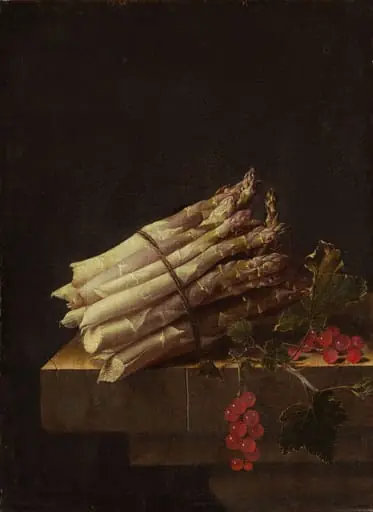 Still Life with Asparagus and Red Currants
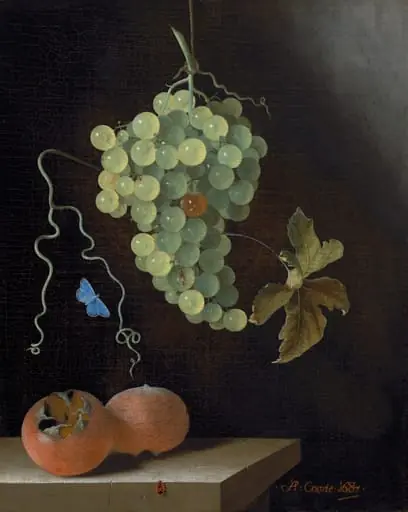 Still Life with a Hanging Bunch of Grapes, Two Medlars, and a Butterfly
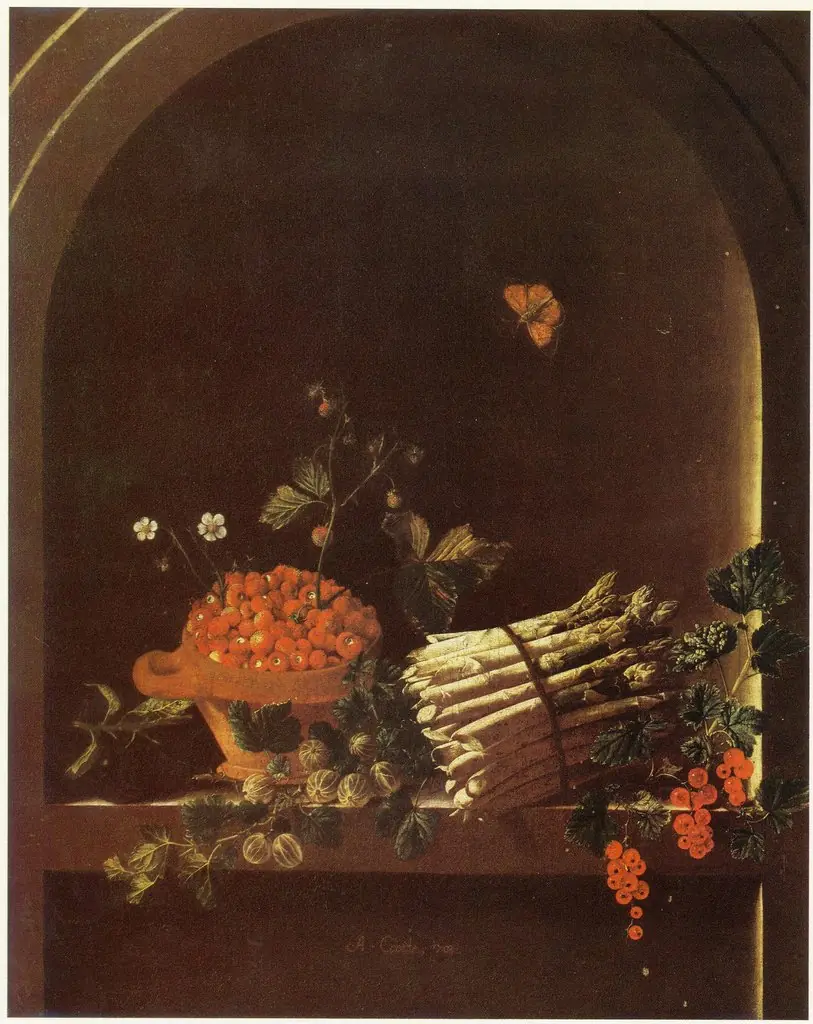 Still Life with Fruit and Asparagus
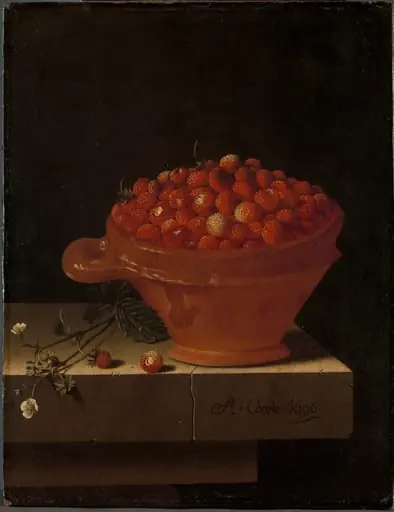 A Bowl of Strawberries on a Stone Plinth
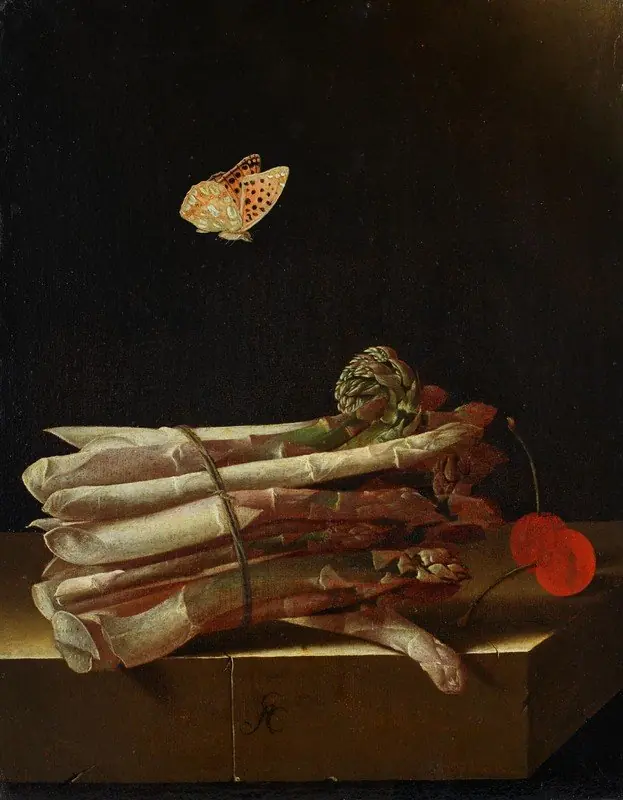 Still life with asparagus, cherries and a butterfly
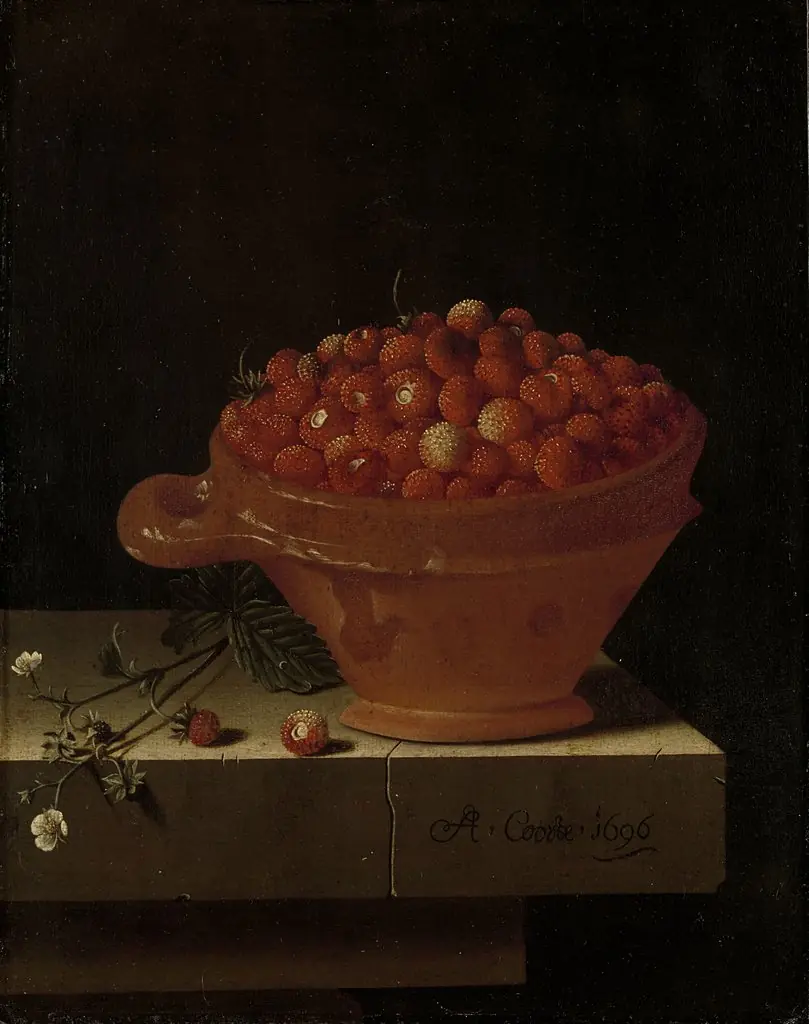 Een bakje aardbeien op een stenen plint
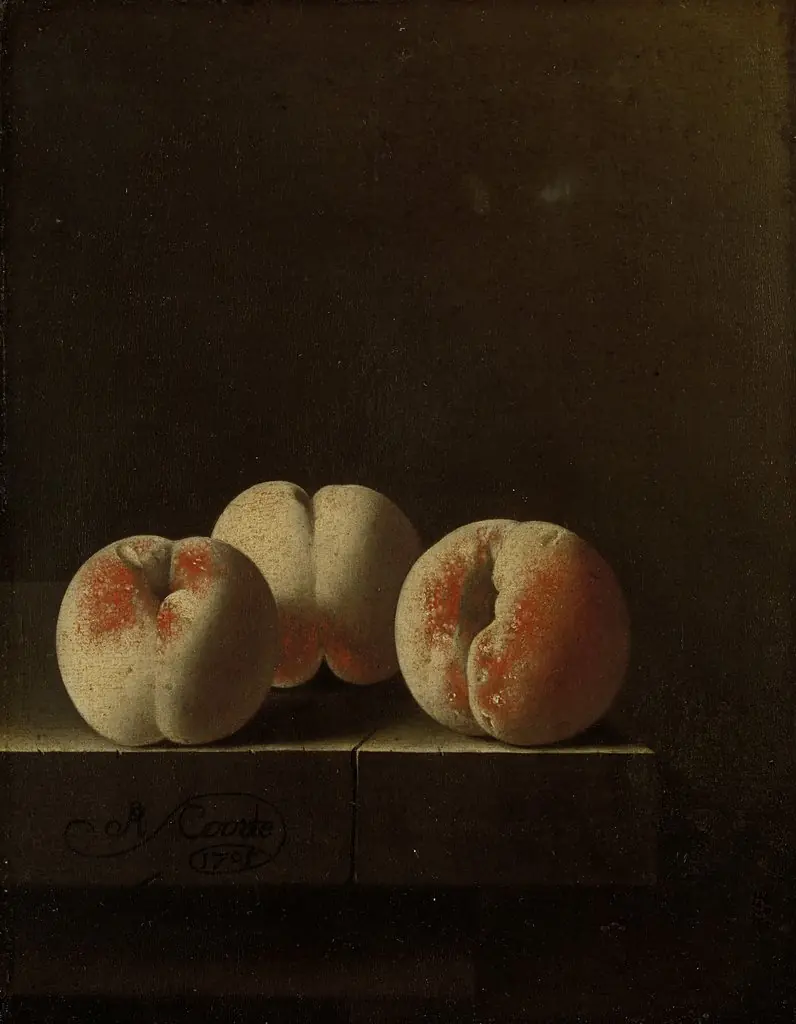 Drie perziken op een stenen plint
 Vier abrikozen op een stenen plint