Artwork
Still Life
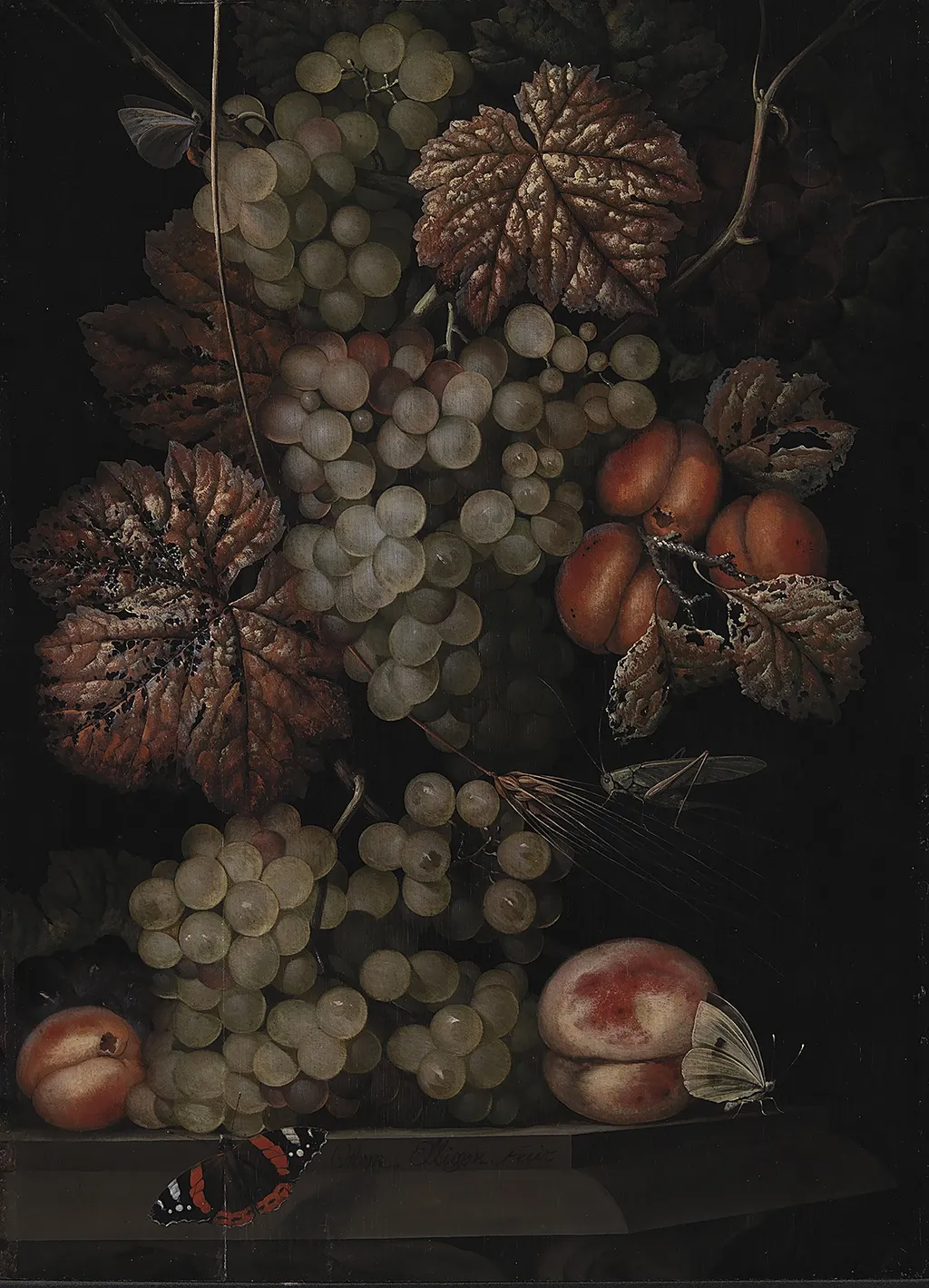
Still Life is an oil painting by the Dutch Golden Age artist Ottmar Elliger. It dates from 1667 and is held in the collection of the Statens Museum for Kunst.
About this work
Overview
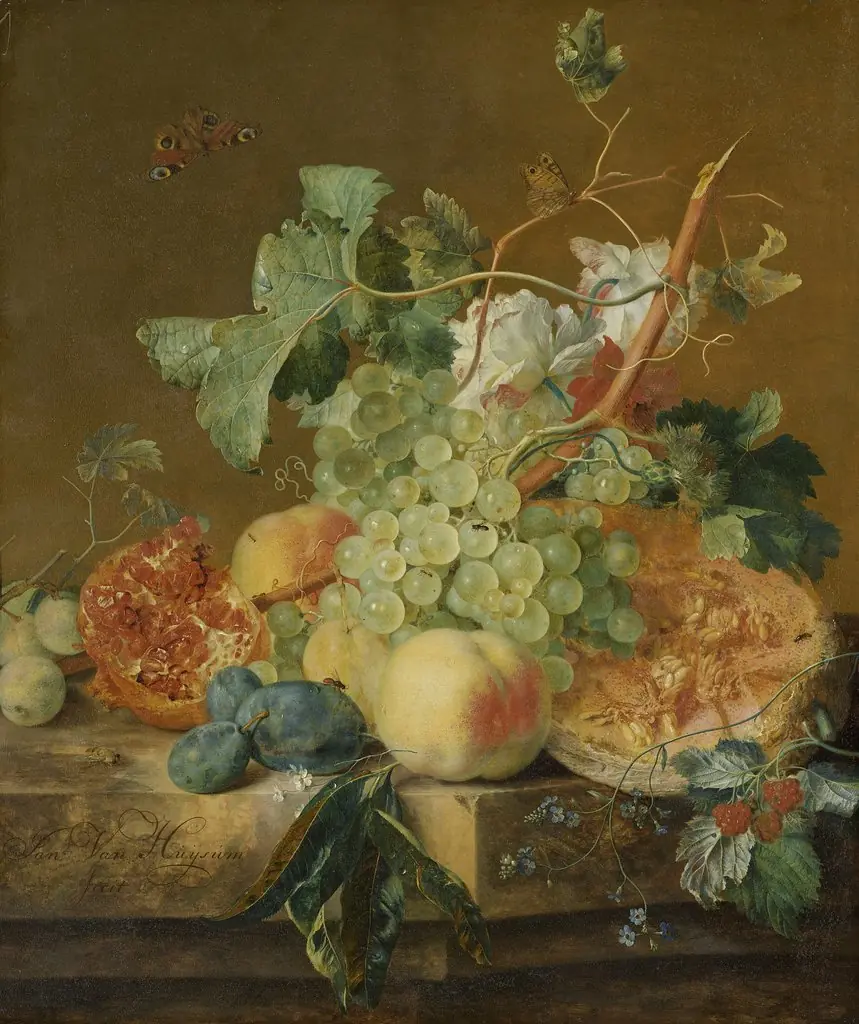
Still Life, an oil painting from 1667, is a characteristic example of the Flemish Baroque still life tradition. Created by Ottmar Elliger, the work showcases a composition of fruit set against a dark background, emphasizing the interplay of light and shadow.
Subject & Meaning
The painting's subject is a lush arrangement of grapes, peaches, and plums, accompanied by scattered leaves, stems, and insects (butterflies and a grasshopper). The emphasis on the natural decay (wilted elements) alongside the vibrant fruit may symbolize the transience of life, a common theme in Baroque still lifes.
Technique & Style
Elliger employed chiaroscuro to dramatic effect, using a dark background to make the fruit's colors more vivid. The meticulous rendering of light on each grape and leaf, with deep shadows, demonstrates the artist's skill in capturing realism and texture through oil paint.
History & Provenance
Painted in 1667, during the Dutch Golden Age, *Still Life* is now part of the collection at the Statens Museum for Kunst. Elliger, trained in Antwerp, had a nomadic career before becoming a court painter in Berlin in 1670.
Context
As a Flemish Baroque painter, Elliger's work reflects the era's fascination with detailed, realistic representations of everyday subjects. His training under Daniel Seghers in Antwerp influenced his approach to flower and fruit still lifes.
Artist & collection
Artist
Ottmar Elliger (1633–1679) was a Flemish Baroque flower painter. According to the Netherlands Institute for Art History, he was born in Gothenburg, but he was trained in Antwerp by Daniel Seghers. His earliest dated…

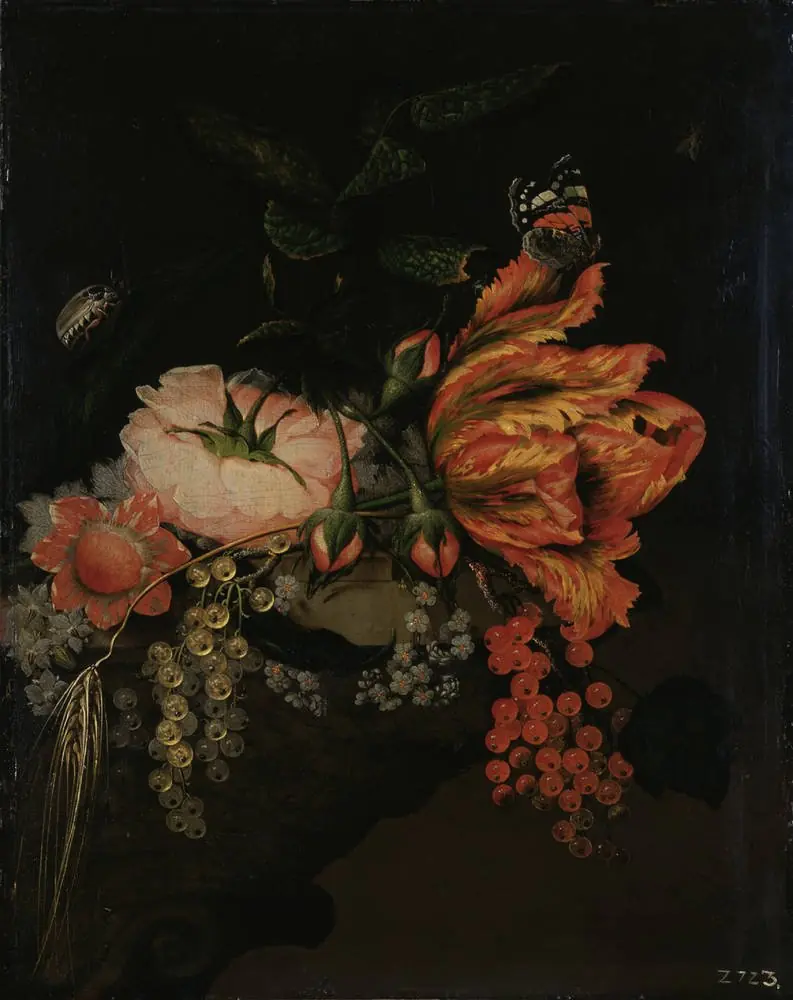
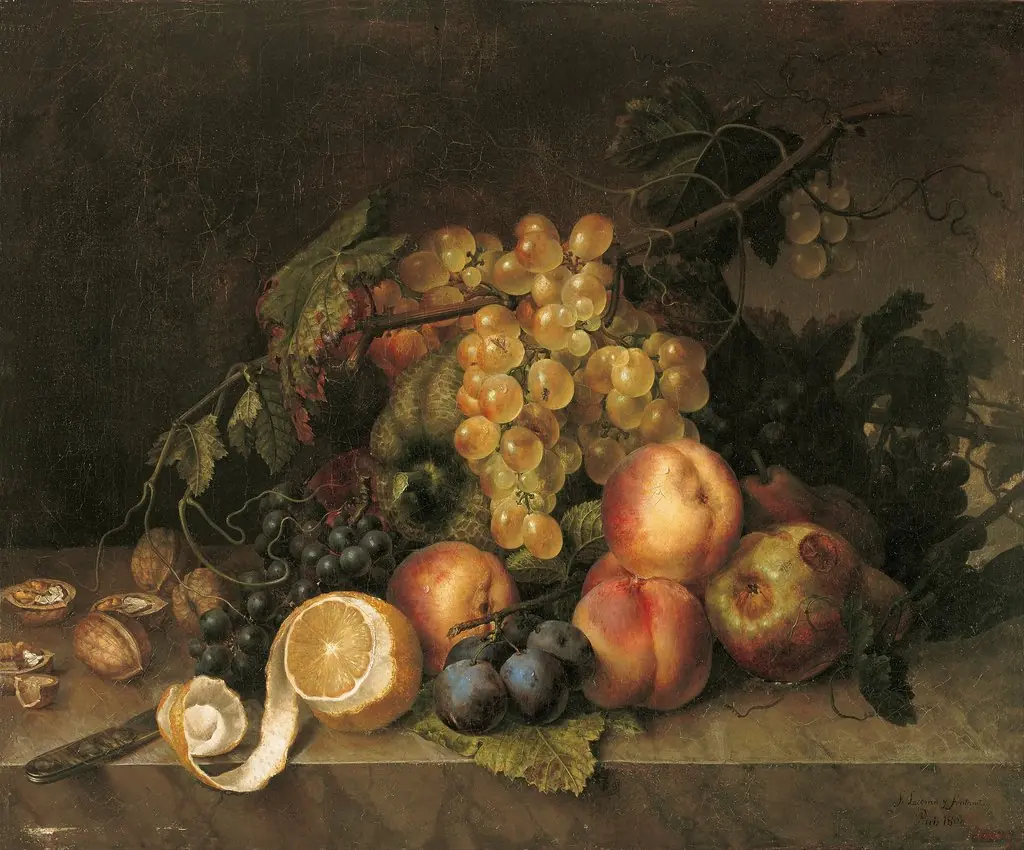 Still Life
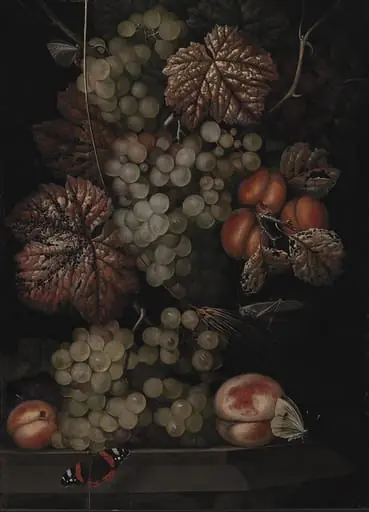 Still Life
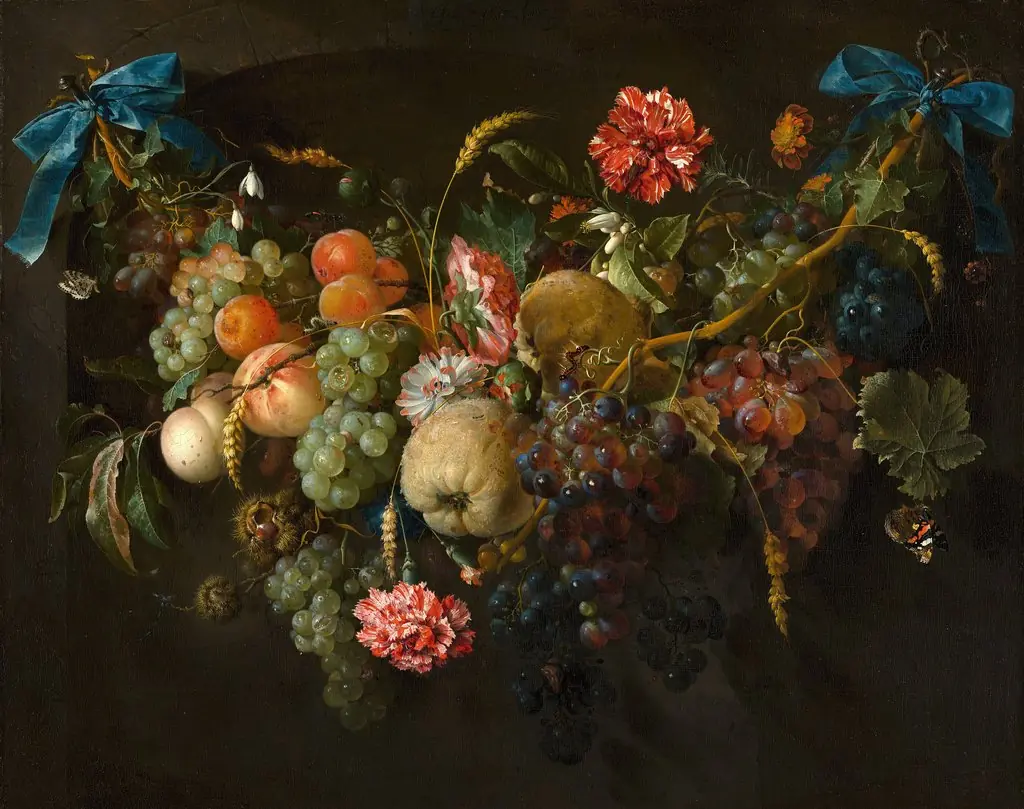 Garland of Fruit and Flowers
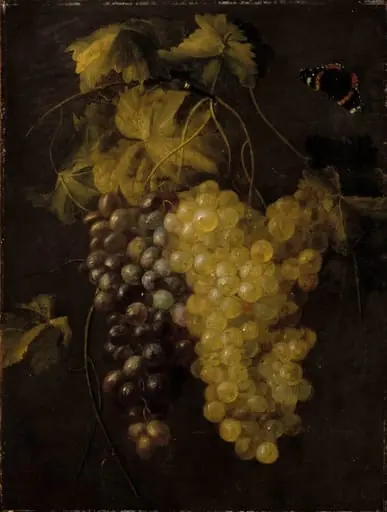 Kaksi rypäleterttua
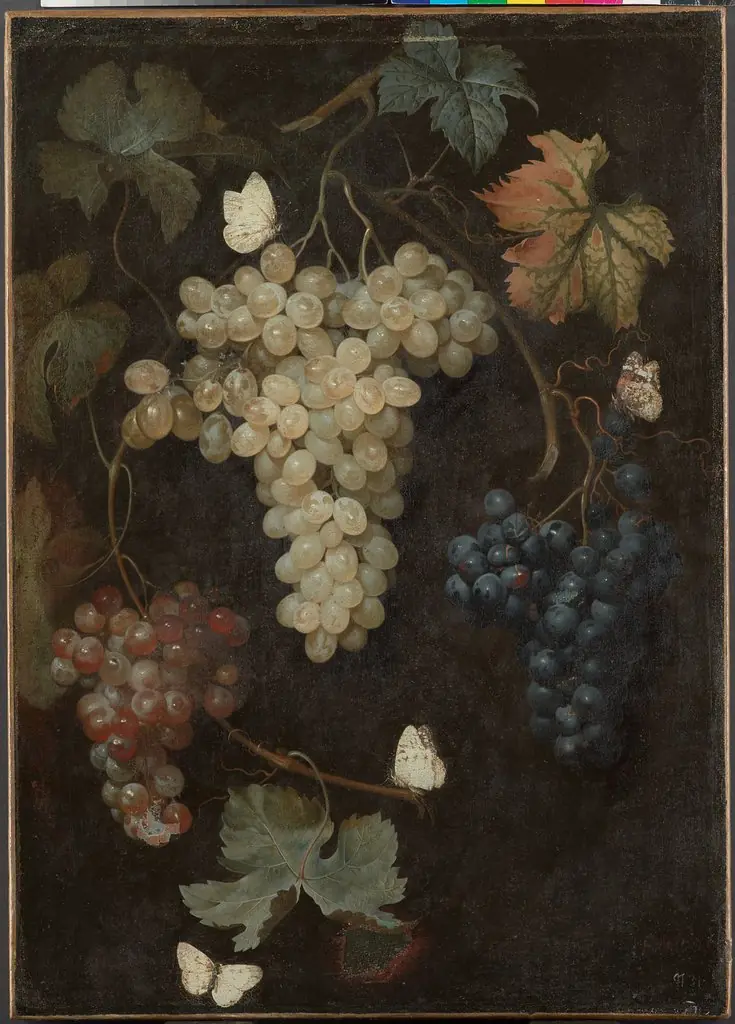 Weintrauben mit drei Trauben und Schmetterlingen
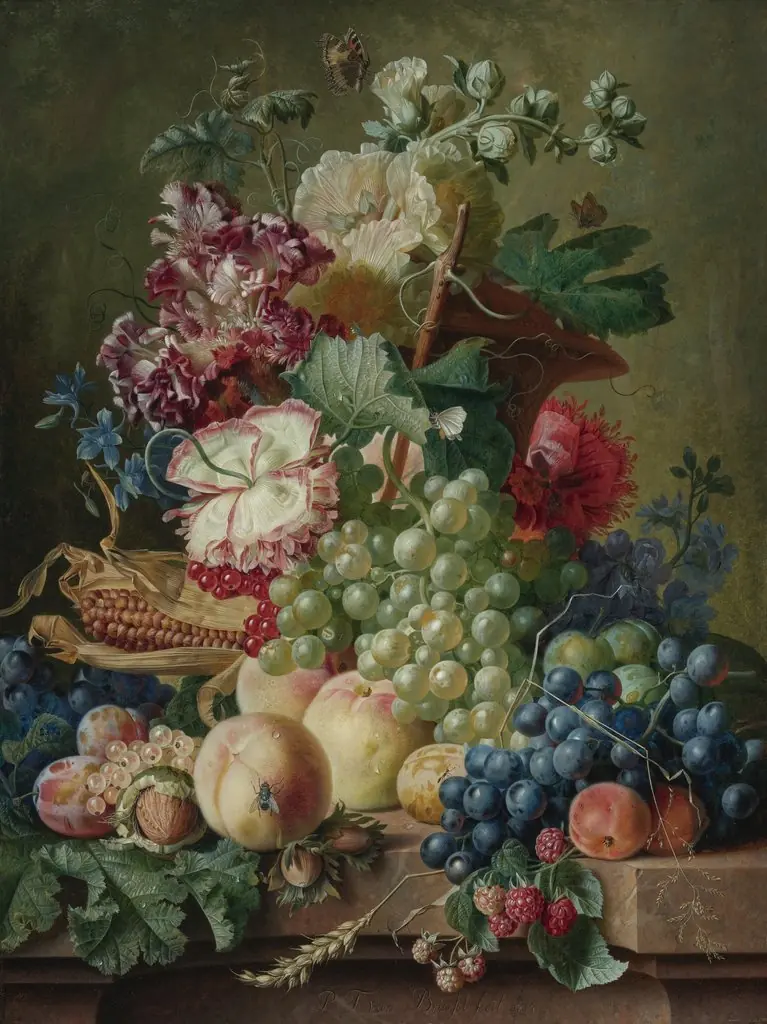 Still life of flowers and fruits on a marble ledge
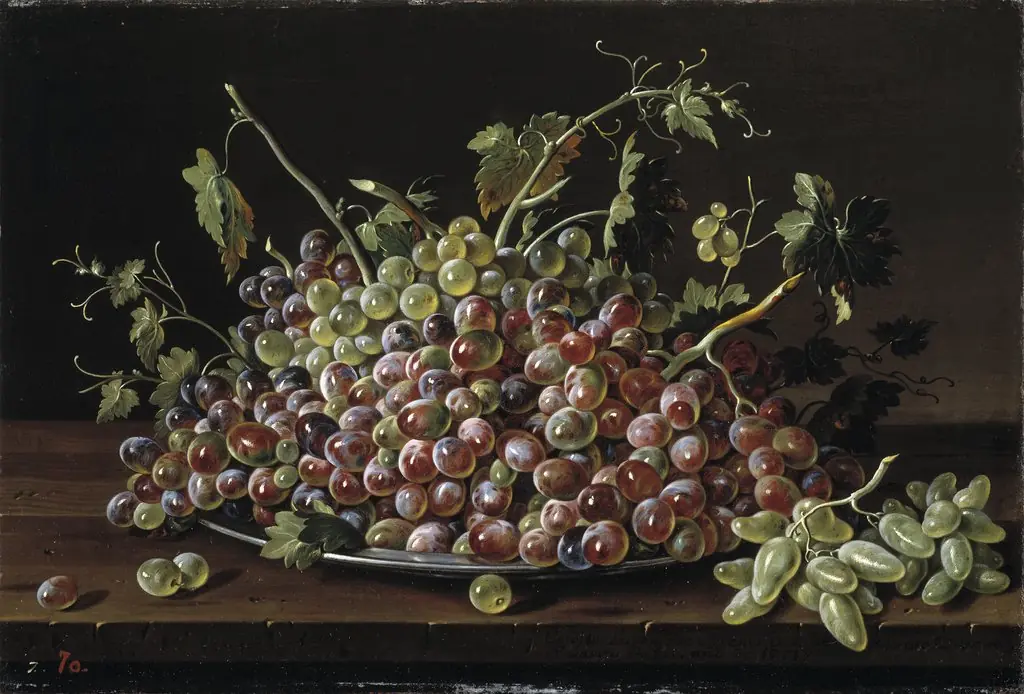 Still Life with Grapes
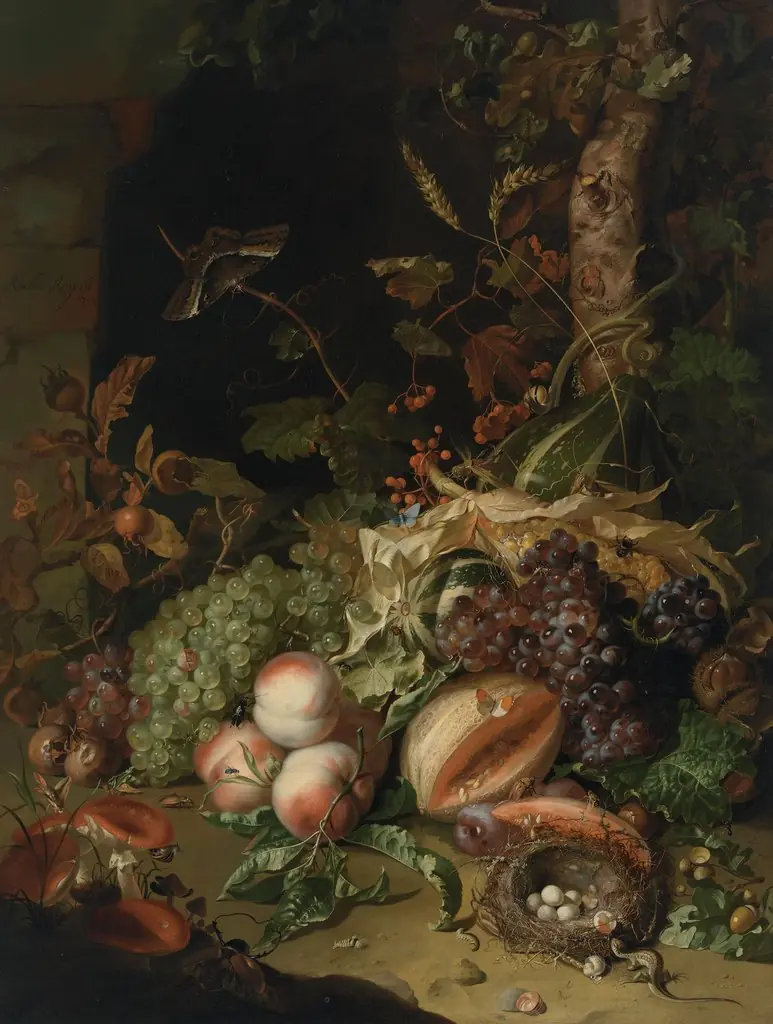 Fruit on a Forest Floor
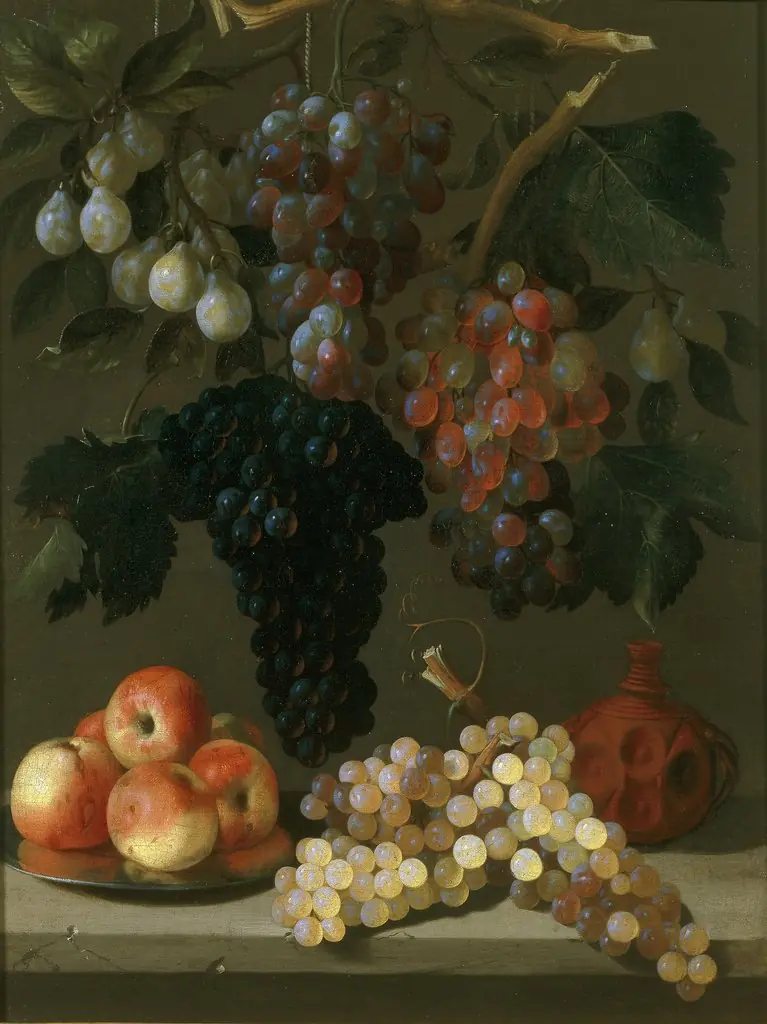 Still Life with Grapes, Apples and Plums
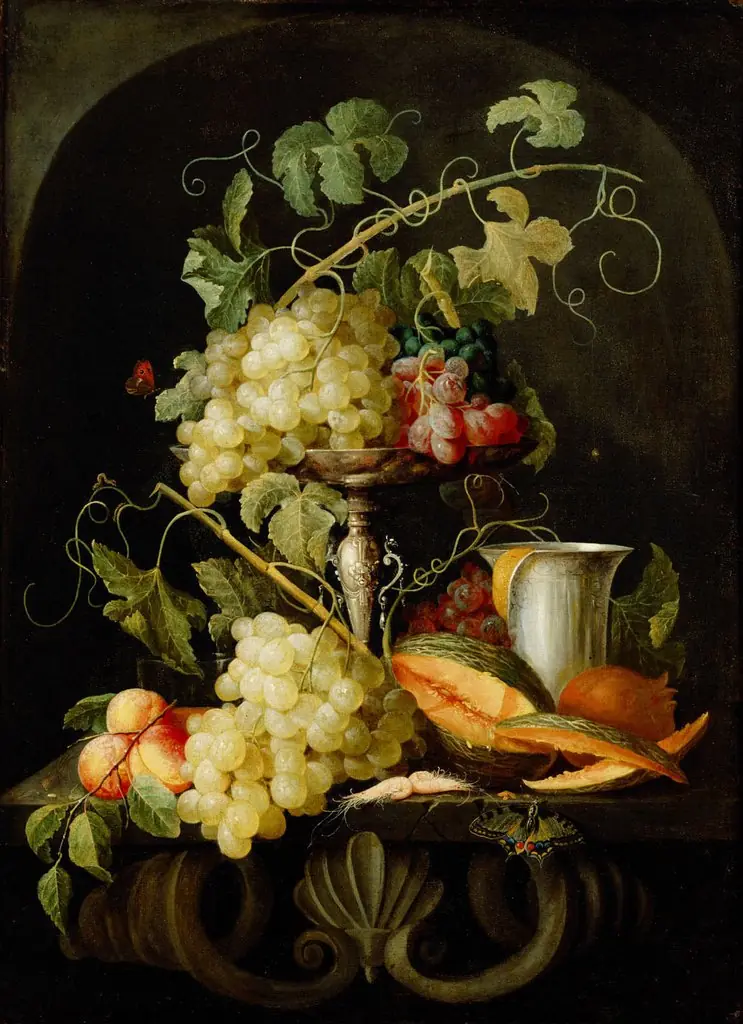 Still life with fruit
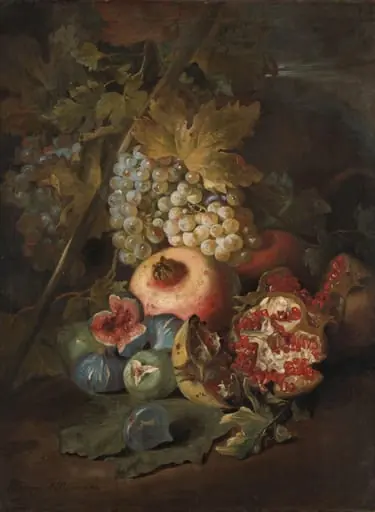 Bunches of Grapes, Pomegranates and Figs in a Landscape
 Still Life with Fruit