Artwork
Vier abrikozen op een stenen plint
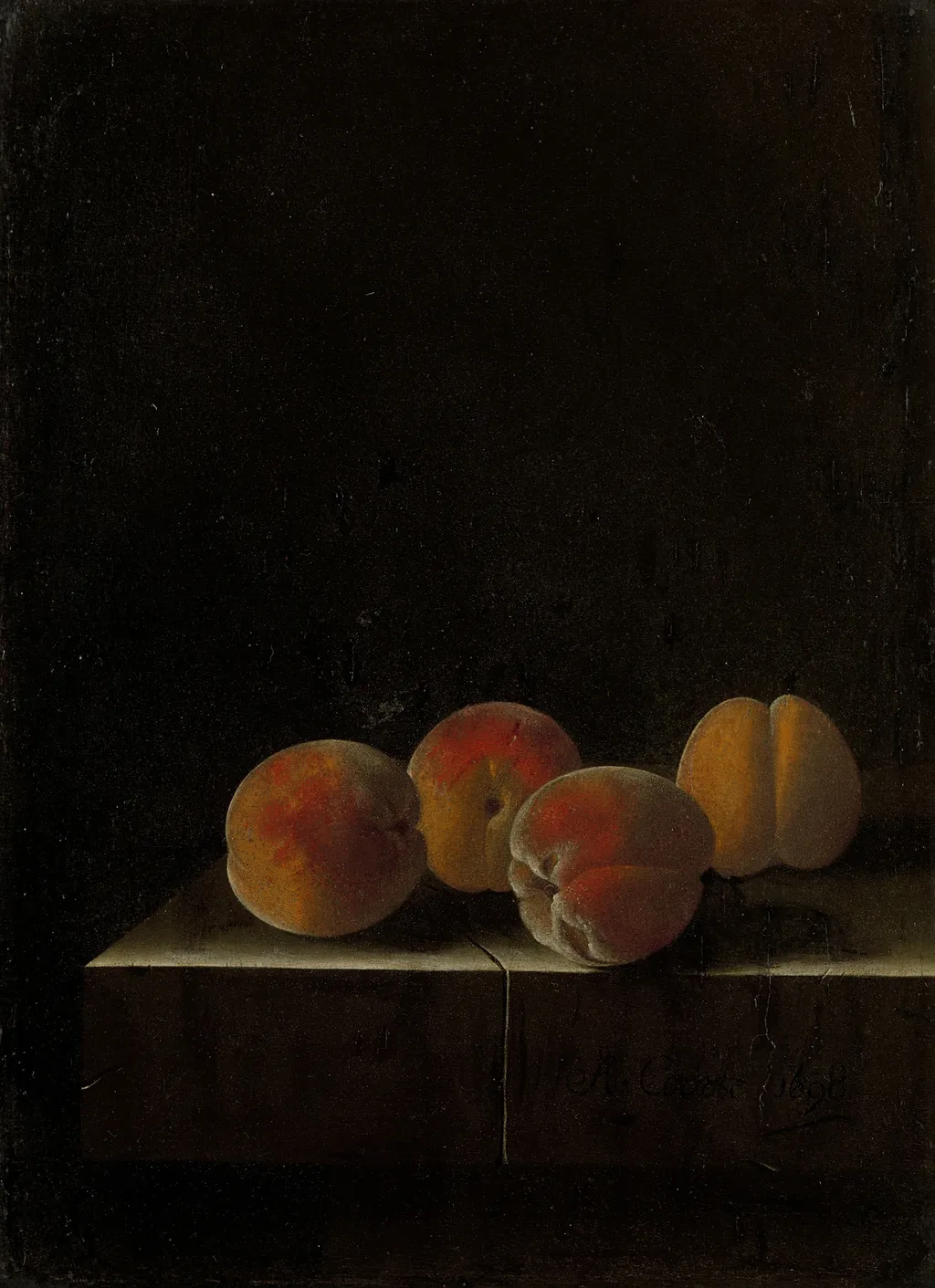
Vier abrikozen op een stenen plint is an unspecified painting by the Dutch Golden Age artist Adriaen Coorte. It dates from 1700 and is held in the collection of the Rijksmuseum.
About this work
Overview
Vier abrikozen op een stenen plint is a still-life painting by Adriaen Coorte, created in 1700. Characteristic of the artist's style, it features a simple, precisely rendered composition.
Subject & Meaning
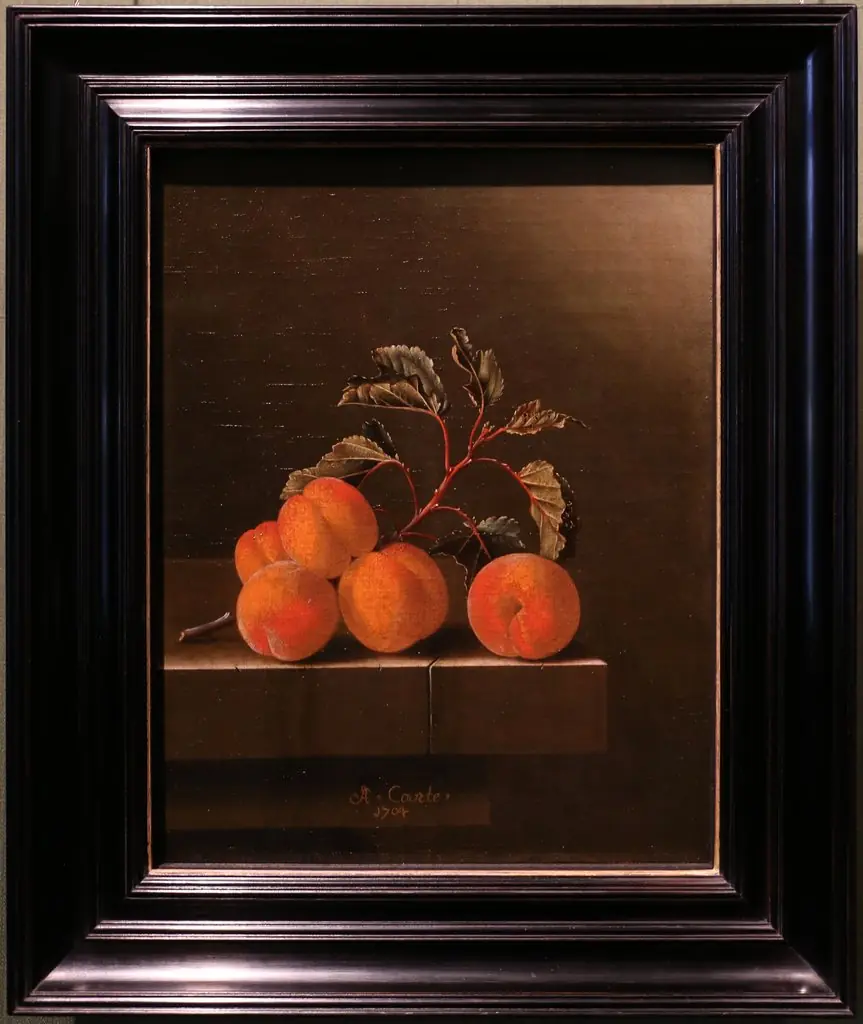
The painting depicts four apricots (not peaches, as might be assumed due to appearance) on a stone ledge. One fruit is halved, showcasing interior details, while the others remain intact. The arrangement emphasizes the artist's focus on subtle, naturalistic representation.
Technique & Style
Coorte employed a restrained approach, highlighting his attention to color, texture, and lighting. The dark background contrasts with the vivid, three-dimensionally rendered fruits, emphasizing their tactile qualities such as fuzzy skin and smooth flesh.
History & Provenance
Adriaen Coorte, active from 1683 to 1707, worked in a style reminiscent of earlier 17th-century Dutch still-life painting. *Vier abrikozen op een stenen plint* is now part of the Rijksmuseum's collection.
Context
This work reflects Coorte's adherence to traditional Dutch Golden Age still-life conventions, despite being created during a later period. His small-scale, detailed compositions were less common by the late 1600s.
Own this work as a print
Artist & collection

Artist
Adriaen Coorte (ca. 1665 – after 1707) was a Dutch Golden Age painter of still lifes, who signed works between 1683 and 1707. He painted small and unpretentious still lifes in a style more typical of the first half of…

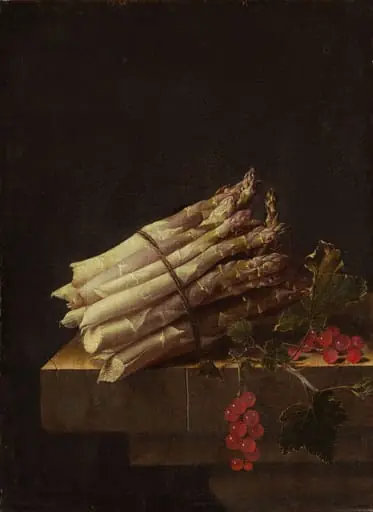 Still Life with Asparagus and Red Currants
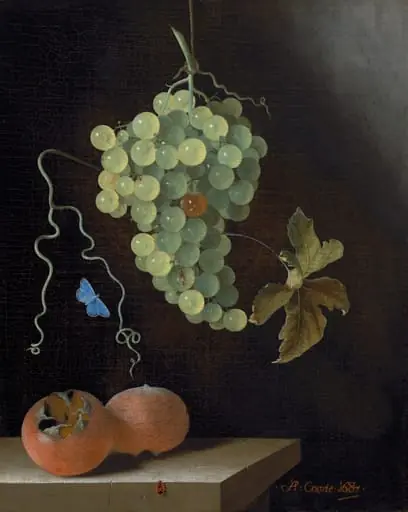 Still Life with a Hanging Bunch of Grapes, Two Medlars, and a Butterfly
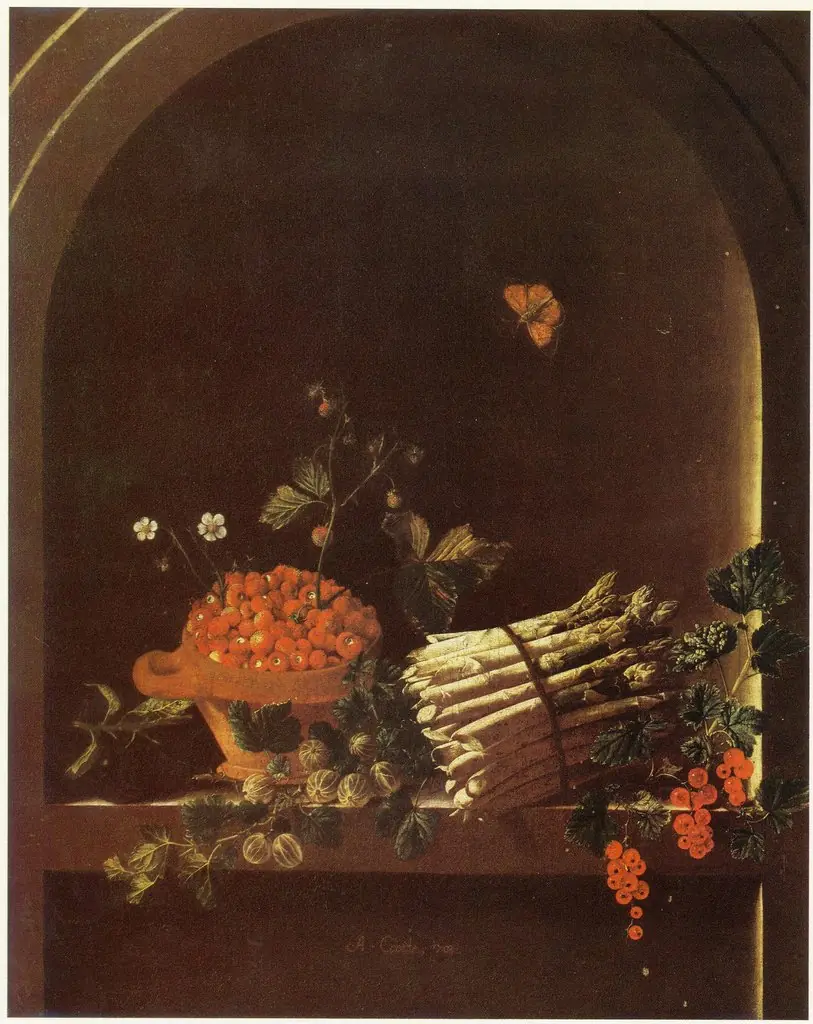 Still Life with Fruit and Asparagus
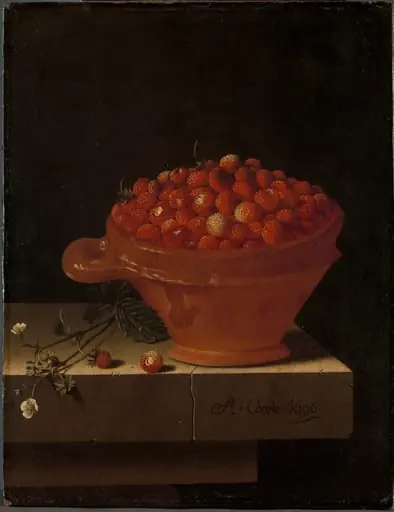 A Bowl of Strawberries on a Stone Plinth
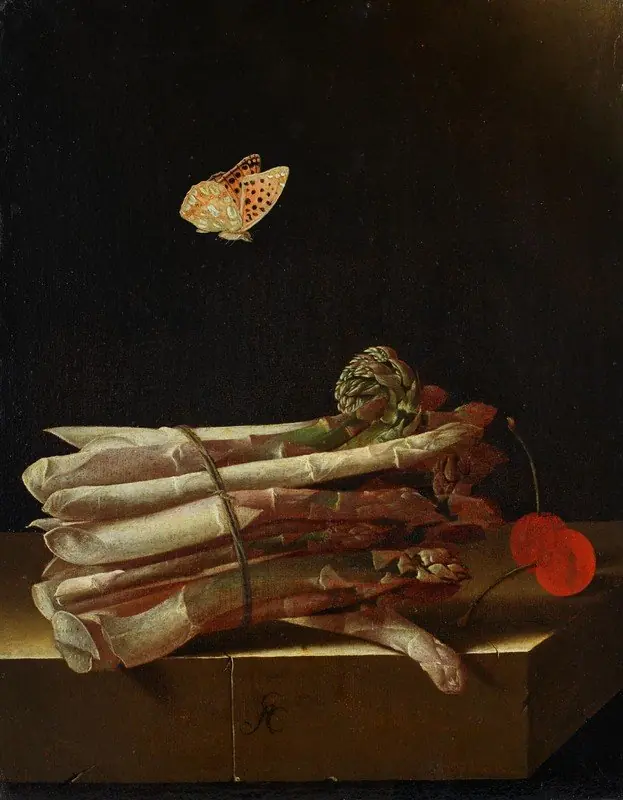 Still life with asparagus, cherries and a butterfly
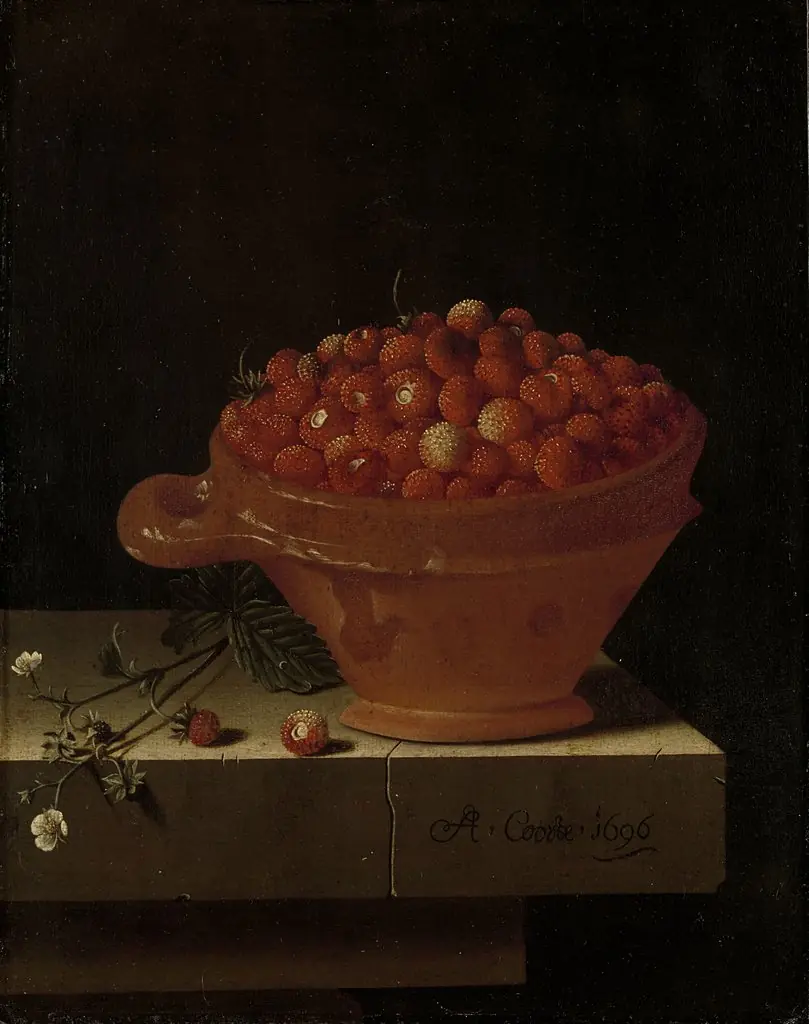 Een bakje aardbeien op een stenen plint
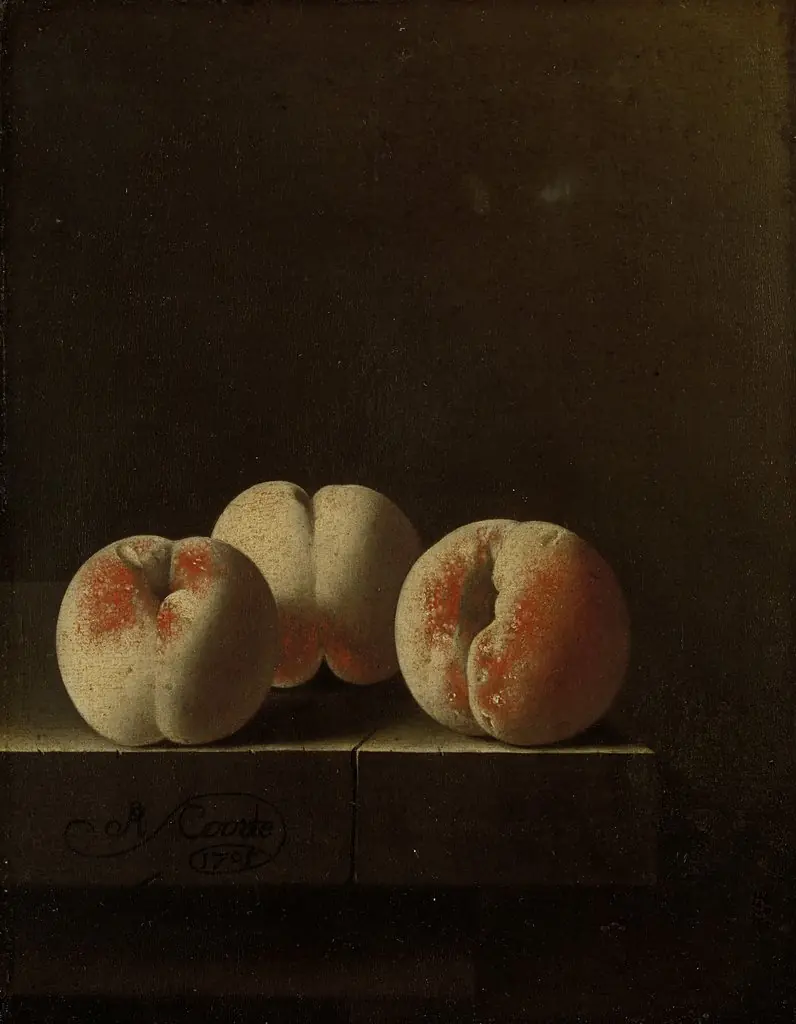 Drie perziken op een stenen plint
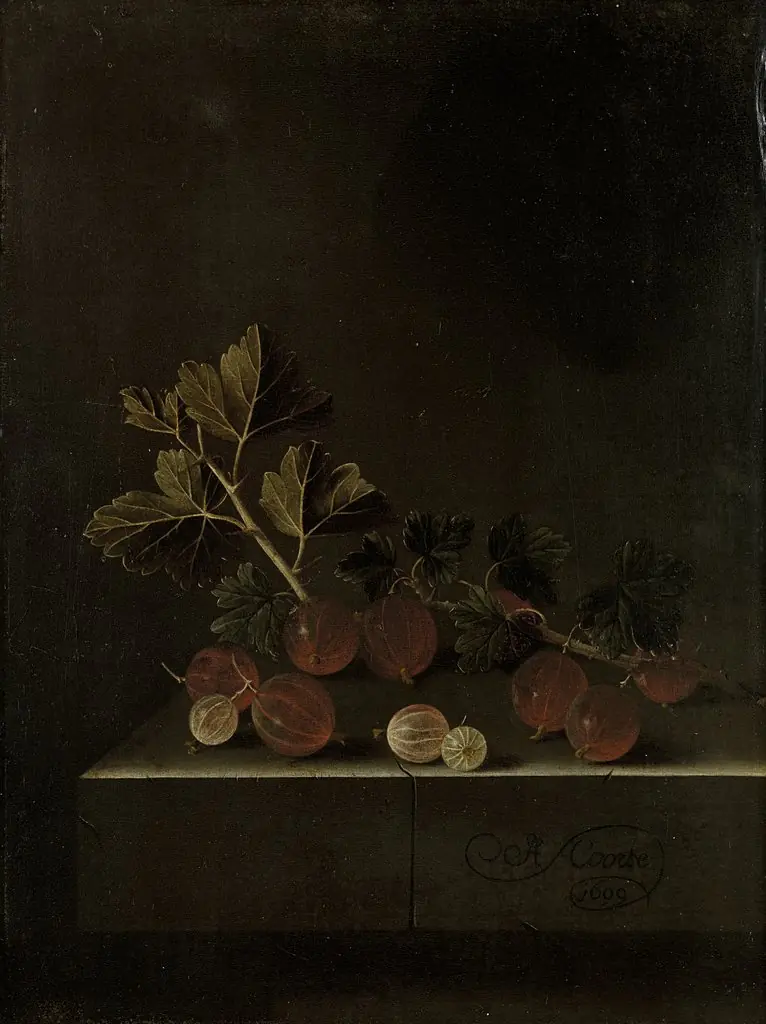 Een takje kruisbessen op een stenen plint
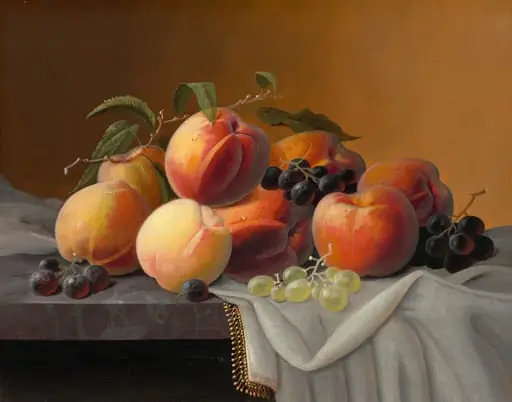 Peaches, Grapes, and Apples
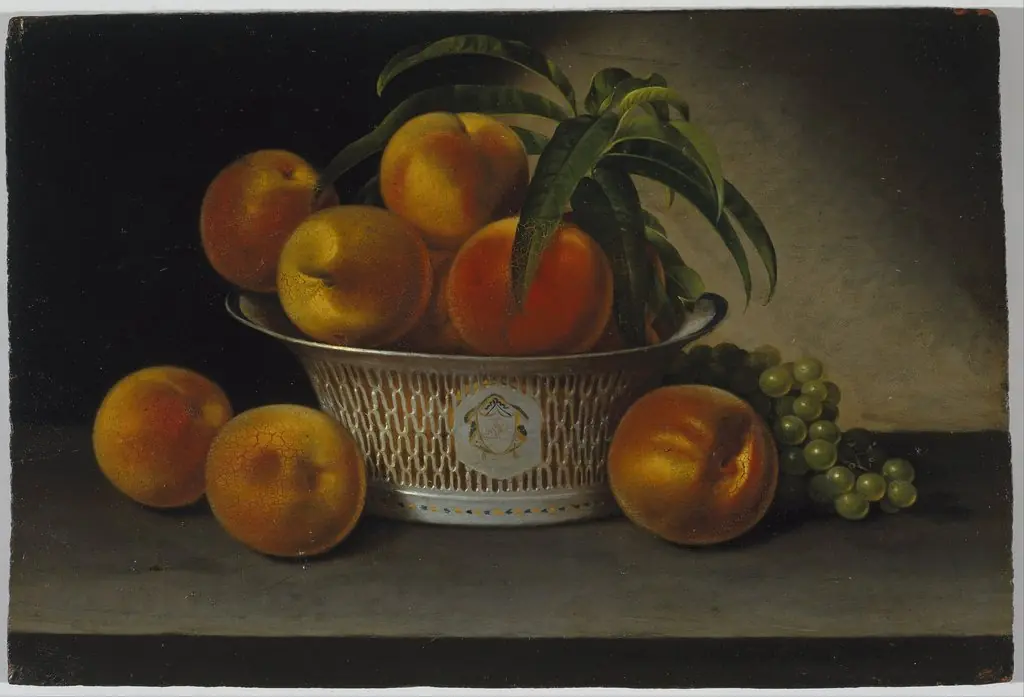 Still Life with Peaches
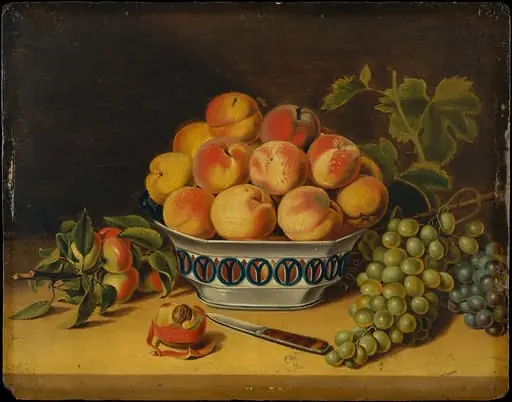 Still Life: Peaches and Grapes
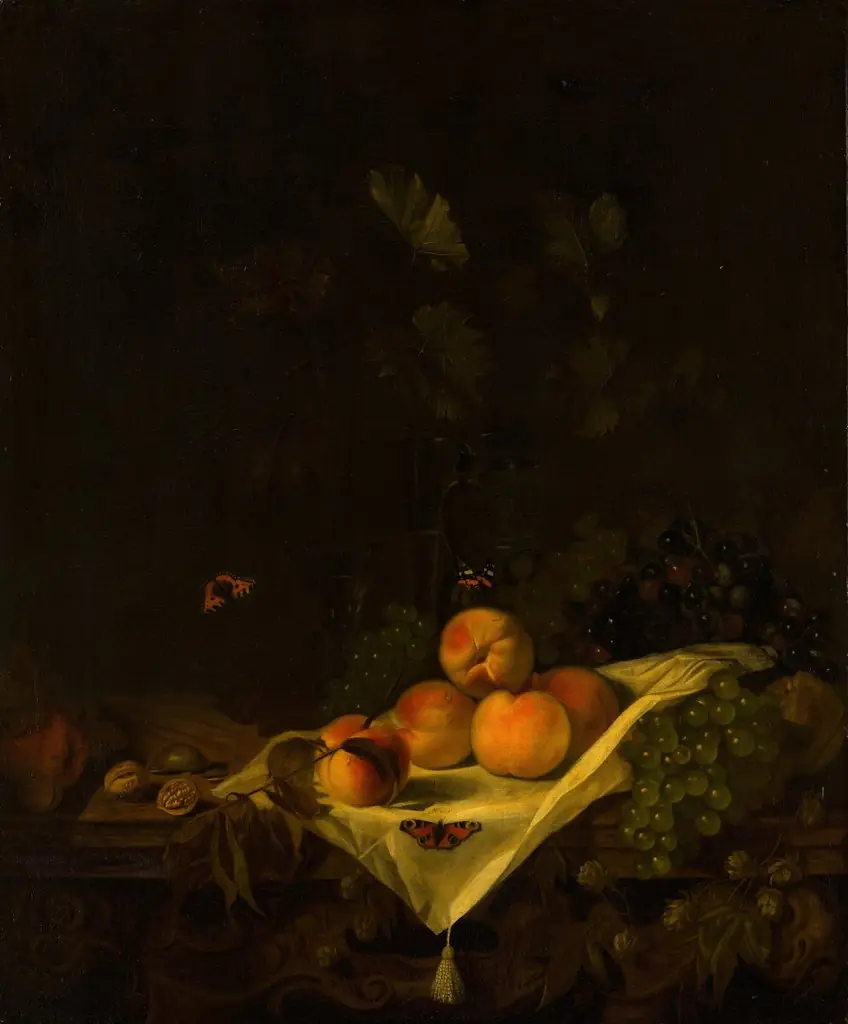 Still life with peaches and grapes
 Still Life with Cantaloupe
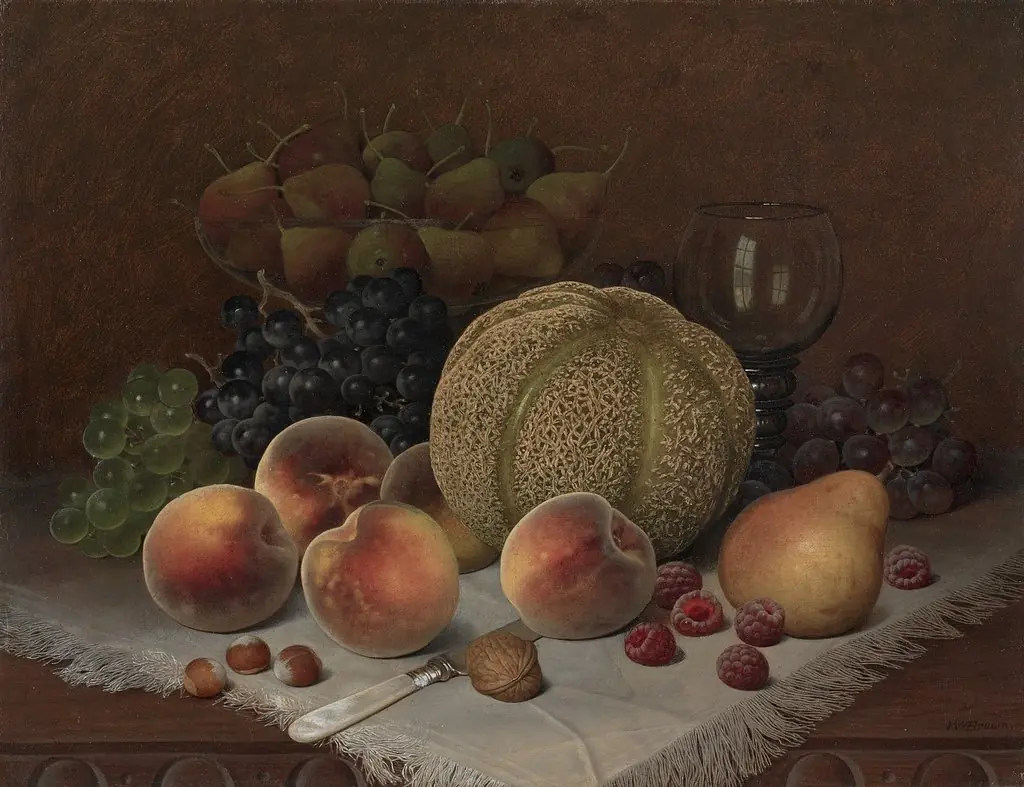 Still Life with Cantaloupe
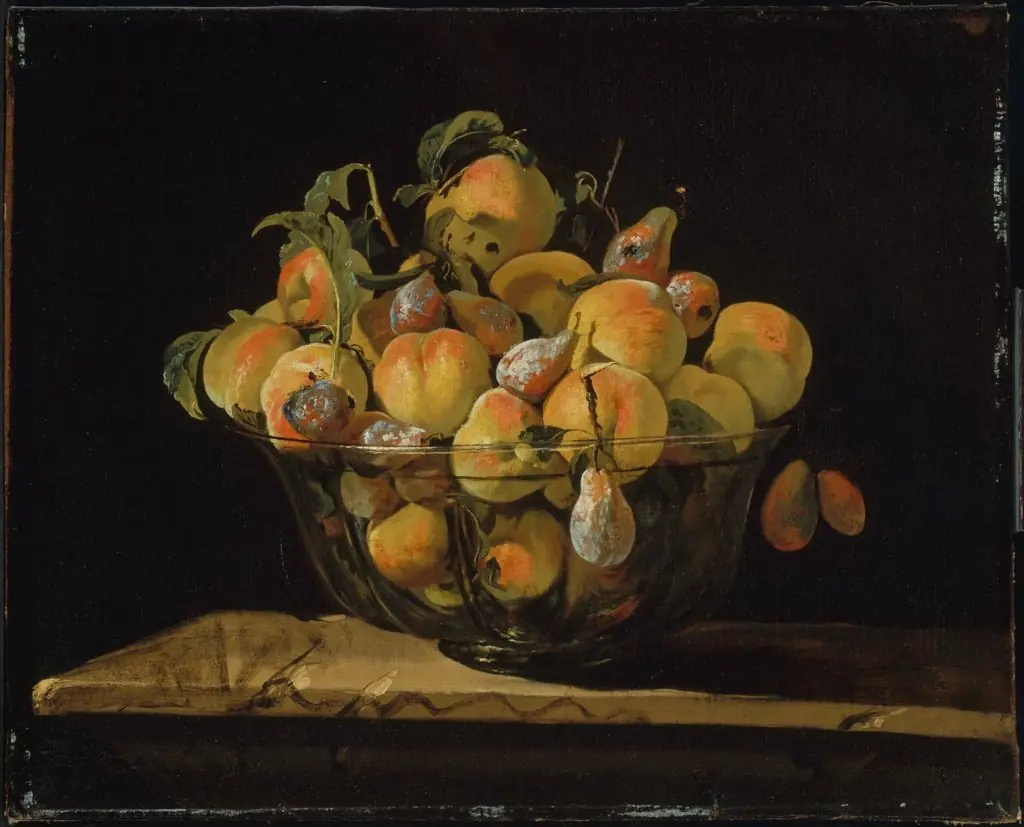 Peaches and Pears in a Glass Bowl
 Still Life
 Still Life with Five Apricots
 Grapes and Peaches
 Still Life with Apples, Grapes and a Pot of Jam