Artwork
Vue generale de Riom, Auvergne
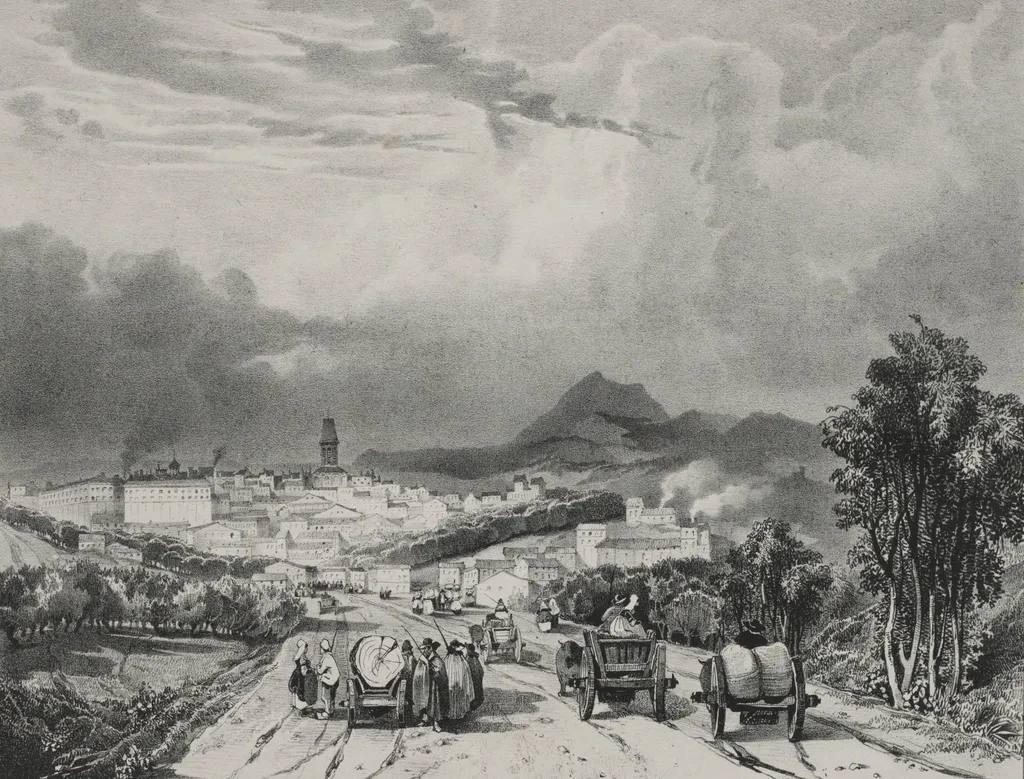
Vue generale de Riom, Auvergne is a print by the Romanticist artist Adrien Dauzats. It dates from 1829 and is held in the collection of the Cleveland Museum of Art.
About this work
Overview
Though he is often associated with scenes from the Ottoman Empire, this work reflects his interest in capturing everyday environments in his native France.
Adrien Dauzats produced this 1829 print as part of a series documenting French regional landscapes. Though he is often associated with scenes from the Ottoman Empire, this work reflects his interest in capturing everyday environments in his native France. The print depicts the town of Riom in Auvergne, rendered with attention to topographical detail and atmospheric conditions. It is now part of the Cleveland Museum of Art’s collection.
Subject & Meaning
The scene presents Riom as a modest, working town nestled in rolling hills. A winding road connects rural and urban elements, with pedestrians and horse-drawn carts suggesting local commerce. The church tower signifies spiritual life, while the factory chimneys hint at early industrial activity. Together, these elements portray a community in transition, neither entirely pastoral nor fully industrialized.
Technique & Style
Dauzats employs chiaroscuro to model forms and suggest depth, particularly in the architecture and cloud formations. The contrast between light and shadow enhances the three-dimensionality of the landscape. Fine linework defines trees and buildings, while the sky’s swirling clouds add movement. The print’s precision reflects a topographical tradition, blending observation with artistic interpretation.
History & Provenance
Created in 1829, the print emerged during a period of growing interest in regional French identity and landscape documentation. It entered the Cleveland Museum of Art’s collection through established acquisition channels, likely as part of a broader effort to include European graphic works from the early 19th century. Its provenance remains consistent with institutional collecting practices of the 20th century.
Context
In the 1820s, French artists increasingly turned to local scenery as national identity took shape after the Revolution and Napoleonic era. Dauzats’s work aligns with this trend, documenting towns like Riom not as idealized vistas but as lived-in places. The inclusion of both church and factory reflects contemporary tensions between tradition and modernization in provincial France.
Legacy
Though not widely exhibited today, the print contributes to a body of work that records France’s evolving rural and semi-industrial landscapes. It stands as a quiet example of 19th-century topographical printmaking, valued for its observational accuracy rather than dramatic flair. Its preservation in a major museum underscores its role in documenting regional history through visual means.
Artist & collection
Artist
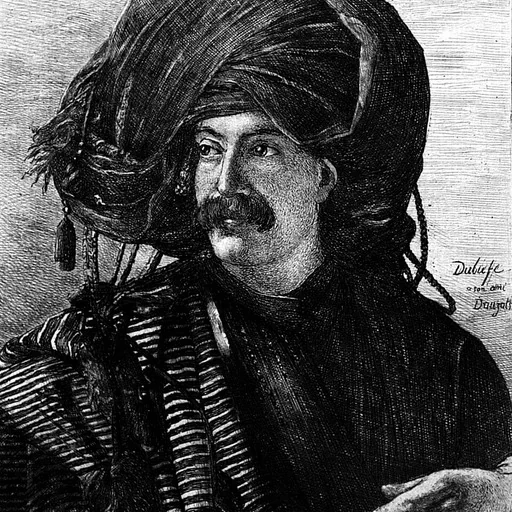
Adrien Dauzats (16 July 1804 – 18 February 1868) was a French landscape, genre painter and painter of Oriental subject matter.

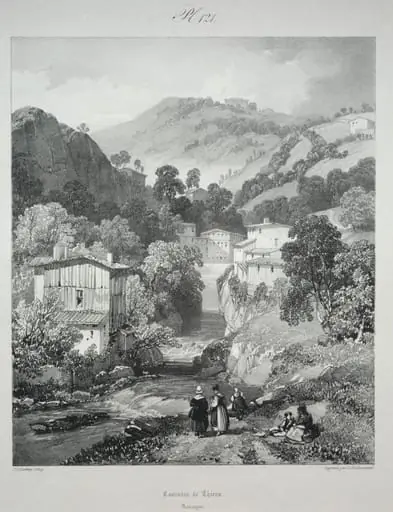 Voyages pittoresques et romantiques dans l'ancienne France. Auvergne: Cascades de Thiers
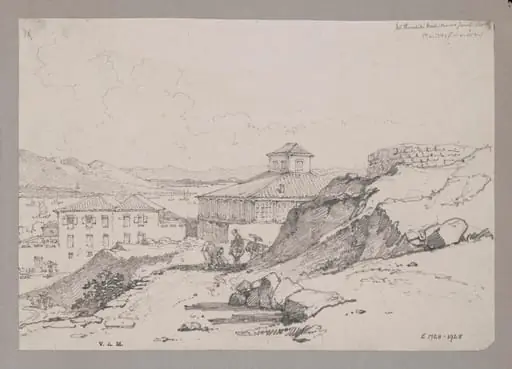 The Rev. Mr. Vatchell's house (formerly Mr. Thornhill's), Macao
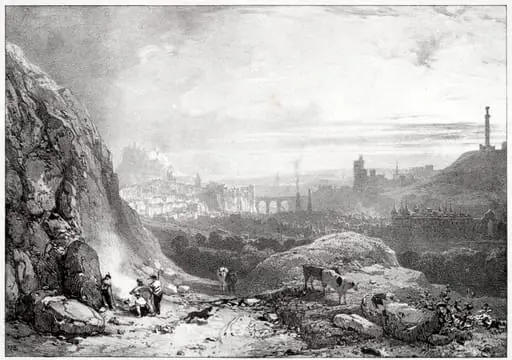 Edinburgh from St. Anthony Chapel
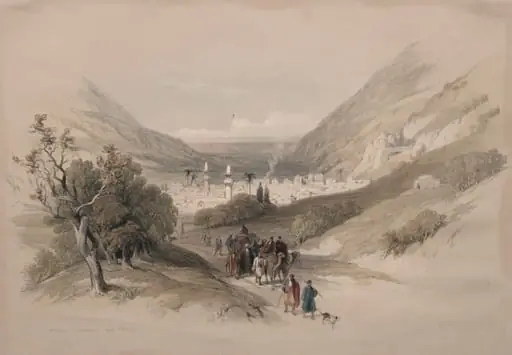 Entrance to Nablus
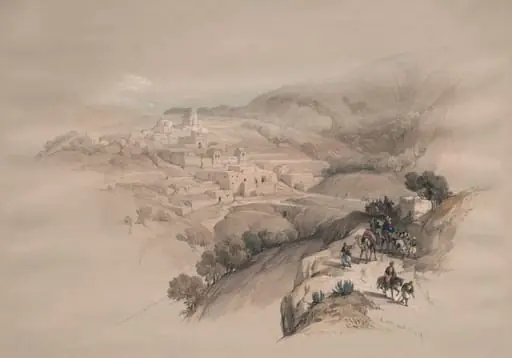 Bethany
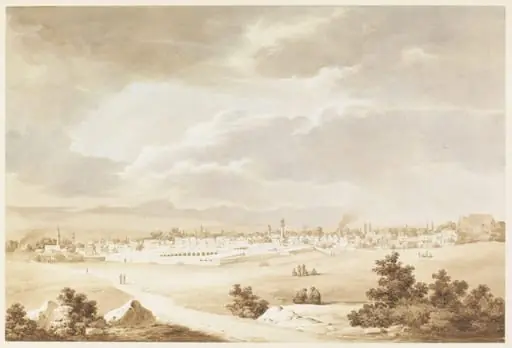 Tarsus
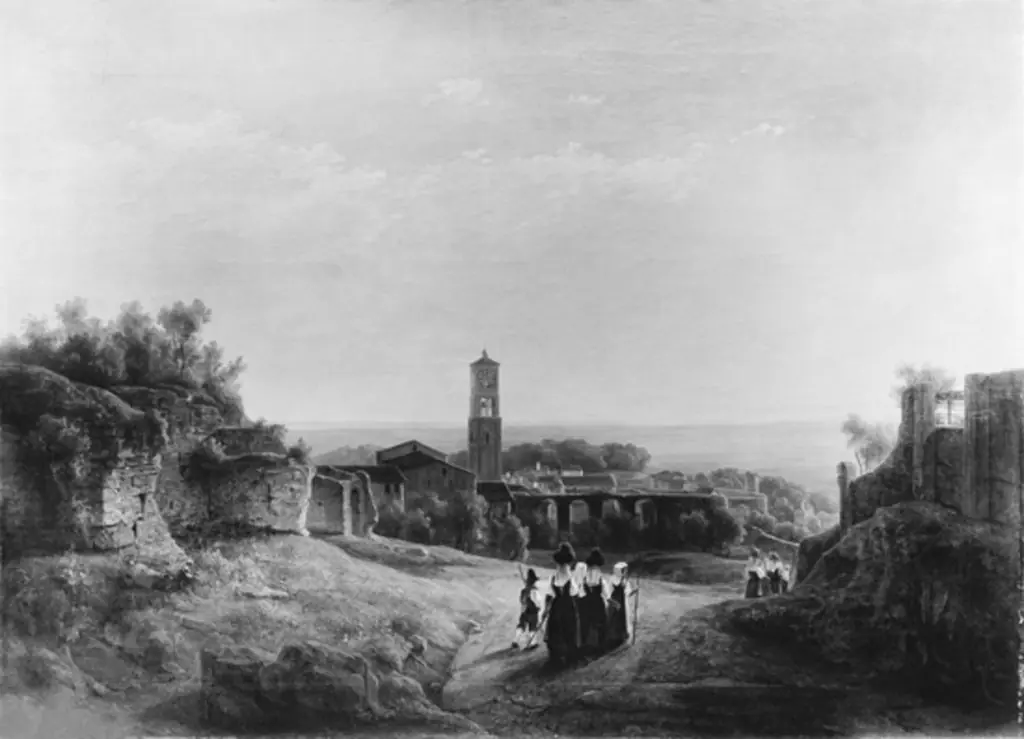 Albano
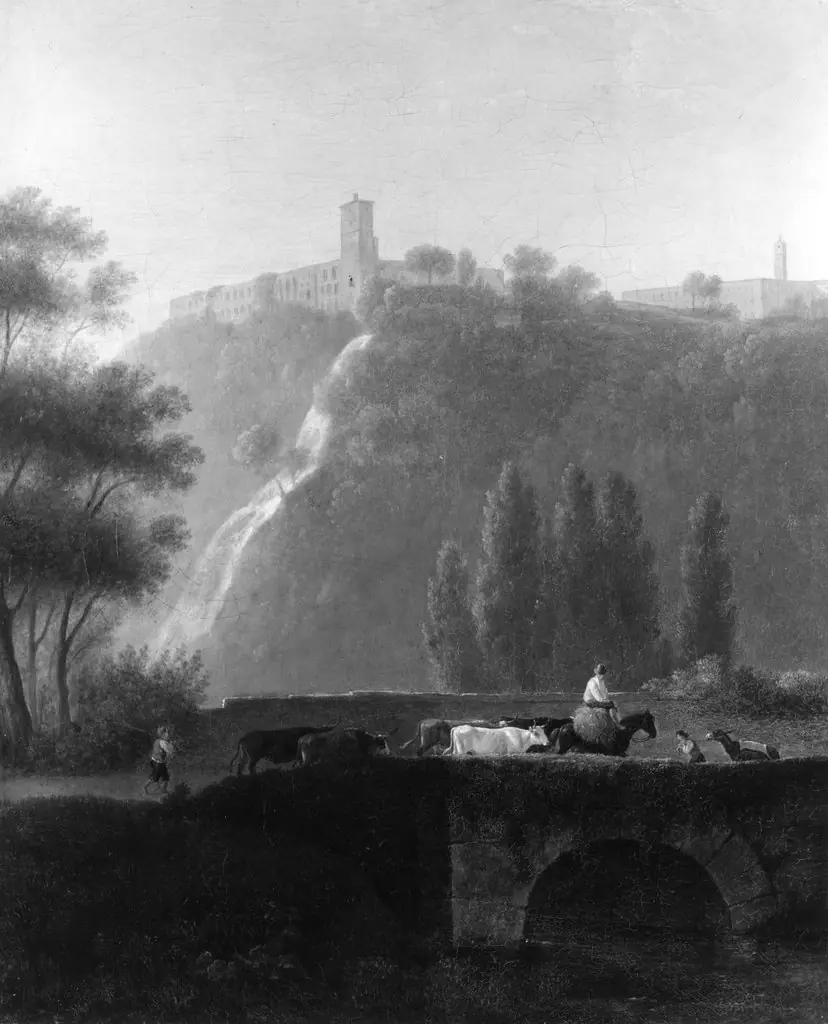 Landscape, the Cascades of Tivoli
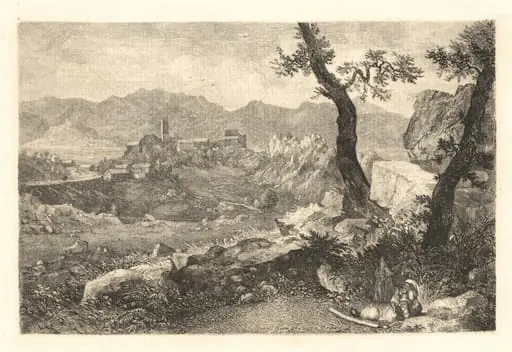 A View near Rome
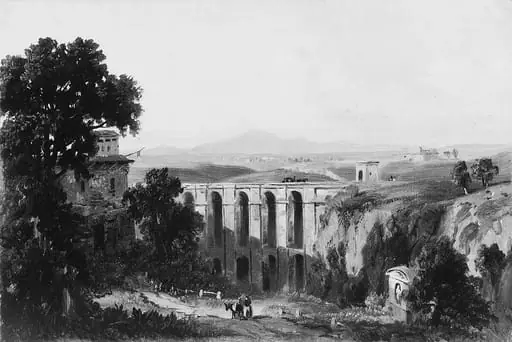 Civita Castellana and Mount Soracte, 1852
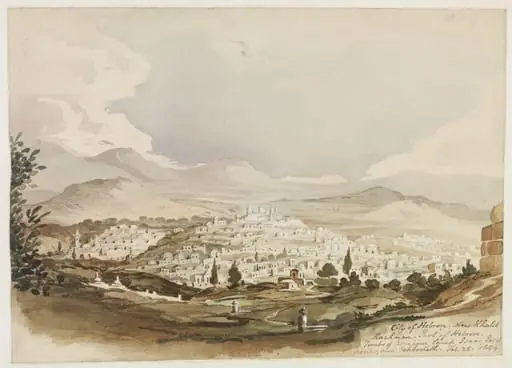 City of Hebron - Now Khalil Rachman - Pool of Hebron. Tombs of Abraham, Sarah, Isaac, Jacob, Abner, and Ishbosheth
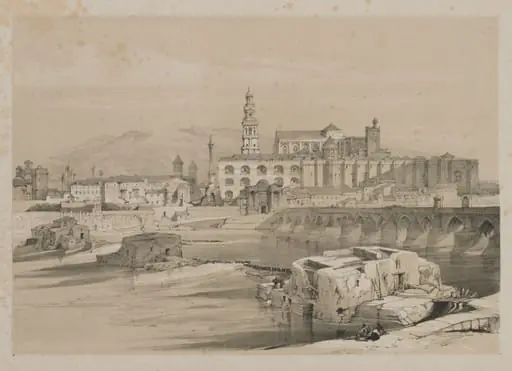 Picturesque Sketches in Spain: Remains of a Roman Bridge on the Guadalquiver, Cordova