Artwork
View of Amsterdam from the Northwest
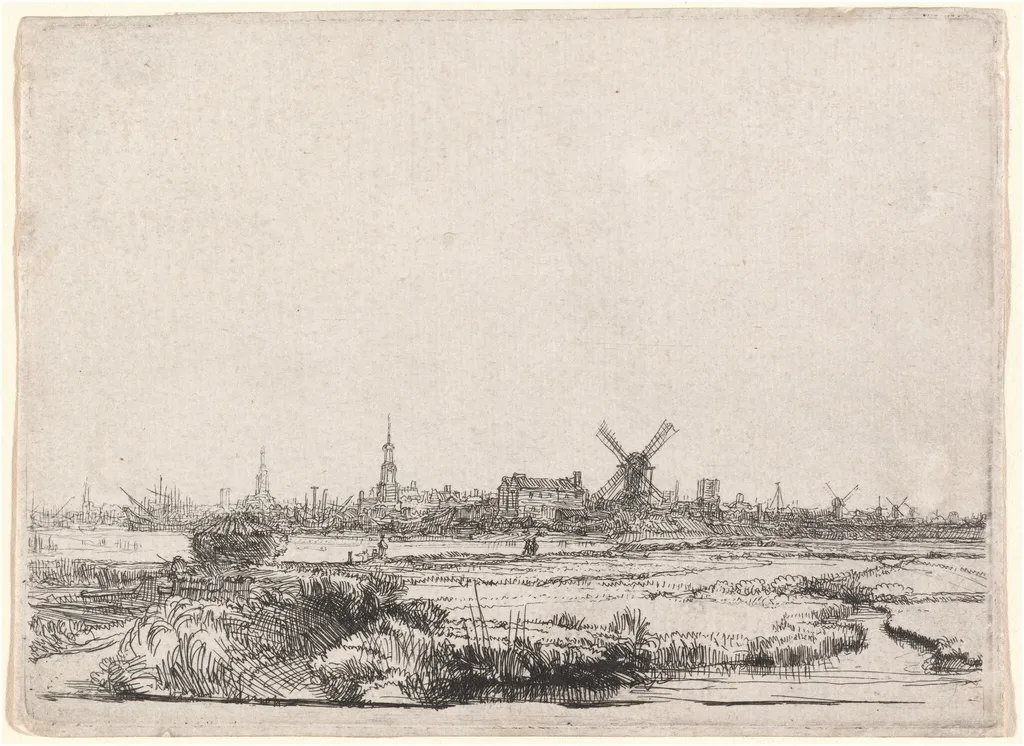
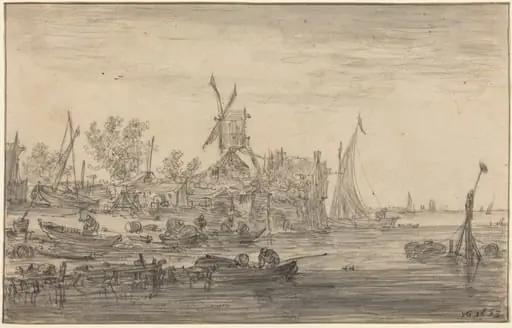
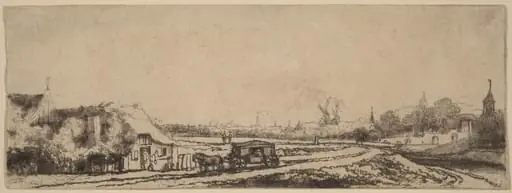
View of Amsterdam from the Northwest is an ink print by the Baroque artist Rembrandt. It dates from 1640 and is held in the collection of the National Gallery of Art.
About this work
Overview
Created around 1640, this etching by Rembrandt van Rijn presents a quiet, elevated perspective of Amsterdam as seen from the northwest.
Created around 1640, this etching by Rembrandt van Rijn presents a quiet, elevated perspective of Amsterdam as seen from the northwest. The composition balances a foreground of sparse vegetation with the distant urban skyline, capturing the city’s architectural silhouette against a soft, open sky. The work is part of Rembrandt’s series of urban views, distinguished by his intimate handling of light and atmospheric space.
Subject & Meaning
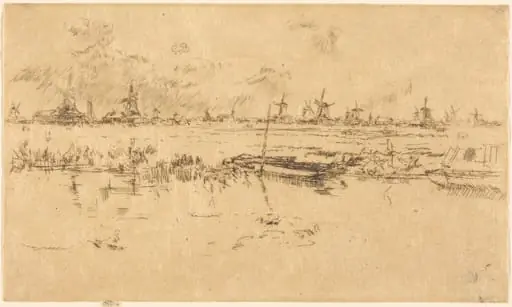
The scene portrays Amsterdam not as a bustling commercial center but as a tranquil, lived-in environment. Windmills and modest brick buildings rise in orderly rows, suggesting the city’s economic stability and civic pride. The absence of figures emphasizes solitude and contemplation, aligning with the Dutch tradition of viewing urban life through a reflective, almost meditative lens.
Technique & Style
Rembrandt employed etching with nuanced line work and varied ink pressure to suggest texture and depth. Fine, deliberate strokes define rooftops and windmill sails, while broader, looser marks render the sky and distant haze. The contrast between sharp architectural details and soft, atmospheric backgrounds reveals his command of tonal gradation, a hallmark of his printmaking.
History & Provenance
The etching was produced during Rembrandt’s mature period in Amsterdam, when he increasingly turned to printmaking as a means of personal expression. It circulated among collectors and fellow artists, influencing later landscape prints. Its survival in multiple impressions indicates its early popularity, though no single original state is definitively known.
Context
In the 1640s, Amsterdam was expanding rapidly, and civic identity was being visually articulated through art. This etching reflects a shift from grand historical scenes to quiet observations of everyday urban life. It aligns with a broader Dutch interest in documenting the built environment, not as propaganda but as a record of place and presence.
Legacy
The etching contributed to the development of topographical printmaking in the Netherlands. While not widely reproduced in its time, its subtle realism and emotional restraint influenced later artists who sought to capture urban landscapes with psychological depth rather than mere documentation.
Artist & collection
Artist
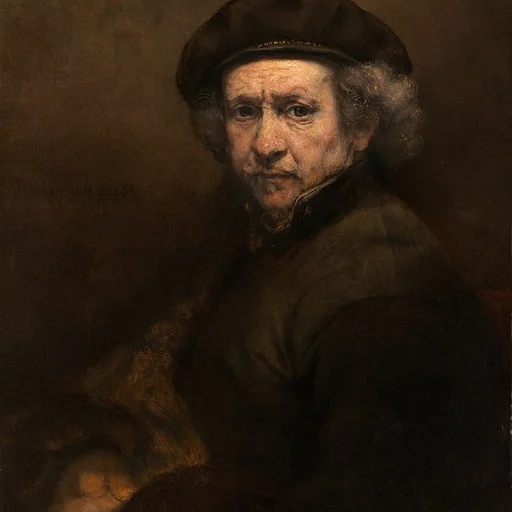
Rembrandt Harmenszoon van Rijn (15 July 1606 – 4 October 1669), known mononymously as Rembrandt, was a Dutch Golden Age painter, printmaker, and draughtsman.

![View of Houtewael near the Sint Anthoniespoort [recto], by Rembrandt](https://artifactworldgallery.com/img/rembrandt--view-of-houtewael-near-the-sint-anthoniespoort-recto--2919925de9060e70-w320.webp)