Artwork
The Windmill
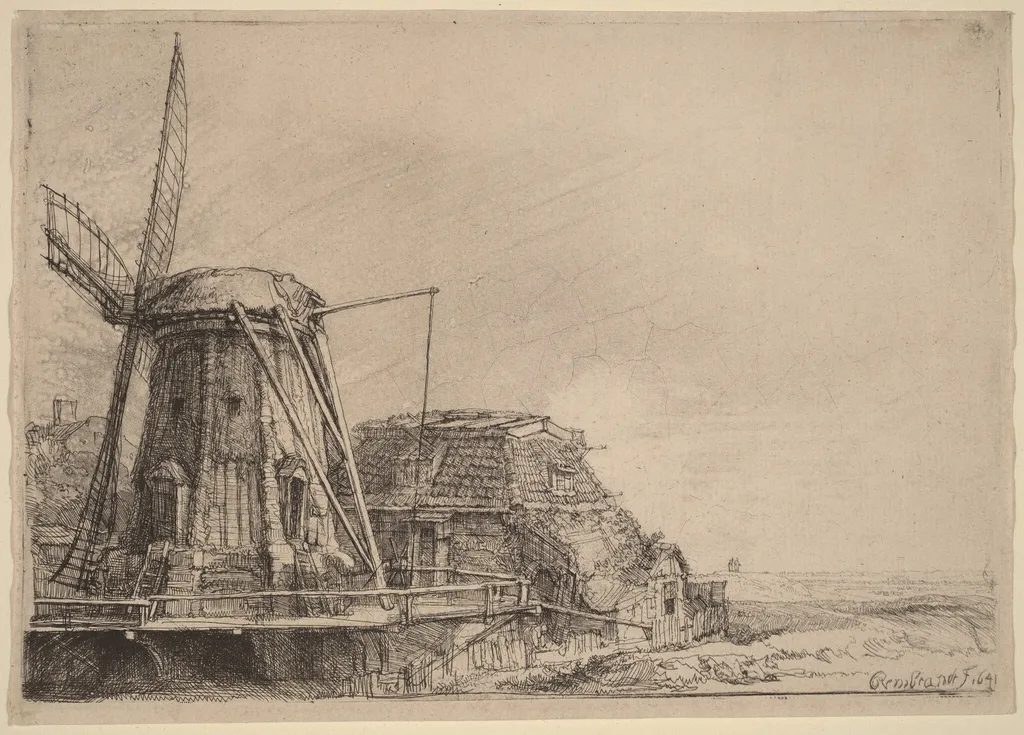
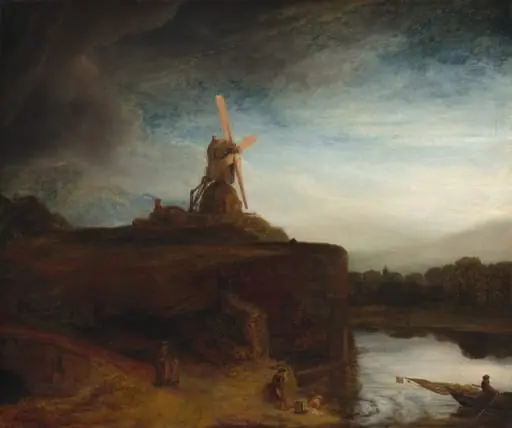
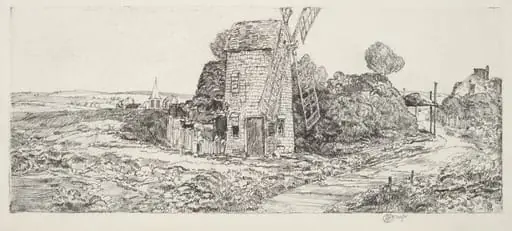
The Windmill is an ink print by the Baroque artist Rembrandt. It dates from 1641 and is held in the collection of the National Gallery of Art.
About this work
Overview
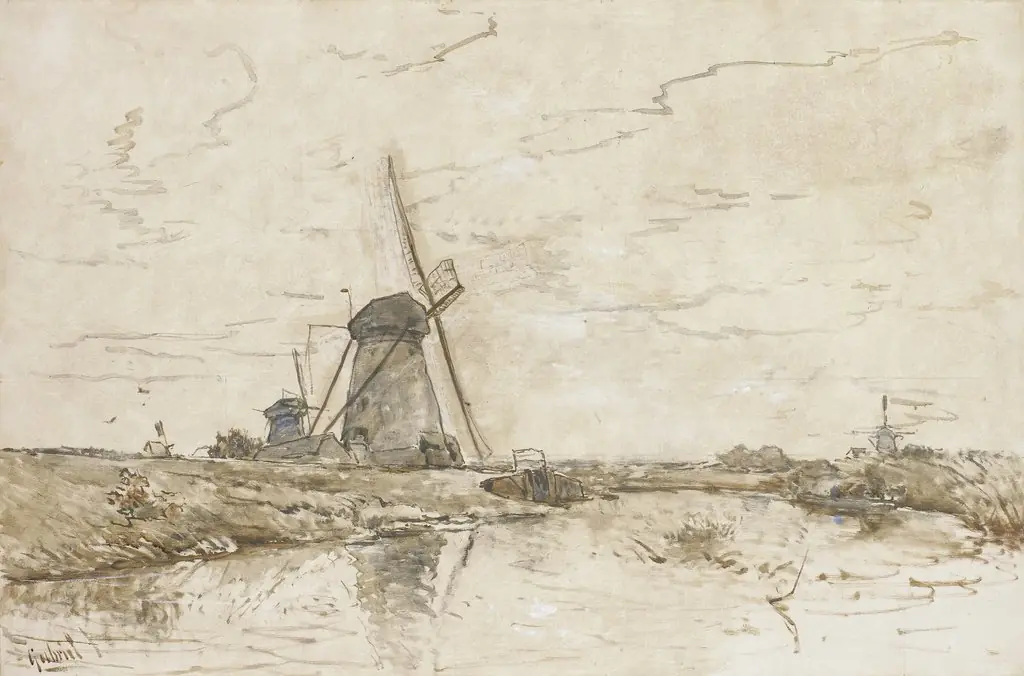
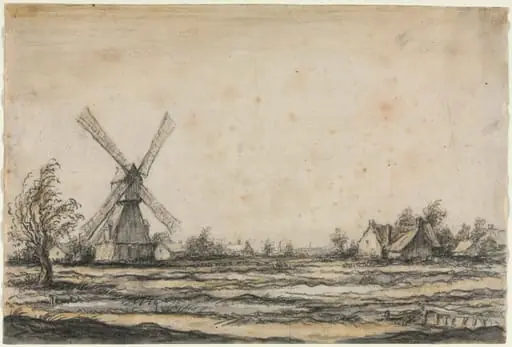
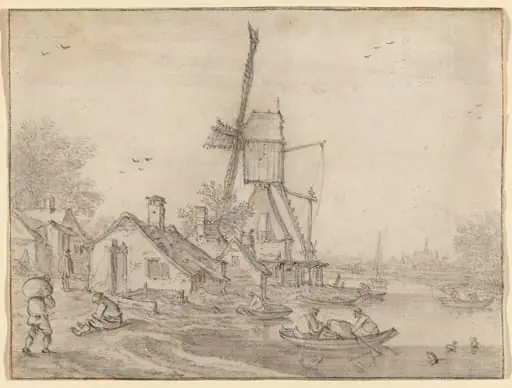
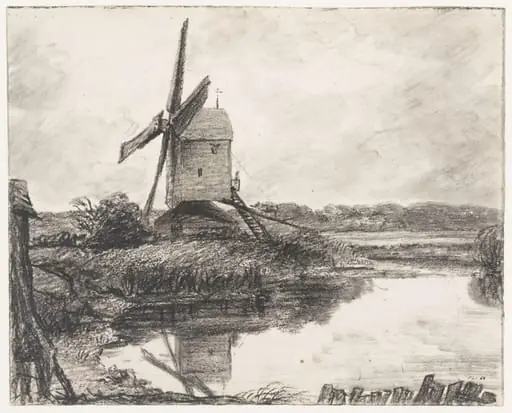
The Windmill, created by Rembrandt van Rijn in 1641, is an etching on laid paper, characterized by its somber depiction of a solitary windmill set against a cloudy sky.
Subject & Meaning
The composition focuses on a small, dark windmill perched on a hill, its sails sharply defined. Notably, the scene is devoid of human figures or dramatic elements, emphasizing the windmill's quiet strength and isolation.
Technique & Style
Executed with a needle on a copper plate, the etching features scratchy, expressive lines that suggest rapid execution while still achieving precise ink control. The laid paper retains faint grid marks from its mold, providing a subtle testament to its production process.
History & Provenance
Created in 1641, specific details about the work's historical ownership or exhibitions are not provided in the available information.
Context
Understanding the interplay of light and shadow in The Windmill can be enhanced by examining the etching technique, which allows for nuanced expressions of tonality through the manipulation of lines and ink.
Legacy
The legacy of The Windmill is not explicitly detailed in the provided information, though it remains a characteristic example of Rembrandt's etching practice during the 1640s.
Artist & collection
Artist
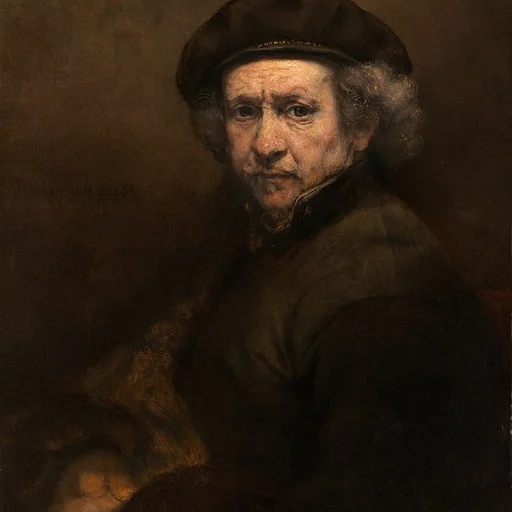
Rembrandt Harmenszoon van Rijn (15 July 1606 – 4 October 1669), known mononymously as Rembrandt, was a Dutch Golden Age painter, printmaker, and draughtsman.

![View of Houtewael near the Sint Anthoniespoort [recto], by Rembrandt](https://artifactworldgallery.com/img/rembrandt--view-of-houtewael-near-the-sint-anthoniespoort-recto--2919925de9060e70-w320.webp)