Artwork
Rosetta Gate, Alexandria
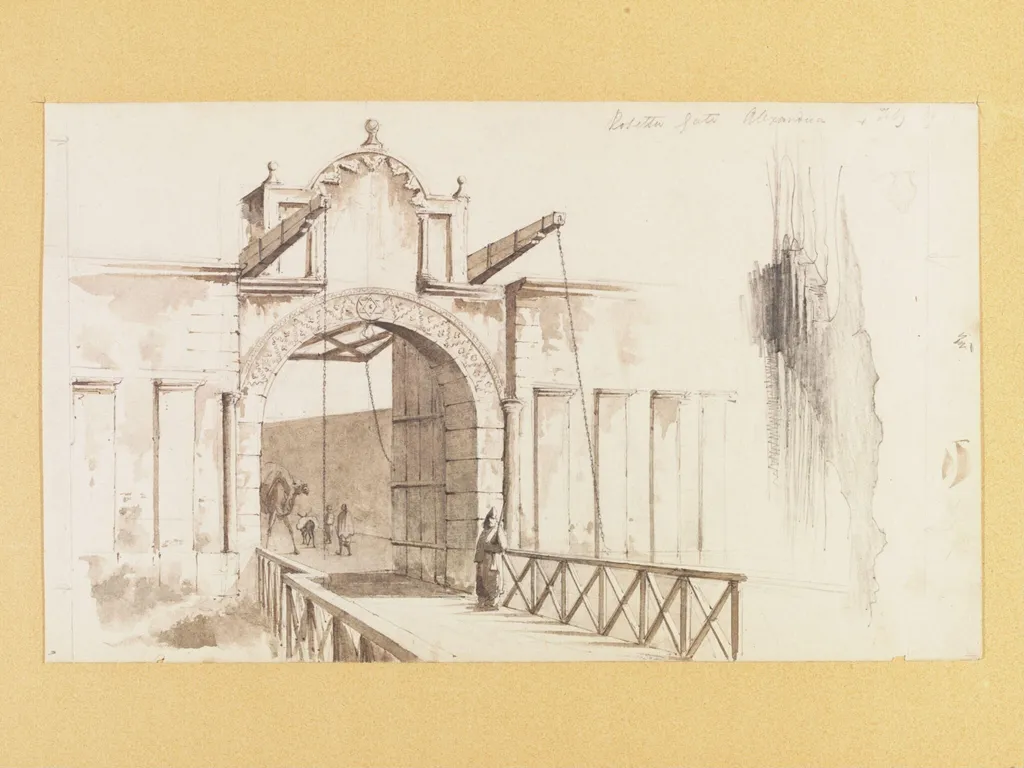
Rosetta Gate, Alexandria is a watercolor work on paper by the Romanticist artist Agostino Aglio. It dates from 1802 and is held in the collection of the Victoria and Albert Museum.
About this work
Overview
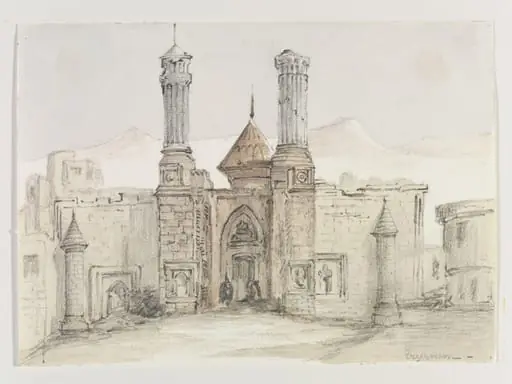
Rosetta Gate, Alexandria is a watercolour drawing created by Agostino Aglio in 1802, depicting a monumental arched gate in Alexandria, Egypt. The work features a stone gate with intricate carvings, approached by a small bridge where a solitary figure stands, gazing upwards. Executed in a range of colours, the piece emphasizes textural details against a plain background.
Subject & Meaning
The subject of the watercolour is the Rosetta Gate, a significant architectural landmark in Alexandria. The inclusion of a figure on the bridge, contemplating the gate, may suggest awe or historical curiosity, aligning with early 19th-century interests in antiquity and exotic landscapes.
Technique & Style
Aglio employed watercolour to capture the textures of the stone gate and its carvings. The use of a plain background to isolate the subject, combined with expressive colour to convey detail, reflects elements of the Romantic style, which emphasized emotion and the beauty of antiquity.
History & Provenance
Created during Agostino Aglio's Egyptian travels with William Wilkins (1801-1802), the watercolour was later acquired from Christopher Powney in October 1964 for £14.
Artist & collection
Artist
Agostino Aglio spent years sketching dusty streets and old walls on scraps of paper he carried everywhere.

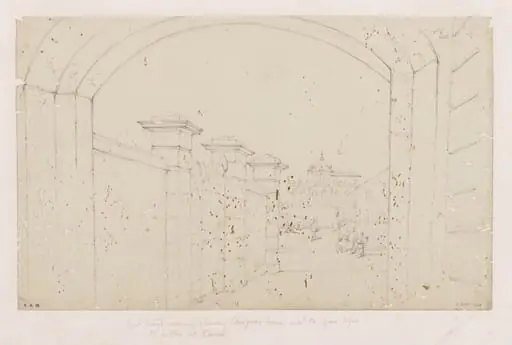 Chungqua's premises seen from the portico of the East India Company's 'factory' at Guangzhou (Canton)
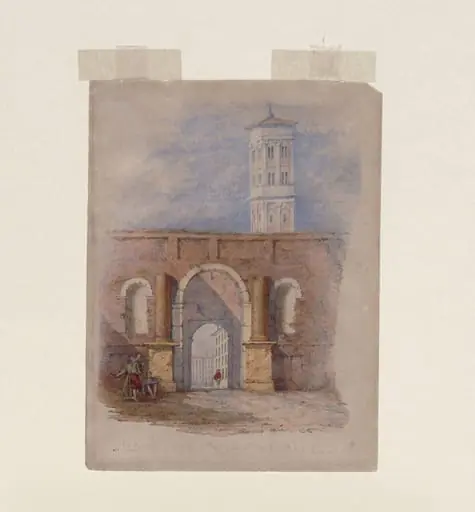 An Ancient Gateway in the Vicinity of St. Peter's, Rome
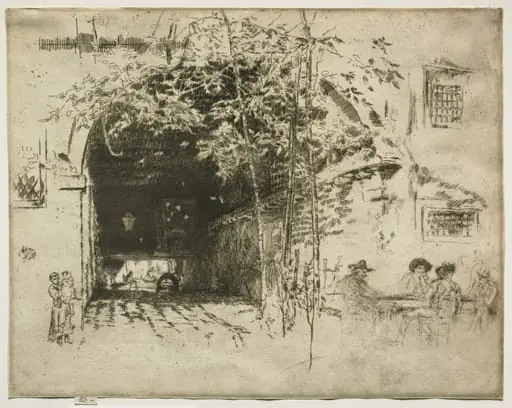 The Traghetto
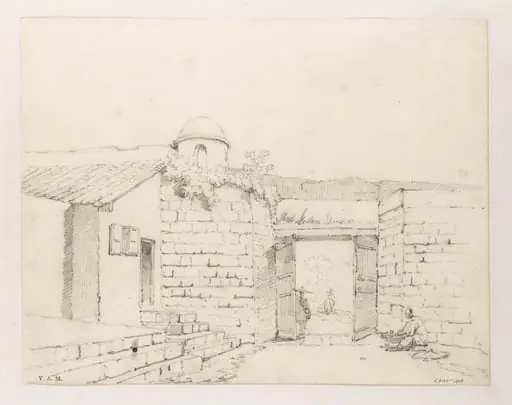 A gateway with a domed turret, Macau
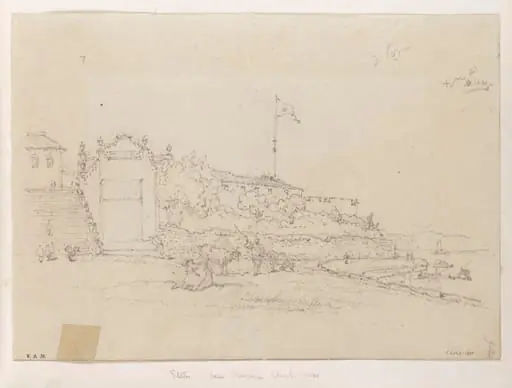 The church of S. Francisco and the adjacent fort, Macau
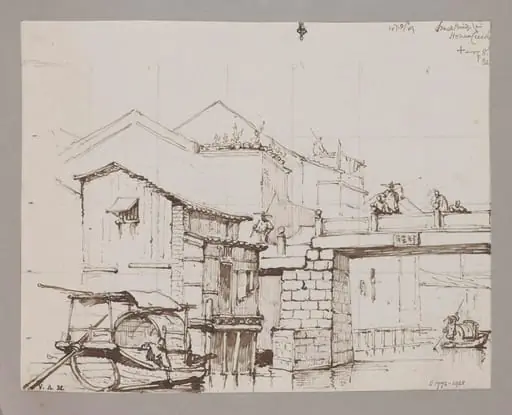 Small bridge near Honan
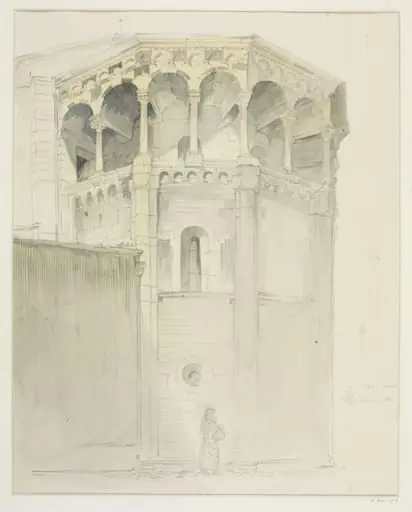 Architectural drawing
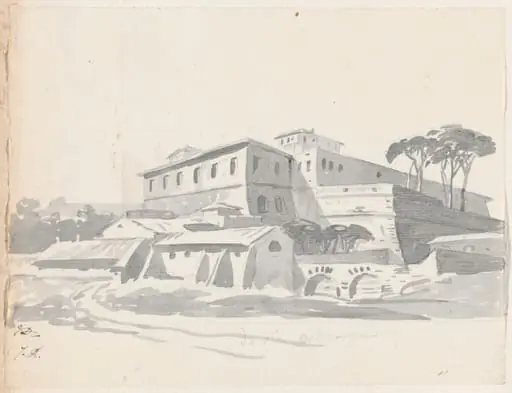 Roman View
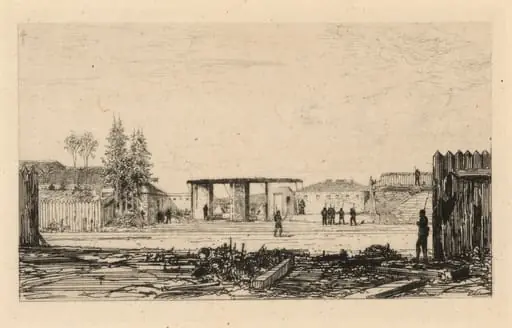 Porte de l'Avenue Uhrich
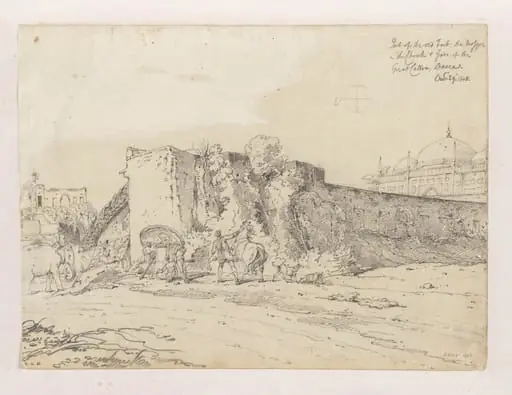 Part of the old fort: the mosque in the chowk and gate of the Great Katra, Dhaka (Dacca)
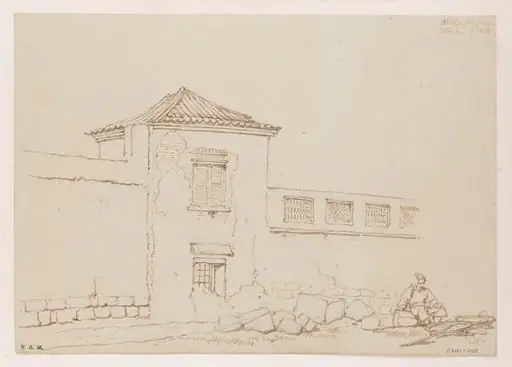 A building in Macau
 Erzeroum