Artwork
An Ancient Gateway in the Vicinity of St. Peter's, Rome
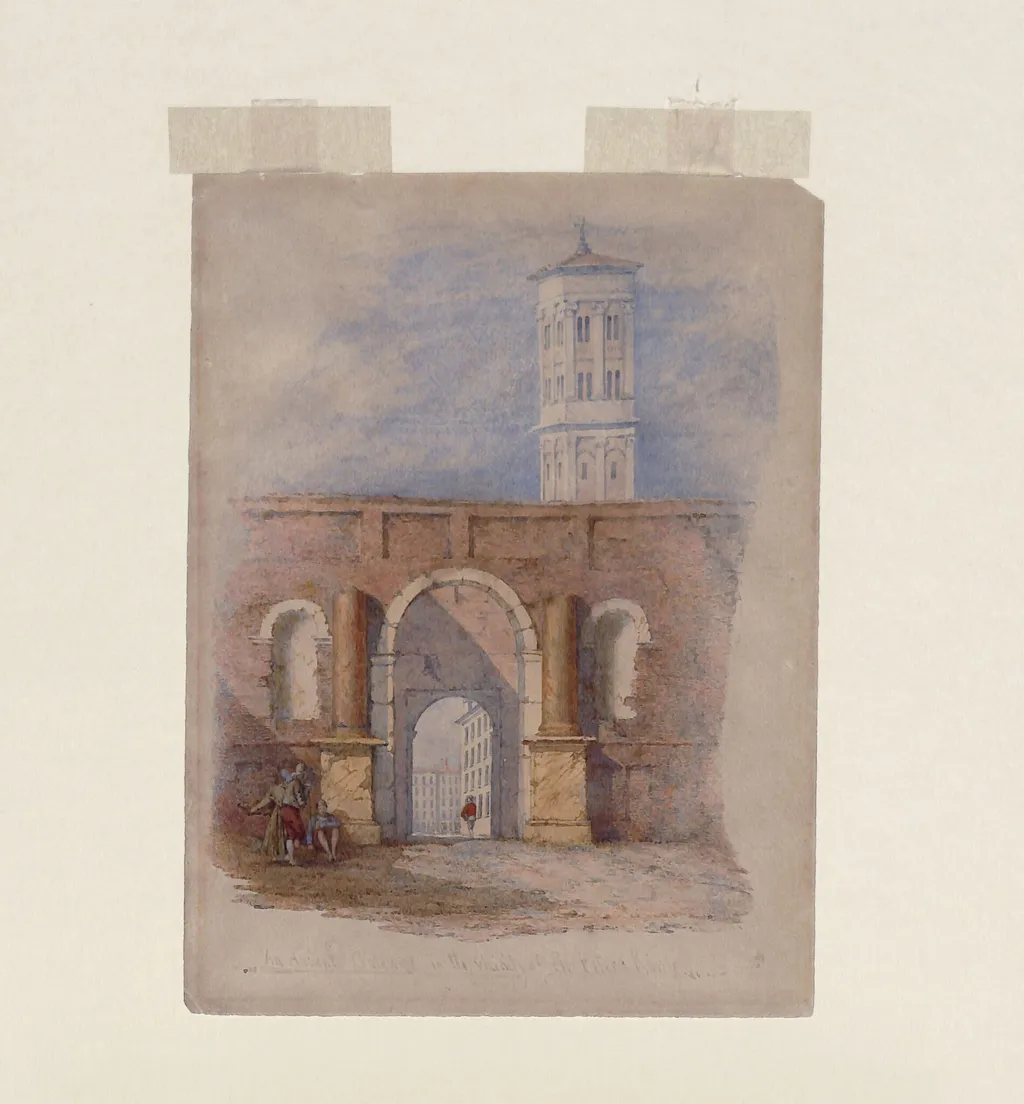
An Ancient Gateway in the Vicinity of St. Peter's, Rome is a watercolor work on paper by the Romanticist artist Richard Dadd. It dates from 1843 and is held in the collection of the Victoria and Albert Museum. This watercolour portrays a weathered Roman gateway near St.
About this work
Overview
This watercolour portrays a weathered Roman gateway near St. Peter’s, its stonework worn by time and framed by the vertical rise of a distant bell tower. The composition emphasizes architectural decay, with soft washes of pigment suggesting ambient light and atmospheric haze. Four small figures stand near the entrance, their scale underscoring the monument’s imposing yet crumbling presence.
Subject & Meaning
The gate, likely a remnant of ancient Rome’s defensive walls, stands as a silent witness to centuries of change. Its ruinous state contrasts with the enduring silhouette of the campanile, hinting at the passage of time and the persistence of sacred or civic structures. The figures, dressed in period attire, appear as transient observers amid enduring stone.
Technique & Style
Delicate watercolour washes create a luminous, ethereal quality, with subtle gradations capturing the texture of aged stone and the play of shadow. Fine brushwork defines cracks and weathering, while the background buildings are rendered with loose, muted tones. The technique avoids sharp detail, favoring a poetic ambiguity that aligns with Romantic sensibilities.
History & Provenance
The work originates from a period when artists traveled to Rome to study classical ruins, often producing topographical sketches for private collections. Though the artist’s identity is unconfirmed, the subject and method suggest it was made in the early 19th century, during a wave of interest in Italy’s layered architectural heritage.
Context
Created during the height of Romanticism, the piece reflects a cultural fascination with ruins as symbols of transience and historical depth. Unlike neoclassical idealization, this work embraces imperfection, valuing the emotional resonance of decay over grandeur. Such scenes were common among travelers documenting Italy’s ancient remnants.
Legacy
As a modest watercolour, it contributes to a broader archive of 19th-century topographical art that preserved Rome’s evolving landscape. While not widely exhibited, it exemplifies how quiet, observational works helped shape contemporary perceptions of antiquity—not as static relics, but as living traces of time.
Artist & collection
Artist
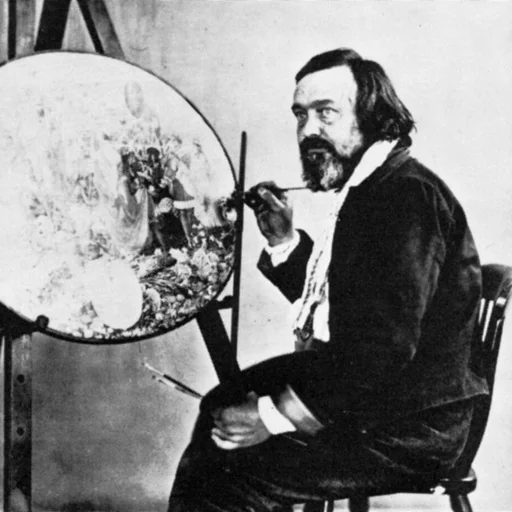
Richard Dadd (1 August 1817 – 7 January 1886) was an English painter of the Victorian era, noted for his depictions of fairies and other supernatural subjects, Orientalist scenes, and enigmatic genre scenes, rendered with obsessively…


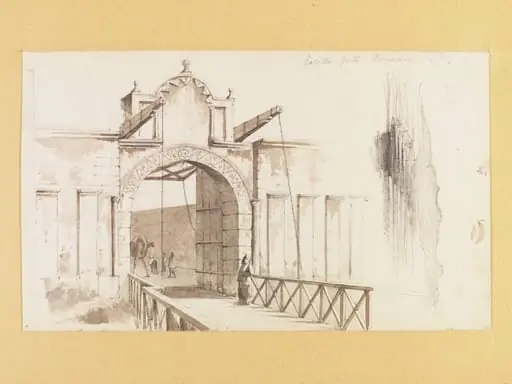 Rosetta Gate, Alexandria
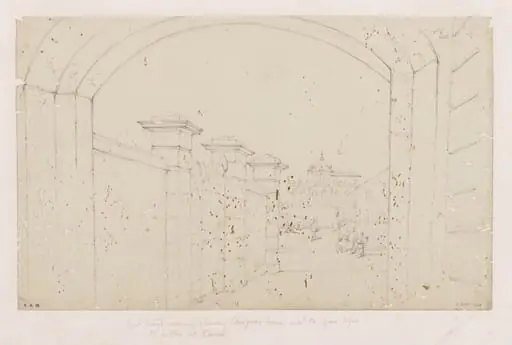 Chungqua's premises seen from the portico of the East India Company's 'factory' at Guangzhou (Canton)
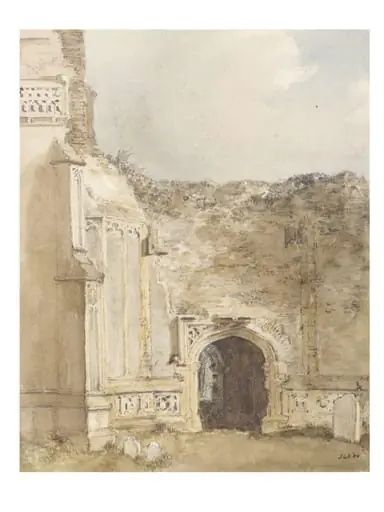 East Bergholt Church: north archway of the ruined tower
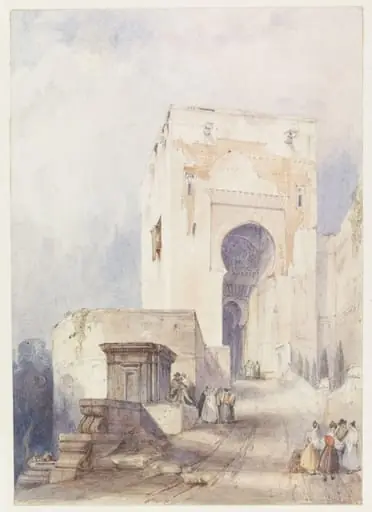 Gate of Justice Alhambra Granada
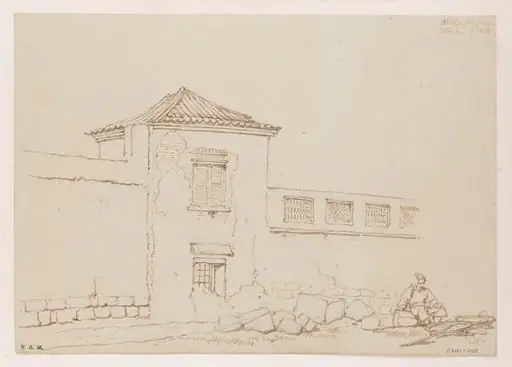 A building in Macau
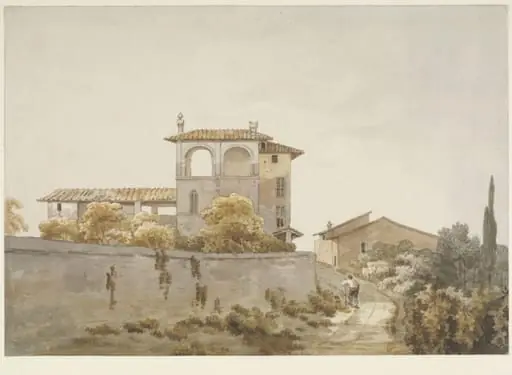 Italian villa
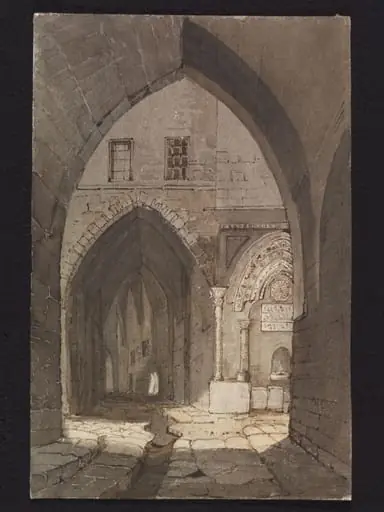 Fountain at Jerusalem near the House of Dives
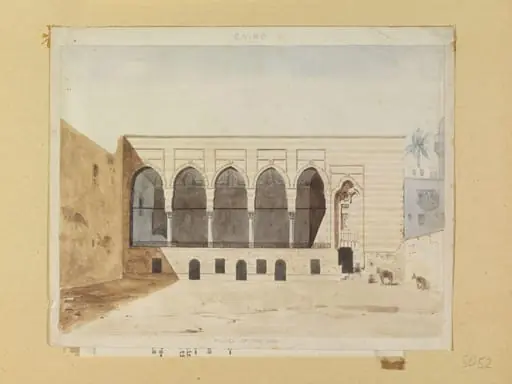 Cairo: Palace of the Cadi
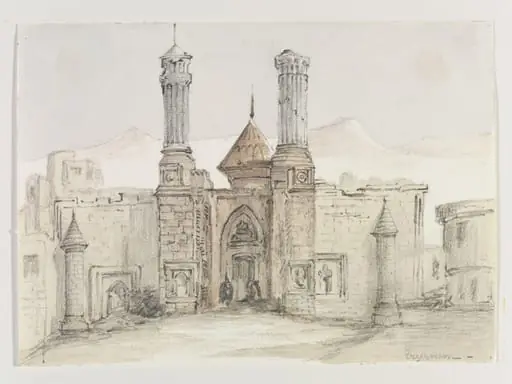 Erzeroum
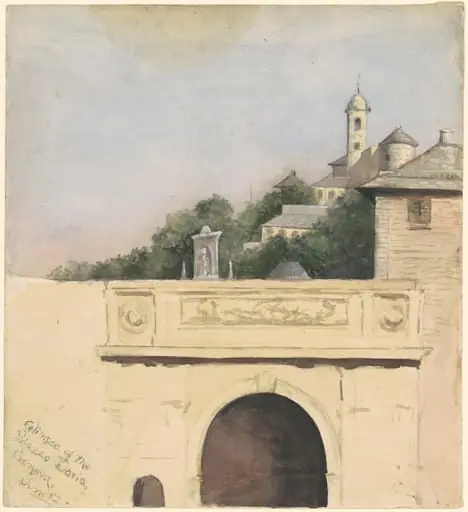 Glimpse of the Palazzo Doria, Genova