Artwork
Tulga
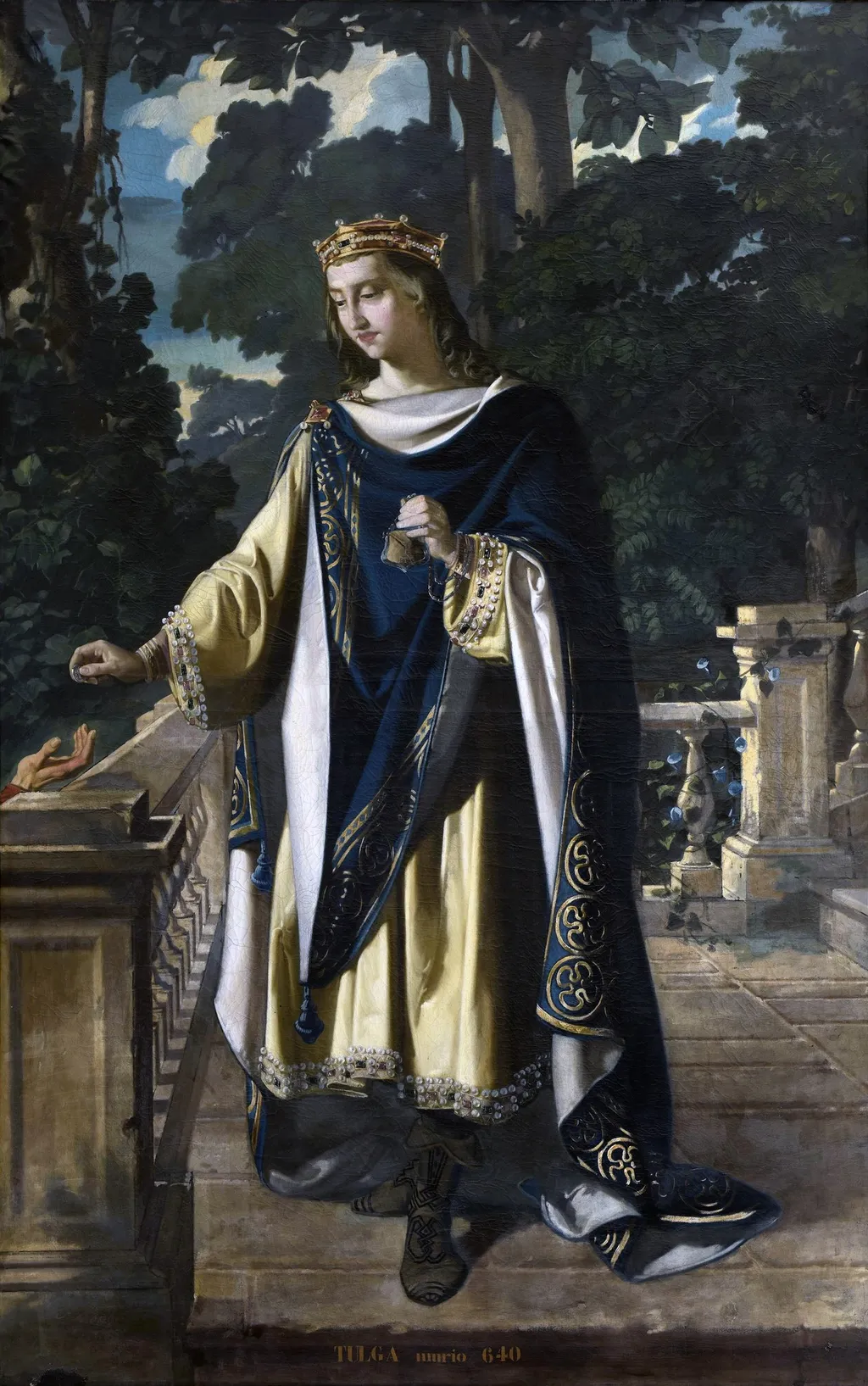
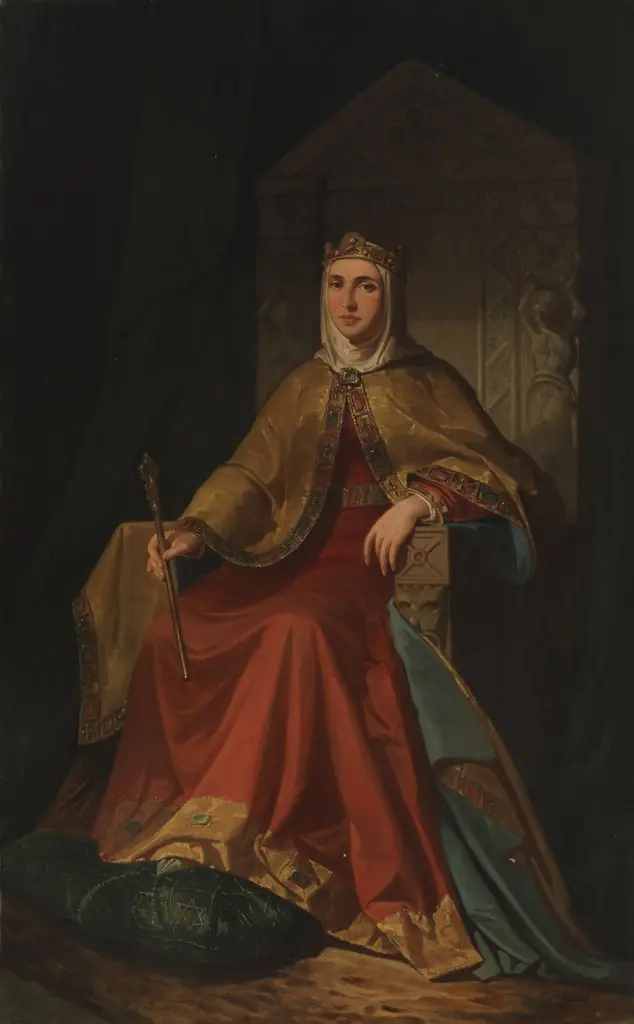
Tulga is an oil painting by the Realist artist Agustín Sáez Glanadell. It dates from 1854 and is held in the collection of the Museo del Prado.
About this work
Overview
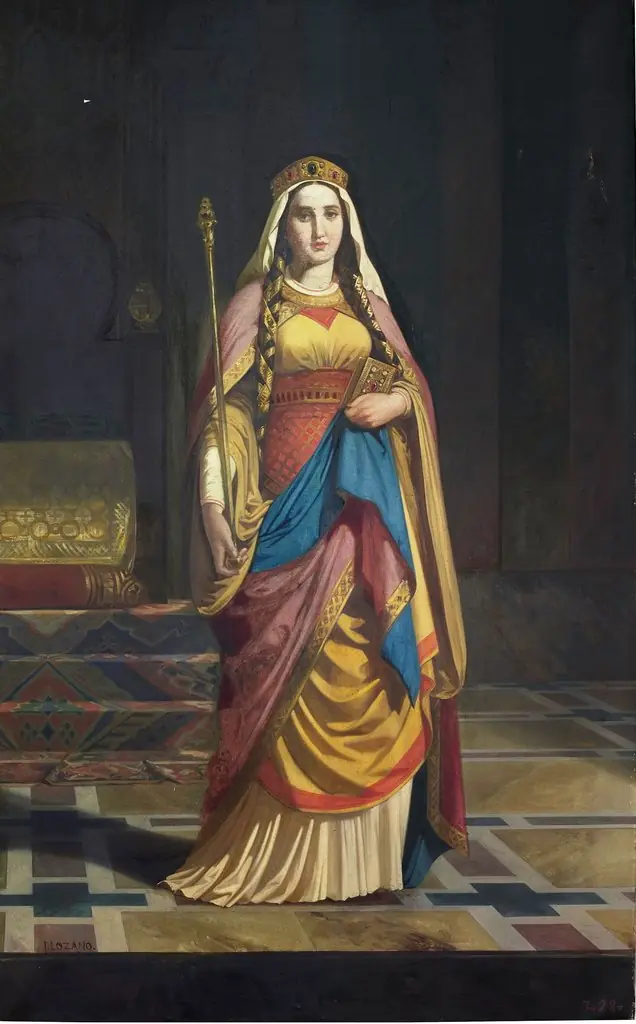
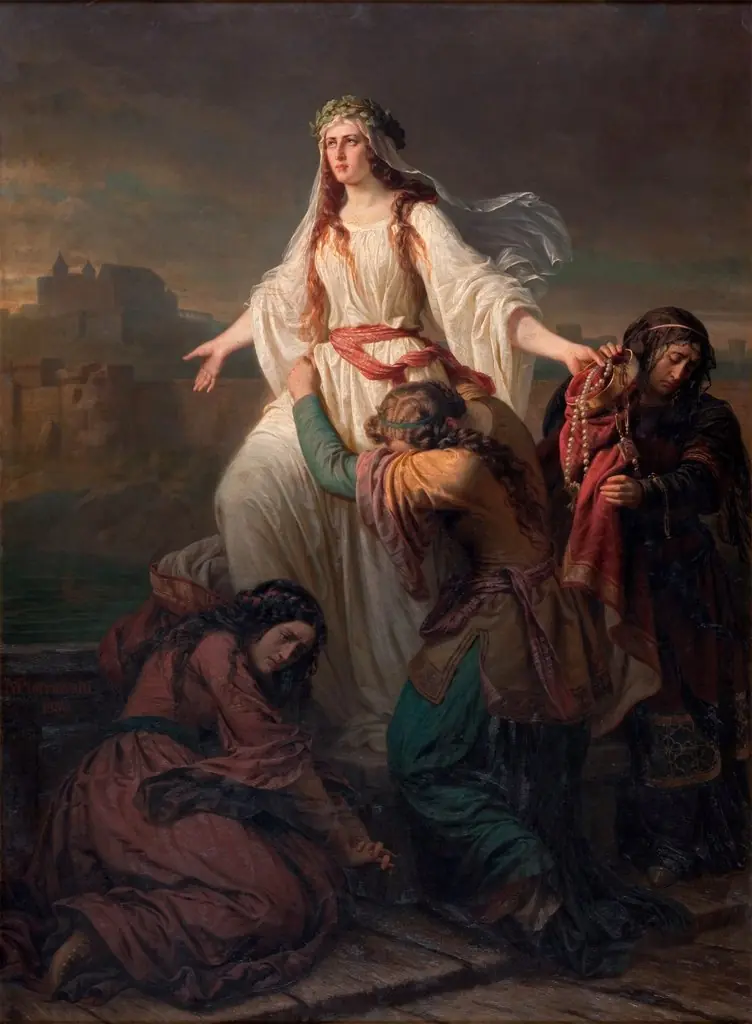
Agustín Sáez Glanadell’s 1854 oil on canvas, titled *Tulga*, is part of the Prado Museum’s collection. The composition centers on a solitary female figure positioned on a stone balcony, her presence emphasized by a golden crown and a richly embroidered blue robe. The background merges a dark forest with a cloudy sky, while a stone wall and a distant statue frame the scene.
Subject & Meaning
The work portrays a woman in regal attire, suggesting themes of authority and perhaps mythic or historical narrative. The crown and formal garments convey a sense of sovereignty, while the paper she holds may allude to a decree or personal testament, inviting speculation about her identity and the story she represents.
Technique & Style
Glanadell employs chiaroscuro to model the figure, contrasting illuminated areas of the face and robe with deeper shadows that recede into the surrounding architecture. The brushwork renders the gold embroidery and the texture of the stone balcony with fine detail, while the atmospheric background is softened through blended tones, creating depth and a contemplative mood.
History & Provenance
Created in 1854, the painting entered the Museo del Prado’s holdings as part of its 19th‑century Spanish art acquisitions. Its catalog reference, Q59844077, records its medium as oil on canvas and confirms its provenance within the museum’s permanent collection, where it remains on display for public viewing.
Context
The mid‑19th century in Spain saw a revival of historic and romantic subjects, often rendered with dramatic lighting. Glanadell’s *Tulga* reflects this trend, combining a classical pose with a romanticized landscape, aligning the work with contemporary interests in national identity and the visual language of power.
Own this work as a print
Artist & collection