Artwork
Untitled
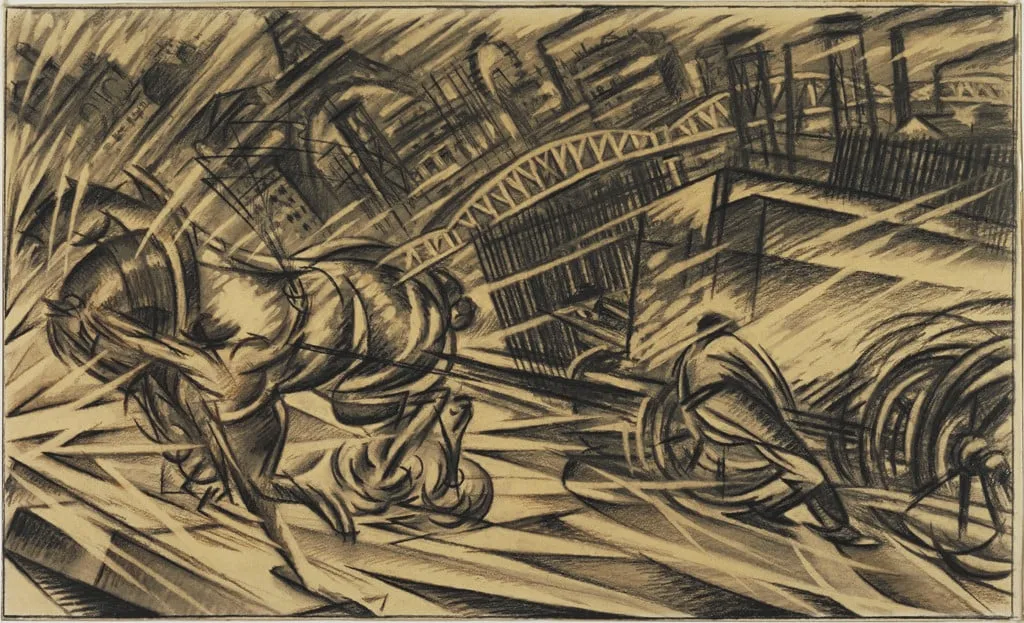
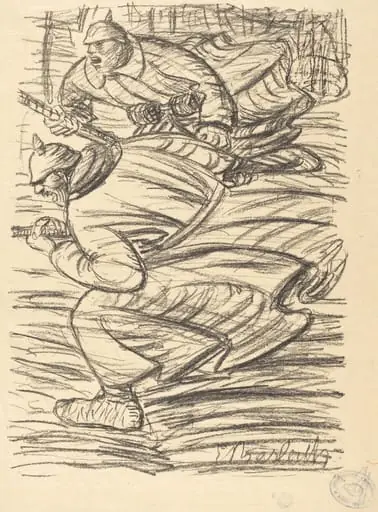
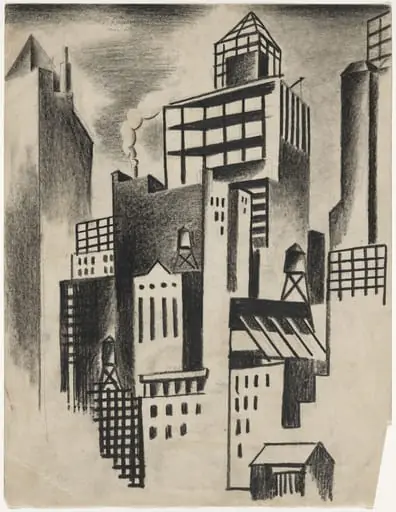
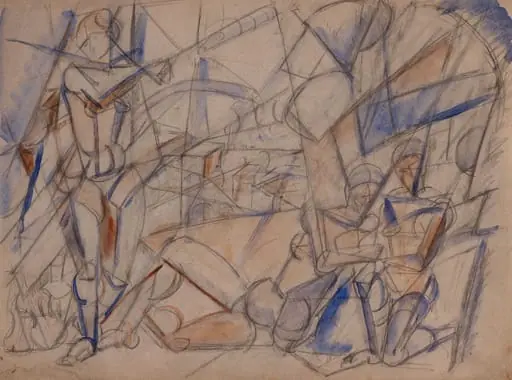
Untitled is a charcoal drawing by Aimé Félix Del Marle. It dates from 1913 and is held in the collection of the Museum of Modern Art.
About this work
Overview
The composition conveys motion through dense, intersecting lines, avoiding detail in favor of rhythmic abstraction.
Created in 1913, this charcoal drawing by Aimé Félix Del Marle is part of The Museum of Modern Art’s collection. Executed on paper, it captures a moment in an urban environment with energetic, layered strokes. The composition conveys motion through dense, intersecting lines, avoiding detail in favor of rhythmic abstraction. Its raw texture and tonal contrast reflect a focus on perception rather than realism.
Subject & Meaning
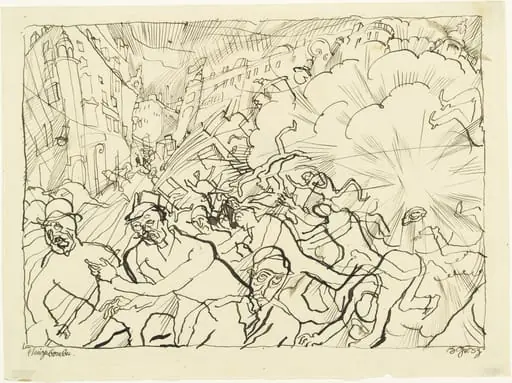
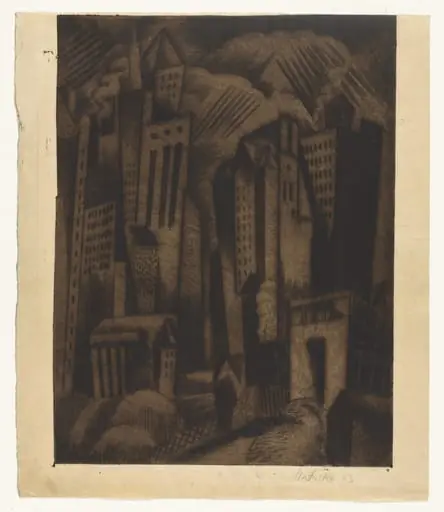
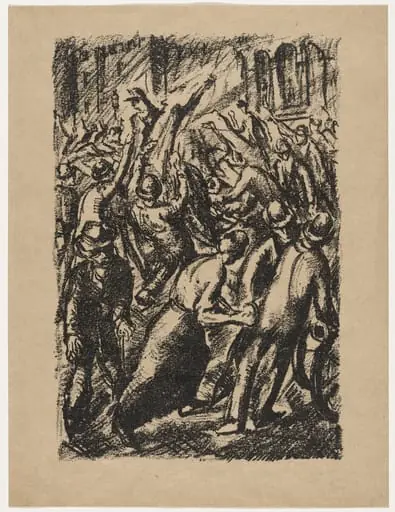
The scene depicts a city street with two figures on bicycles, their forms simplified and integrated into the surrounding architecture. A bridge and buildings frame the space, their angular forms suggesting urban density. The work does not narrate a specific event but evokes the sensation of transit—movement, speed, and the fleeting nature of urban life through fragmented forms and overlapping contours.
Technique & Style
Del Marle employed heavy charcoal to build dense, overlapping lines that create texture and depth. Cross-hatching and rapid, directional strokes generate a sense of velocity and spatial compression. Light and shadow are not modeled conventionally but implied through the weight and density of marks, giving the pavement and structures a tactile, almost vibrating surface.
History & Provenance
The drawing was completed in 1913 and entered the collection of The Museum of Modern Art at a later date. Its provenance prior to institutional acquisition is not publicly documented. It remains one of few known works by the artist from this period, offering insight into early 20th-century experimental drawing practices in Europe.
Context
Created during a time of rapid urbanization and technological change, the drawing aligns with broader artistic interests in capturing motion and modernity. While not part of a named movement, its approach echoes contemporaneous explorations in Futurism and Expressionism, where line and texture replaced traditional perspective to convey psychological and sensory experience.
Legacy
The work stands as an example of how drawing could function as a direct medium for expressing perception rather than representation. Its emphasis on gesture and texture influenced later artists interested in the physicality of mark-making. Though not widely reproduced, it contributes to understanding the diversity of modernist drawing beyond major movements.
Artist & collection