Artwork
The Dance
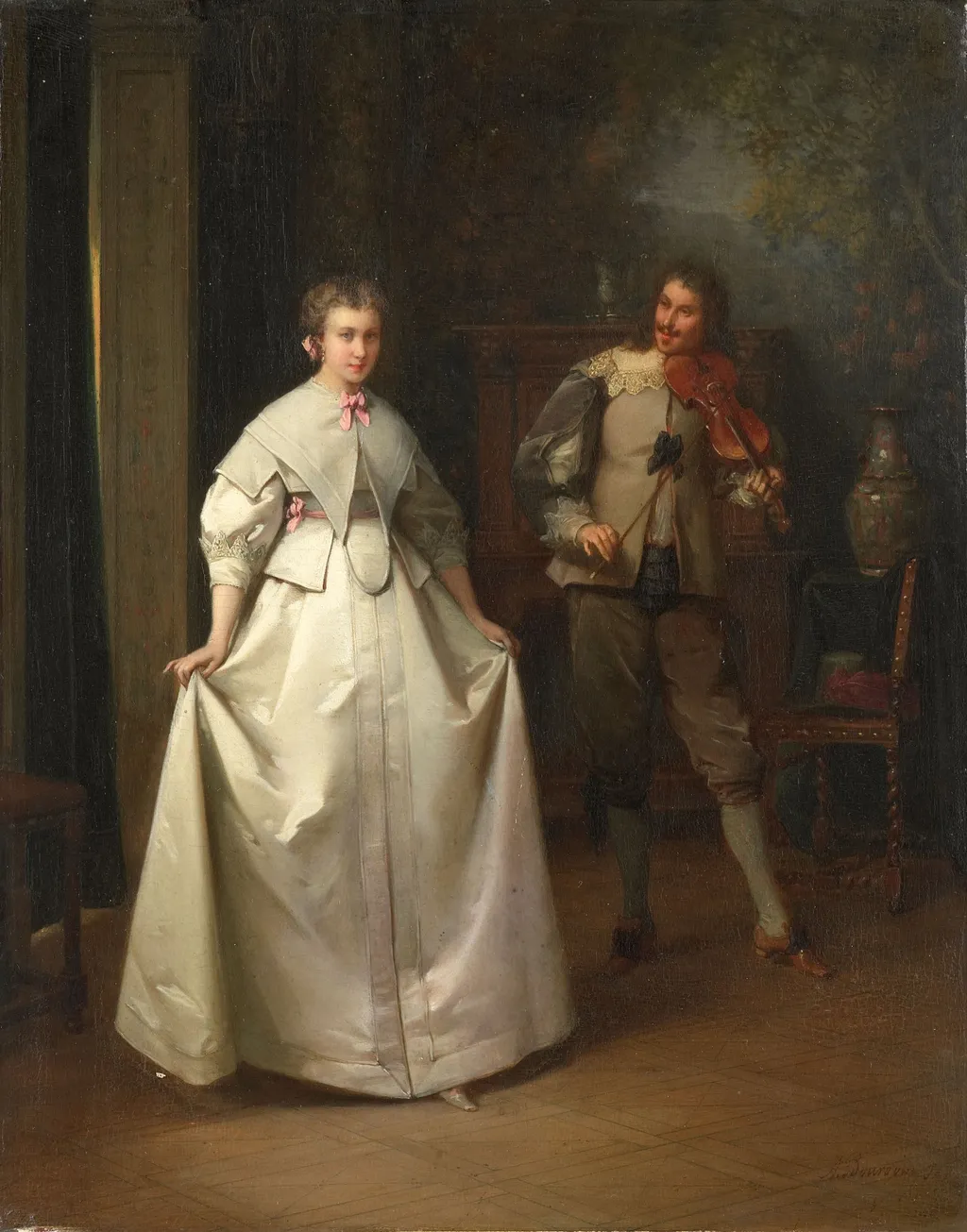
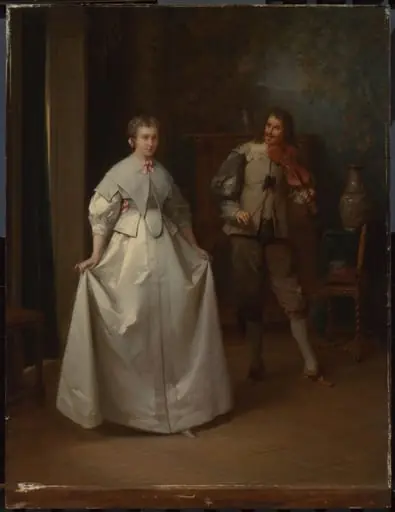
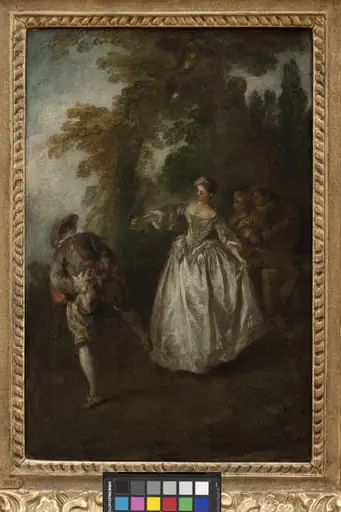
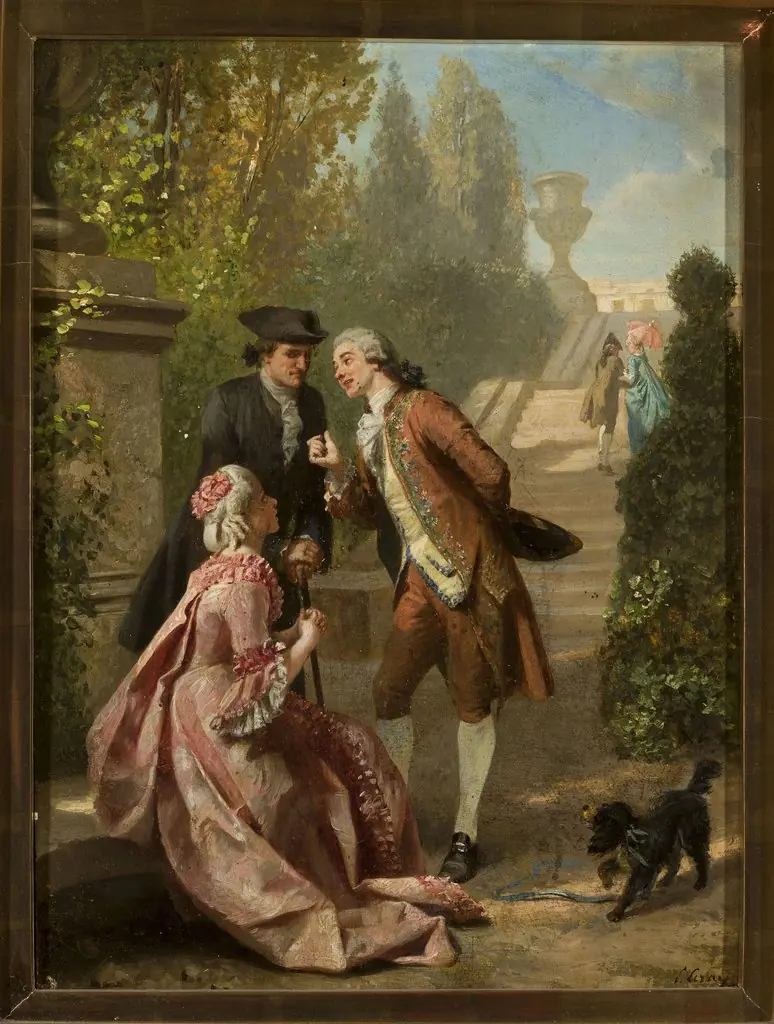
The Dance is an oil painting by the Realist artist Aimé-Gabriel-Adolphe Bourgoin. It dates from 1870 and is held in the collection of the Rijksmuseum.
About this work
Overview
Painted in 1870 by Aimé-Gabriel-Adolphe Bourgoin, this oil on canvas work captures a quiet moment of intimate performance. It is part of the Rijksmuseum’s collection, where it is displayed as an example of 19th-century French genre painting. The composition centers on two figures engaged in a private musical exchange, rendered with restrained emotion and careful attention to atmosphere.
Subject & Meaning
The painting depicts a woman standing still, her hands resting on her skirt, while a man plays violin beside her. Their stillness and proximity suggest a moment of shared stillness rather than energetic dance. The absence of a crowd or festive context implies an intimate, domestic setting. The scene evokes quiet companionship, where music becomes a silent dialogue between two individuals.
Technique & Style
Bourgoin employs chiaroscuro to isolate the figures against a deep, indistinct background. Light falls selectively on the woman’s pale dress, the man’s face, and their hands, drawing attention to gesture and expression. The contrast between the illuminated foreground and the shadowed surroundings enhances the sense of intimacy. Brushwork is precise yet unobtrusive, favoring mood over detail.
History & Provenance
Created in 1870, the painting entered the Rijksmuseum’s holdings in the late 19th or early 20th century, likely through acquisition or donation. Its presence in a Dutch national collection reflects broader European interest in French genre scenes during that period. No significant changes in ownership or restoration are documented, and it has remained in the museum’s care since acquisition.
Context
In the decades following the 1848 revolutions, French artists increasingly turned to quiet, everyday moments rather than grand historical narratives. Bourgoin’s work aligns with this trend, echoing contemporaries like Jules Breton and Jean-François Millet in its focus on solitude and domestic rhythm. The violin and stillness reflect a cultural ideal of music as a private, reflective act.
Legacy
Though not widely exhibited outside the Rijksmuseum, the painting remains a quiet example of French genre painting’s emotional restraint. It contributes to scholarly understanding of how 19th-century artists used light and composition to convey intimacy without narrative drama. Its preservation allows ongoing study of lighting techniques and social themes in post-revolutionary French art.
Own this work as a print
Artist & collection
Artist
Aimé-Gabriel-Adolphe Bourgoin (1824–1874) was an artist, born in former 2nd arrondissement of Paris.