Artwork
Messenger
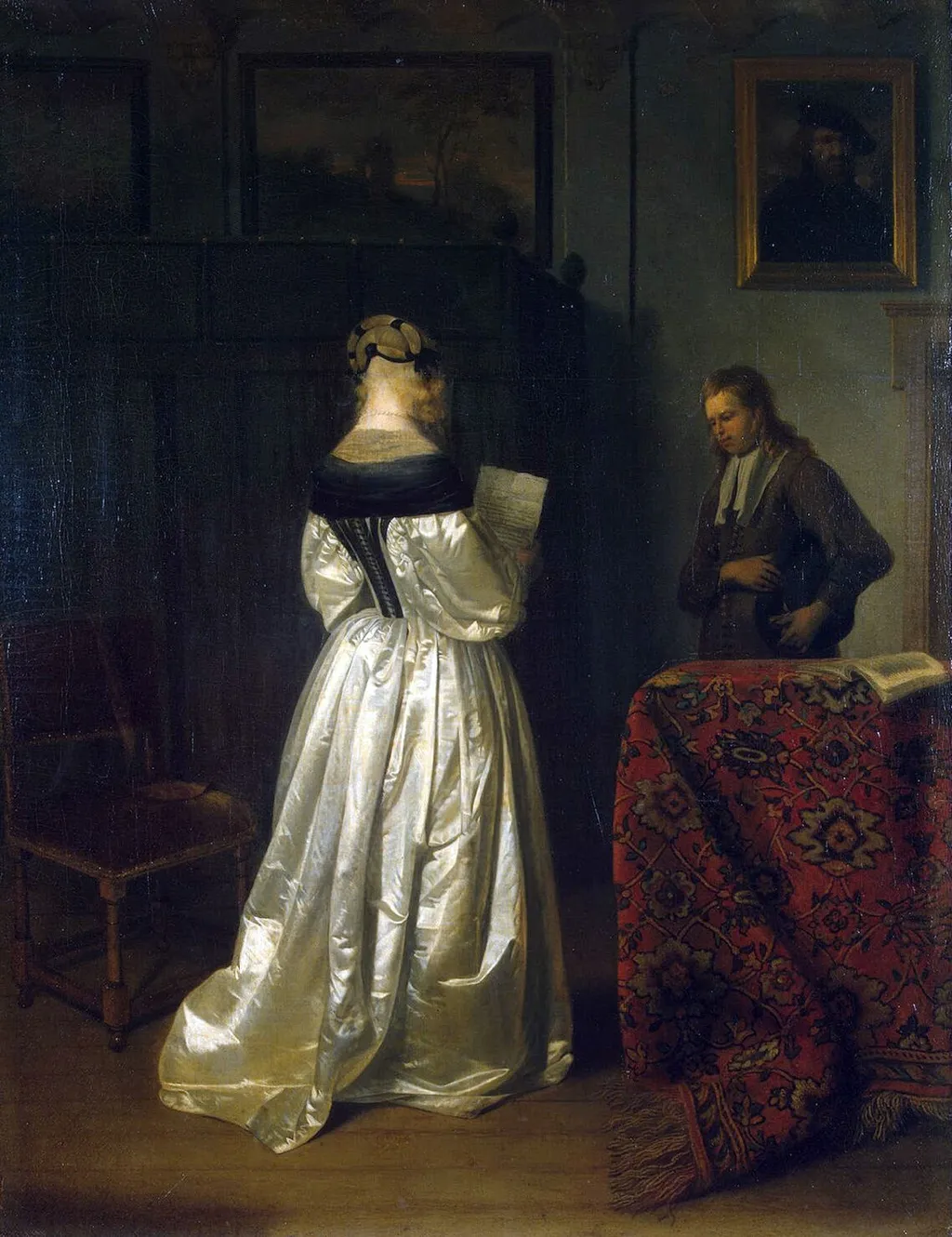
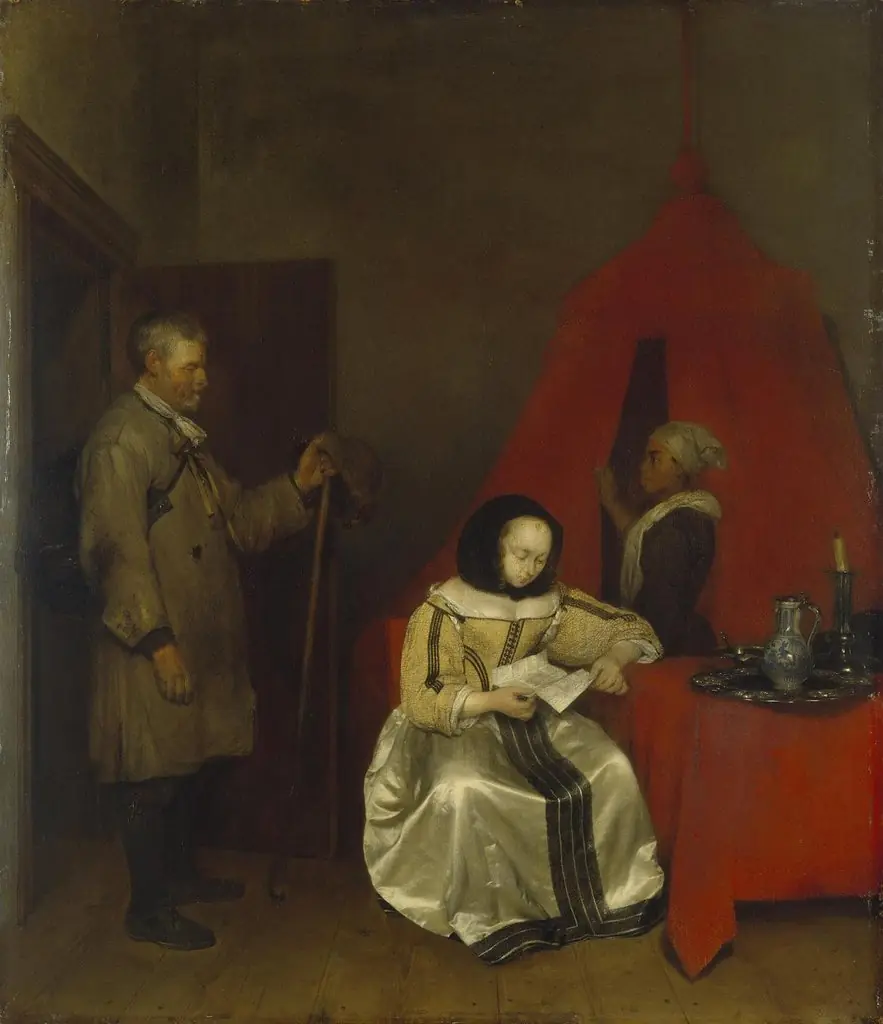
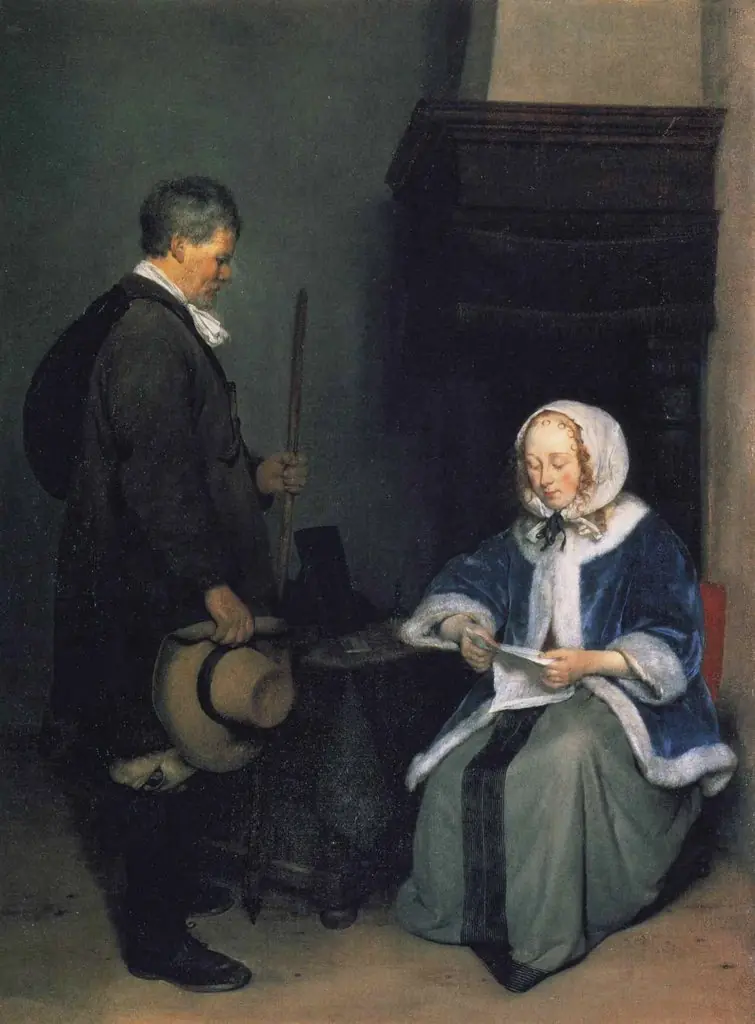
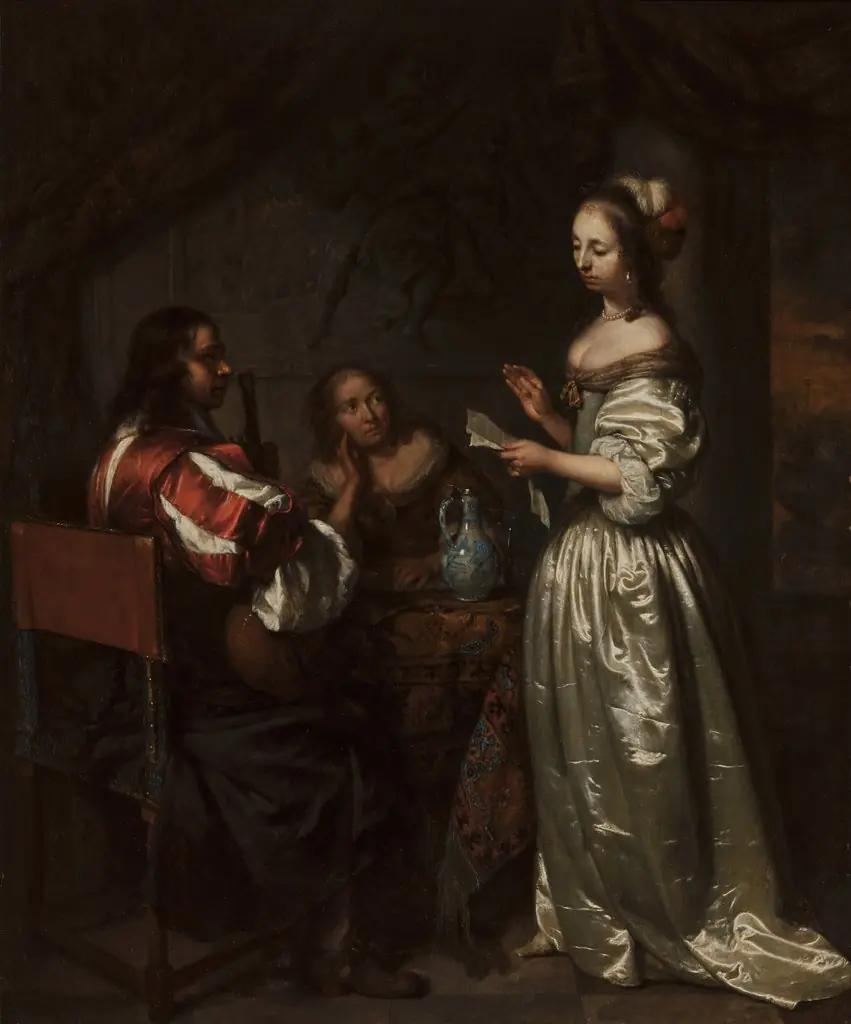
Messenger is an oil painting by the Dutch Golden Age artist Gerard ter Borch. It dates from 1675 and is held in the collection of the Hermitage Museum.
About this work
Overview
It reflects the artist’s focus on restrained domestic life during the Dutch Golden Age, capturing a moment of stillness between two figures.
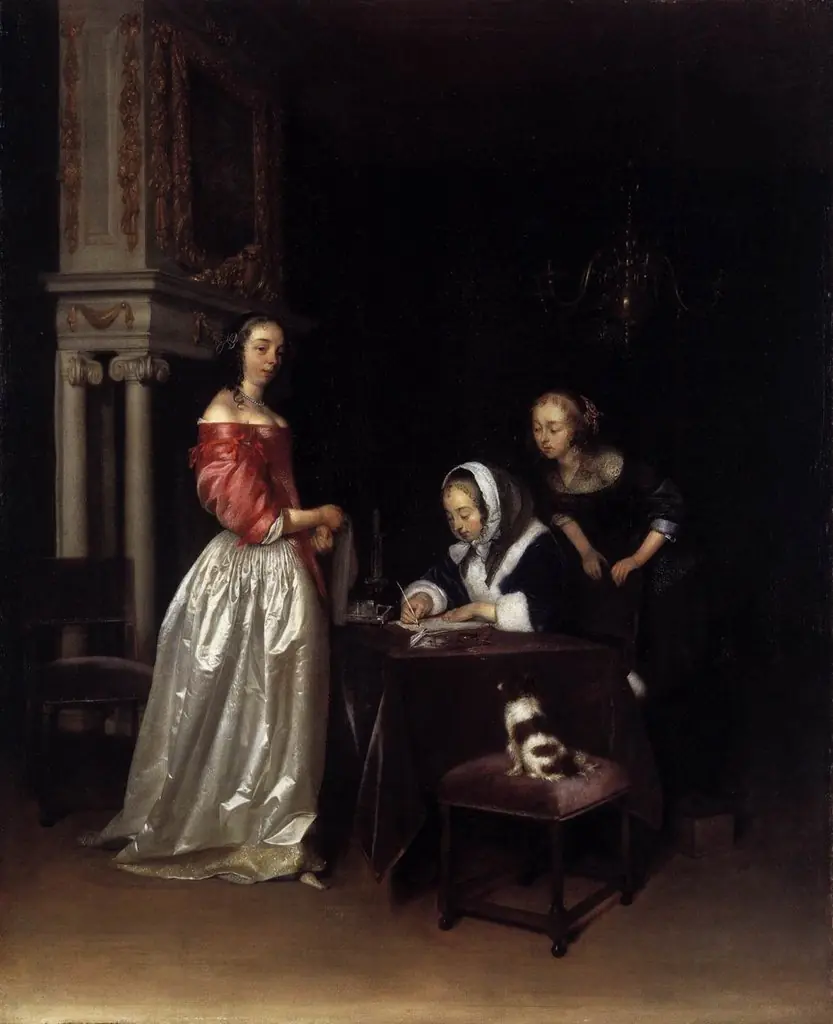
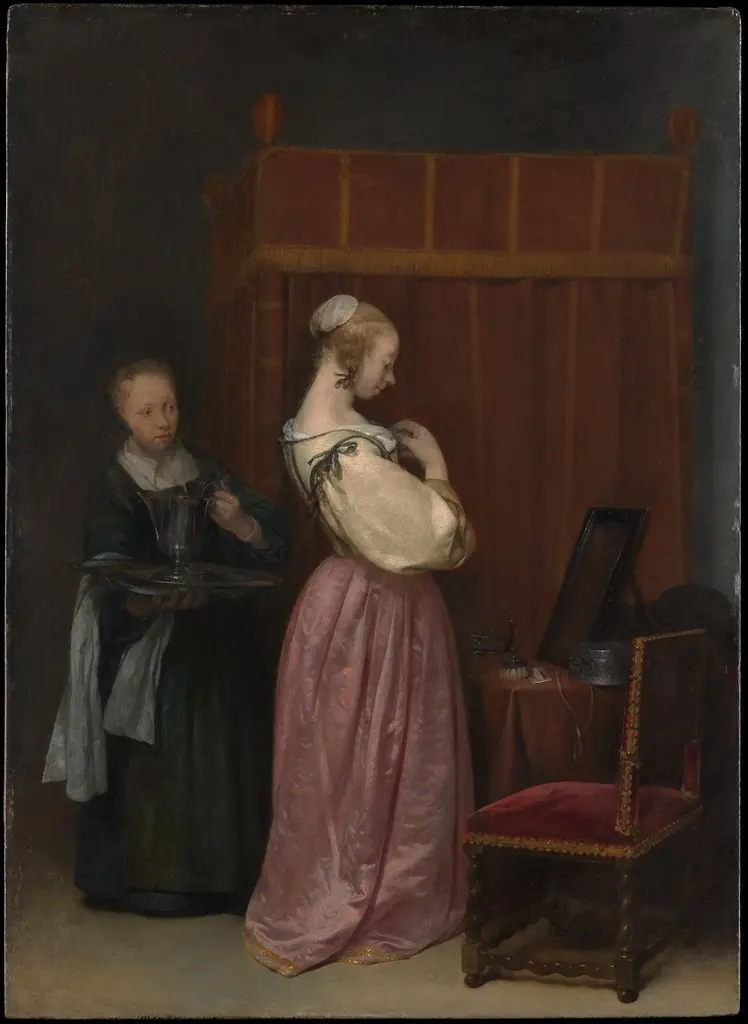
Painted in 1675 by Gerard ter Borch, *Messenger* is a quiet interior scene rendered in oil on panel. It reflects the artist’s focus on restrained domestic life during the Dutch Golden Age, capturing a moment of stillness between two figures. The work is part of a broader tradition of genre painting that emphasized subtle psychological nuance over dramatic narrative. It is currently held in the State Hermitage Museum in Saint Petersburg.
Subject & Meaning
A woman, turned away, holds a folded letter, her presence suggesting communication yet withholding its content. Beside her, a man sits absorbed in a book, his posture conveying contemplation rather than engagement. The unspoken tension between them—between action and inaction, message and silence—invites interpretation without resolution. The scene resists clear storytelling, instead offering a meditation on privacy and unvoiced emotion.
Technique & Style
Ter Borch employs chiaroscuro to model form with soft contrasts, drawing attention to the luminous silver dress against the dim room. The fabric’s sheen is rendered through delicate brushwork, while the dark walls and muted tones ground the composition. Light falls selectively, illuminating the letter and the man’s book, directing the viewer’s gaze without overt drama. The textures of cloth, paper, and wood are rendered with quiet precision.
History & Provenance
Created late in ter Borch’s career, *Messenger* reflects his mature style, refined through decades of observing intimate interiors. The painting entered the Hermitage collection in the 18th century, likely acquired during the expansion of Russian imperial holdings in European art. Its provenance before that remains undocumented, though its composition aligns with works collected by Dutch and later European patrons of genre painting.
Context
In mid-17th-century Holland, genre painting flourished as a reflection of bourgeois values—privacy, order, and introspection. Ter Borch’s work stood apart for its refined elegance and psychological subtlety, contrasting with the more narrative-driven scenes of contemporaries. His focus on quiet moments influenced artists like Vermeer, who similarly explored the emotional weight of everyday life within confined domestic spaces.
Legacy
*Messenger* exemplifies the Dutch Golden Age’s shift toward psychological depth in genre scenes. Ter Borch’s restrained palette and attention to tactile detail became a model for later artists interested in interiority. Though less celebrated than some peers, his influence persists in the quiet, contemplative tone of 17th-century Dutch painting, where meaning emerges from stillness rather than action.
Artist & collection
Artist
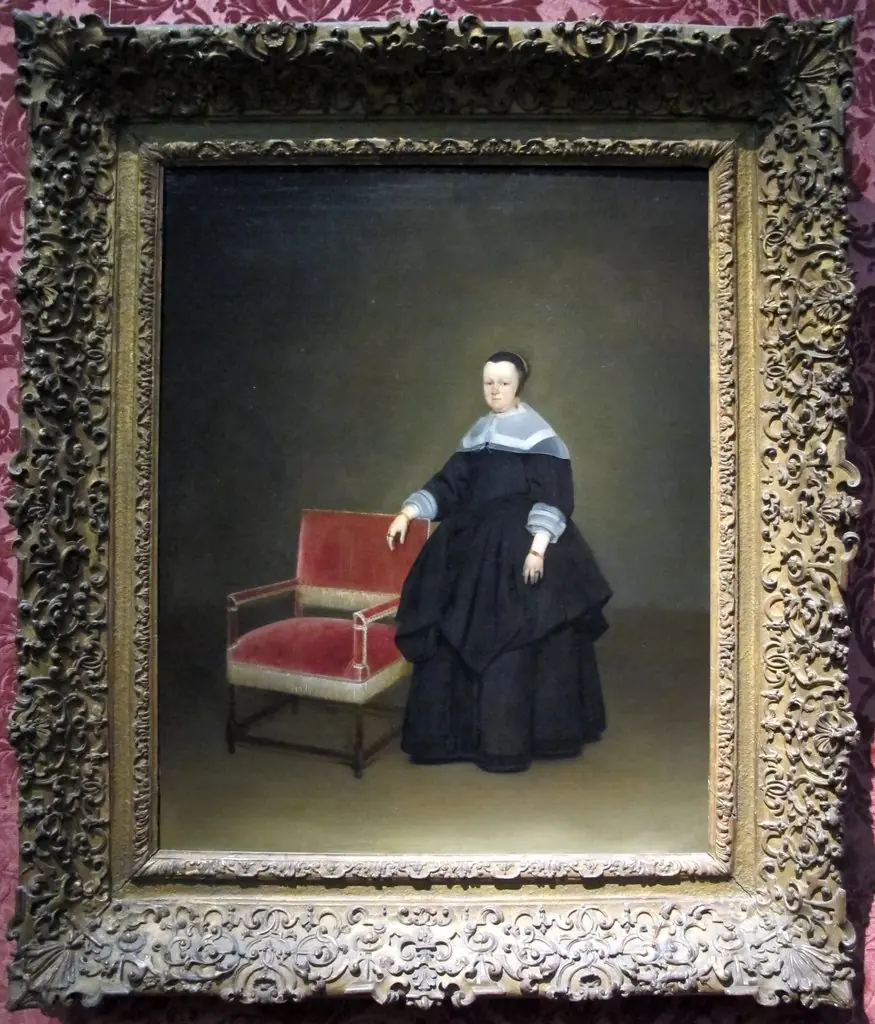
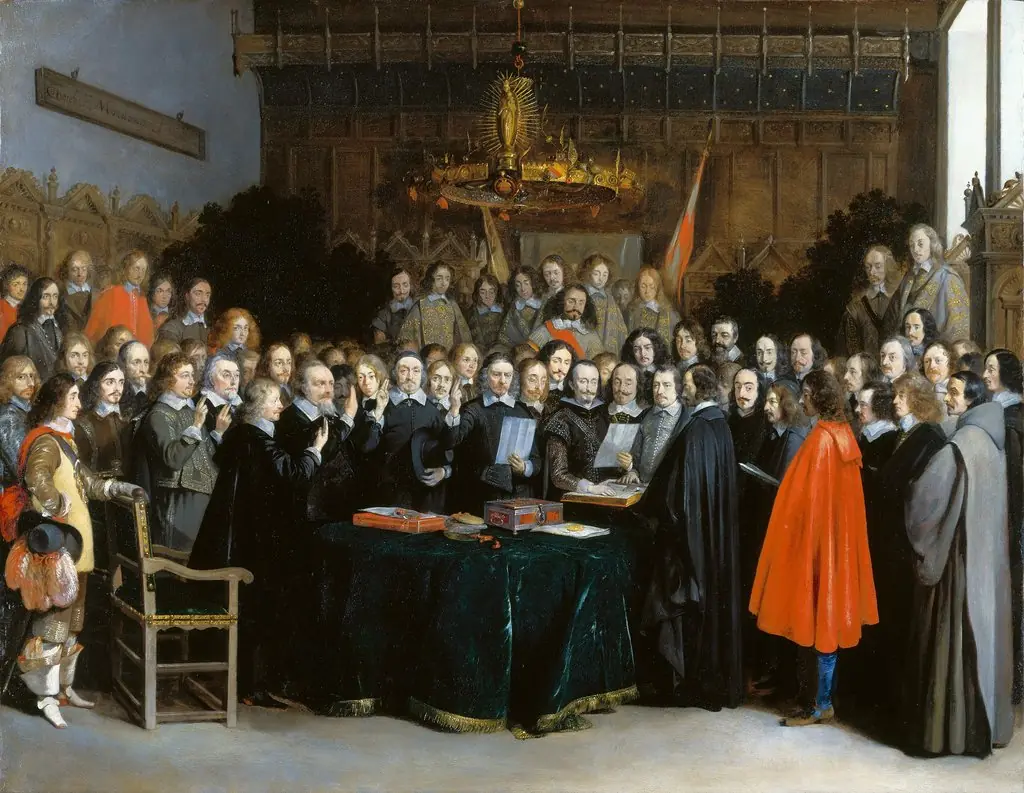
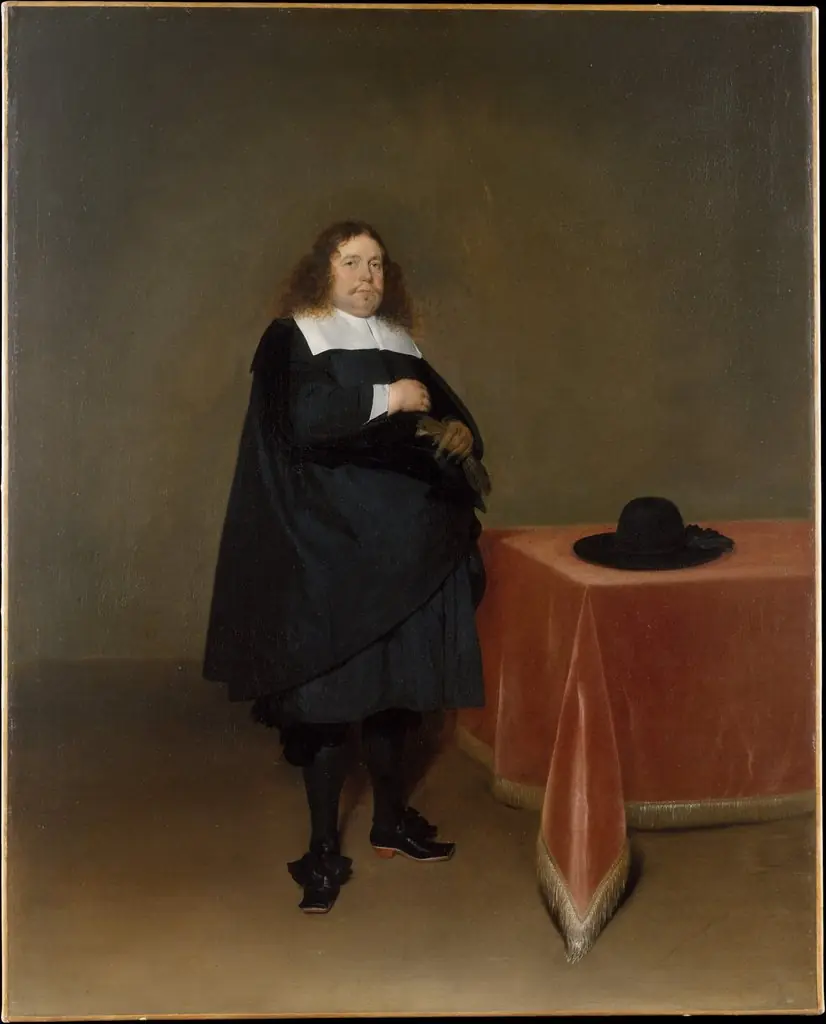
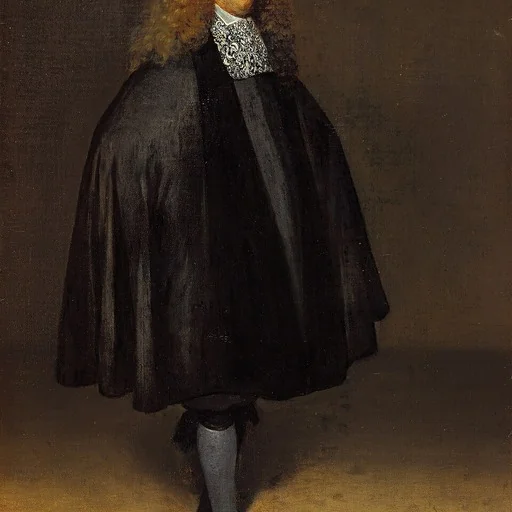
Gerard ter Borch (Dutch: ; December 1617 – 8 December 1681), also known as Gerard Terburg (Dutch: ), was a Dutch Golden Age painter mainly of genre subjects.