Artwork
Hindoo temple of Parbuttee or Parwuttee, at Poona
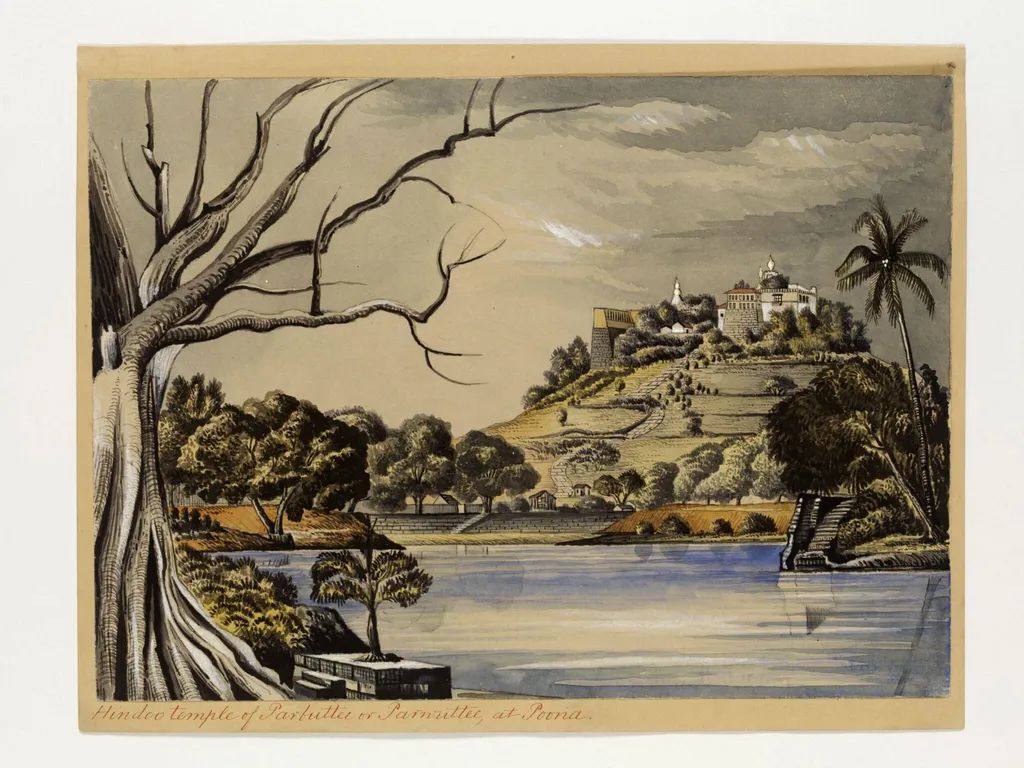
Hindoo temple of Parbuttee or Parwuttee, at Poona is a paint painting by the Romanticist artist Henry Francis Ainslie. It dates from 1849 and is held in the collection of the Victoria and Albert Museum.
About this work
It was made by Henry Francis Ainslie, who joined the British Army and traveled widely.
This painting shows a temple scene in Poona, India, from 1849–1850. It was made by Henry Francis Ainslie, who joined the British Army and traveled widely. You might not know Ainslie’s name, but he painted this while stationed in Poona.
The view focuses on the Parbati temple and its nearby tank. His work uses earth colors, so expect warm browns and soft grays.
If you like this style, check out the artist Ainslie, Henry Francis.
Overview
Henry Francis Ainslie, a British army officer and amateur artist, created this watercolor during his posting in Poona between 1849 and 1850. Stationed with the 83rd Regiment of Foot, he documented local architecture as a personal pursuit rather than for official duty. The painting captures the Parbati temple complex and its adjacent tank, reflecting his interest in topographical detail. Ainslie produced twenty-three watercolors in India, now held by the V&A, offering a quiet record of colonial-era Indian landscapes.
Subject & Meaning
The scene depicts the Parbati temple, a Hindu shrine dedicated to the goddess Parvati, situated near a large stepped tank used for ritual bathing and community gathering. Ainslie’s focus on the temple’s form and its relationship to the water body suggests an interest in architectural harmony and local religious practice. The composition avoids overt commentary, presenting the site as a quiet, enduring presence within the landscape, consistent with his observational approach.
Technique & Style
Ainslie employed earth-toned pigments—ochres, umbers, and soft grays—applied in watercolor with precise black ink outlines. This method simplified architectural details into clear, bold shapes, emphasizing structure over ornamentation. His training in military surveying informed his disciplined draftsmanship, yet the work lacks the rigidity of official surveys, instead conveying a personal, contemplative gaze. The restrained palette and clean lines reflect a preference for clarity over dramatic effect.
History & Provenance
Painted during Ainslie’s service in western India, the work entered the Victoria and Albert Museum’s collection among a group of twenty-three watercolors he produced in Poona. He retired from the army in 1855 and lived in London until his death in 1879. The paintings were never published or exhibited publicly during his lifetime, remaining private records of his travels. Their preservation in the V&A underscores their value as documentary artifacts of mid-19th-century British military life in India.
Context
Ainslie painted during a period when British officers frequently recorded Indian sites, often as part of broader colonial documentation efforts. Unlike official surveyors, he worked independently, without institutional mandate. His images contribute to a growing body of amateur topographical art that captured India’s monuments before widespread photographic documentation. These works reflect both curiosity and detachment, offering glimpses of sacred spaces through a colonial lens.
Legacy
Though Ainslie was not a professional artist, his watercolors remain significant as firsthand visual records of 19th-century Indian architecture. His restrained style and focus on structural clarity distinguish his work from more romanticized depictions of the subcontinent. The V&A’s collection preserves his quiet, methodical approach, providing scholars with material for studying how British officers perceived and recorded Indian cultural landscapes during the early colonial era.
Artist & collection

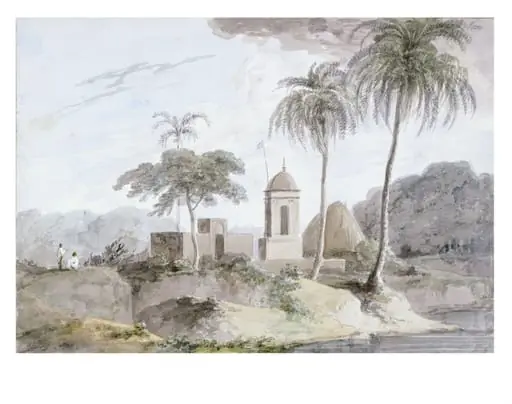 View near Bandell, India
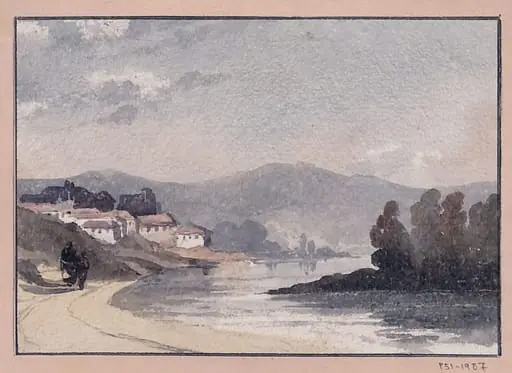 Landscape with figures and houses
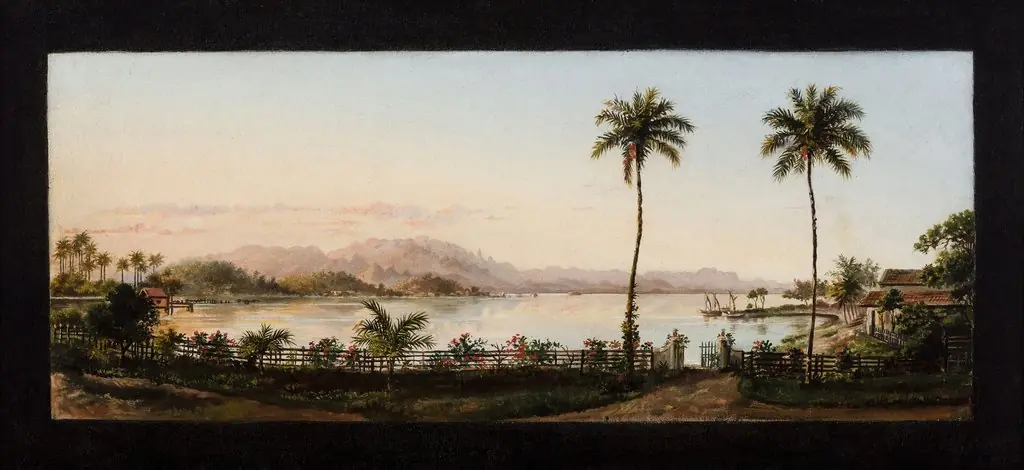 Enseada de Paquetá com Serra dos Órgãos ao fundo (atribuído)
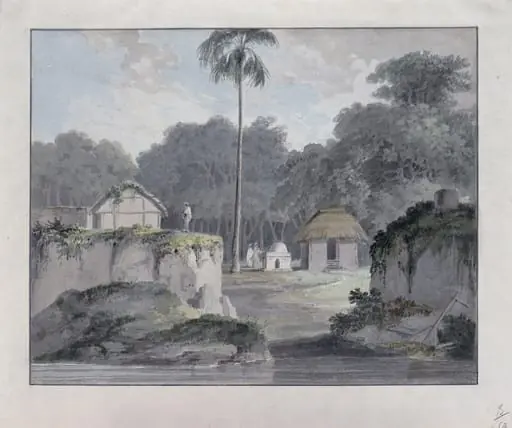 View near Nia-sirai
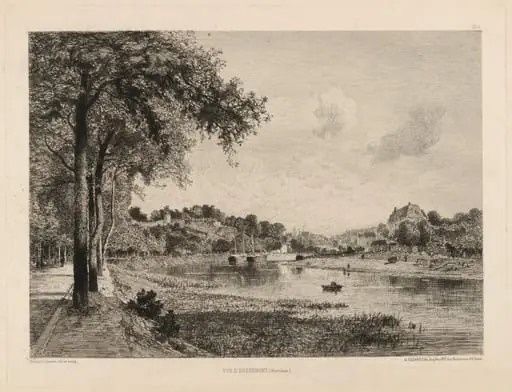 Vue d’Hennebont (Morbihan)
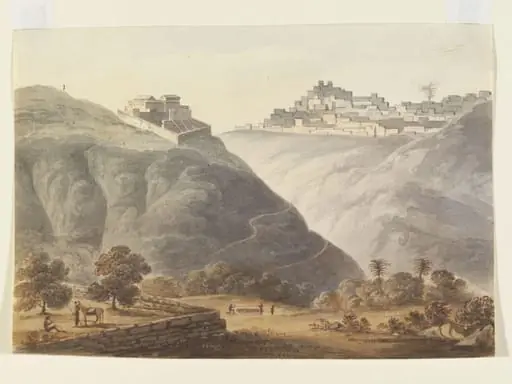 Bethlehem
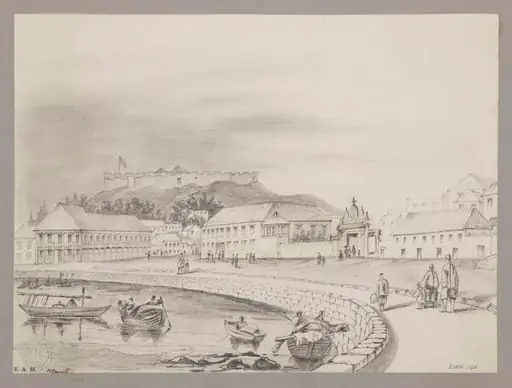 Houses of Mr. Whiteman ("the forty-pillared house") and Captain Elliott, and Monte Fort, Macao
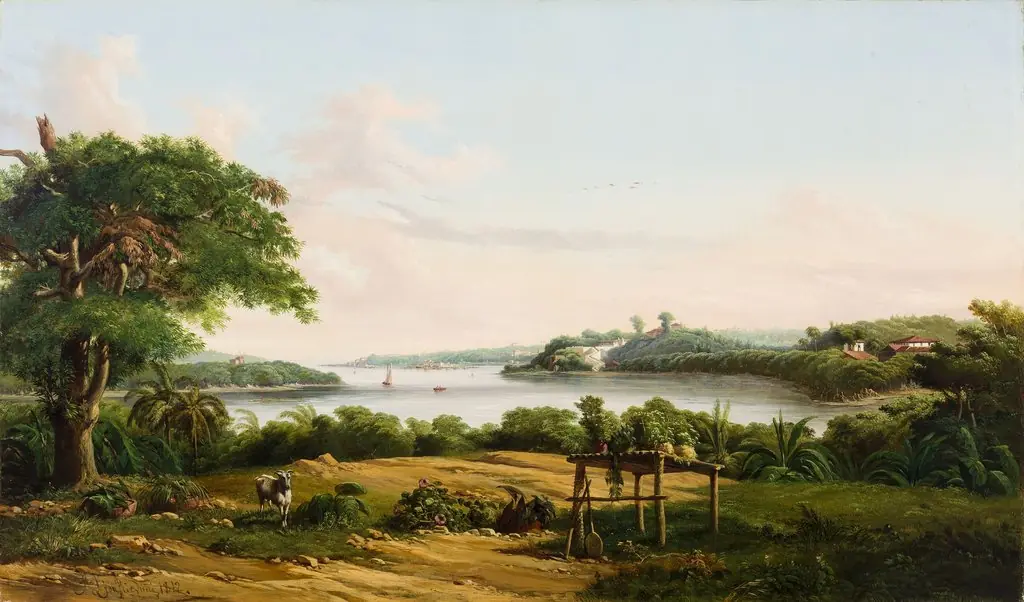 The City Outskirts
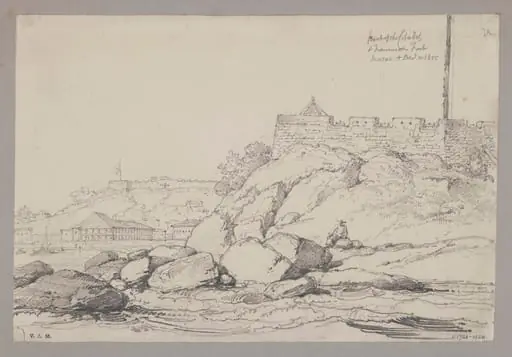 Part of the Citadel and Franciscan Fort, Macao, with part of Mr. Whiteman's house ("the forty-pillared house")
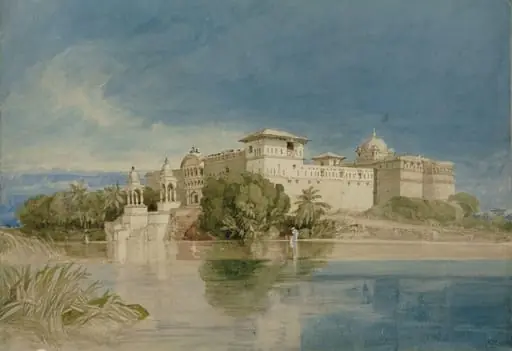 Palace at Perawa, Malwa, Bengal