Artwork
View near Nia-sirai
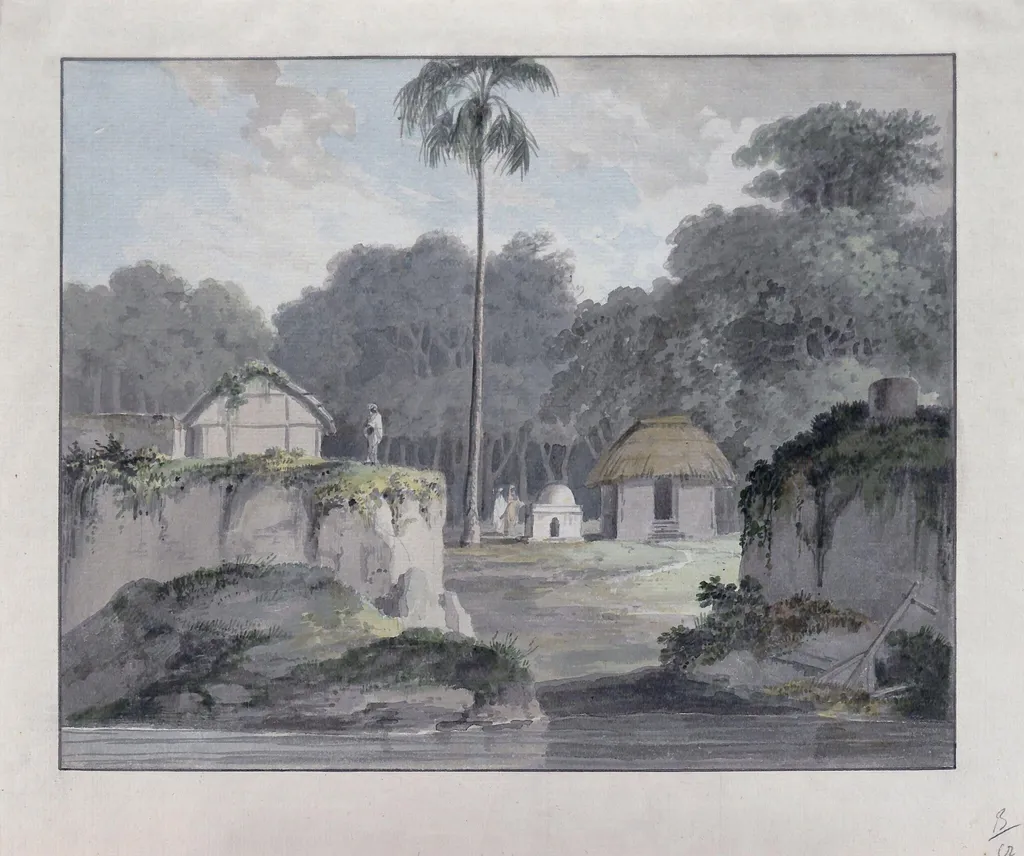
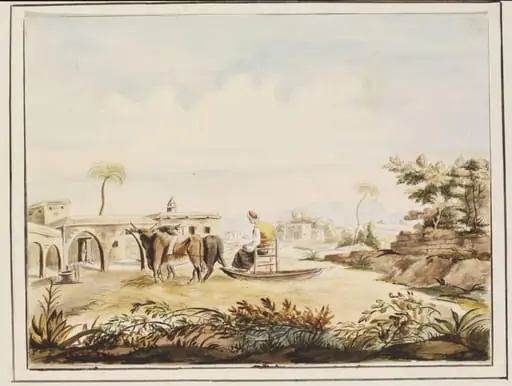
View near Nia-sirai is a watercolor work on paper by the Baroque artist Thomas RA Daniell. It dates from 1749 and is held in the collection of the Victoria and Albert Museum. This watercolour by Thomas Daniell captures a quiet stretch of landscape near Nia-sirai, a location in southern India.
About this work
Overview
This watercolour by Thomas Daniell captures a quiet stretch of landscape near Nia-sirai, a location in southern India.
This watercolour by Thomas Daniell captures a quiet stretch of landscape near Nia-sirai, a location in southern India. The work is part of a series documenting the subcontinent’s scenery during the late 18th century. An inscription on the reverse identifies it as 'No.56. Near Nia-sirai,' situating it within Daniell’s broader observational project. The piece reflects his methodical approach to recording topography through direct observation.
Subject & Meaning
The composition centers on a solitary large tree, flanked by sparse architecture and distant human figures. A body of water reflects the soft sky, reinforcing stillness. The scene lacks dramatic action, instead emphasizing quietude and the harmony between natural forms and modest human presence. Daniell’s focus on unembellished terrain suggests an interest in topographical accuracy over romanticized idealization.
Technique & Style
Daniell employed transparent watercolour washes to build subtle tonal gradations, avoiding bold contrasts. Muted earth tones and pale blues dominate, enhancing the sense of atmospheric calm. Fine brushwork defines foliage and rock textures in the foreground, while distant elements are rendered with lighter, looser strokes to suggest depth. The technique reflects British watercolour traditions adapted to Indian light and topography.
History & Provenance
Created during Daniell’s travels across India with his nephew William between 1786 and 1794, this work originated as a field study. It was later incorporated into their published series of aquatints, though this original watercolour remained in private hands. The inscription on the reverse confirms its role as a numbered component of a systematic visual record, likely used as a reference for later prints.
Context
Daniell’s watercolours emerged amid British colonial expansion, serving both documentary and aesthetic purposes. While European audiences sought exotic imagery, Daniell’s approach was restrained, prioritizing fidelity to place over embellishment. His work contributed to early Western visual records of South Asian landscapes, distinct from the theatricality of contemporaneous Orientalist painting.
Legacy
Though not widely exhibited today, Daniell’s watercolours remain significant for their precision and quiet observation. They influenced later topographical artists and provided foundational visual material for publications on Indian scenery. The work stands as a quiet counterpoint to more dramatic colonial imagery, valued for its understated documentation of place rather than spectacle.
Artist & collection
Artist
Thomas Daniell turned his brush toward India’s landscapes and buildings, painting watercolors that capture the country’s skies, villages, and hills in the late 1700s and early 1800s.

 View in Krakatoa Island, near the Straits of Sunda
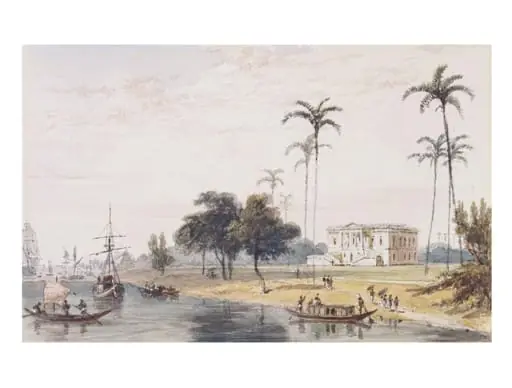 In the Garden House Reach, Calcutta
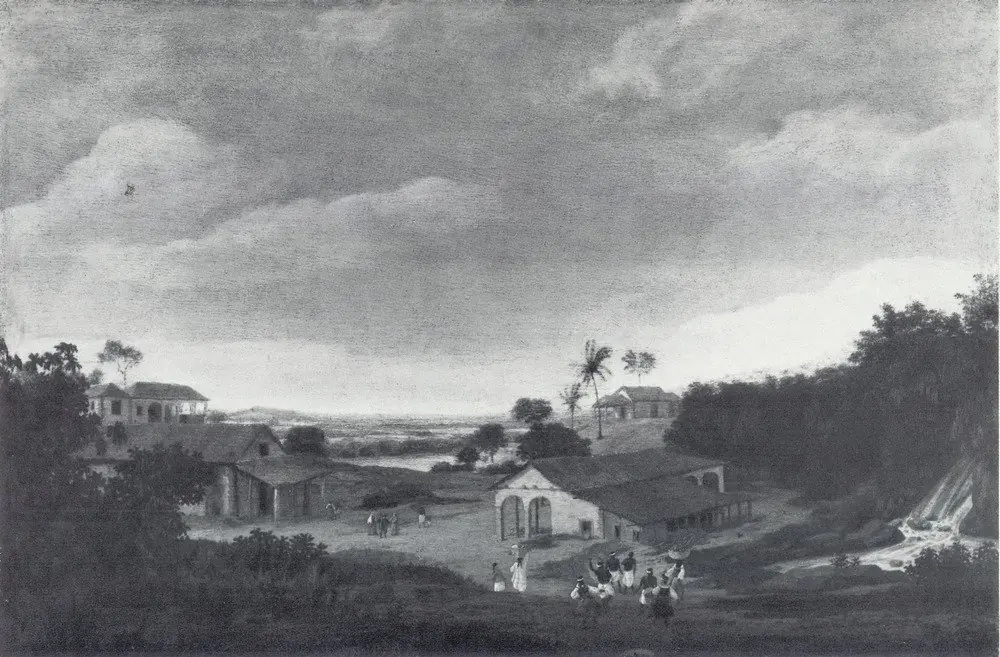 Sugar Mill (Sugar Plantation)
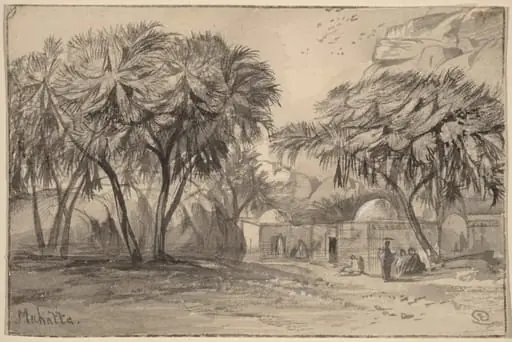 Mahatta
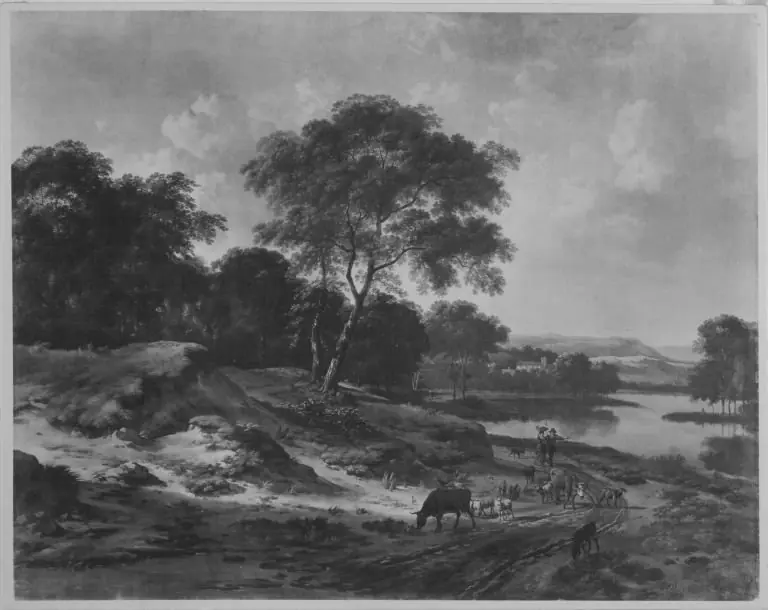 Landschaft mit Hirten
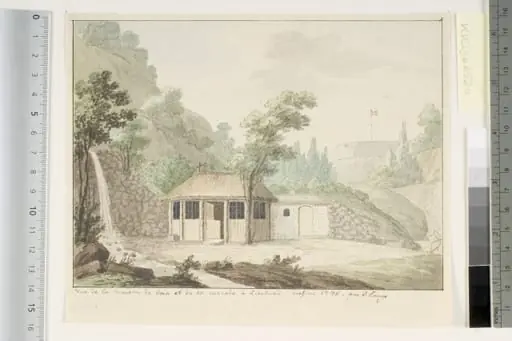 Liselund
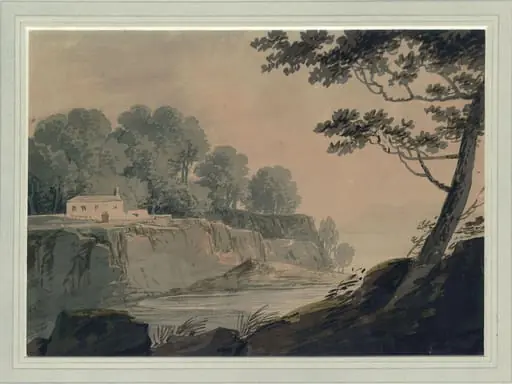 River scene with cottage and trees
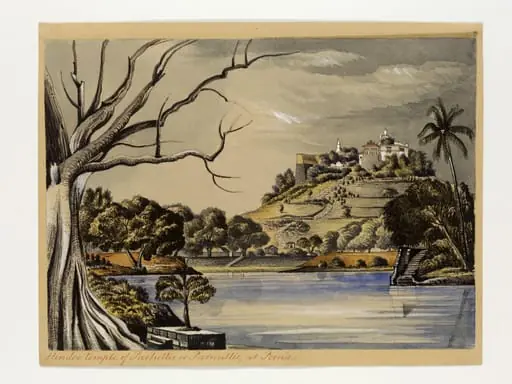 Hindoo temple of Parbuttee or Parwuttee, at Poona
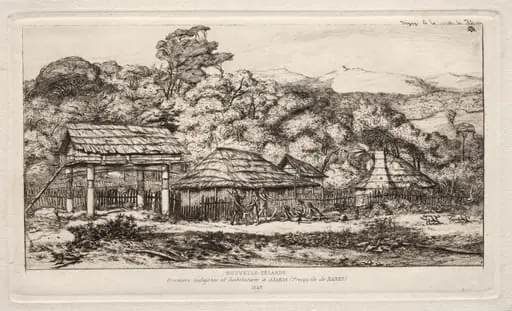 Native Barns and Huts at Akaroa, Banks' Peninsula, 1845
 The manner of treading out the Corn
 Tomb of an unidentified Muslim saint at Anupshahr