Artwork
Palace at Perawa, Malwa, Bengal
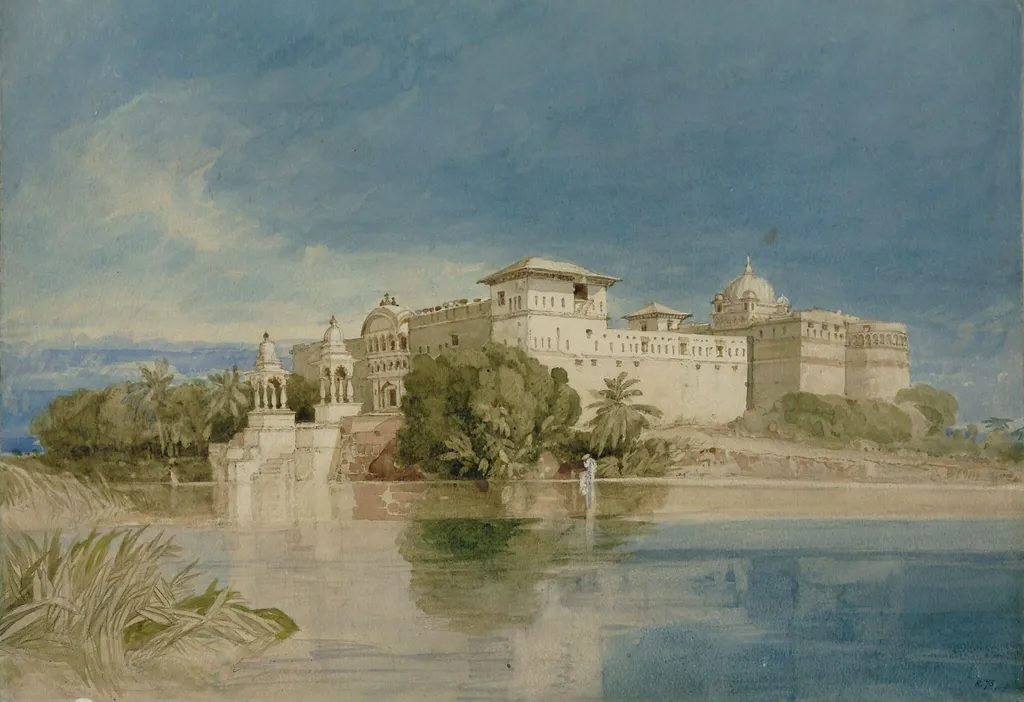
Palace at Perawa, Malwa, Bengal is a watercolor work on paper by the Romanticist artist John Sell Cotman. It dates from 1800 and is held in the collection of the Victoria and Albert Museum.
About this work
Overview
Painted in 1800 by John Sell Cotman, this watercolor captures a palace complex in Malwa, Bengal, positioned along a still body of water.
Painted in 1800 by John Sell Cotman, this watercolor captures a palace complex in Malwa, Bengal, positioned along a still body of water. The work is executed in delicate washes, emphasizing atmosphere over architectural precision. Cotman’s restrained palette and fluid technique convey a sense of quiet contemplation, characteristic of his approach to topographical subjects during his travels in India.
Subject & Meaning
The palace, likely a regional seat of power, is depicted in serene isolation, its towers and domes reflected clearly in the water. The absence of human figures and the stillness of the scene suggest a meditation on impermanence and the quiet dignity of architectural heritage. The setting evokes a sense of place rooted in local geography rather than imperial grandeur.
Technique & Style
Cotman employed loose, transparent watercolor washes to suggest form without rigid definition. Light browns and pale whites dominate the structure, while the sky and water are rendered with soft gradients. The brushwork remains open and suggestive, avoiding heavy detail, which lends the scene an ethereal, sketch-like quality consistent with his Romantic-era sensibilities.
History & Provenance
Created during Cotman’s brief but significant time in India, the work belongs to a series of topographical studies made between 1799 and 1801. It was likely produced for personal documentation or private circulation, not public exhibition. The painting’s survival reflects its value as a record of architectural forms in a region undergoing colonial transformation.
Context
Cotman’s depiction aligns with British artistic interest in Indian architecture during the early 19th century, though his approach diverges from overtly exoticizing styles. Rather than emphasizing ornament or spectacle, he focuses on harmony between structure and landscape, reflecting a more introspective, even melancholic, engagement with the subcontinent’s built environment.
Legacy
This watercolor contributes to a lesser-known body of British watercolors documenting Indian architecture outside official colonial surveys. Cotman’s subtle handling influenced later artists interested in atmospheric landscape, though his Indian works remained largely outside mainstream art historical narratives until late 20th-century reassessments.
Artist & collection
Artist
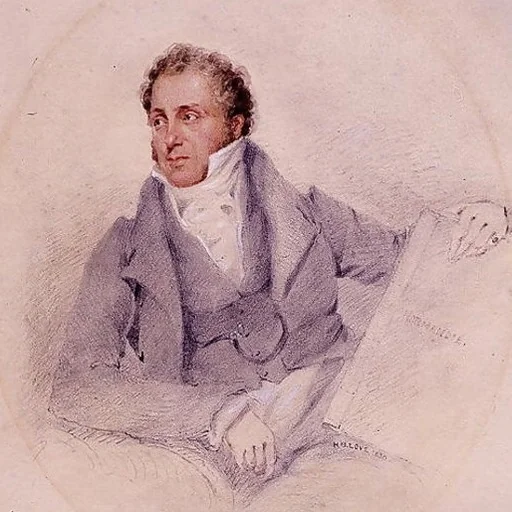
John Sell Cotman (16 May 1782 – 24 July 1842) was an English marine and landscape painter, etcher, illustrator, and a leading member of the Norwich School of painters.

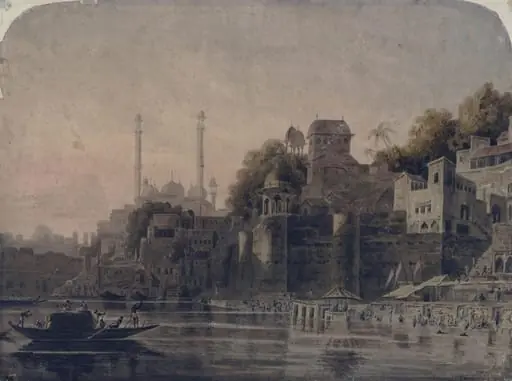 Benares on the Ganges
 Palmyra (from Kasr el Ain)
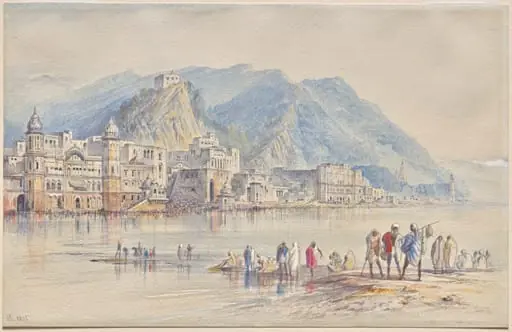 Hardwar, India
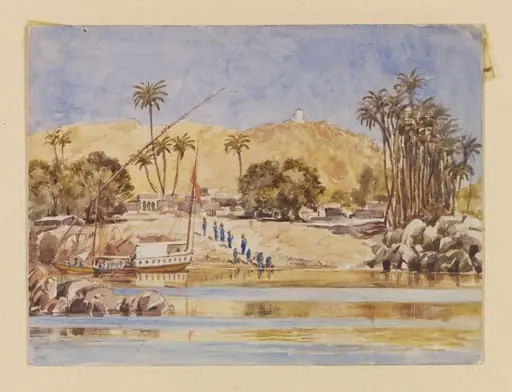 View on the Nile, opposite Aswan
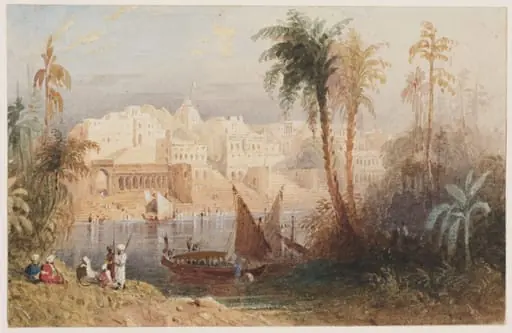 A view of an Indian city beside a river
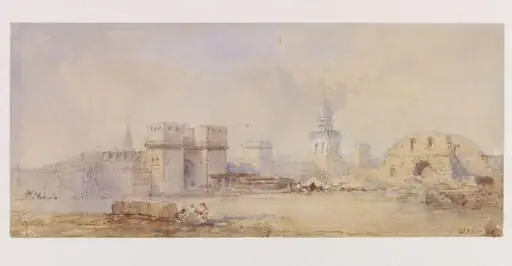 Bab al-Nasr and walls of Cairo, with part of the Mosque of Khalif al-Hakim
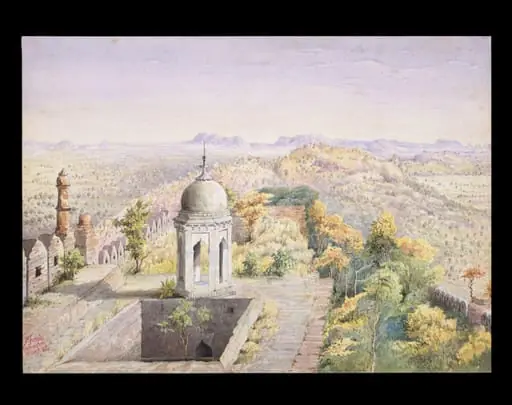 Landscape in Ambagarh, Bhandara (Central Provinces), India
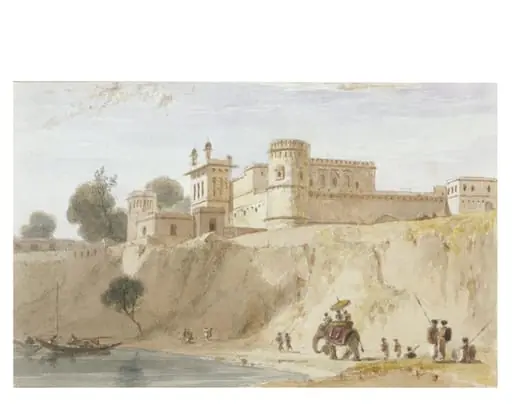 Anopshur
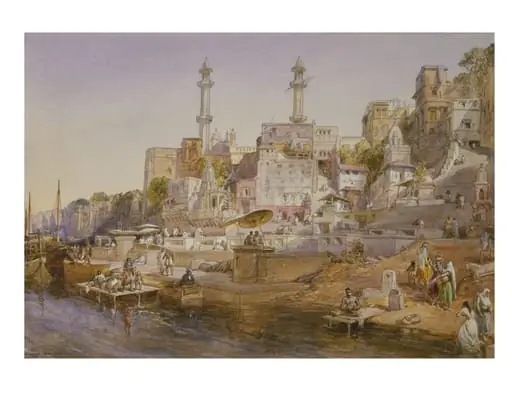 The Mosque of Aurangzeb and Panchganga Ghat from the Ganges, Benares.
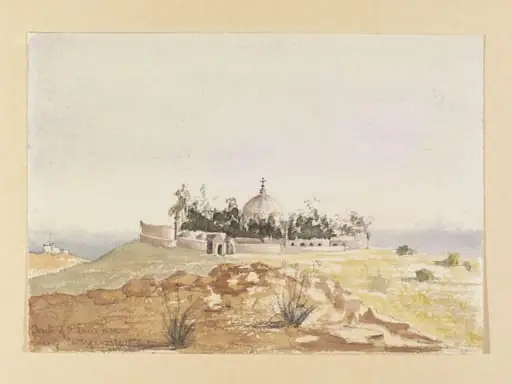 Tomb of St. Louis on the ruins of Carthage
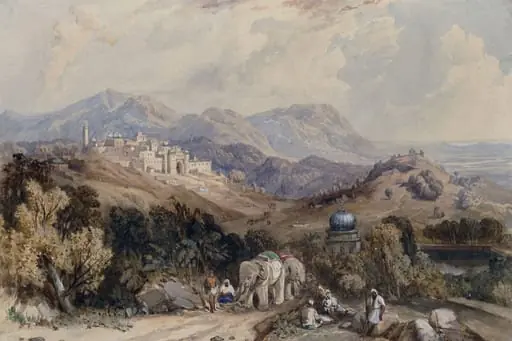 Amber, Rajpootana
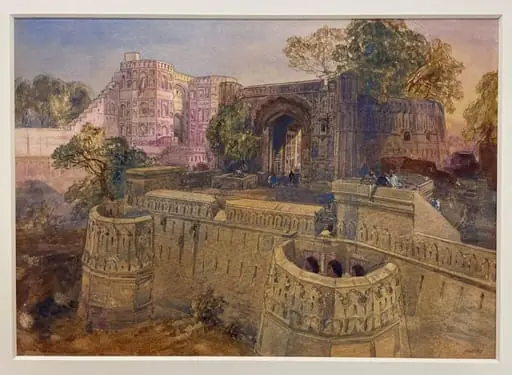 Taxali Darwaza, Lahore