Artwork
Exterior of the traveller's rest house, formerly the East India Company's Factory, Tatta
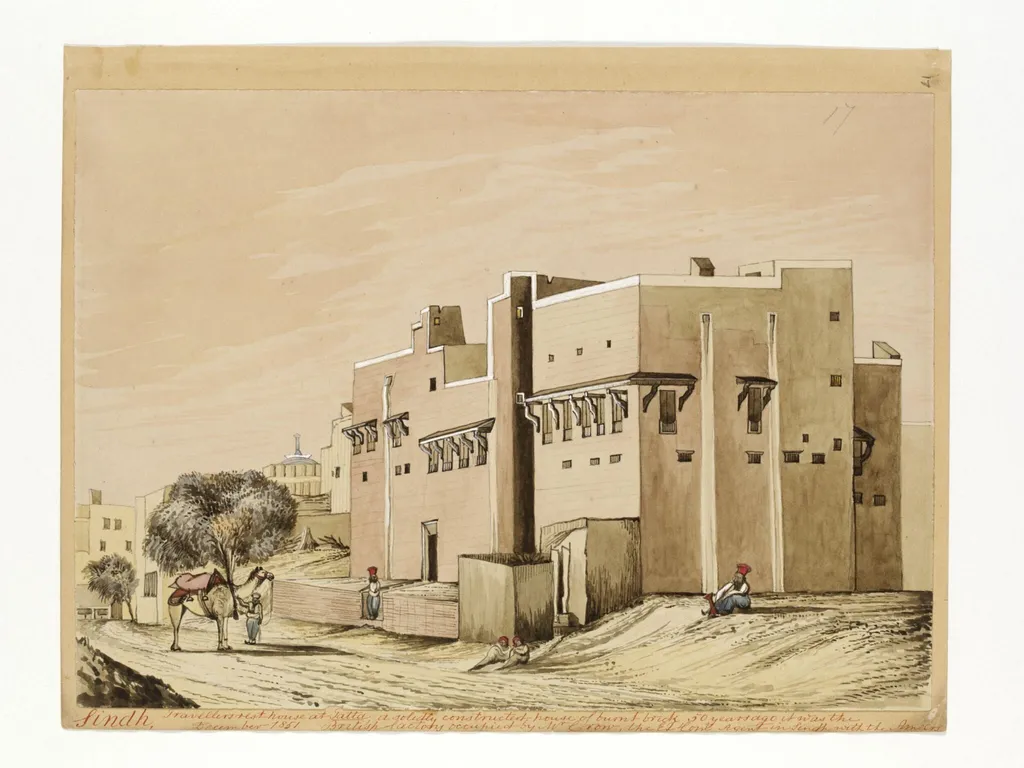
Exterior of the traveller's rest house, formerly the East India Company's Factory, Tatta is a paint painting by the Impressionist artist Henry Francis Ainslie. It dates from 1851 and is held in the collection of the Victoria and Albert Museum. This painting captures the exterior of a former East India Company factory in Tatta, repurposed as a rest house for travelers.
About this work
The colors are muted, mostly earthy browns and grays, with a few patches of green from the trees.
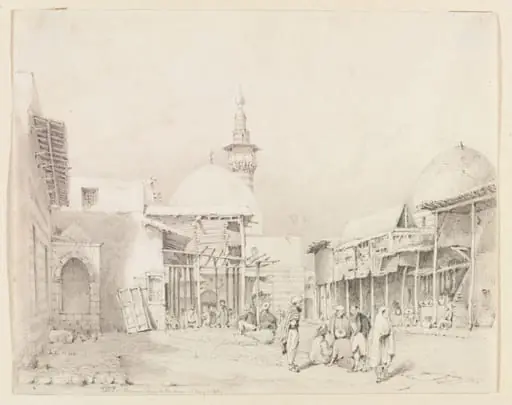
This painting shows a quiet street with old, flat-roofed buildings. A camel stands near a tree on the left, while two people in robes walk or sit by the dusty road. The buildings have simple windows and some have small balconies with hanging cloths. The colors are muted, mostly earthy browns and grays, with a few patches of green from the trees.
The text at the bottom hints this is a real place from 1851, likely in what’s now Pakistan. The artist focused on everyday life and simple architecture, not grand scenes.
Check out the Victoria and Albert Museum to see more works like this.
Overview
This painting captures the exterior of a former East India Company factory in Tatta, repurposed as a rest house for travelers. Rendered in muted earth tones, the scene emphasizes quiet domesticity over grandeur. Simple flat-roofed structures line the background, while a lone tree and a camel anchor the foreground. The composition reflects a documentary impulse, recording an ordinary architectural site with minimal embellishment.
Subject & Meaning
The scene portrays everyday life along a dusty road in mid-19th century Sindh. A seated figure and two pedestrians in robes suggest the building’s function as a waystation. The camel, a common transport animal, reinforces the region’s trade networks. The absence of dramatic action or symbolic elements points to an interest in ordinary, unidealized reality rather than imperial spectacle.
Technique & Style
The artist employs a restrained palette of browns, grays, and muted greens, aligning with the arid landscape. Forms are rendered with soft outlines and subtle tonal shifts, avoiding sharp detail. Windows and balconies with hanging cloths are indicated with minimal strokes, suggesting observation over idealization. The flat perspective and lack of chiaroscuro reflect a topographical approach common in colonial-era records.
History & Provenance
Painted in 1851, the work documents a building once used by the East India Company in Tatta, now in modern-day Pakistan. Its inscription confirms the location and date, indicating it was made as a record rather than a commissioned portrait. The painting likely originated from a British artist or surveyor working in the region during the Company’s administrative presence.
Context
During the 1840s–1850s, British officials and artists increasingly documented South Asian architecture and daily life as part of colonial record-keeping. This painting fits within a broader trend of topographical art that prioritized accuracy over aesthetic flourish. Tatta, a historic river port, was a minor administrative node, making such scenes typical of the periphery rather than the imperial center.
Legacy
The painting survives as a quiet testament to the material culture of colonial-era Sindh. It contributes to a visual archive of vernacular architecture and social routines often overlooked in grand historical narratives. Held in the Victoria and Albert Museum’s collection, it remains a reference for scholars studying the intersection of observation, empire, and everyday space.
Artist & collection

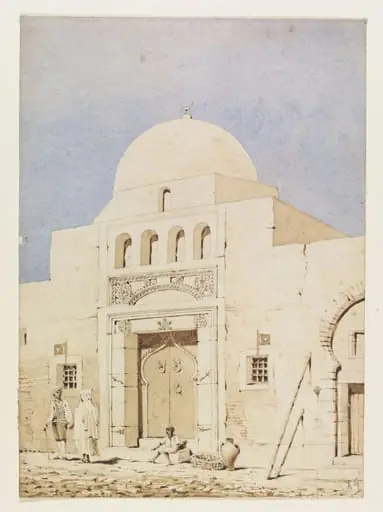 A Koubba, Soussa
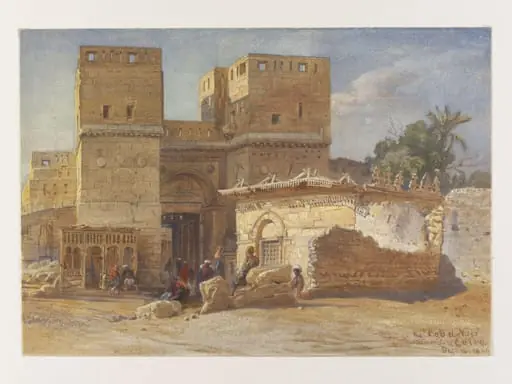 The Bab el Nasr. Cairo
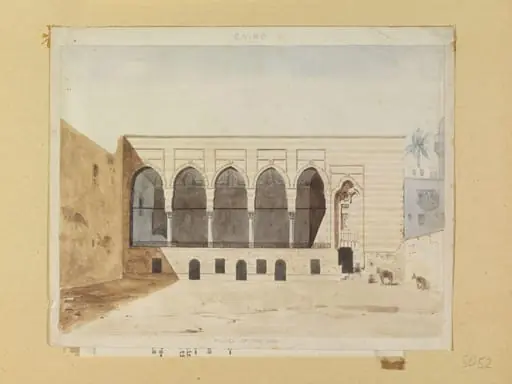 Cairo: Palace of the Cadi
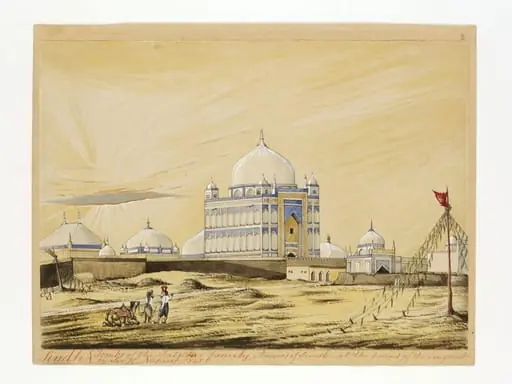
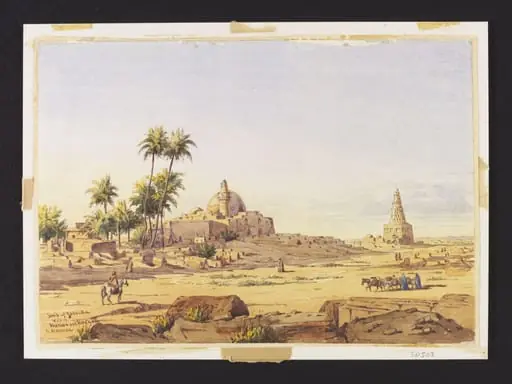 Tomb of Zobeida wife of Haroon ool Rashid in distance
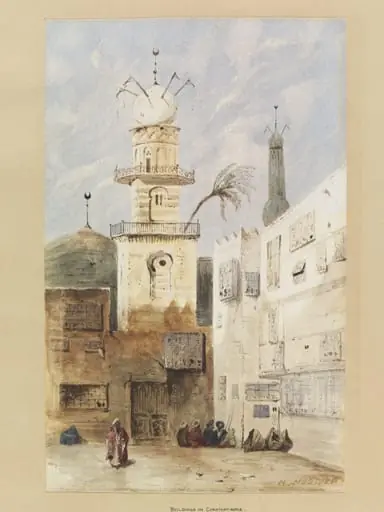 Mosque, possibly in North Africa
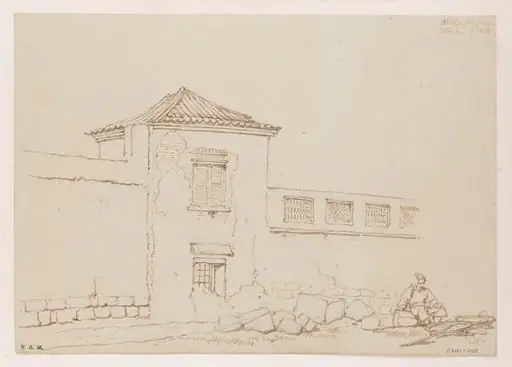 A building in Macau
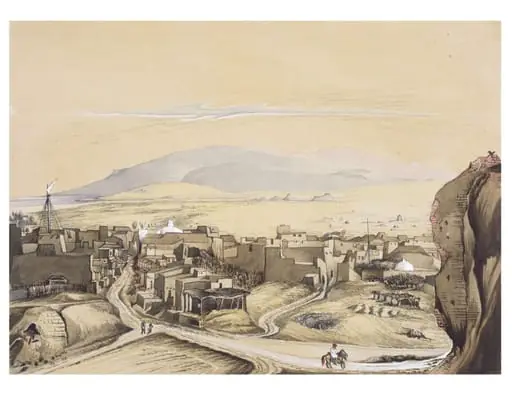 Untitled
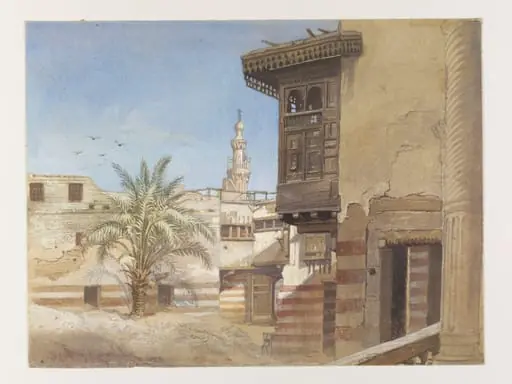 View from the Loggia of the Summer Reception Room (Makad) in the House of the Memluk Raduan Bey, Cairo
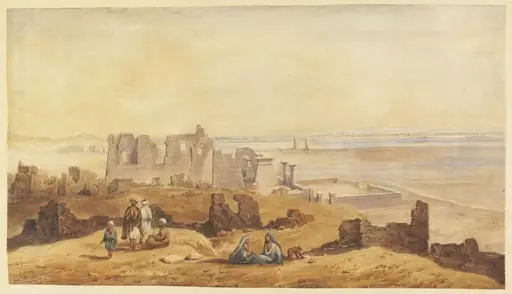 Luxor: the West Bank, with the Temple of Ramesses III at Madinat Habu; looking east towards the Nile
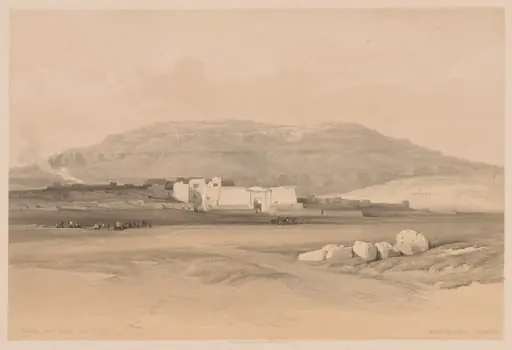 Egypt and Nubia: Volume II - No. 20, Medinet Abou, Thebes
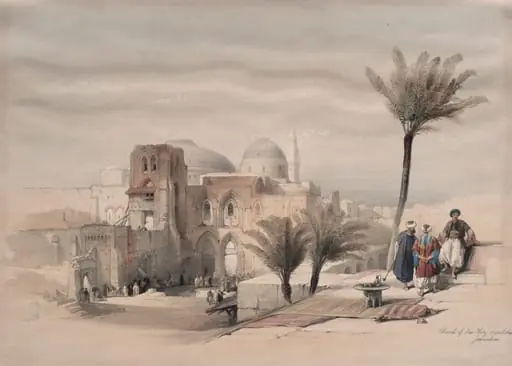 Church of the Holy Sepulchre, Jerusalem
 Damas. dans le Madan