Artwork
Landscape from the Vincity of Czarnokozińce
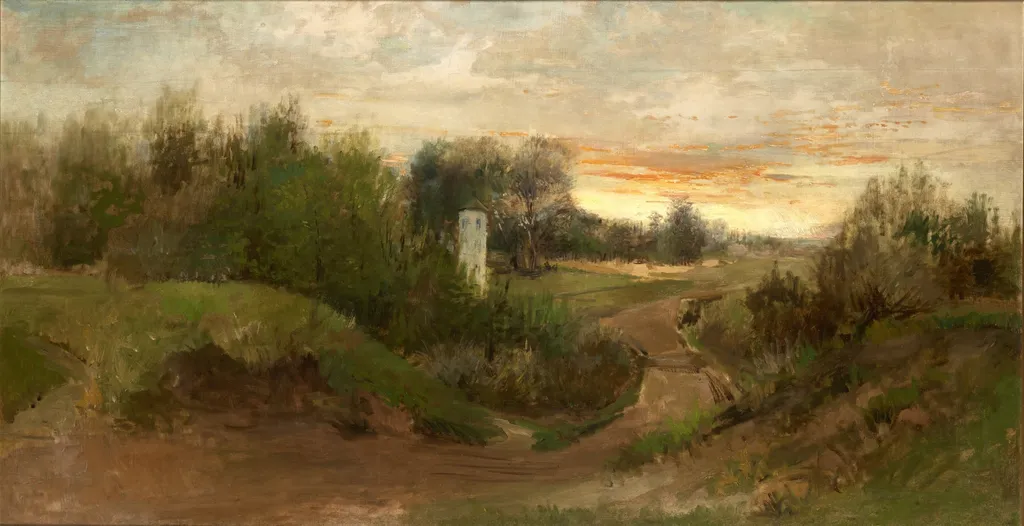
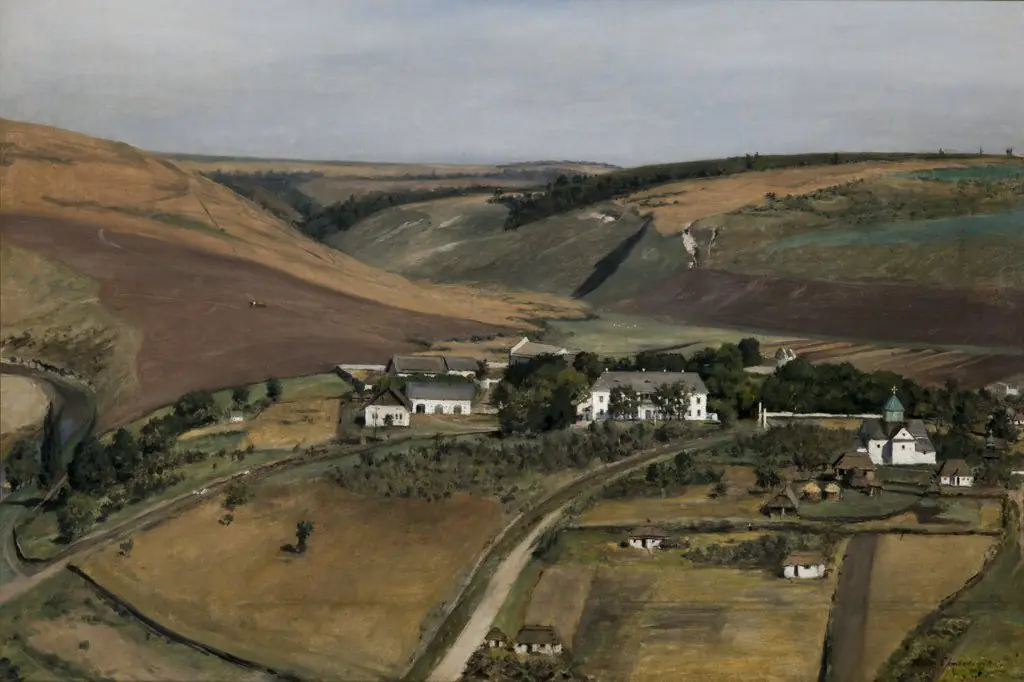
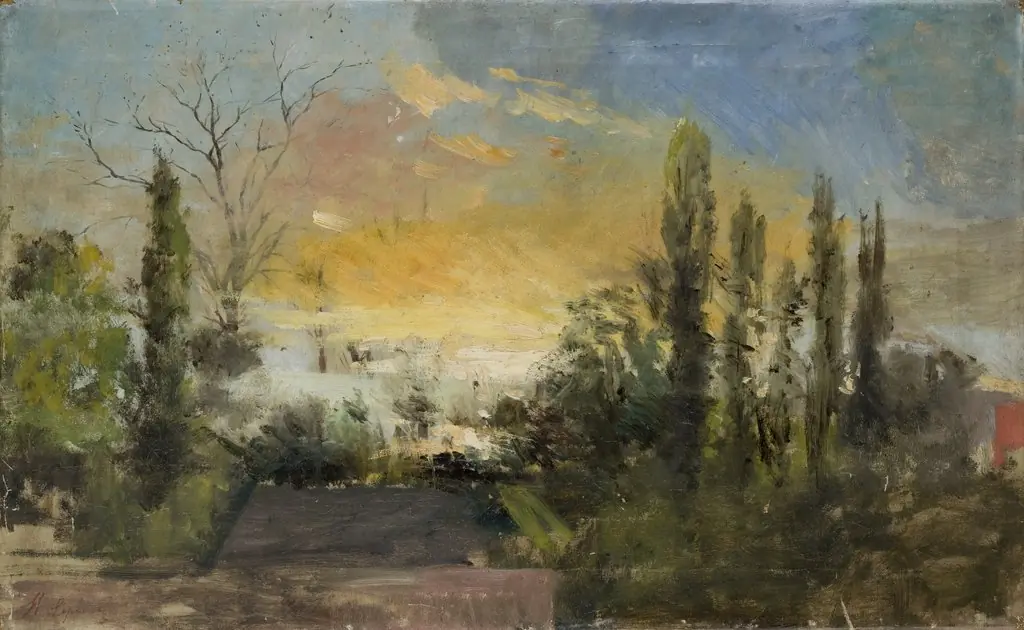
Landscape from the Vincity of Czarnokozińce is an oil painting by Albert Chmielowski. It is held in the collection of the National Museum in Kraków.
About this work
Overview
It captures a modest stretch of countryside with a winding path, scattered vegetation, and a distant building under a soft, overcast sky.
Landscape from the Vincity of Czarnokozińce is an oil painting by Albert Chmielowski, depicting a quiet rural scene in Poland. The work is part of the collection at the National Museum in Kraków. It captures a modest stretch of countryside with a winding path, scattered vegetation, and a distant building under a soft, overcast sky. The composition invites contemplation through its restrained palette and deliberate spatial arrangement.
Subject & Meaning
The scene presents an unadorned view of the Polish countryside near Czarnokozińce, a place tied to Chmielowski’s personal history. A solitary white structure in the distance suggests a farmhouse or chapel, subtly anchoring the landscape in human presence without overt narrative. The muted light and open space convey stillness, reflecting the artist’s interest in solitude and the spiritual resonance of ordinary places.
Technique & Style
Chmielowski employed thick, visible brushwork to build texture in the grasses and foliage, while softer transitions in the sky suggest atmospheric depth. The use of chiaroscuro is subtle but effective, with light breaking through clouds to highlight the path and distant structure. Oil paint allows for layered modulation of tone, enhancing the sense of quiet luminosity without dramatic contrast.
History & Provenance
The painting originated from Chmielowski’s time spent in the village of Czarnokozińce, where he lived in his later years. It was acquired by the National Museum in Kraków during the early 20th century as part of efforts to preserve works by Polish artists with regional ties. Its provenance remains unbroken since its entry into the museum’s collection.
Context
Created during the final phase of Chmielowski’s life, this landscape aligns with his shift from religious themes to intimate natural scenes. Though trained as a painter in Kraków and Munich, his later works reflect a personal withdrawal into contemplative observation of rural life. This piece resonates with broader late-19th-century Polish trends favoring authentic, non-idealized depictions of the homeland.
Legacy
Though not widely exhibited, the painting contributes to the understanding of Chmielowski’s evolution as an artist beyond his religious iconography. It exemplifies his quiet, introspective approach to landscape, influencing later Polish painters who sought emotional depth in unassuming rural settings. The work remains a quiet testament to his connection with the land and its quiet rhythms.
Artist & collection
Artist
A Polish painter of the late 1800s, Albert Chmielowski made dark, earth-toned oils that balanced quiet mood with sharp realism.

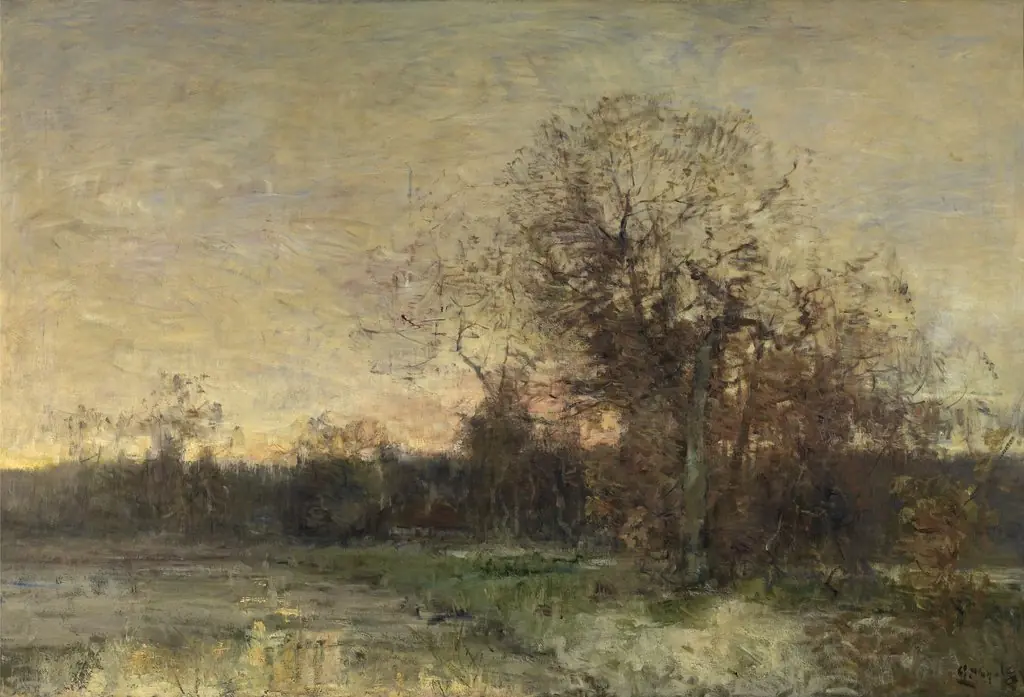 The Pond in Ixelles
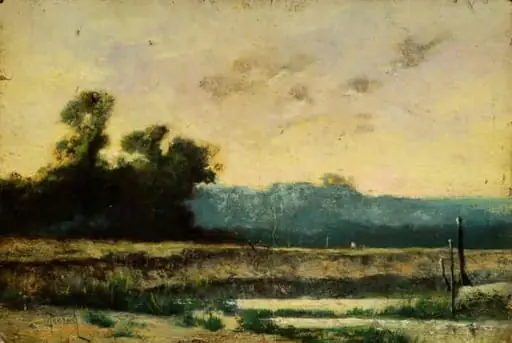 Peisaj
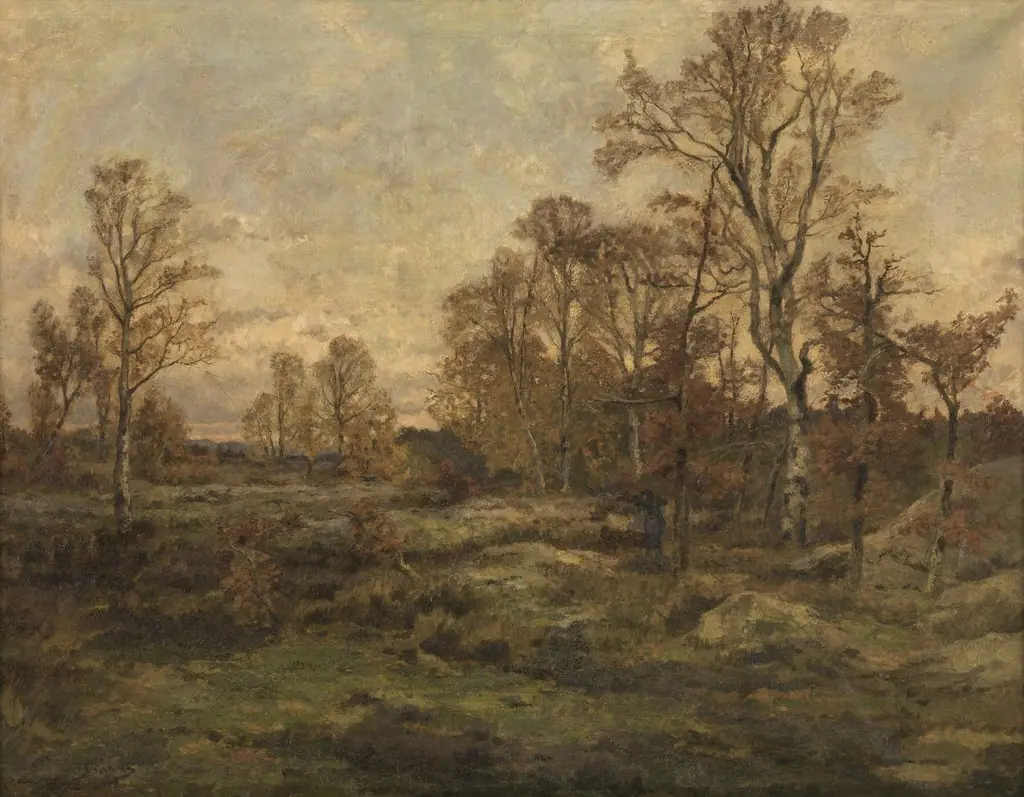 The Forest of Fontainebleau - Autumn Evening
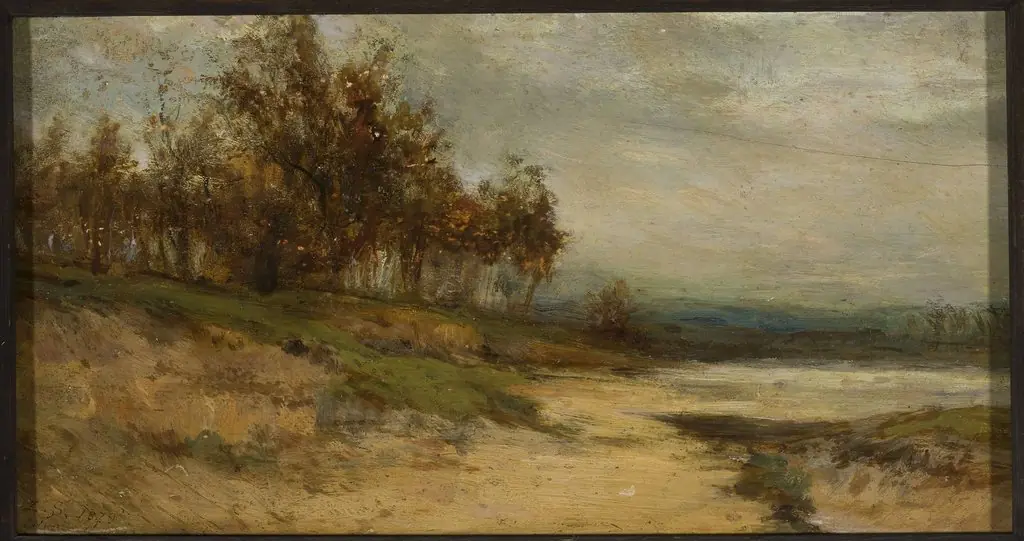 Landscape with a bunch of trees
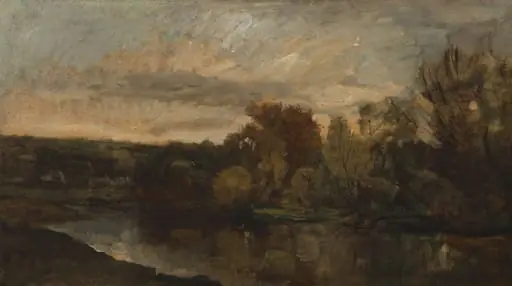 Le Bas Meudon (A Curve of the Seine near Paris)
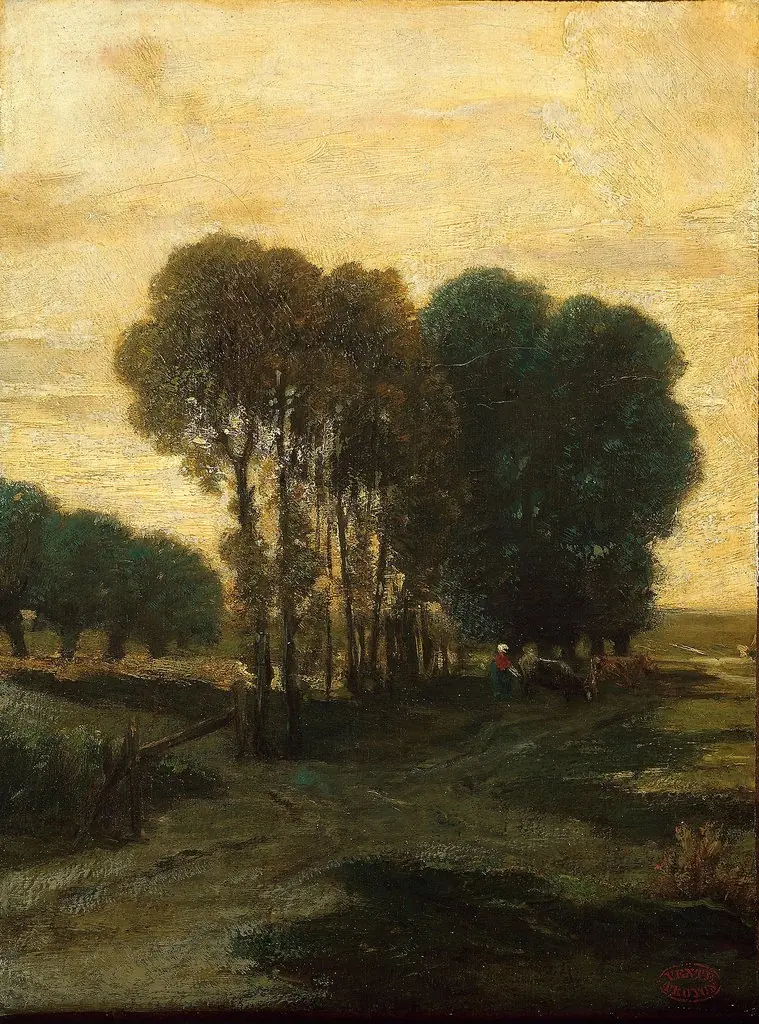 A Clump of Trees
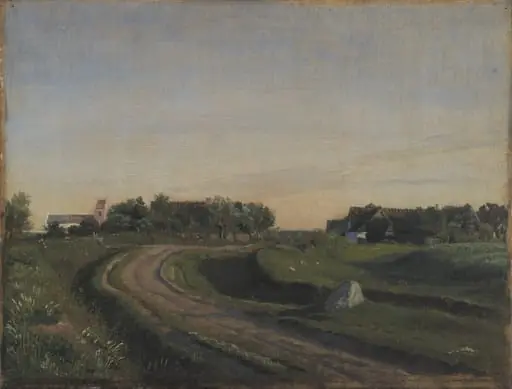 Vejby with the Church seen from the North. Evening Light. Zealand
 Landscape
 Landscape
 A Polder Landscape after a Thunderstorm
 The Elm Tree
 Landscape from Rabka