Artwork
Lilies
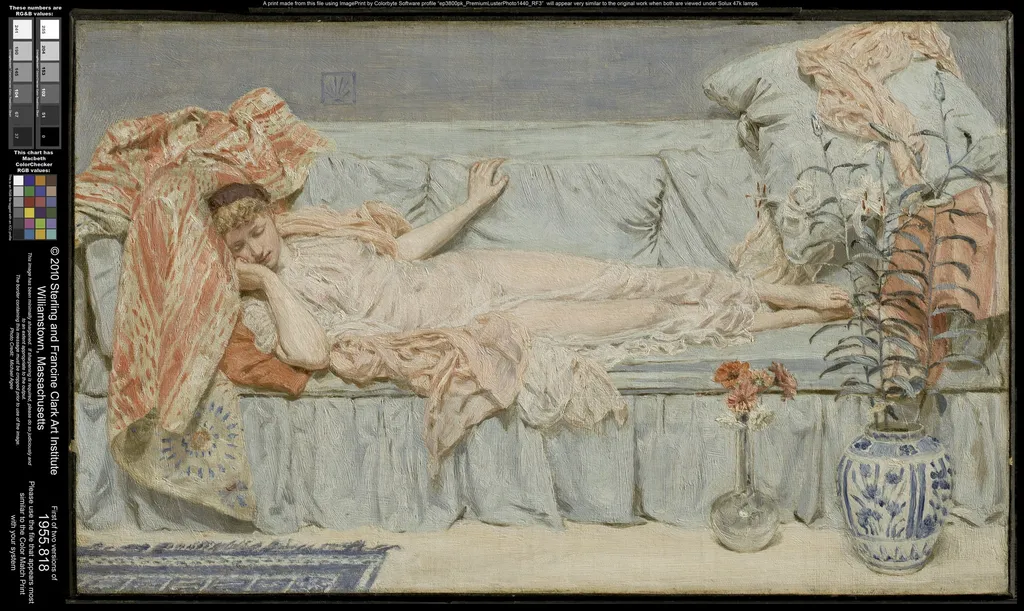
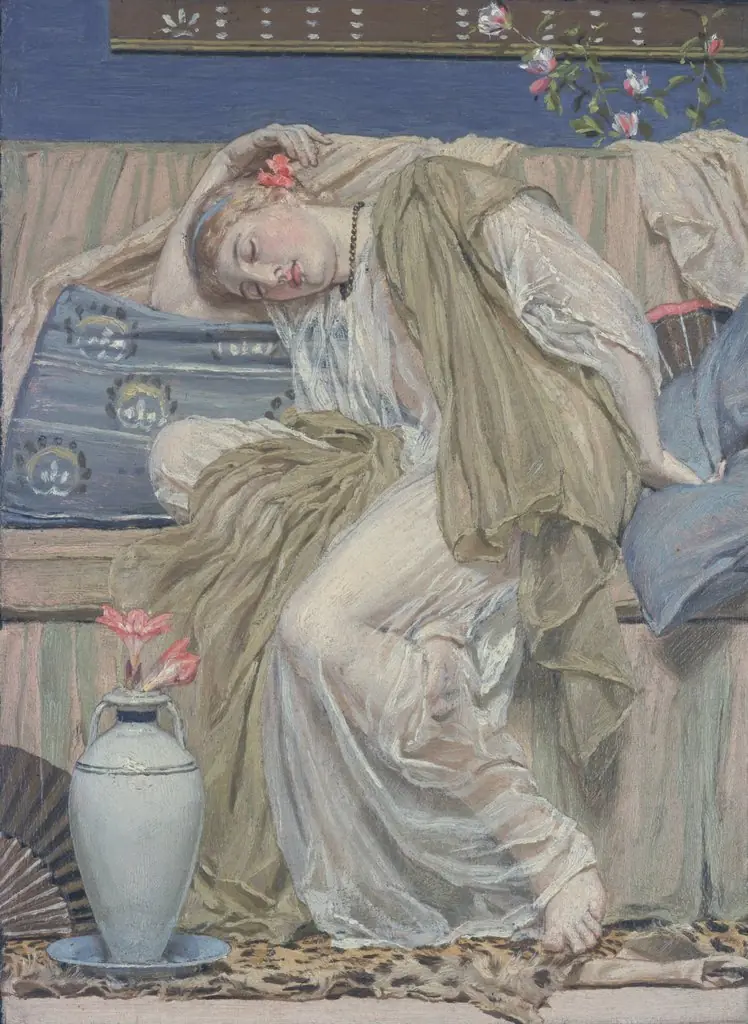
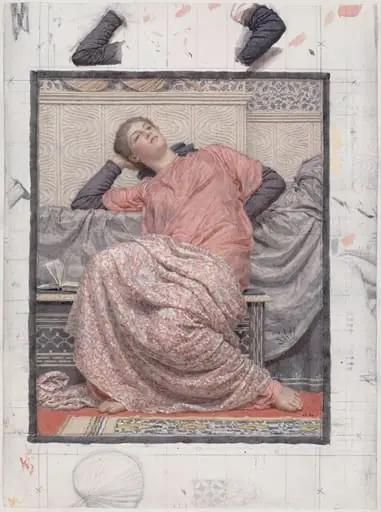
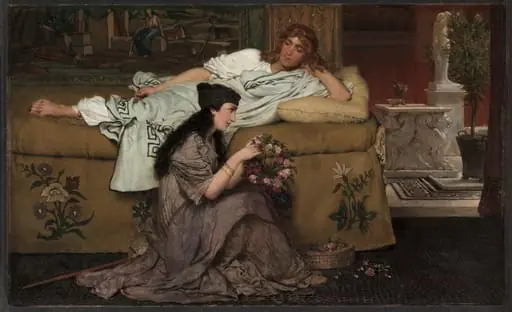
Lilies is an oil painting by the British Romanticist artist Albert Joseph Moore. It dates from 1866 and is held in the collection of the Clark Art Institute.
About this work
Overview
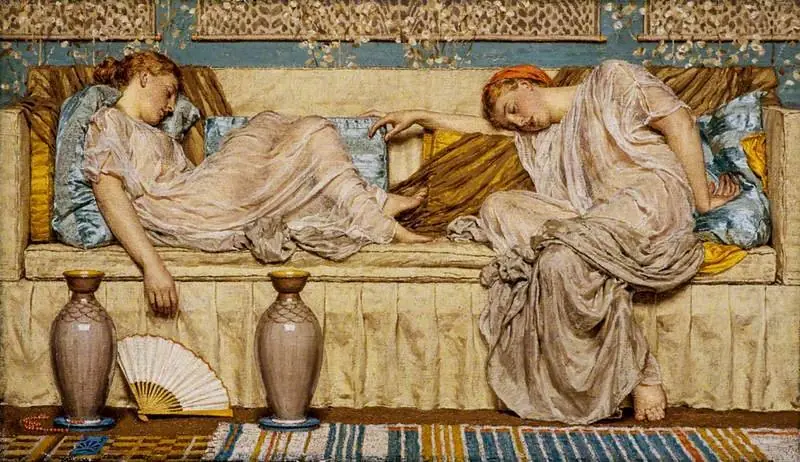
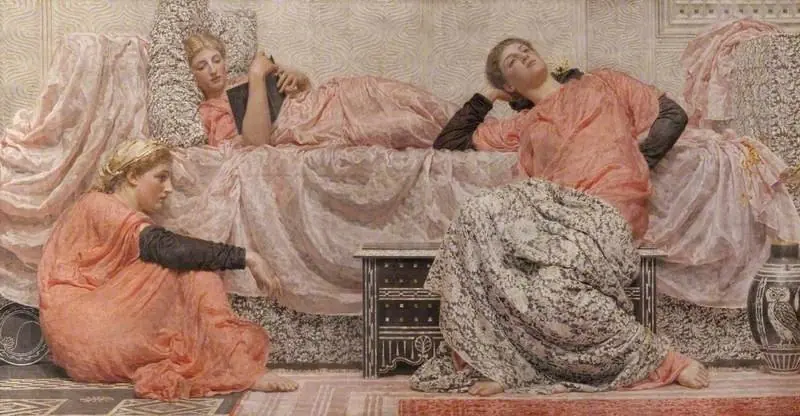
Albert Joseph Moore’s 1866 oil painting *Lilies* presents a tranquil domestic scene in which a nude woman reclines on a cushioned sofa. The composition is softened by a muted palette of whites, pinks, and blues, while a vase of lilies rests on the floor, reinforcing the work’s delicate atmosphere.
Subject & Meaning
The central figure is depicted in a relaxed pose, her right arm supporting her head and her left hand resting on the sofa’s fabric. The surrounding drapery, a white sheet and a pink‑white blanket, partially covers her body, suggesting modesty within an intimate setting. The lilies, rendered with fine detail, evoke classical ideals of purity and beauty.
Technique & Style
Moore employs a smooth, glazed surface achieved through successive layers of translucent oil, a method that creates luminous depth and subtle tonal transitions. His brushwork is restrained, emphasizing form over texture, while the careful rendering of light on the fabric and skin reflects the artist’s interest in classical composition and decorative harmony.
History & Provenance
Created during the height of British Romanticism, *Lilies* aligns with Moore’s reputation for portraying languid female nudes amid opulent, antiquity‑inspired settings. The painting was exhibited shortly after its completion and entered private collections in the late nineteenth century, later passing through several dealers before being acquired by its current institutional holder.
Artist & collection
Artist
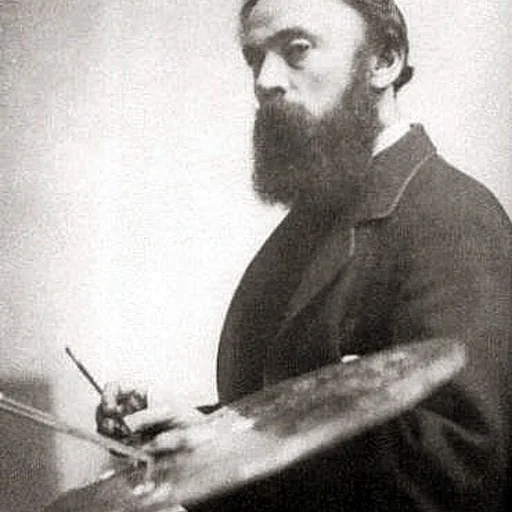
Albert Joseph Moore (4 September 1841 – 25 September 1893) was an English painter, known for his depictions of languorous female figures set against the luxury and decadence of the classical world.