Artwork
The Umpire
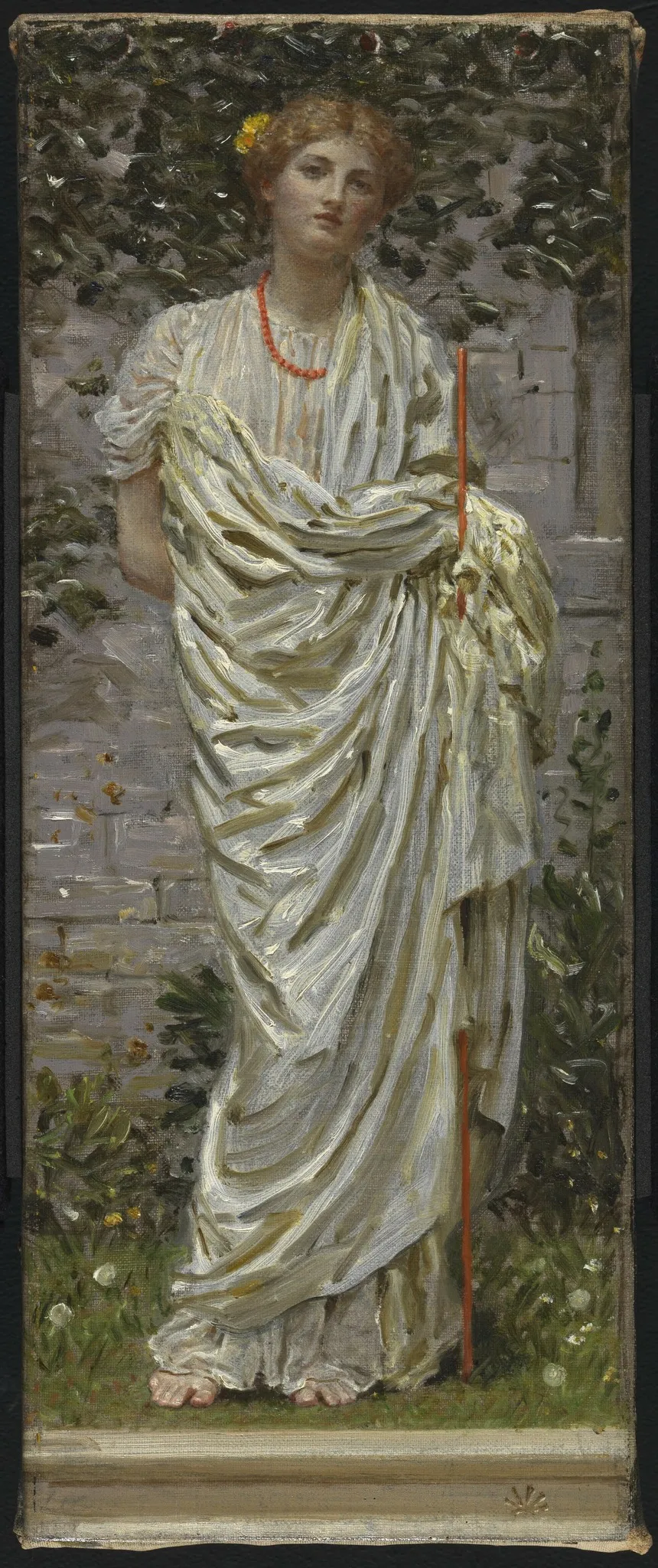
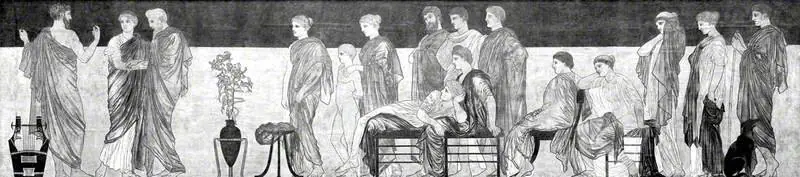
The Umpire is an oil painting by the Post-Impressionist artist Albert Joseph Moore. It is held in the collection of the Fitzwilliam Museum.
About this work
Overview
The painting belongs to a series of works in which Moore explored quiet, contemplative figures within idealized architectural settings.
Albert Joseph Moore completed *The Umpire* in 1894 using oil on canvas. The painting belongs to a series of works in which Moore explored quiet, contemplative figures within idealized architectural settings. Though often associated with Aesthetic Movement ideals, it diverges from narrative drama in favor of composed stillness. The work is now part of the Fitzwilliam Museum’s collection in Cambridge.
Subject & Meaning
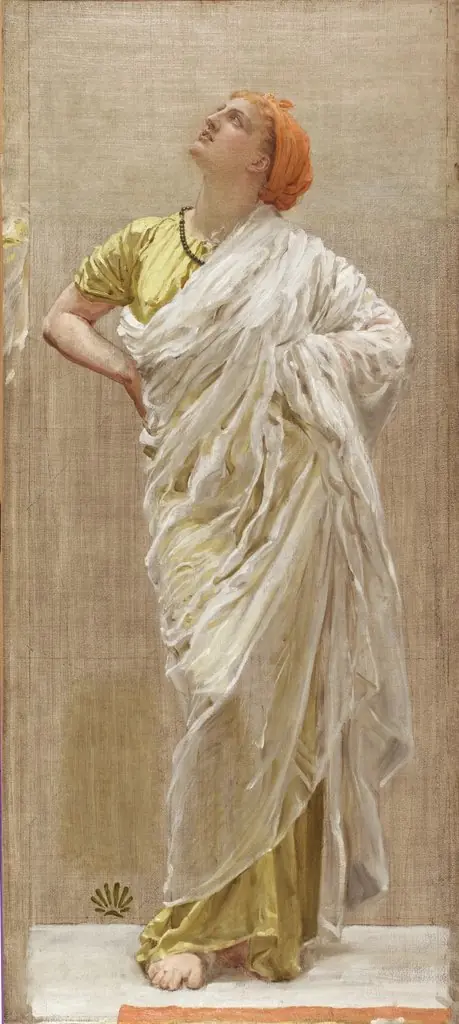
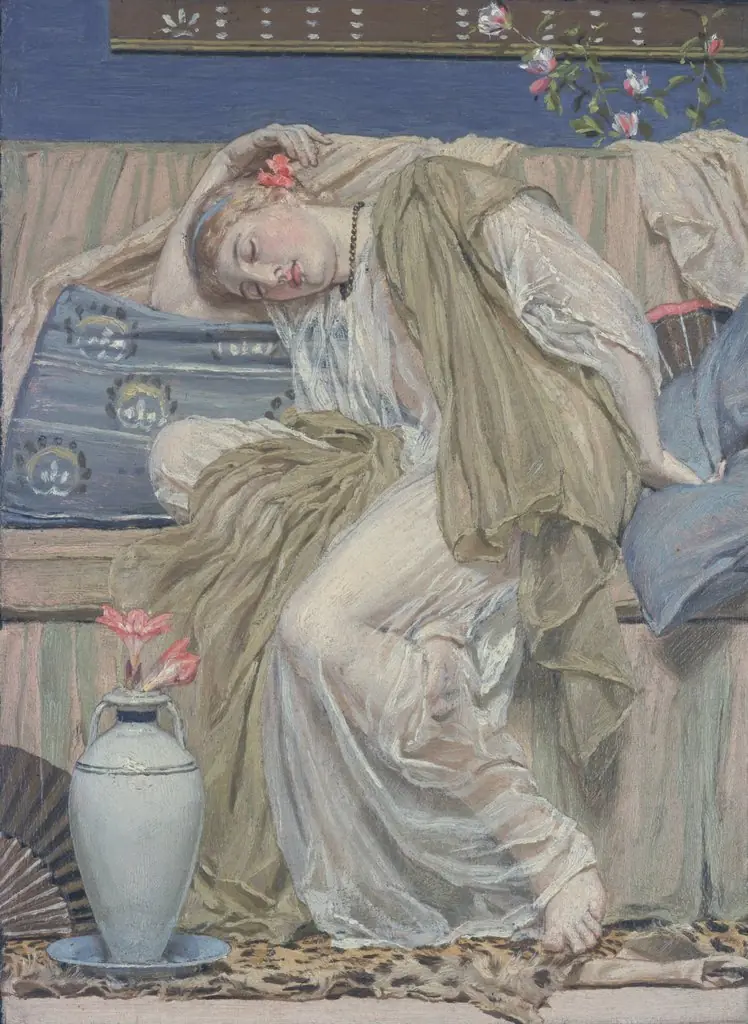
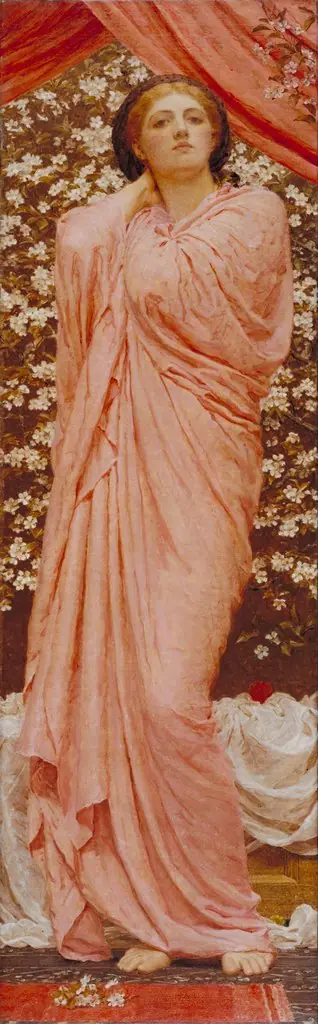
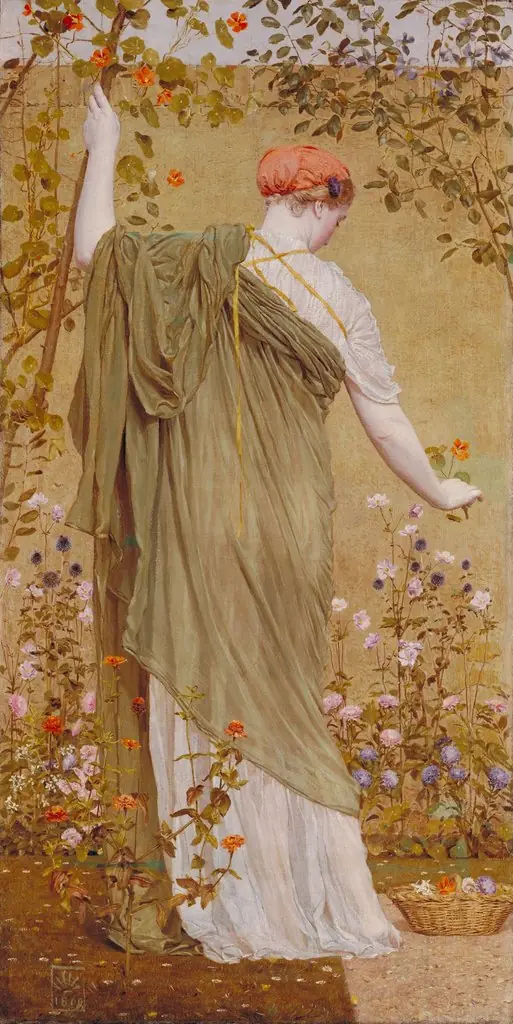
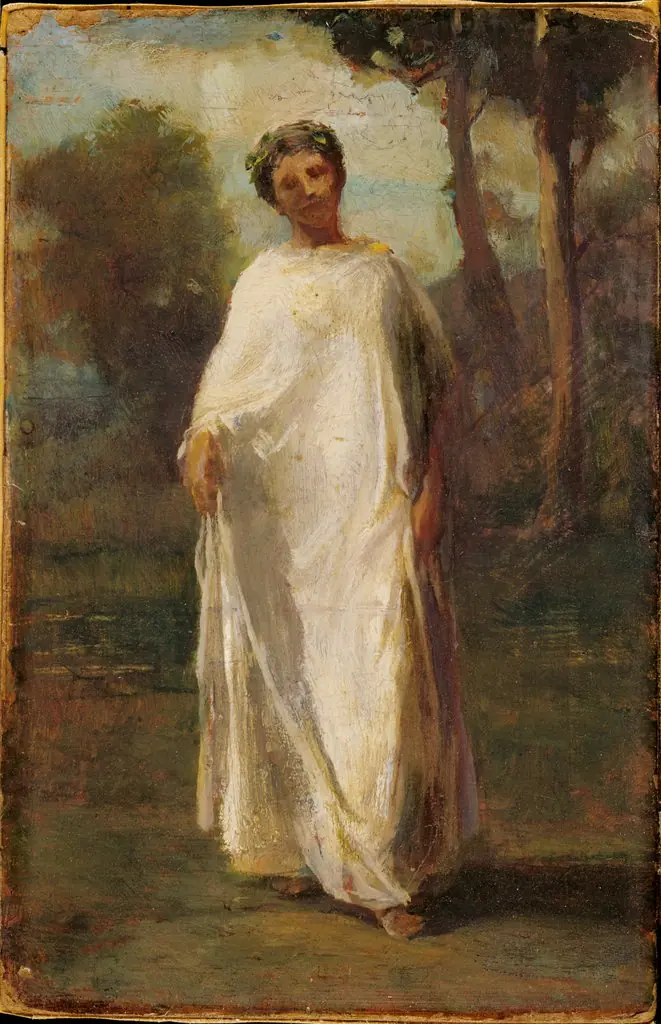
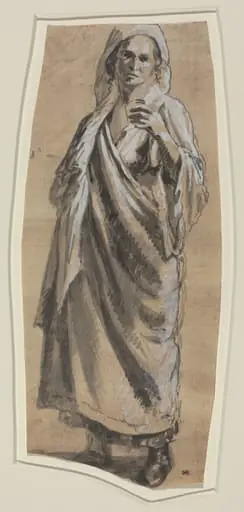
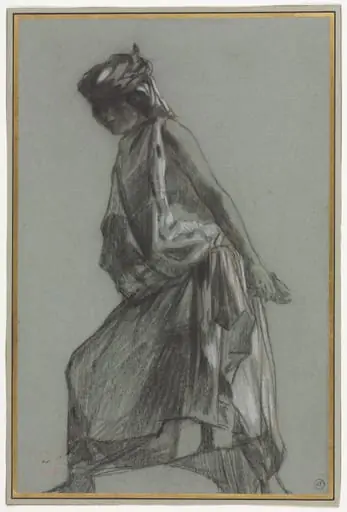
The central figure is a woman in a white draped garment, holding a slender object, her gaze lowered in quiet focus. Her posture and attire suggest a ritual or ceremonial role, though no specific myth or text confirms her identity. The title *The Umpire* implies authority or judgment, yet the scene avoids tension, instead evoking meditative stillness. The ambiguity invites interpretation without anchoring meaning to a known story.
Technique & Style
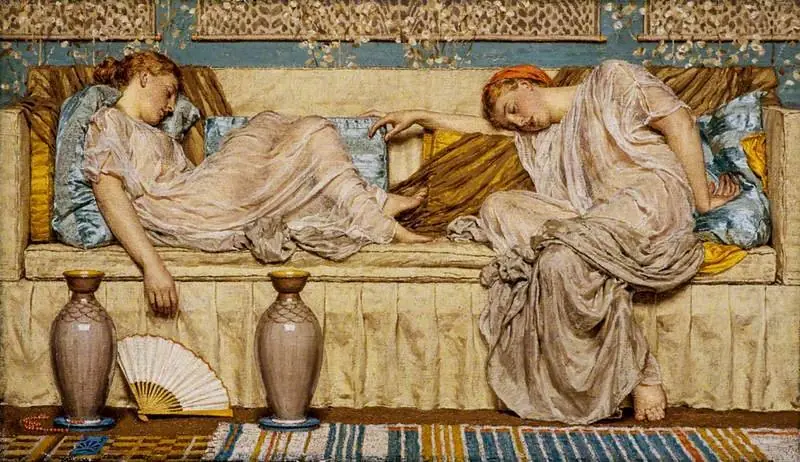
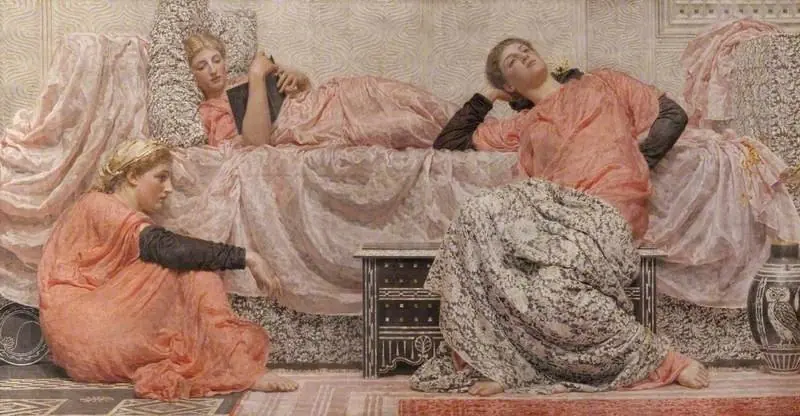
Moore employed smooth, even brushwork to render the figure’s drapery and the stone wall with equal precision. Color is restrained: pale tones dominate, accented only by the red necklace and subtle green foliage. Light falls evenly, eliminating shadows to enhance the sense of timelessness. The composition is horizontal and balanced, reinforcing the painting’s serene, almost sculptural quality.
History & Provenance
Painted near the end of Moore’s life, *The Umpire* reflects his mature style, developed over decades of refining figures in classical settings. It entered the Fitzwilliam Museum’s collection in the early 20th century, likely through acquisition or bequest. The work remained relatively unpublicized compared to his larger compositions, preserving its quiet presence within the museum’s holdings.
Context
Moore worked amid the Aesthetic Movement’s rise in Britain, where art prioritized beauty and mood over moral or narrative content. His figures often echoed classical sculpture, stripped of dramatic action. *The Umpire* aligns with contemporaries like Whistler and Burne-Jones in its emphasis on harmony and refined form, yet stands apart through its understated, solitary subject.
Legacy
Though not widely exhibited during Moore’s lifetime, *The Umpire* exemplifies his enduring interest in serene, gendered forms within architectural spaces. It contributes to scholarly understanding of late Victorian aestheticism, particularly its quiet subversion of classical tropes. The painting continues to be studied for its restrained elegance and the subtle tension between presence and anonymity in its figure.
Artist & collection
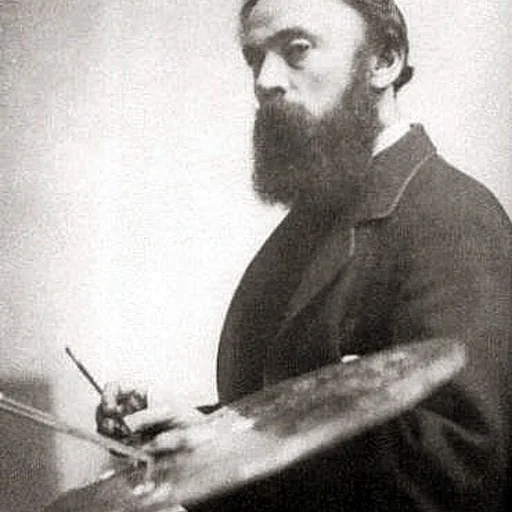
Artist
Albert Joseph Moore (4 September 1841 – 25 September 1893) was an English painter, known for his depictions of languorous female figures set against the luxury and decadence of the classical world.