Artwork
Untitled
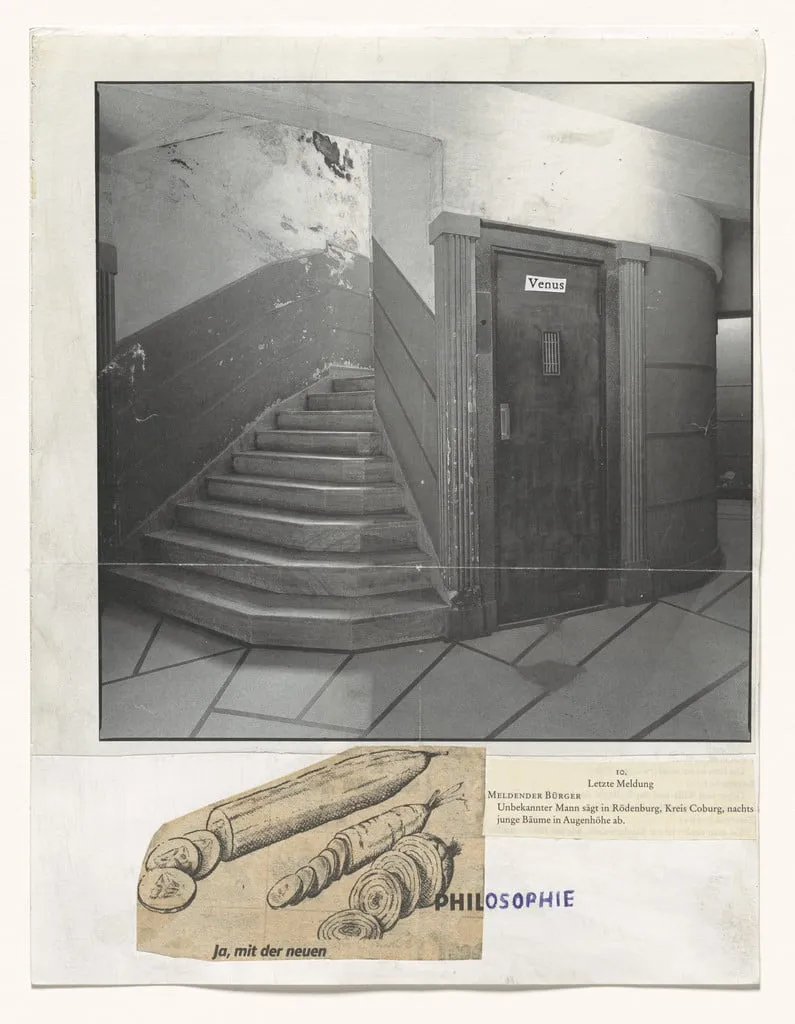
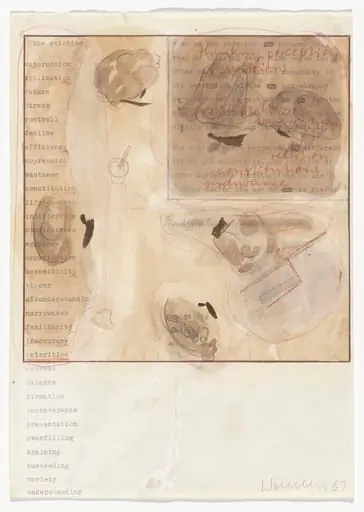
Untitled is a drawing by Rainald Goetz Albert Oehlen. It dates from 1987 and is held in the collection of the Museum of Modern Art.
About this work
Overview
The piece is mounted on cardstock and constructed using cut-and-pasted materials, reflecting a deliberate engagement with found imagery and textual fragments.
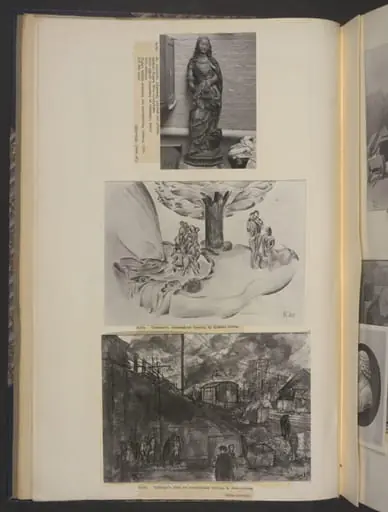
Created in 1987 by Albert Oehlen, this mixed-media work combines a black-and-white photograph with collaged printed elements and handwritten annotations. The piece is mounted on cardstock and constructed using cut-and-pasted materials, reflecting a deliberate engagement with found imagery and textual fragments. It resides in the collection of The Museum of Modern Art, where it is categorized as a drawing despite its composite nature.
Subject & Meaning
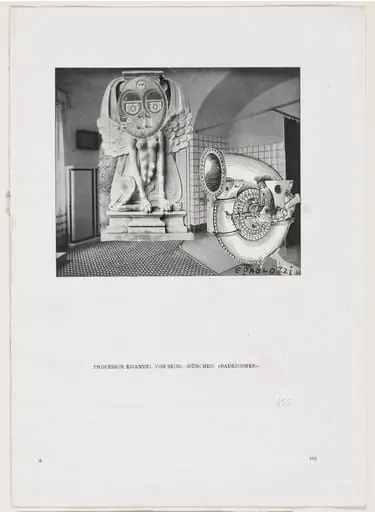
A photograph of a dimly lit stairwell leads to a door marked 'Venus,' an incongruous label that disrupts the mundane setting. Beneath it, a newspaper clipping depicts tree stumps and reports on nighttime tree-cutting. The juxtaposition suggests themes of erasure, hidden rituals, and the intrusion of the symbolic into the ordinary. The name 'Venus' introduces mythic or erotic undertones, contrasting with the decay implied by the stumps and worn steps.
Technique & Style
Oehlen employs a raw, unpolished aesthetic, layering photographic reproduction with fragmented text and hand-drawn elements in ballpoint pen. The collage is assembled without refinement, emphasizing materiality over illusion. The integration of printed media and spontaneous mark-making aligns with post-punk and neo-avant-garde strategies, rejecting traditional compositional harmony in favor of dissonance and textual disruption.
History & Provenance
The work was produced during a period when Oehlen was actively challenging painterly conventions through appropriation and textual intervention. It entered The Museum of Modern Art’s collection in the late 1980s, part of a broader institutional interest in German postwar art that embraced conceptual and anti-aesthetic practices. Its provenance reflects its origins in the Frankfurt art scene of the 1980s, where interdisciplinary experimentation was common.
Context
Emerging in the wake of German Neo-Expressionism, Oehlen’s work resisted emotional grandeur in favor of irony and fragmentation. This piece responds to a cultural moment marked by media saturation and the collapse of stable meaning. The use of German-language press clippings situates it within local concerns—urban decay, environmental vandalism—while the absurdity of 'Venus' points to broader questions about symbolism in everyday spaces.
Legacy
The work exemplifies a shift in late 20th-century art toward hybrid forms that blur drawing, collage, and conceptual practice. It influenced subsequent generations of artists who treated text and found imagery as primary materials. Its presence in MoMA’s collection signals its role in redefining what constitutes a drawing, expanding the category beyond traditional mark-making to include assembled, mediated realities.
Artist & collection