Artwork
Cliffside, India
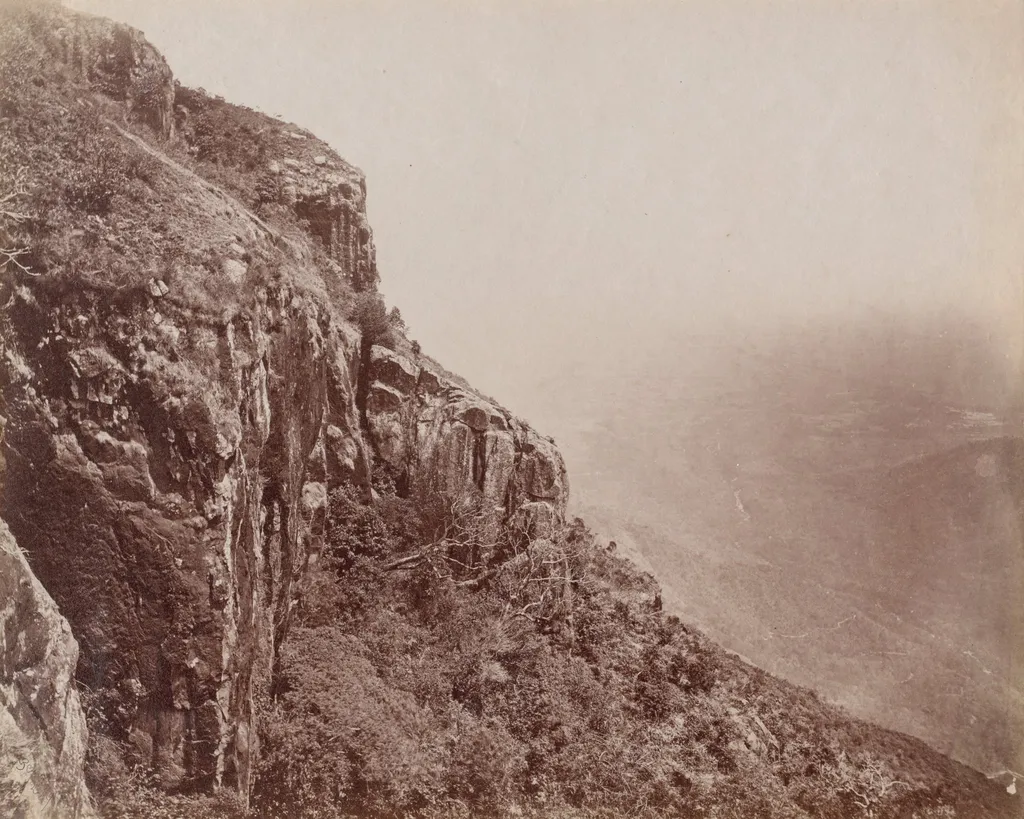
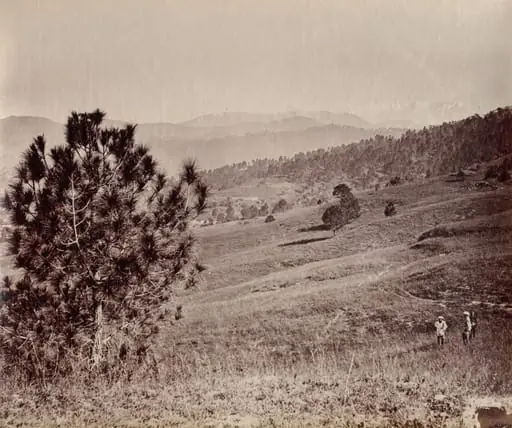
Cliffside, India is a photography by the Impressionist artist Albert Thomas Watson Penn. It dates from 1884 and is held in the collection of the Cleveland Museum of Art.
About this work
Overview
The image captures a rugged cliff face in India, rendered with attention to natural texture and atmospheric depth.
Cliffside, India is a photographic work created around 1884 by Albert Thomas Watson Penn. It is part of the collection at The Cleveland Museum of Art. The image captures a rugged cliff face in India, rendered with attention to natural texture and atmospheric depth. Unlike painted landscapes, this piece uses the photographic medium to record geological detail with precision, reflecting 19th-century interest in documenting the natural world.
Subject & Meaning
The subject is a barren, steep cliff edge, its surface marked by irregular stones and sparse vegetation. The absence of human figures or architectural elements emphasizes the rawness of the landscape. The hazy, indistinct horizon below suggests vastness and isolation, reinforcing a sense of quiet endurance. The image conveys no narrative, instead inviting contemplation of nature’s resilience and geological time.
Technique & Style
Penn employed photographic processes of the era to capture fine surface details, emphasizing the tactile quality of rock. Light is used to define edges and crevices, enhancing the three-dimensionality of the cliff. The blurred background, achieved through shallow focus or exposure choices, creates spatial depth without relying on traditional perspective. This approach prioritizes material truth over idealized composition.
History & Provenance
Created during Penn’s time in India, the photograph likely resulted from his travels as part of British colonial documentation efforts. It entered The Cleveland Museum of Art’s collection through established acquisition channels, though specific provenance details prior to its museum ownership are not widely recorded. Its preservation reflects early interest in non-European landscapes within Western institutional collections.
Context
In the 1880s, photography was increasingly used to record geographical and cultural sites across the British Empire. Cliffside, India aligns with scientific and ethnographic efforts to catalog terrain, often for administrative or academic purposes. While not overtly political, the image participates in a broader trend of visual documentation that shaped Western perceptions of colonial territories.
Legacy
The photograph stands as an early example of landscape photography that values observation over romanticization. It contributes to the historical record of how natural features in South Asia were visually interpreted during the colonial period. Though not widely exhibited, it remains a quiet testament to the medium’s capacity to convey geological presence without embellishment.
Artist & collection

 Khyber Side of Sarkai Hill
 Ceylon Views to Adam's Tooth
 View of Hills near Mahabaleshwar
 View of the Great Wall, China
 Loch Katrine
 Japanese Temple Graveyard, Shuntoji, Nagasaki
 Vue prise du Couvent des Dominicains, Chalais (Isère), France
 Shimla. View North of Mount Jakko
 Udsigt mod Mammellerne (Monti Ruffi) nær Olevano
 Untitled (Fern Study)
 Rock Cliffs above a Stream
 Landscape with Tree and Three Men, India