Artwork
The Fall and Redemption of Man: The Last Supper
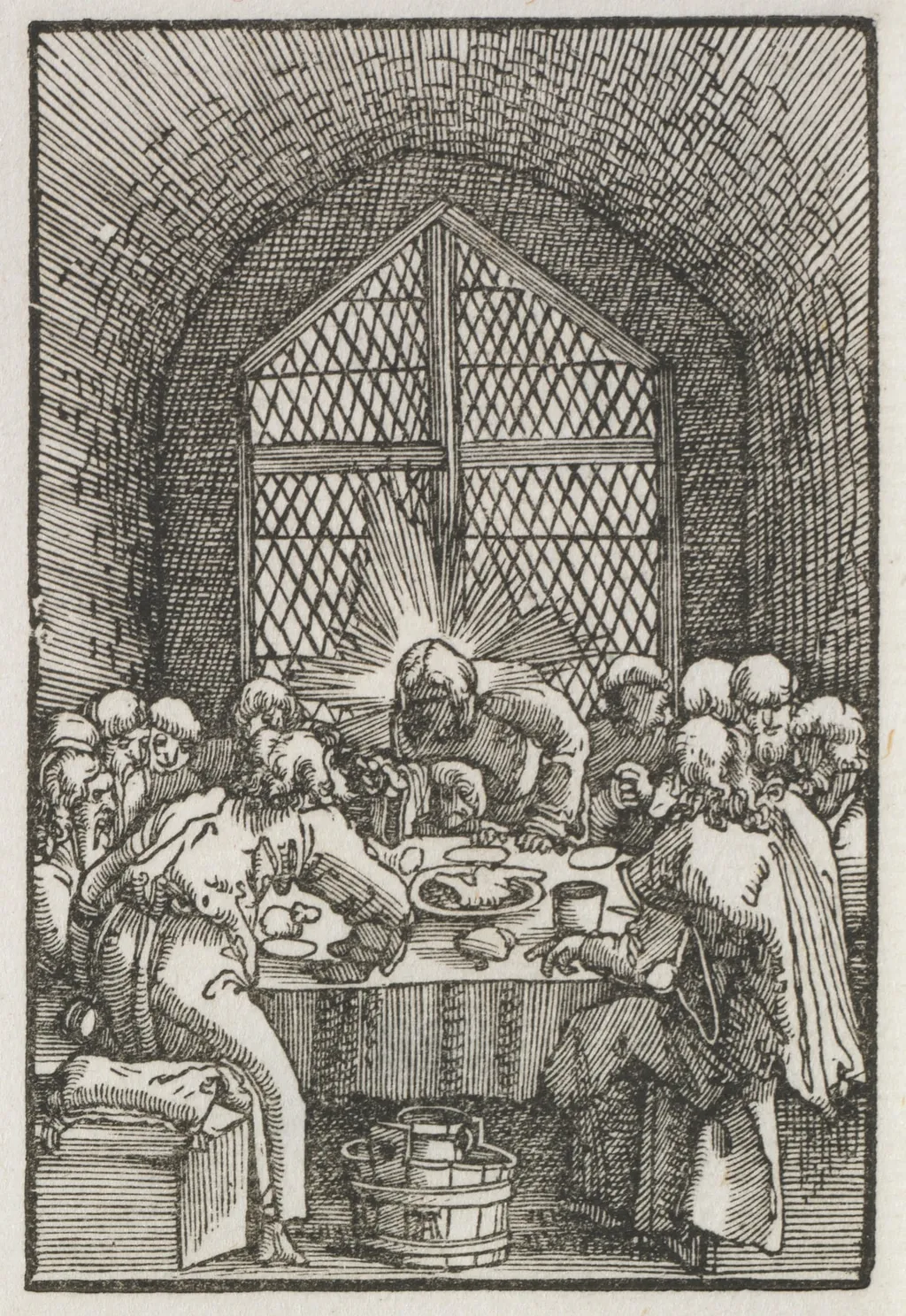
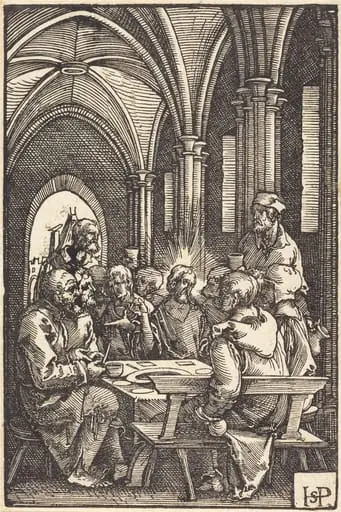
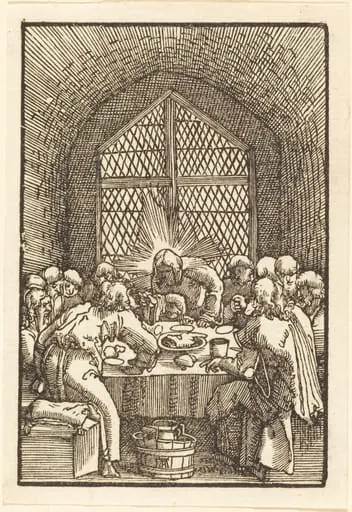
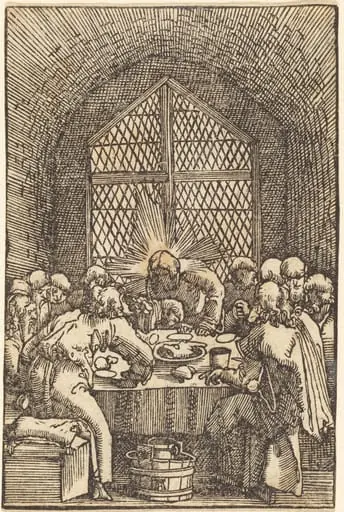
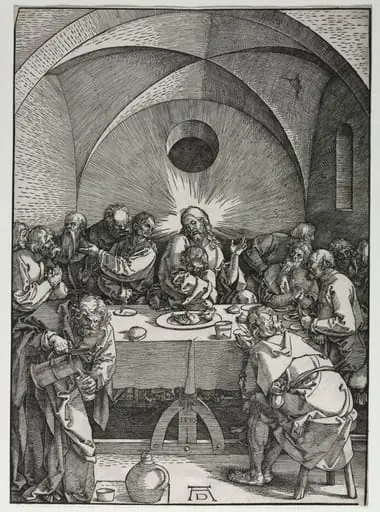
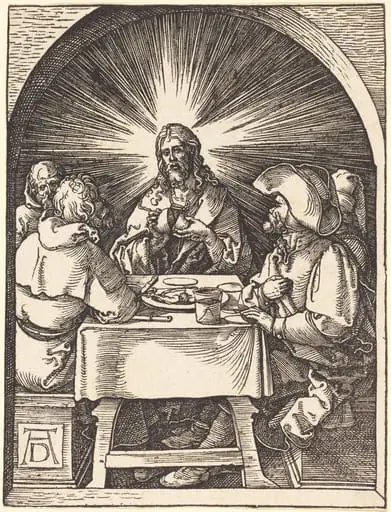
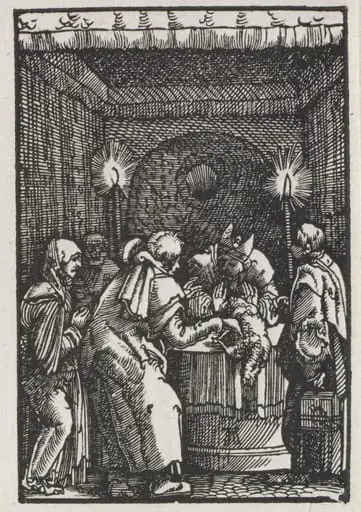
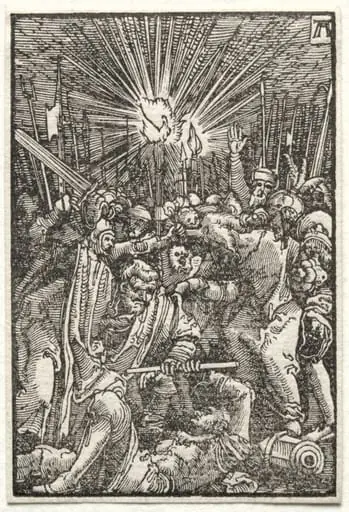
The Fall and Redemption of Man: The Last Supper is a print by the Renaissance artist Albrecht Altdorfer. It dates from 1515 and is held in the collection of the Cleveland Museum of Art.
About this work
Overview
Though titled to reference both the Fall and Redemption of Man, the image focuses on the Last Supper, rendered with quiet intimacy rather than grandeur.
Created around 1515 by Albrecht Altdorfer, this etching depicts a biblical scene framed within a domestic interior. Though titled to reference both the Fall and Redemption of Man, the image focuses on the Last Supper, rendered with quiet intimacy rather than grandeur. Altdorfer, active in Regensburg, was known for integrating sacred narratives into tangible, earthly settings, a hallmark of the Danube School’s approach to religious art.
Subject & Meaning
The scene captures Christ and his disciples sharing a meal, with one central figure gesturing as if offering blessing. The inclusion of everyday objects—wooden tables, ceramic vessels, and simple attire—grounds the moment in ordinary life. This blending of the divine with the mundane suggests a theological emphasis on the sacred embedded in daily human experience, reflecting Reformation-era shifts in devotional practice.
Technique & Style
Altdorfer employed fine, precise etching lines to define forms and create depth, using contrast between light and shadow to model space. The lattice window casts structured illumination across the table, enhancing the sense of interior volume. The composition is tightly arranged yet avoids clutter, with figures arranged in a calm, rhythmic order—characteristic of German Renaissance printmaking’s attention to detail and spatial clarity.
History & Provenance
The print entered the Cleveland Museum of Art’s collection as part of its broader holdings in Northern Renaissance graphics. While its early ownership is undocumented, its preservation reflects 19th- and 20th-century scholarly interest in Altdorfer’s prints. The work survives as one of several religious etchings by the artist, valued for its technical precision and narrative restraint.
Context
In early 16th-century southern Germany, religious imagery increasingly moved away from ornate altarpieces toward intimate, accessible formats. Altdorfer’s etching aligns with this trend, offering a private devotional image suited for domestic contemplation. The Danube School’s focus on landscape and atmosphere subtly infuses even indoor scenes with a sense of naturalism, distinguishing them from Italian counterparts.
Legacy
Altdorfer’s integration of biblical themes into everyday settings influenced later Northern artists who sought to humanize sacred stories. Though less widely known than his landscapes, this etching exemplifies his ability to convey spiritual gravity through quiet observation. It remains a key example of how printmaking expanded access to religious imagery beyond ecclesiastical contexts.
Artist & collection
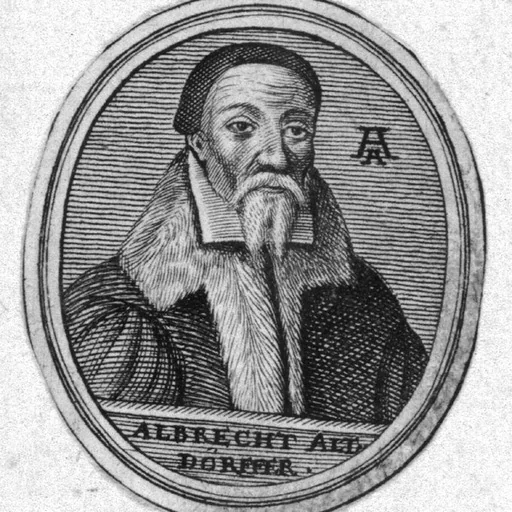
Artist
Albrecht Altdorfer (c. 1480 – 12 February 1538) was a German painter, engraver and architect of the Renaissance working in Regensburg. Along with Lucas Cranach the Elder and Wolf Huber he is regarded to be the main…