Artwork
Holy Family with the Three Hares
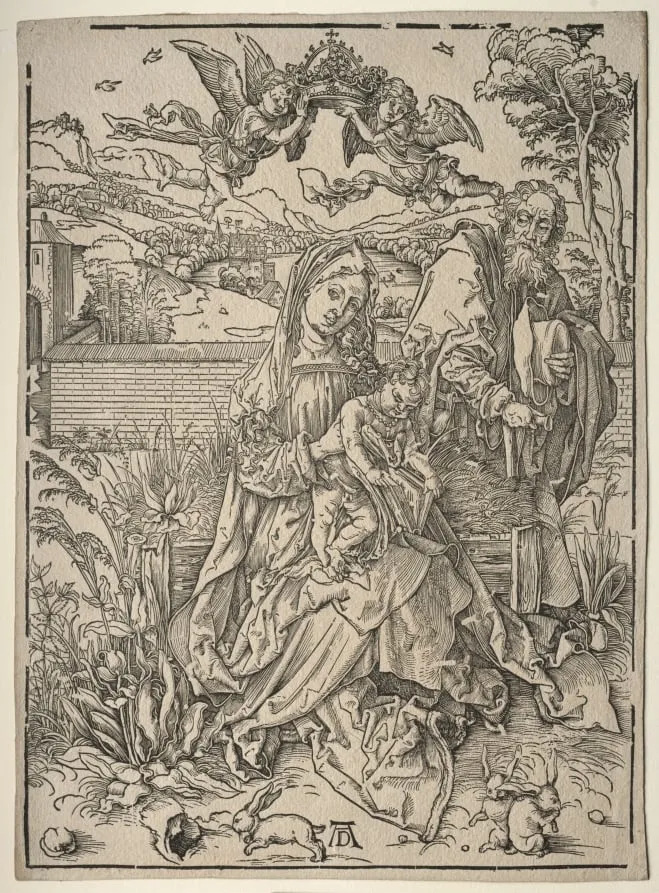
Holy Family with the Three Hares is a print by the Renaissance artist Albrecht Dürer. It dates from 1498 and is held in the collection of the Cleveland Museum of Art.
About this work
Overview
Though often described as a painting, it is in fact a woodcut, reflecting Dürer’s primary medium during this phase of his career.
Created in 1498, this print by Albrecht Dürer portrays the Holy Family in a quiet natural setting. Though often described as a painting, it is in fact a woodcut, reflecting Dürer’s primary medium during this phase of his career. The composition blends sacred figures with subtle natural elements, including three hares in the foreground, which introduce an unusual, symbolic layer to the devotional scene.
Subject & Meaning
The Virgin Mary cradles the infant Jesus while Saint Joseph observes from beside her, their gestures conveying tenderness and vigilance. The inclusion of three hares—interlocked in a circular pattern—has been interpreted as a reference to the Trinity or to themes of fertility and renewal. Their presence softens the religious gravity of the scene, suggesting a harmonious coexistence between the divine and the natural world.
Technique & Style
Dürer employed fine, controlled lines in woodcut to render texture and depth, a hallmark of his technical precision. The foliage, clothing, and landscape are detailed with meticulous cross-hatching, creating a sense of volume and spatial recession. The hares are rendered with lively, varied postures, contrasting with the stillness of the figures, demonstrating Dürer’s ability to infuse narrative nuance through draftsmanship.
History & Provenance
This print was made during Dürer’s early period, shortly after his first trip to Italy, when he was refining his synthesis of Northern and Southern European artistic traditions. It was widely distributed through print networks, contributing to his reputation across Europe. Surviving impressions are held in major collections, including the Albertina in Vienna and the British Museum, attesting to its early circulation and enduring interest.
Context
In late 15th-century Germany, devotional imagery was central to both private piety and public religious life. Dürer’s engagement with the Holy Family theme aligned with popular Marian devotion, while the hares may reflect folk symbolism or alchemical motifs circulating in humanist circles. The work reflects a broader trend among Northern artists to embed complex meanings within accessible religious scenes.
Legacy
Though less famous than Dürer’s later engravings, this woodcut exemplifies his early mastery of narrative compression and symbolic layering. It influenced subsequent generations of printmakers who sought to merge spiritual themes with naturalistic detail. The hares, in particular, became a recurring motif in Northern European art, often carrying similar layered interpretations.
Artist & collection
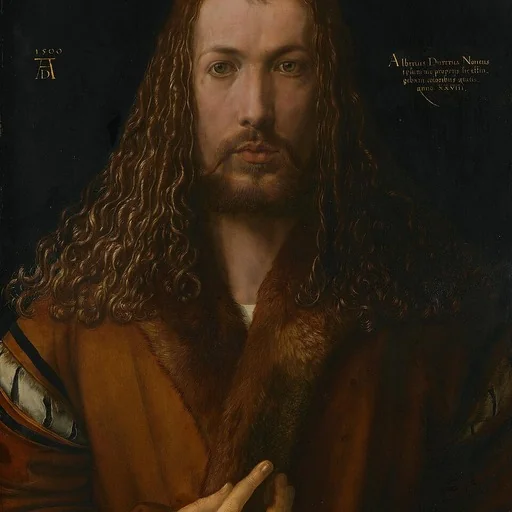
Artist
Albrecht Dürer spent his life in Nuremberg, a busy German city where artists traded prints like currency.

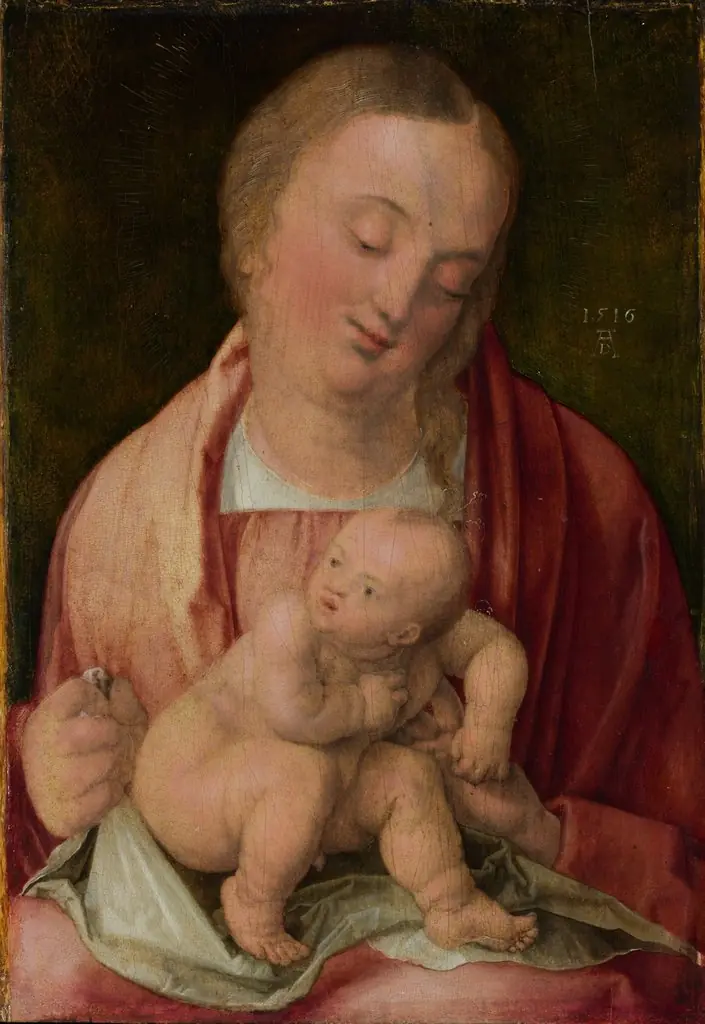
![Madonna and Child [obverse], by Albrecht Dürer](https://artifactworldgallery.com/img/albrecht-durer--madonna-and-child-obverse--d7b8ebf05d22ebe5-w320.webp)
![Lot and His Daughters [reverse], by Albrecht Dürer](https://artifactworldgallery.com/img/albrecht-durer--lot-and-his-daughters-reverse--b4ebf9b282faa17a-w320.webp)
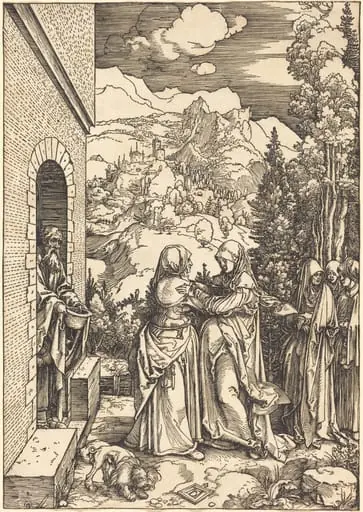 The Visitation
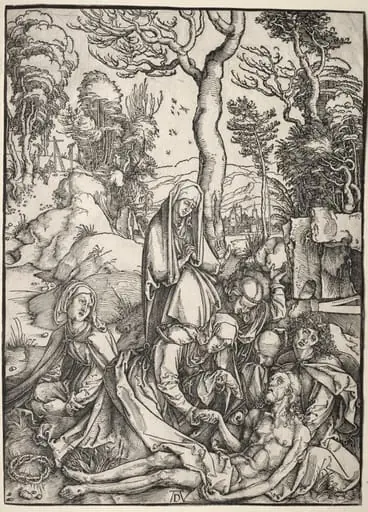 The Great Passion: The Lamentation of Christ
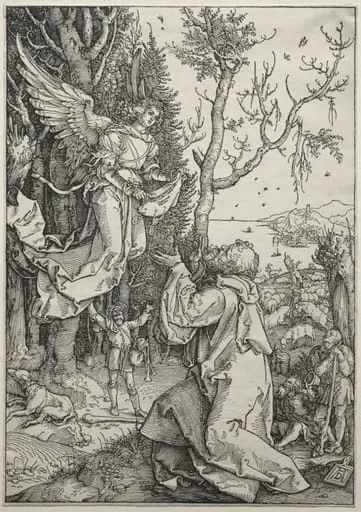 The Life of the Virgin: Joachim and the Angel
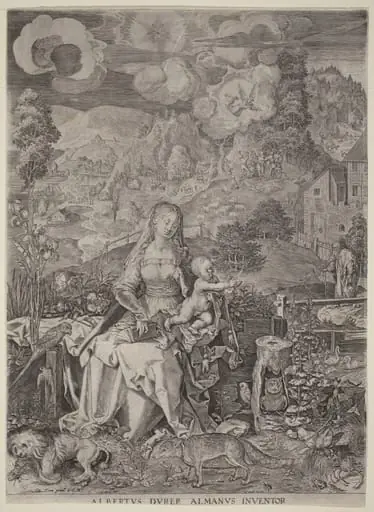 Virgin and Child in a Landscape
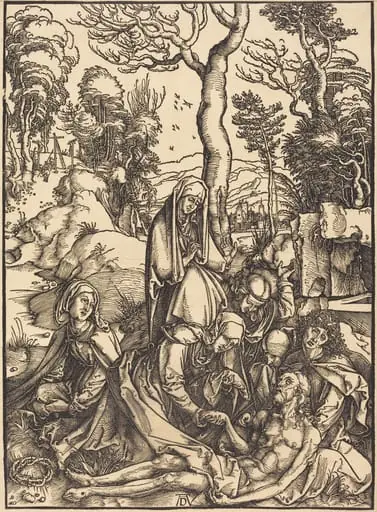 The Lamentation
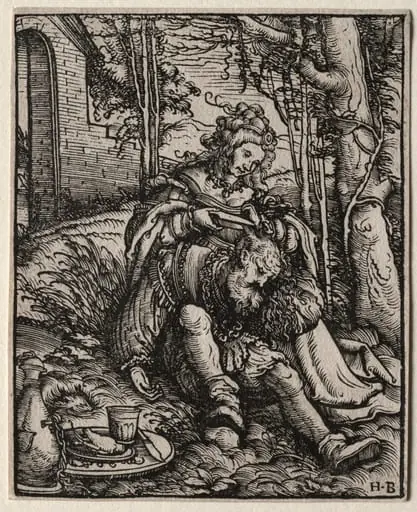 Samson and Delilah
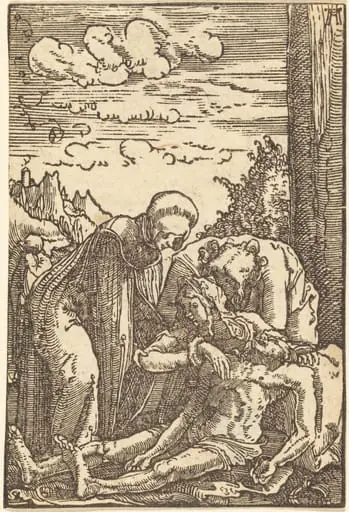 The Lamentation of Christ
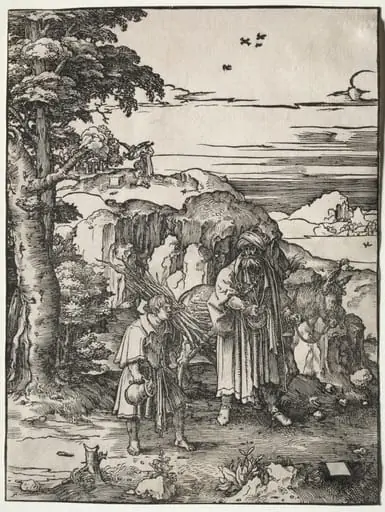 Abraham Going to Sacrifice Isaac
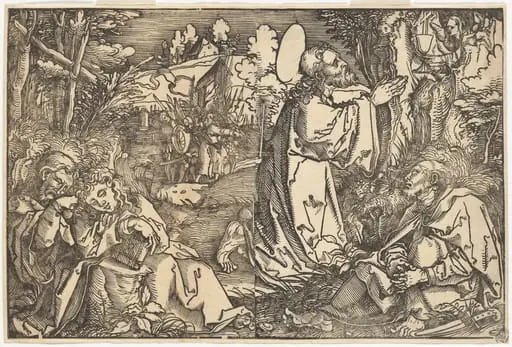 Christ on the Mount of Olives
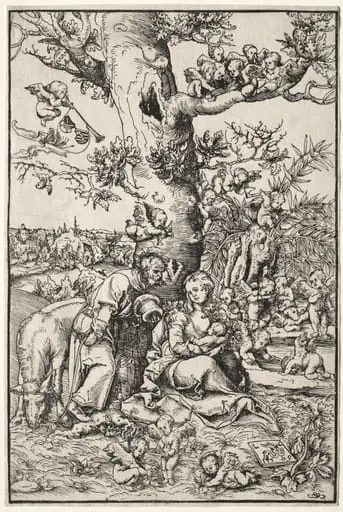 Rest on the Flight into Egypt
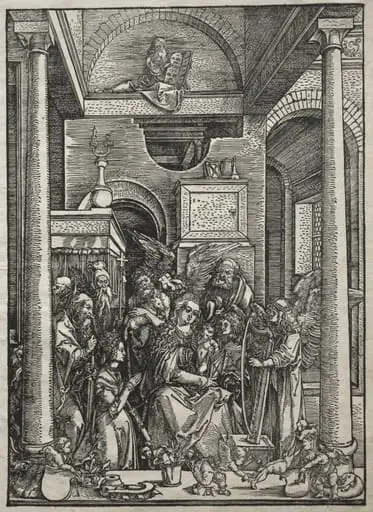 Life of the Virgin: Adoration of the Virgin and Child by Saints and Angels
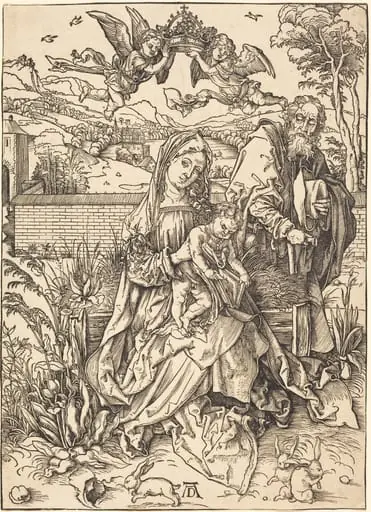 The Holy Family with the Three Hares