Artwork
Son of Righteousness
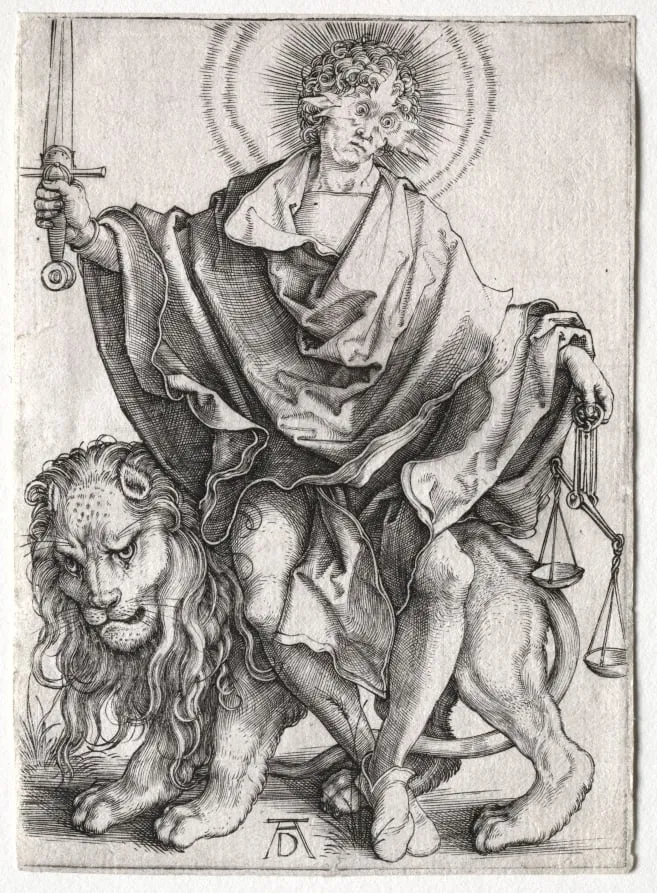
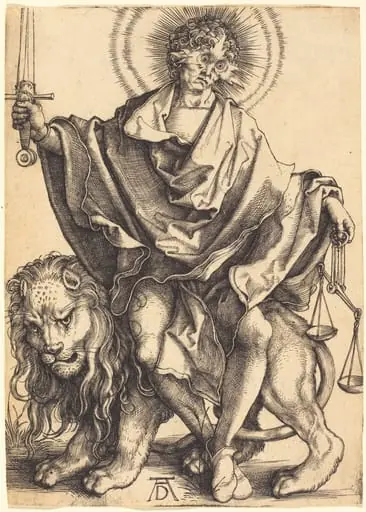
Son of Righteousness is a print by the Renaissance artist Albrecht Dürer. It dates from 1500 and is held in the collection of the Cleveland Museum of Art.
About this work
Overview
Created around 1500, *Son of Righteousness* is an engraving by Albrecht Dürer, reflecting his mastery of the medium during the German Renaissance.
Created around 1500, *Son of Righteousness* is an engraving by Albrecht Dürer, reflecting his mastery of the medium during the German Renaissance. Though often associated with painting, Dürer’s reputation was largely built on his prints, which circulated widely across Europe. This work belongs to a series of religious and allegorical engravings he produced in the early 16th century, demonstrating his technical precision and intellectual engagement with theological themes.
Subject & Meaning
The figure depicted is a crowned, haloed man standing atop a lion, wielding a sword in one hand and a scale in the other. These attributes suggest a symbolic representation of divine justice, possibly drawing from biblical imagery of righteous judgment. The lion, traditionally a symbol of power or evil, is subdued beneath his feet, implying moral authority over chaos. The figure’s solemn gaze and formal posture convey an unyielding sense of divine order.
Technique & Style
Dürer employed fine, controlled lines to render intricate textures in the figure’s robe, the lion’s mane, and the surrounding space. Chiaroscuro is achieved through dense hatching and cross-hatching, creating strong contrasts that model form and depth. The realism of the lion’s fur and the weight of the garments reflect Dürer’s attention to naturalistic detail, while the composition remains tightly focused on the central figure, enhancing its symbolic gravity.
History & Provenance
The engraving was produced during a period when Dürer was refining his printmaking techniques and gaining international acclaim. It likely circulated among humanist circles and collectors in Germany and Italy. While its early ownership is undocumented, it appears in later collections of Dürer’s prints, affirming its place within his mature body of work. No original painting version exists; the work is known solely through the engraved plate.
Context
Dürer created this piece amid growing interest in allegorical imagery within Northern Renaissance humanism. His engagement with Italian art, particularly through correspondence and prints, influenced his synthesis of classical form and Christian symbolism. While contemporaries like Raphael explored similar themes in painting, Dürer’s medium allowed broader dissemination, making his visual interpretations of righteousness accessible beyond elite audiences.
Legacy
The engraving contributed to Dürer’s enduring reputation as a bridge between Northern and Italian artistic traditions. Its precise technique and symbolic clarity made it a model for later printmakers. Though less widely discussed than his *Melencolia I* or *Knight, Death and the Devil*, *Son of Righteousness* remains a key example of how religious allegory was rendered with intellectual rigor and technical mastery in early 16th-century print culture.
Artist & collection
Artist
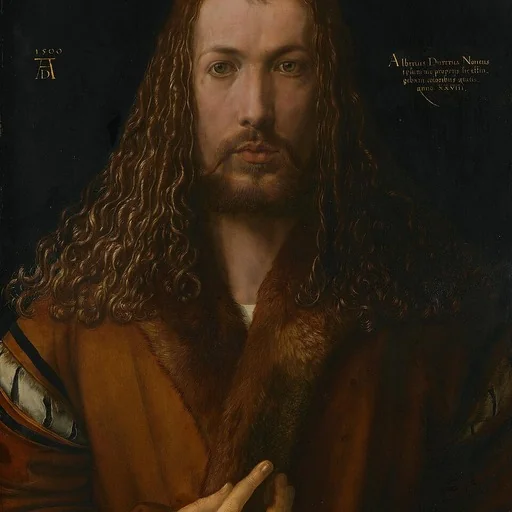
Albrecht Dürer spent his life in Nuremberg, a busy German city where artists traded prints like currency.

![Madonna and Child [obverse], by Albrecht Dürer](https://artifactworldgallery.com/img/albrecht-durer--madonna-and-child-obverse--d7b8ebf05d22ebe5-w320.webp)
![Lot and His Daughters [reverse], by Albrecht Dürer](https://artifactworldgallery.com/img/albrecht-durer--lot-and-his-daughters-reverse--b4ebf9b282faa17a-w320.webp)