Artwork
Plate 12: Benjamin
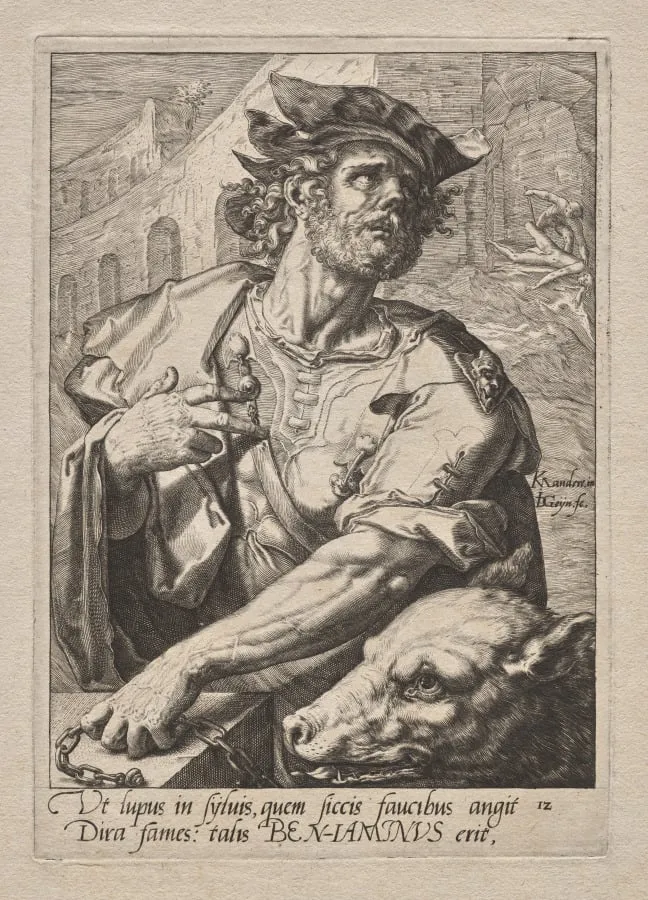
Plate 12: Benjamin is a print by the Renaissance artist Jacob de Gheyn II. It dates from 1589 and is held in the collection of the Cleveland Museum of Art.
About this work
Overview
This print is the twelfth in a series depicting the twelve sons of Jacob, each represented with symbolic attributes reflecting their biblical blessings.
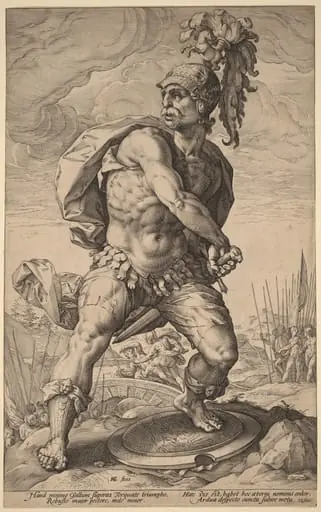
This print is the twelfth in a series depicting the twelve sons of Jacob, each represented with symbolic attributes reflecting their biblical blessings. Created in the late 16th-century Netherlands, it portrays Benjamin gripping a wolf by a chain, while conflict unfolds in the background. The series was produced during a period of religious and political upheaval, when biblical narratives offered moral and political resonance for contemporary audiences.
Subject & Meaning
Benjamin, the youngest son of Jacob, is shown with a wolf—a symbol drawn from Genesis 49:27, where Jacob prophesies his son will be a ravenous wolf. The chain suggests controlled ferocity, not unrestrained violence. Behind him, a battle scene reinforces the tribal destiny of strength and resilience. The imagery aligns with the biblical blessing that framed Benjamin’s lineage as both fierce and disciplined, suited to endure conflict.
Technique & Style
The print employs chiaroscuro to model forms with dramatic contrasts of light and shadow, enhancing the three-dimensionality of figures and textures. Fine linework defines the wolf’s fur and the armor of combatants, while the background is rendered with atmospheric depth. The composition balances foreground symbolism with narrative action, typical of Northern Renaissance printmaking traditions that prioritized detail and allegorical clarity.
History & Provenance
Produced in the Netherlands around the 1580s–1590s, the series emerged amid the Dutch Revolt against Spanish rule. Biblical heroes like Jacob’s sons were widely circulated in prints as models of steadfastness under oppression. These images were distributed through commercial print shops, reaching both elite collectors and middle-class households, reinforcing religious identity during a time of social fragmentation.
Context
The late 16th century saw a surge in biblical iconography across Protestant Europe, where visual storytelling replaced Catholic imagery. Printmakers in the Netherlands capitalized on this demand, using Old Testament figures to reflect contemporary values of endurance and divine justice. Benjamin’s wolf, like the other sons’ emblems, served as a visual shorthand for tribal character, aligning ancient prophecy with civic ideals of strength and order.
Legacy
The series contributed to the standardization of biblical iconography in Northern European print culture. Its symbolic language influenced later depictions of the Twelve Tribes in religious art and heraldry. Though not widely attributed to a single artist, the prints remain significant as early examples of serialized narrative imagery, demonstrating how print technology democratized religious and moral instruction across social classes.
Artist & collection

Artist
Jacob de Gheyn II was a Dutch painter and engraver, whose work shows the transition from Northern Mannerism to Dutch realism over the course of his career.