Artwork
The Crucifixion
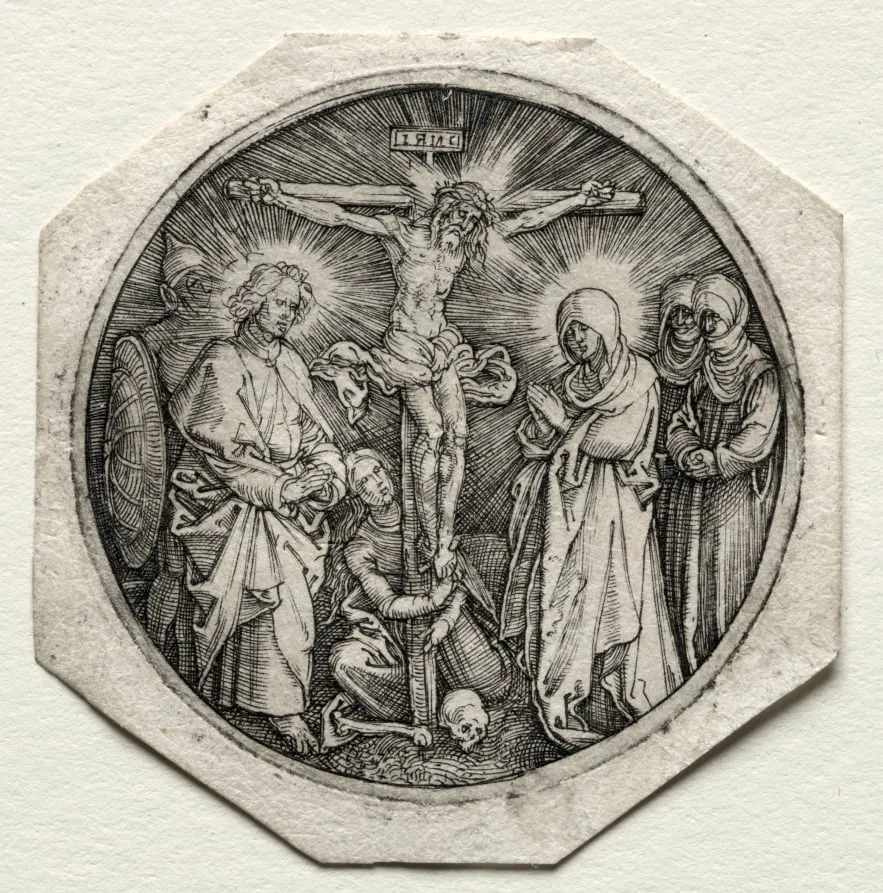
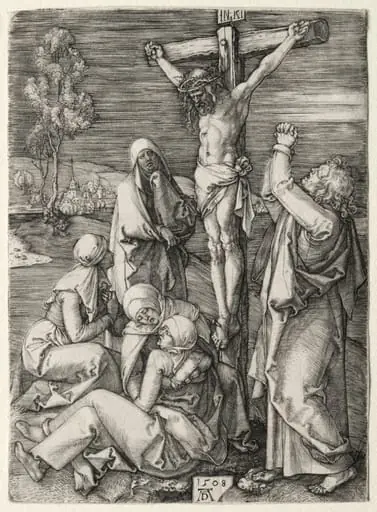
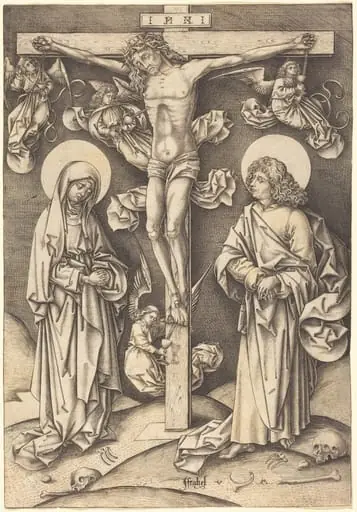
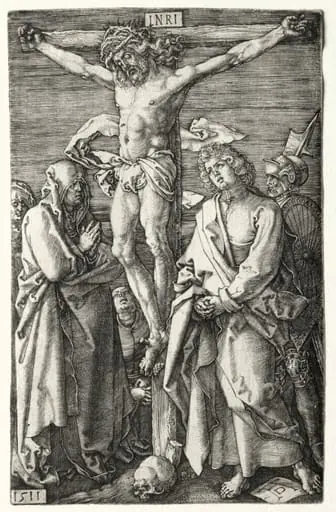
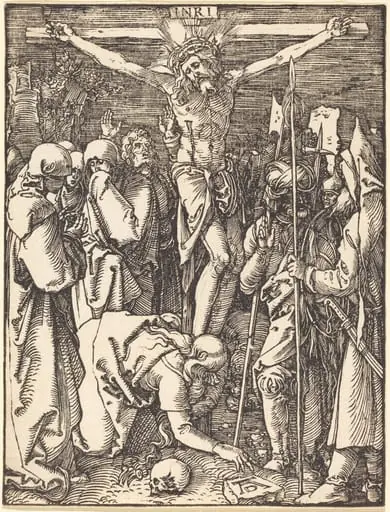
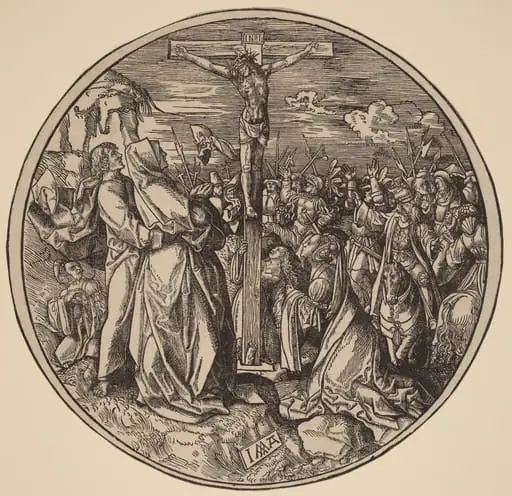
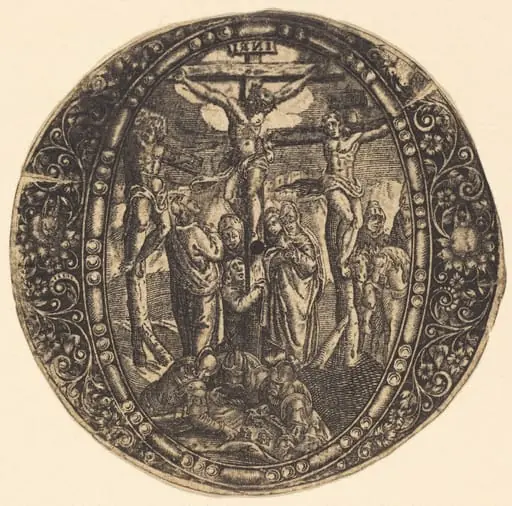
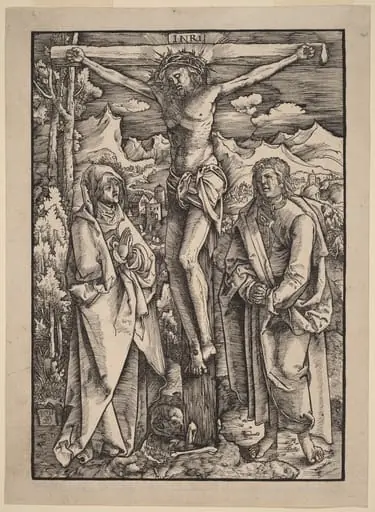
The Crucifixion is a print by the Renaissance artist Albrecht Dürer. It dates from 1518 and is held in the collection of the Cleveland Museum of Art.
About this work
Overview
Executed in woodcut, it reflects Dürer’s technical precision and his synthesis of Northern European detail with Italian compositional harmony.
Created around 1518, this print by Albrecht Dürer depicts the Crucifixion in a tightly composed circular format. Executed in woodcut, it reflects Dürer’s technical precision and his synthesis of Northern European detail with Italian compositional harmony. The work belongs to the Cleveland Museum of Art’s collection and exemplifies his mature printmaking phase, where religious themes were rendered with heightened emotional gravity and structural clarity.
Subject & Meaning
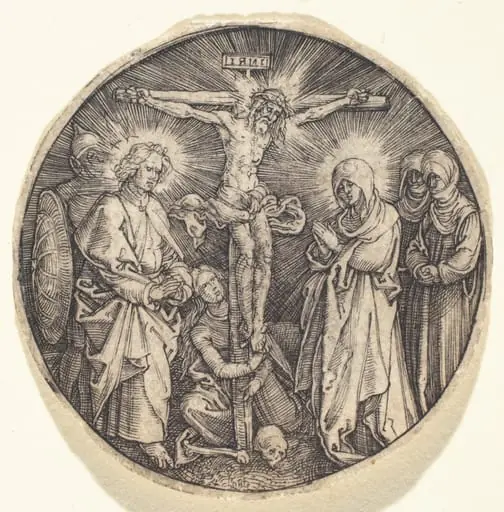
The scene centers on Christ nailed to the cross, surrounded by four figures: a kneeling mourner, a figure holding a cloth, and two observers gazing upward. The circular frame and the inscription 'IHS'—a monogram for Jesus—emphasize sacred focus. The stillness of the figures and the radiating light suggest divine presence amid human sorrow, aligning with devotional practices of the time while inviting contemplation of sacrifice and redemption.
Technique & Style
Dürer employed sharp, controlled lines and deep chiaroscuro to model form and evoke drama. The figures appear rigid, their contours sharply defined, evoking the carved quality of woodcut. The circular composition channels attention inward, while the contrast between light and shadow heightens spiritual tension. His technique merges Northern attention to detail with Italian ideals of balance, resulting in a restrained yet powerful visual rhythm.
History & Provenance
Produced during Dürer’s later years, the print emerged after his second journey to Italy, when his style had absorbed classical influences without abandoning his Northern roots. It entered the Cleveland Museum of Art’s collection in the 20th century, following a lineage of private and institutional holdings common among German Renaissance prints. Its preservation reflects its enduring status as a significant example of early 16th-century religious graphic art.
Context
In early 16th-century Germany, religious imagery was central to both Catholic devotion and emerging Protestant thought. Dürer’s print responds to this climate, offering a meditative image suited for private contemplation. His engagement with Italian art—particularly in composition and anatomical clarity—demonstrates the cross-cultural exchange shaping Renaissance printmaking, even as his technique remained rooted in the woodcut tradition of the North.
Legacy
This print contributed to Dürer’s reputation as a bridge between Northern and Southern European artistic traditions. Its disciplined form and emotional restraint influenced later generations of printmakers seeking to convey sacred narratives with clarity and dignity. Though not widely reproduced in his lifetime, its presence in major collections underscores its role in the evolution of religious graphic art during the Reformation era.
Artist & collection
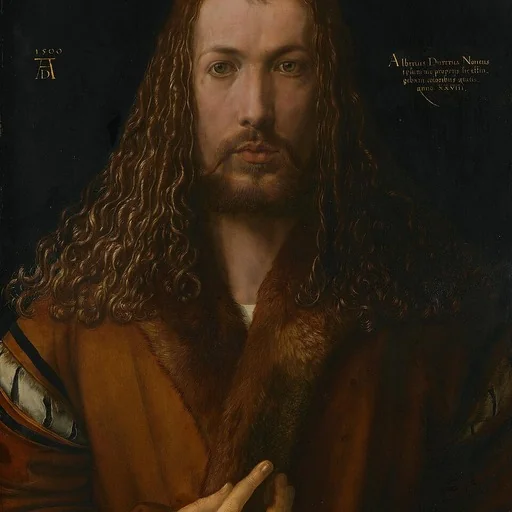
Artist
Albrecht Dürer spent his life in Nuremberg, a busy German city where artists traded prints like currency.

![Madonna and Child [obverse], by Albrecht Dürer](https://artifactworldgallery.com/img/albrecht-durer--madonna-and-child-obverse--d7b8ebf05d22ebe5-w320.webp)
![Lot and His Daughters [reverse], by Albrecht Dürer](https://artifactworldgallery.com/img/albrecht-durer--lot-and-his-daughters-reverse--b4ebf9b282faa17a-w320.webp)