Artwork
The Crucifixion
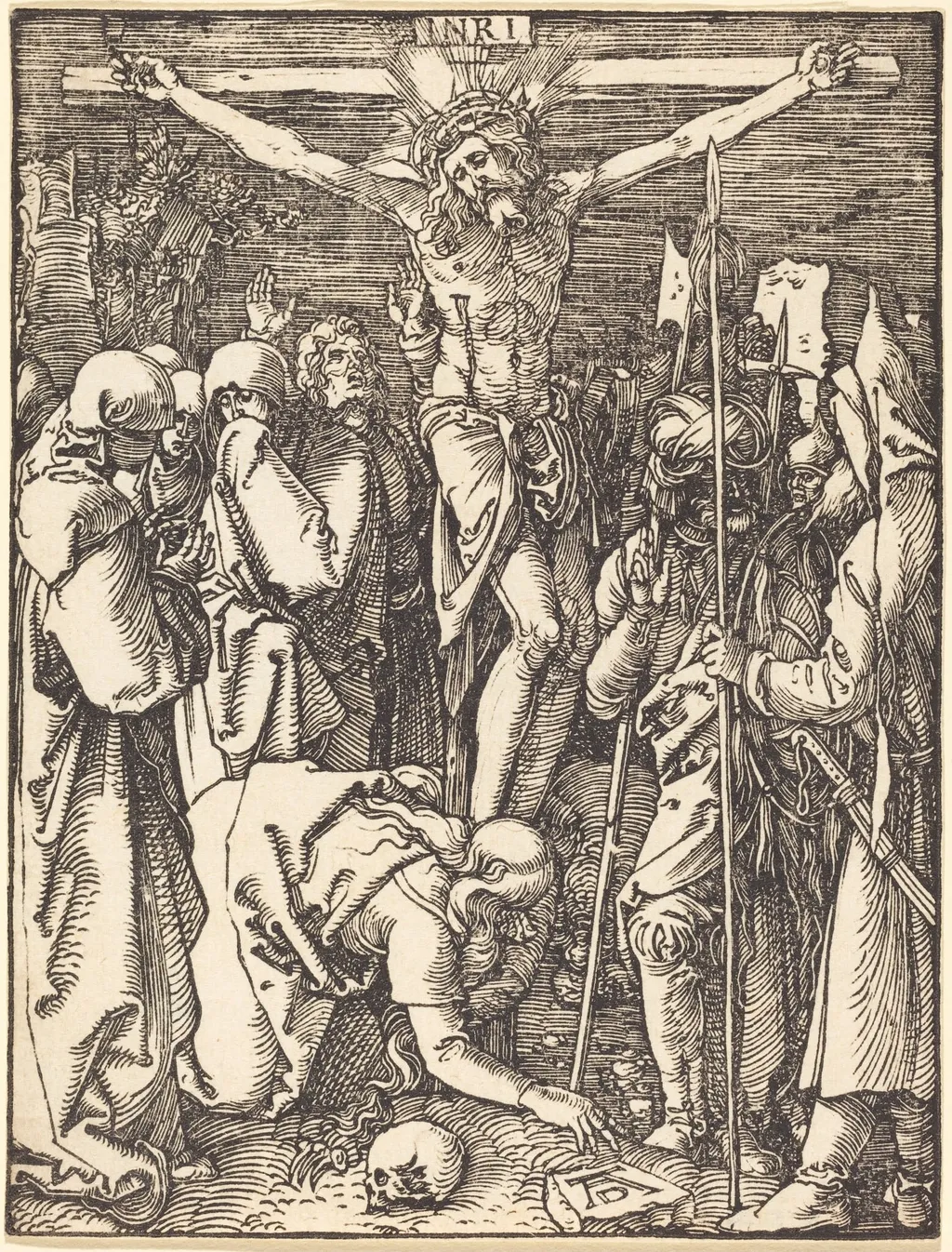
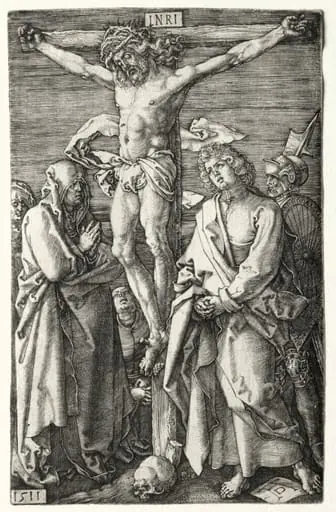
The Crucifixion is an ink print by the Northern Renaissance artist Albrecht Dürer. It dates from 1510 and is held in the collection of the British Museum.
About this work
Overview
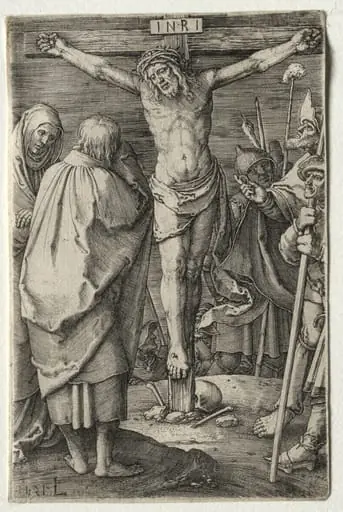
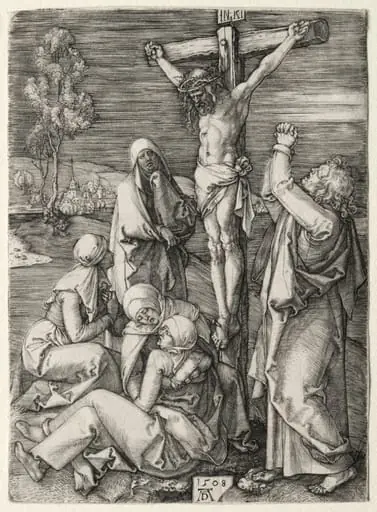
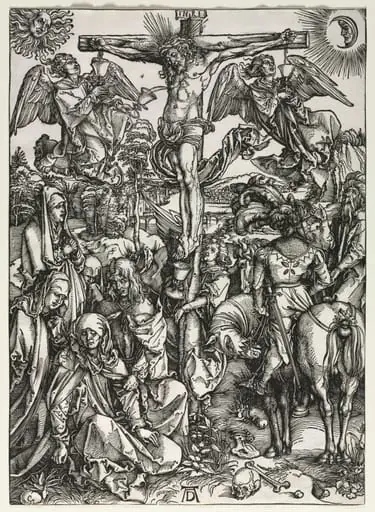
Albrecht Dürer’s woodcut entitled *The Crucifixion* was produced around 1510 on laid paper. The print presents the biblical scene of Jesus on the cross, accompanied by a crowd of onlookers and a skull positioned at the foot of the cross, a traditional reference to Golgotha.
Subject & Meaning
The composition centers on the crucified Christ, whose body is rendered with meticulous attention to the tension of muscles and the drapery of his garments. The skull beneath the cross serves as a memento mori, linking the event to the burial site and underscoring themes of mortality and redemption.
Technique & Style
Dürer employed a refined woodcut technique that allowed for heightened contrast: deep, velvety blacks juxtapose with sharply delineated whites. The lines are crisp, defining every fold of cloth and anatomical detail, creating a sense of immediacy that distinguishes the work from more serene devotional images.
History & Provenance
This print belongs to the final trio of Passion woodcuts Dürer completed in his later career. It reflects his experimentation with a newer printing process that intensified tonal ranges, a development that marked a departure from his earlier, more uniformly toned works.
Context
Created during the early sixteenth century, the piece aligns with the Northern Renaissance’s focus on detailed naturalism and theological symbolism. It anticipates Dürer’s subsequent series, *The Small Passion*, and contributes to the period’s broader visual discourse on the crucifixion narrative.
Artist & collection
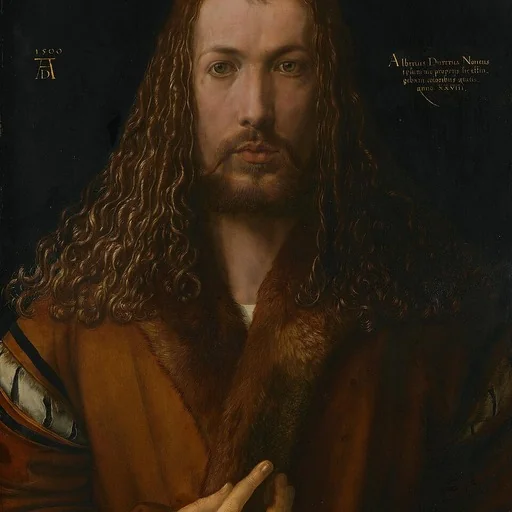
Artist
Albrecht Dürer spent his life in Nuremberg, a busy German city where artists traded prints like currency.

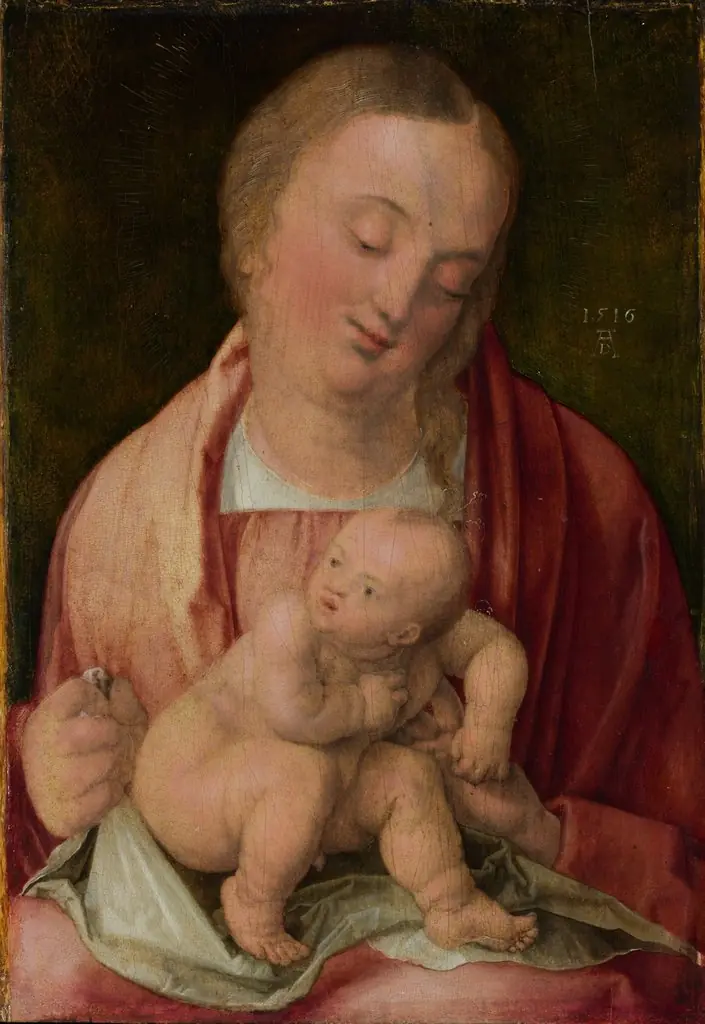
![Madonna and Child [obverse], by Albrecht Dürer](https://artifactworldgallery.com/img/albrecht-durer--madonna-and-child-obverse--d7b8ebf05d22ebe5-w320.webp)
![Lot and His Daughters [reverse], by Albrecht Dürer](https://artifactworldgallery.com/img/albrecht-durer--lot-and-his-daughters-reverse--b4ebf9b282faa17a-w320.webp)
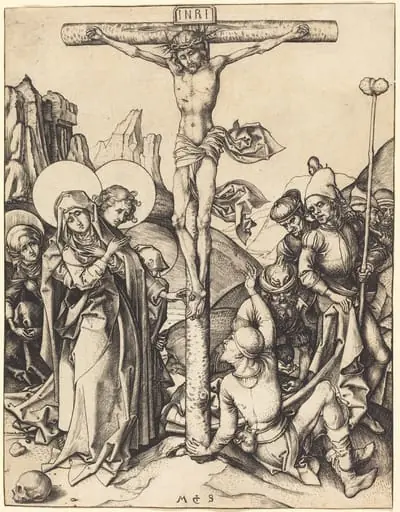 The Crucifixion
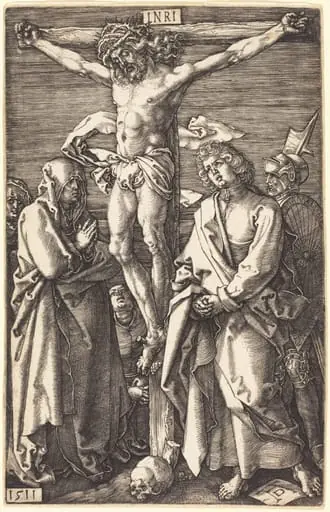 The Crucifixion
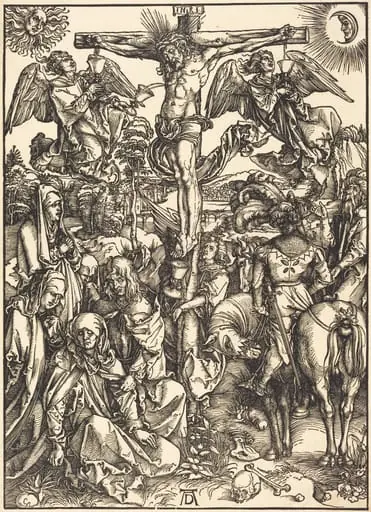 The Crucifixion
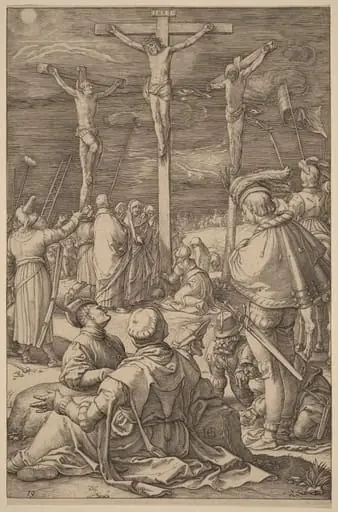 The Crucifixion
 The Crucifixion
 The Passion: The Crucifixion
 The Crucifixion
 The Crucifixion
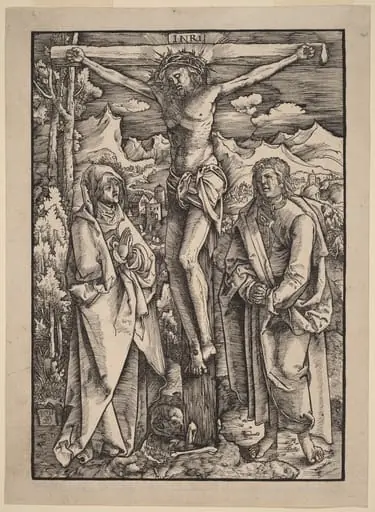 Christ on the Cross between the Virgin and Saint John
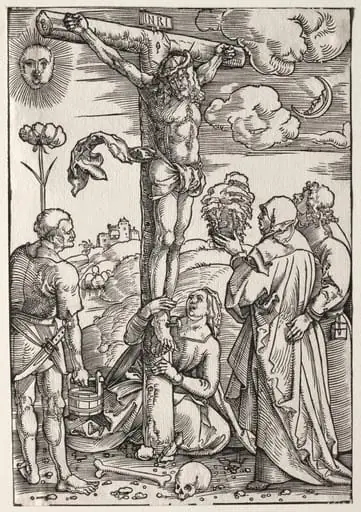 Christ on the Cross with Mary, St. John, Mary Magdalen and St. Stephen
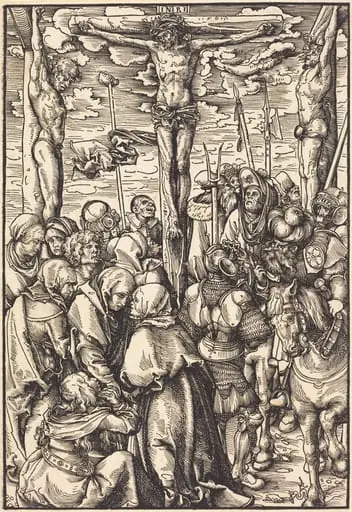 The Crucifixion
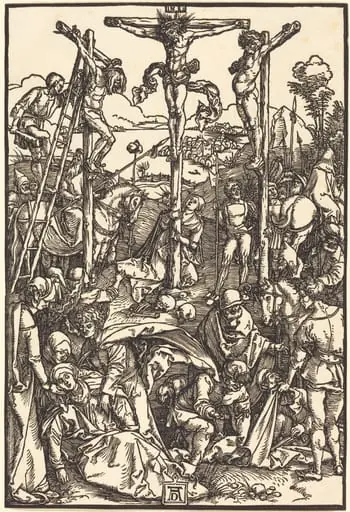 Calvary with the Three Crosses