Artwork
The Eight Saints of Austria
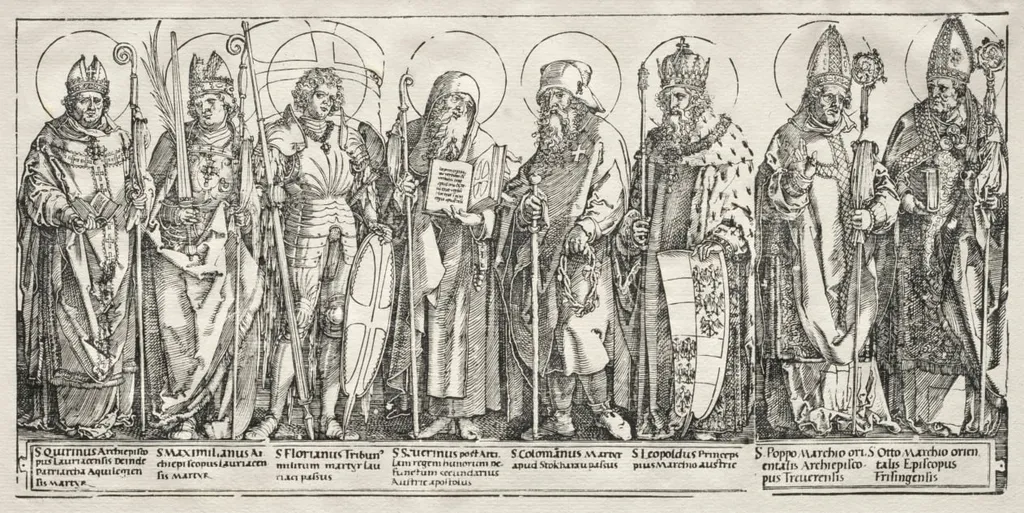
The Eight Saints of Austria is a print by the Renaissance artist Albrecht Dürer. It dates from 1515 and is held in the collection of the Cleveland Museum of Art.
About this work
Overview
Created circa 1515, this print by Albrecht Dürer presents eight saints arranged in a single row against a neutral background.
Created circa 1515, this print by Albrecht Dürer presents eight saints arranged in a single row against a neutral background. Executed in a precise, linear style, it belongs to his series of religious prints that circulated widely across Europe. Dürer, a Nuremberg-born artist, was renowned for his technical innovation in woodcut and engraving, and this work exemplifies his ability to convey spiritual gravity through minimal means.
Subject & Meaning
The eight figures are identified by Latin inscriptions as saints associated with Austria, likely chosen for regional veneration. Each holds a symbolic attribute—such as a book, sword, or palm branch—signifying their martyrdom, ministry, or divine favor. Their halos and solemn expressions emphasize sanctity, while the absence of narrative context focuses attention on their individual holiness and collective presence as intercessors.
Technique & Style
Dürer employed fine, controlled lines and subtle tonal gradations to model the figures with sculptural weight. The robes are rendered with rhythmic folds, and the faces are carefully shaded to suggest volume without reliance on perspective or background. The plain setting isolates the saints, reinforcing their iconic status. The print’s clarity and precision reflect Dürer’s mastery of the woodcut medium and his commitment to anatomical and spiritual realism.
History & Provenance
The print was produced during Dürer’s mature period, when his works were in high demand across religious and secular circles. It entered the collection of the Cleveland Museum of Art through documented acquisitions in the 20th century, though its earlier ownership history remains largely unrecorded. Its survival in good condition reflects its value as both devotional object and artistic artifact.
Context
In early 16th-century Central Europe, devotional prints like this served as accessible tools for private worship and regional identity. Dürer’s prints responded to growing lay piety and the demand for portable religious imagery before the Reformation. This work aligns with contemporary efforts to visualize saints as tangible, authoritative figures, bridging the gap between ecclesiastical tradition and individual devotion.
Legacy
Dürer’s Eight Saints of Austria contributed to the standardization of saintly iconography in print form, influencing later religious imagery across Northern Europe. Its restrained composition and technical refinement set a benchmark for clarity in devotional art. Though not widely exhibited today, it remains a key example of how printmaking extended the reach of sacred imagery beyond ecclesiastical walls.
Artist & collection
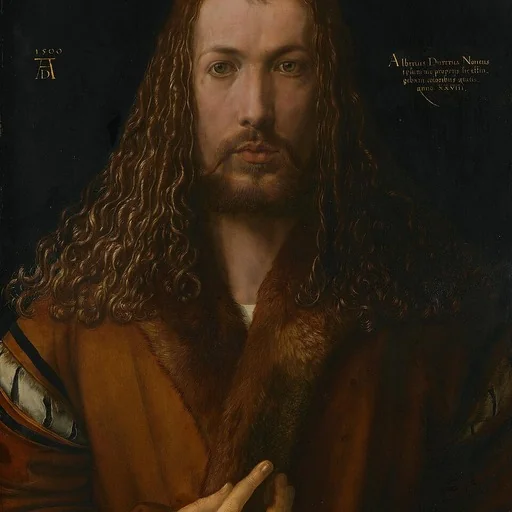
Artist
Albrecht Dürer spent his life in Nuremberg, a busy German city where artists traded prints like currency.

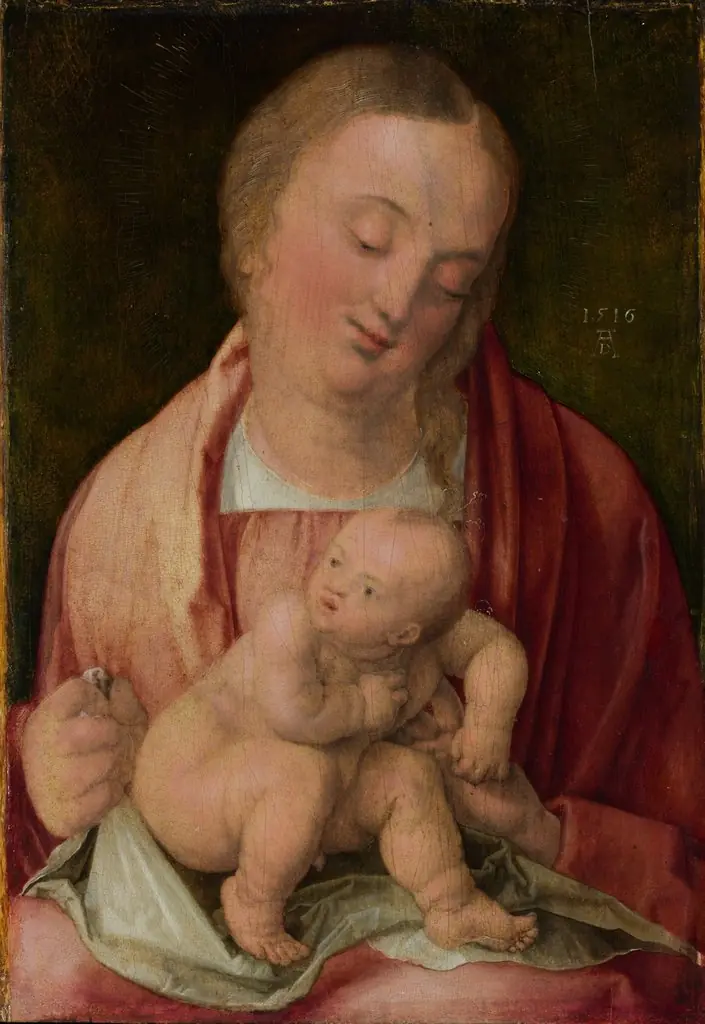
![Madonna and Child [obverse], by Albrecht Dürer](https://artifactworldgallery.com/img/albrecht-durer--madonna-and-child-obverse--d7b8ebf05d22ebe5-w320.webp)
![Lot and His Daughters [reverse], by Albrecht Dürer](https://artifactworldgallery.com/img/albrecht-durer--lot-and-his-daughters-reverse--b4ebf9b282faa17a-w320.webp)
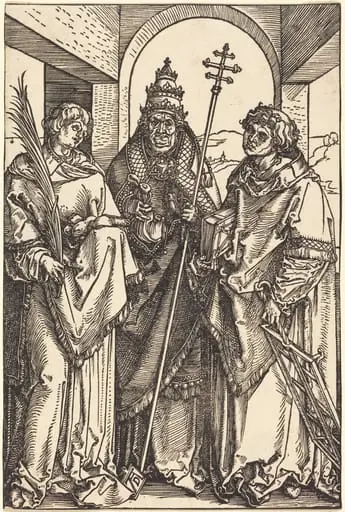 Saints Stephen, Sixtus, and Lawrence
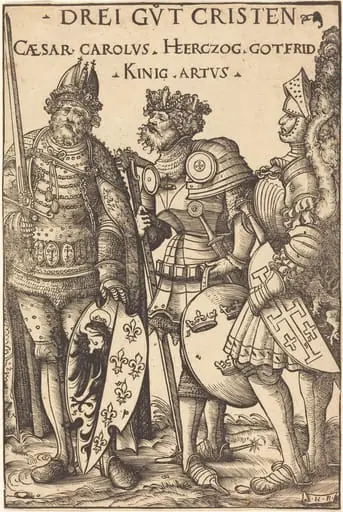 Charlemagne, Arthur and Godfrey
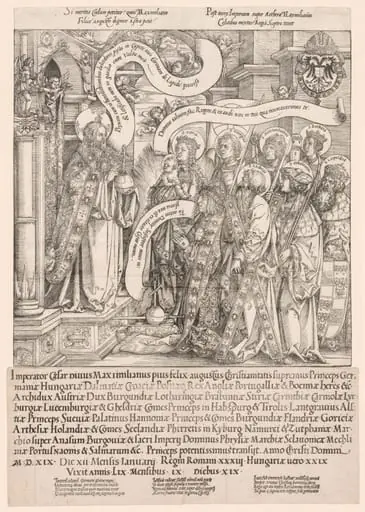 Maximilian Presented by His Patron Saints to the Almighty
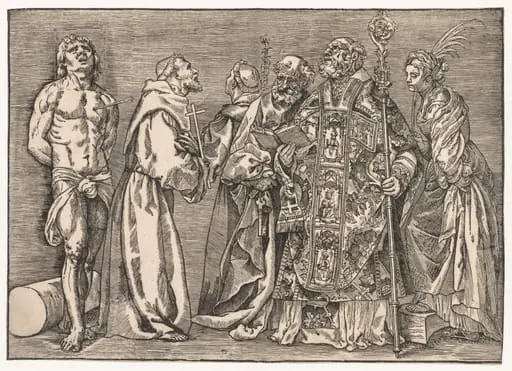 The Six Saints
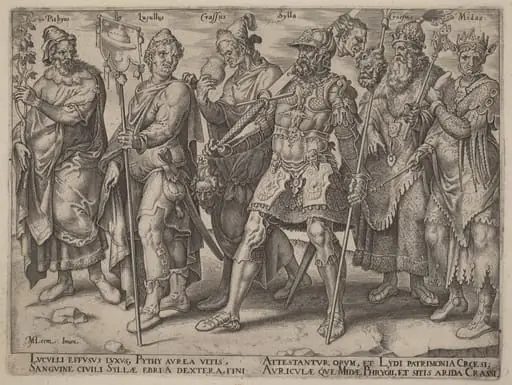 Notorious Examples of Wealth from Antiquity
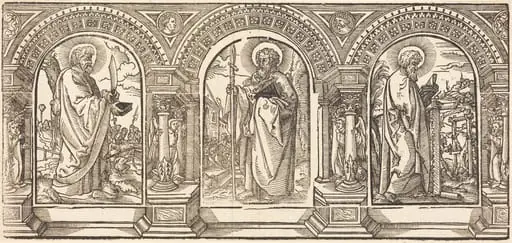 Christ and His Disciples I
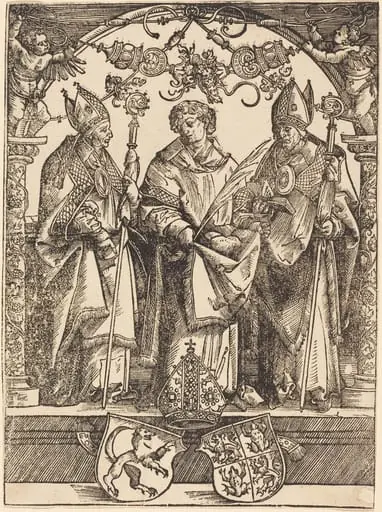 Saints Maximilian, Stephen, and Valentine
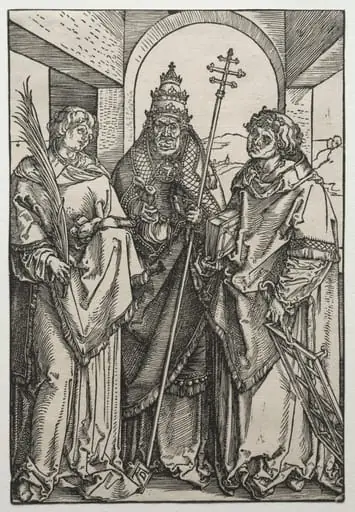 Saints Stephen, Sixtus and Laurence
 The Deceptive Effects of Wealth
 Christ and His Disciples V