Artwork
Christ and His Disciples I
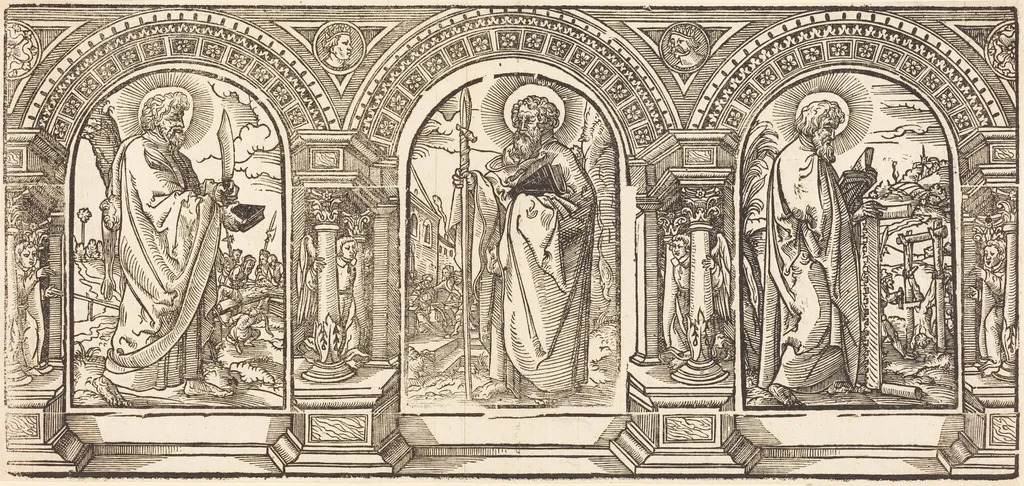
Christ and His Disciples I is an ink print by the Renaissance artist German 16th Century. It dates from 1550 and is held in the collection of the National Gallery of Art.
About this work
Overview
Sharp incised lines and dense shading give the images a sculptural depth, characteristic of early printed religious imagery designed for devotional use.
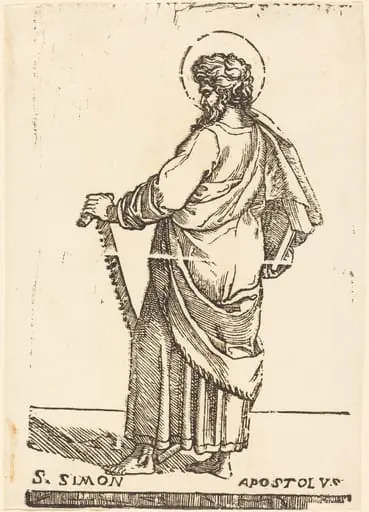
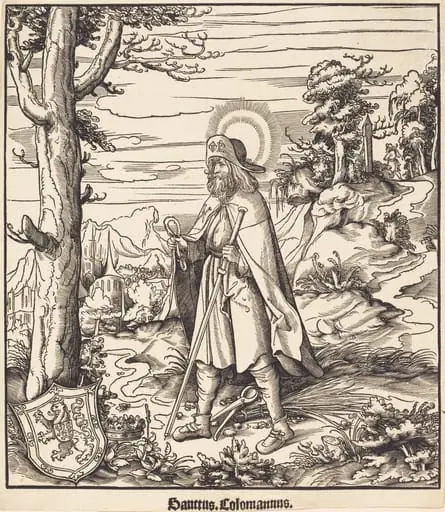
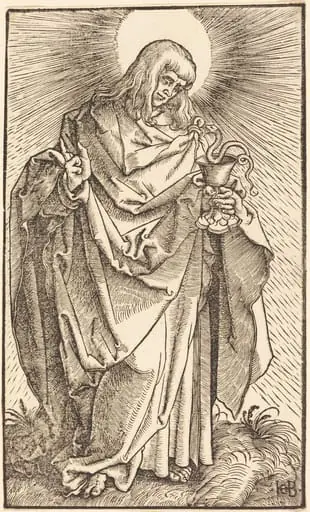
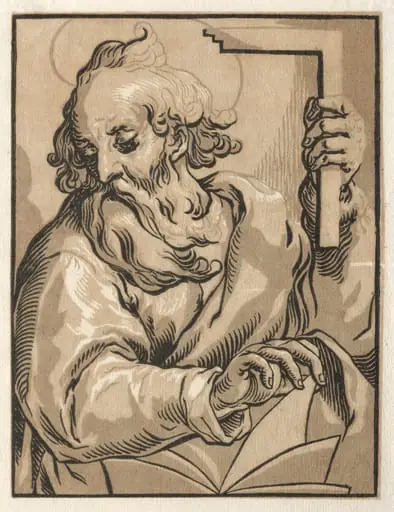
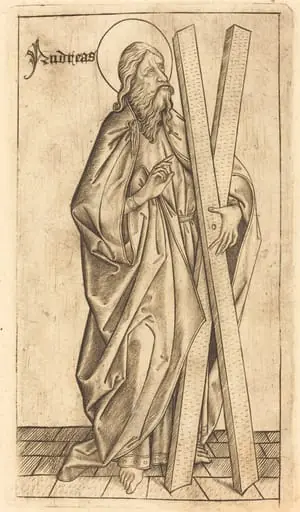
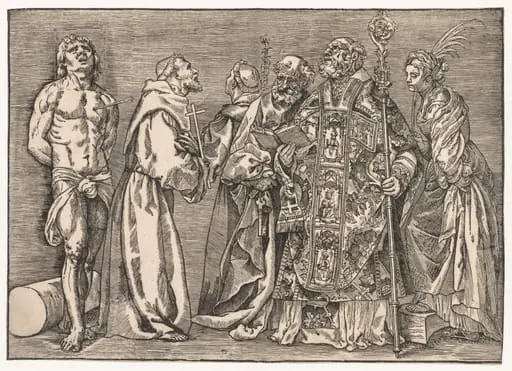
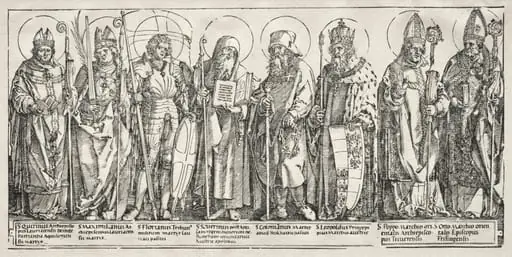
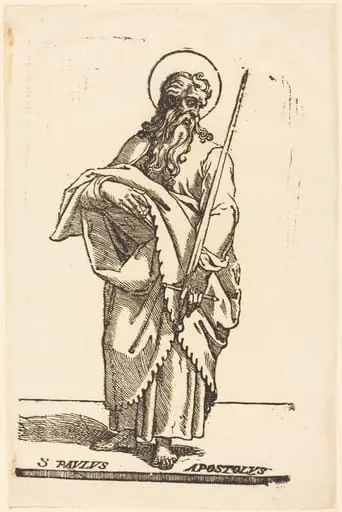
This woodcut presents five vertical panels arranged like stained-glass windows, each depicting scenes from the life of Christ and his disciples. The composition is elongated and tightly framed, with figures rendered in flowing drapery against detailed architectural backdrops. Sharp incised lines and dense shading give the images a sculptural depth, characteristic of early printed religious imagery designed for devotional use.
Subject & Meaning
The central panel portrays Christ haloed and standing on clouds, likely representing his ascension or divine authority. Surrounding panels show disciples in varied poses—some holding staffs or books—suggesting moments of teaching, witness, or departure. Tiny angels and architectural elements reinforce sacred space, guiding viewers through a narrative sequence meant to inspire contemplation and reinforce doctrinal themes.
Technique & Style
Executed as a woodcut, the image relies on carved lines and bold contrasts to define form. The artist used fine, controlled incisions to suggest texture in robes and depth in backgrounds, while heavy shading enhances volume. This method, common in the late medieval and early Renaissance periods, allowed for mass reproduction of religious imagery, bridging the gap between manuscript illumination and printed books.
History & Provenance
Though the artist’s identity is unrecorded, the style aligns with Northern European printmakers active in the late 15th century. Such woodcuts were often produced in monastic or urban workshops for private devotion or liturgical instruction. Their portability made them ideal for spreading biblical narratives beyond literate elites, particularly in regions where access to painted altarpieces was limited.
Context
Created during a period when printing was expanding religious access, this woodcut reflects the Church’s use of visual media to communicate doctrine to a largely illiterate populace. Similar series appeared in devotional books and wall hangings, merging traditional iconography with emerging print technology. The vertical format echoes ecclesiastical architecture, reinforcing the sacred nature of the scenes depicted.
Legacy
This work exemplifies how woodcut printing democratized religious imagery before the dominance of engraving and etching. Its structured, narrative format influenced later illustrated Bibles and catechisms. Though overshadowed by more elaborate prints, such series preserved visual traditions and laid groundwork for the integration of text and image in Protestant and Catholic educational materials.
Artist & collection

Artist
A German artist from the late 1500s drew lively scenes of knights clashing in parades and mock battles.

![Abraham Entertaining the Angels [verso], by German 16th Century](https://artifactworldgallery.com/img/german-16th-century--abraham-entertaining-the-angels-verso--69d1b25f4eba0a53-w320.webp)