Artwork
The Last Supper
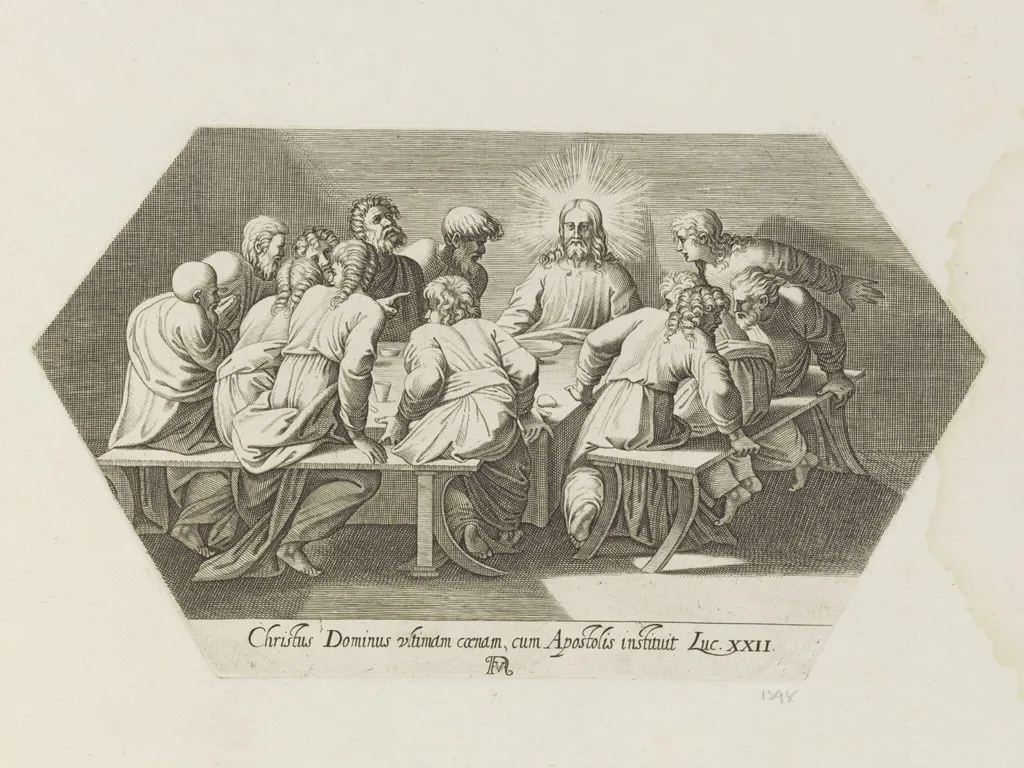
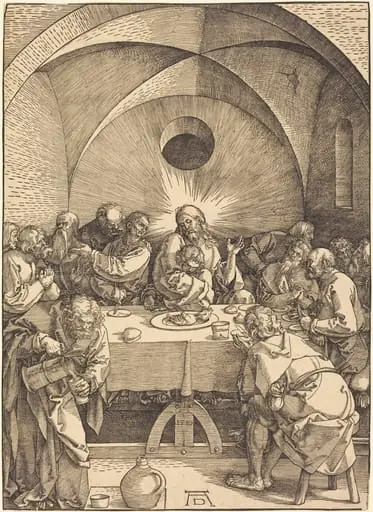
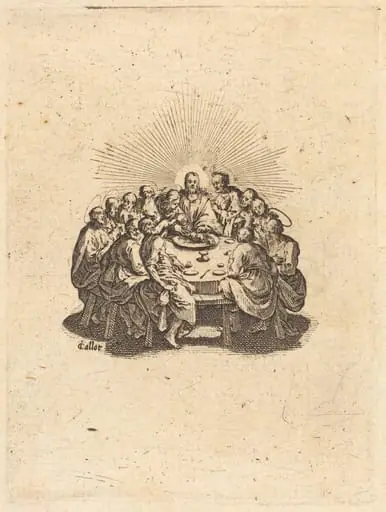
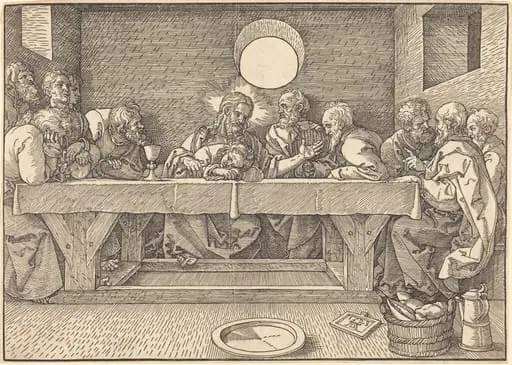
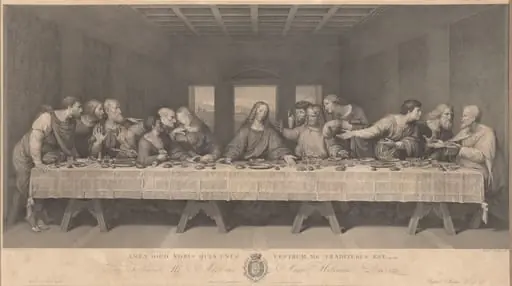
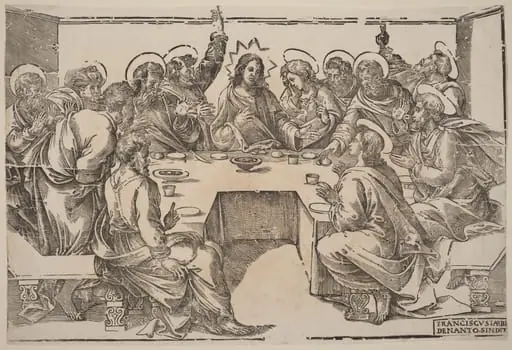
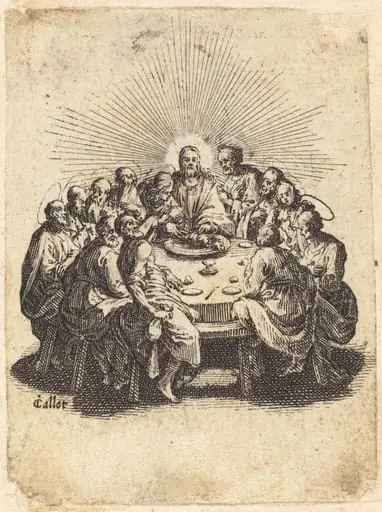
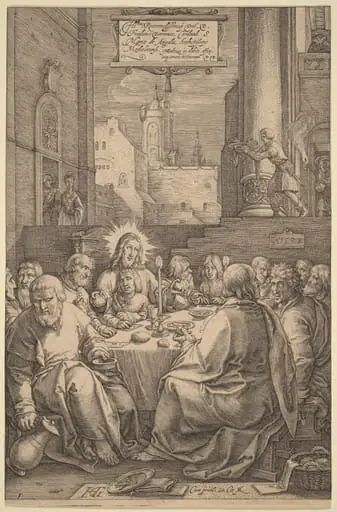
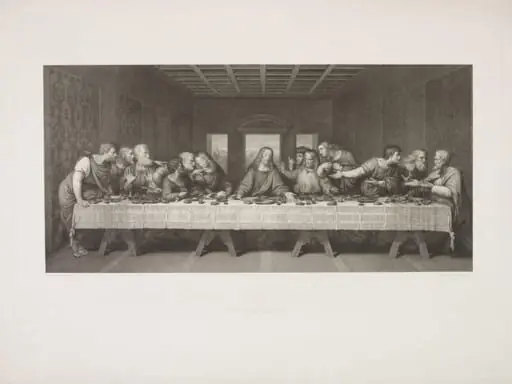
The Last Supper is a print by the Baroque artist Francesco Villamena. It is held in the collection of the Victoria and Albert Museum.
About this work
Overview
Created as part of a series of twenty prints, it translates a painted biblical narrative into a monochrome graphic format.
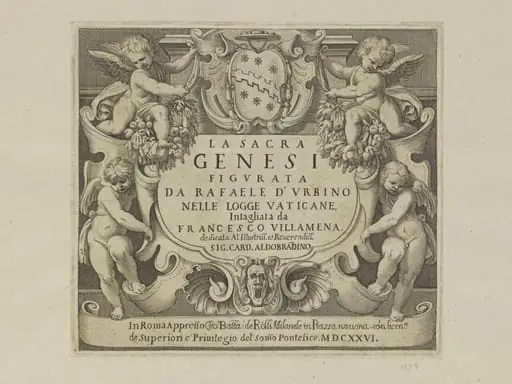
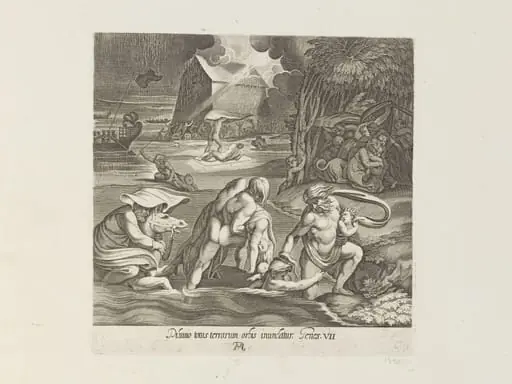
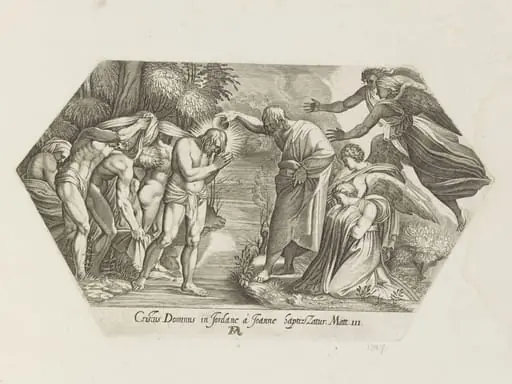
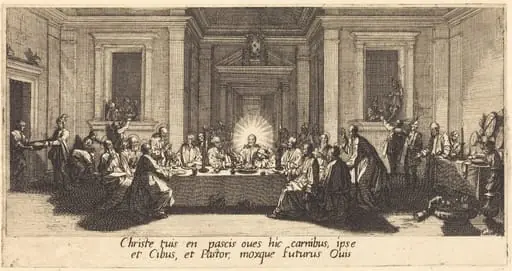
This 1626 etching by Francesco Villamena reproduces a scene from Raphael’s fresco cycle in the Vatican’s Loggie. Created as part of a series of twenty prints, it translates a painted biblical narrative into a monochrome graphic format. The print carries a Latin inscription identifying the subject as Christ instituting the Last Supper with his apostles, aligning it with devotional imagery popular in early 17th-century print culture.
Subject & Meaning
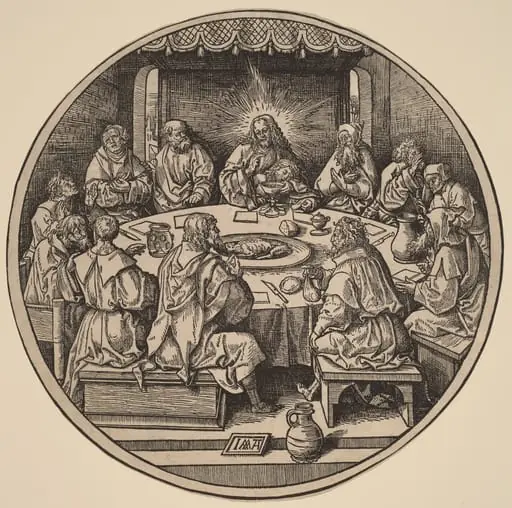
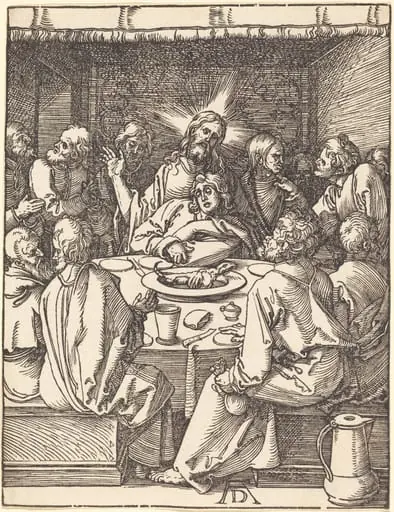
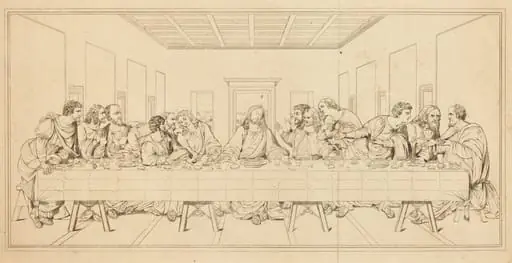
The scene captures the moment Christ announces that one of his disciples will betray him. The central figure, Christ, gestures with raised hands, while the apostles react with varied expressions of shock, disbelief, and inquiry. The composition emphasizes emotional tension and collective attention, reinforcing the theological weight of the event as the institution of the Eucharist and the foreshadowing of Christ’s sacrifice.
Technique & Style
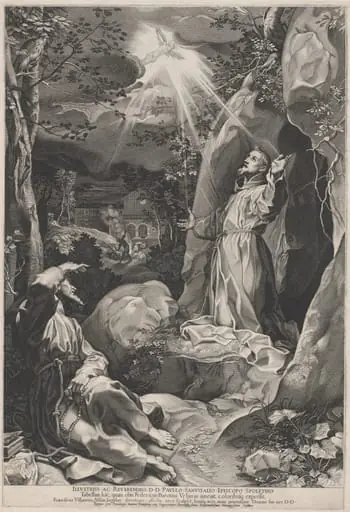
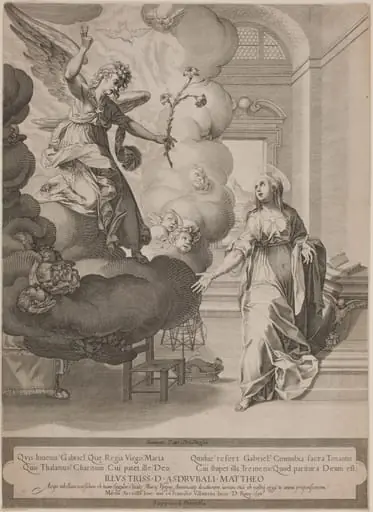
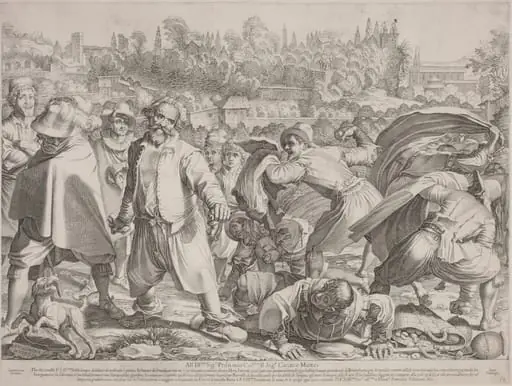
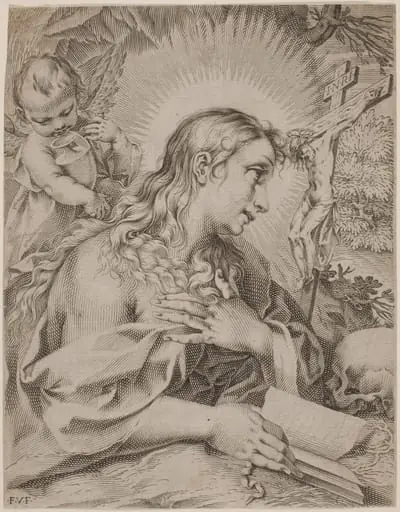
Villamena employed fine, controlled lines and cross-hatching to render depth and volume in the figures and drapery. The dense arrangement of bodies and the sharp contrasts between light and shadow reflect Baroque sensibilities, prioritizing dramatic intensity over spatial clarity. The print’s monochrome palette enhances its graphic force, adapting Raphael’s painted composition into a format suited for reproduction and private devotion.
History & Provenance
The print was produced in Rome in 1626 as part of a published series titled the 'Raphael Bible,' which translated Raphael’s Vatican frescoes into engraved form. Villamena, a skilled engraver active in Rome, was commissioned to interpret these works for a broader audience. The series served both as a devotional aid and as a means of disseminating High Renaissance imagery beyond the Vatican’s walls.
Context
In the early 17th century, prints after major paintings were widely circulated among clergy, scholars, and the devout. Villamena’s work emerged during a period when the Catholic Church encouraged visual aids for religious instruction following the Council of Trent. By reproducing Raphael’s compositions, such prints helped maintain the authority of established iconography while making it accessible outside Rome.
Legacy
Villamena’s etchings contributed to the enduring visibility of Raphael’s compositions in print form. Though not original inventions, these works preserved and propagated key religious narratives through accessible media. The series remains a valuable record of how Renaissance art was reinterpreted and distributed in the Baroque era, influencing later reproductive printmaking traditions.
Artist & collection
Artist
Francesco Villamena (1564–1624) was an Italian engraver, drawing teacher and art collector.