Artwork
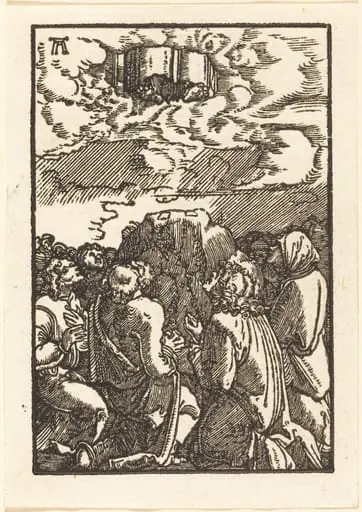
The Small Passion: The Ascension
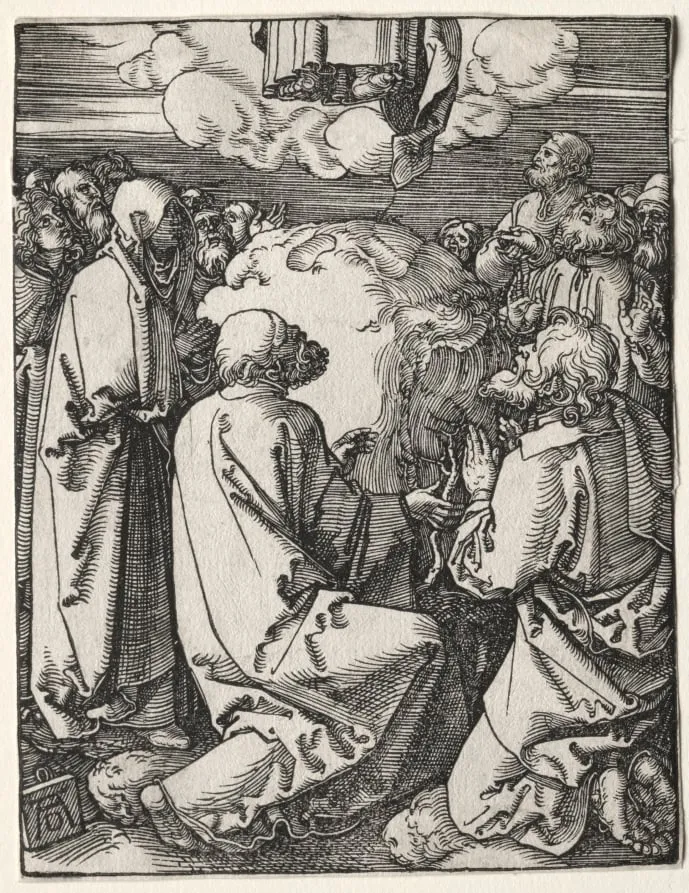
The Small Passion: The Ascension is a print by the Renaissance artist Albrecht Dürer. It dates from 1510 and is held in the collection of the Cleveland Museum of Art.
About this work
Overview
Part of a cohesive devotional series, the print reflects Dürer’s deep engagement with religious narrative and his technical precision in woodcutting.
Created in 1510, *The Small Passion: The Ascension* is one of 36 woodcuts by Albrecht Dürer illustrating events from Christ’s final days. Part of a cohesive devotional series, the print reflects Dürer’s deep engagement with religious narrative and his technical precision in woodcutting. The work was produced during a period when Dürer was refining his printmaking methods, gaining international acclaim for his ability to convey complex scenes with clarity and emotional weight.
Subject & Meaning
The scene captures Christ’s ascent into heaven, as described in the Acts of the Apostles. Below, a group of disciples reacts with awe and reverence: one kneels in prayer, others gesture upward in wonder or point toward the divine figure rising above them. The composition emphasizes human response to the miraculous, grounding spiritual transcendence in tangible emotion. Dürer avoids idealized figures, instead portraying individuals with distinct postures that convey varied states of belief and bewilderment.
Technique & Style
Dürer employed fine, controlled lines to build form and movement, using dense hatching and cross-hatching to model volume and contrast. The dark, swirling clouds and sharply defined figures create a sense of depth through chiaroscuro, despite the medium’s monochrome limitations. His attention to gesture and drapery enhances the drama, while the intricate background details—trees, rocks, distant hills—anchor the supernatural event in a recognizable earthly setting.
History & Provenance
The print entered the Cleveland Museum of Art’s collection in the 20th century, having passed through private European collections since its creation. As part of *The Small Passion*, it was originally sold as a set, often bound in books for private devotion. Its survival in good condition reflects its early popularity among collectors and religious patrons who valued Dürer’s prints for their devotional utility and artistic excellence.
Context
In early 16th-century Germany, printed images were vital tools for religious instruction and personal piety. Dürer’s *Small Passion* responded to growing demand for accessible biblical imagery, especially as literacy rose and the Reformation loomed. Unlike large altarpieces, these woodcuts could be owned and studied privately, making them powerful conduits for spiritual reflection among both clergy and laypeople.
Legacy
Dürer’s *Small Passion* set a new standard for narrative printmaking, influencing generations of artists across Europe. Its integration of emotional realism, technical innovation, and theological depth helped elevate printmaking from craft to fine art. The series remains a touchstone for understanding how visual media shaped religious experience in the early modern period, bridging artistic ambition with devotional purpose.
Artist & collection
Artist
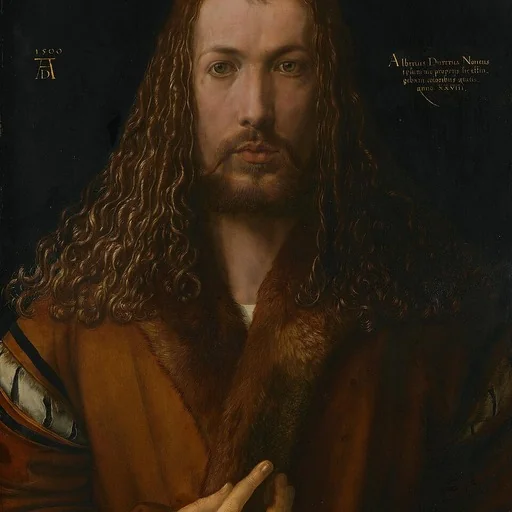
Albrecht Dürer spent his life in Nuremberg, a busy German city where artists traded prints like currency.

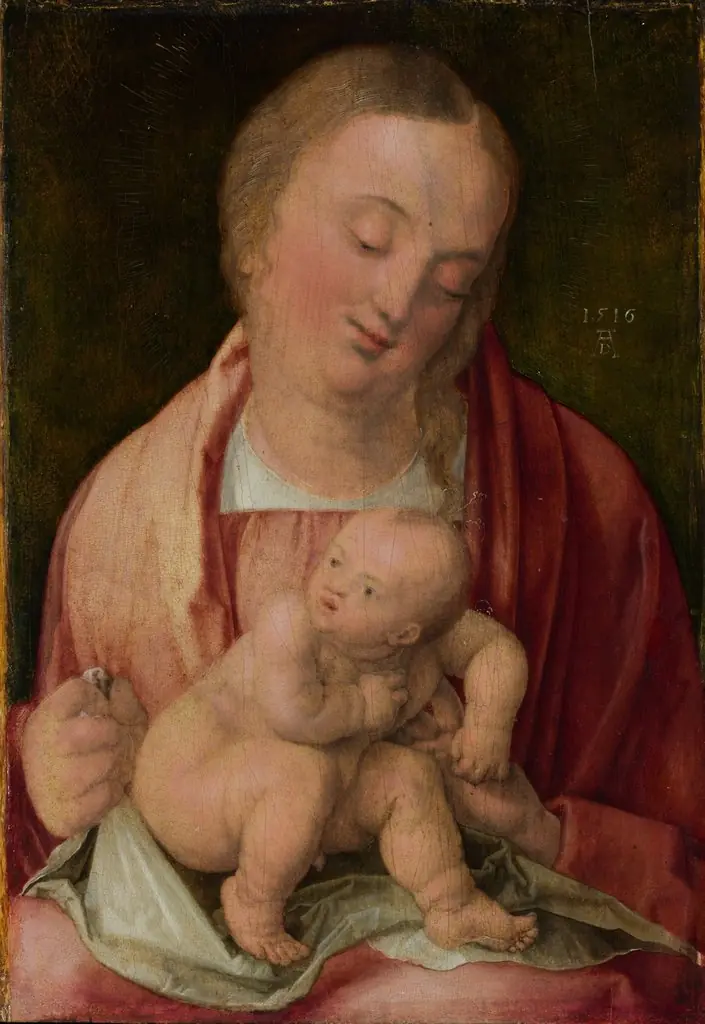
![Madonna and Child [obverse], by Albrecht Dürer](https://artifactworldgallery.com/img/albrecht-durer--madonna-and-child-obverse--d7b8ebf05d22ebe5-w320.webp)
![Lot and His Daughters [reverse], by Albrecht Dürer](https://artifactworldgallery.com/img/albrecht-durer--lot-and-his-daughters-reverse--b4ebf9b282faa17a-w320.webp)