Artwork
Hercules and the Hind
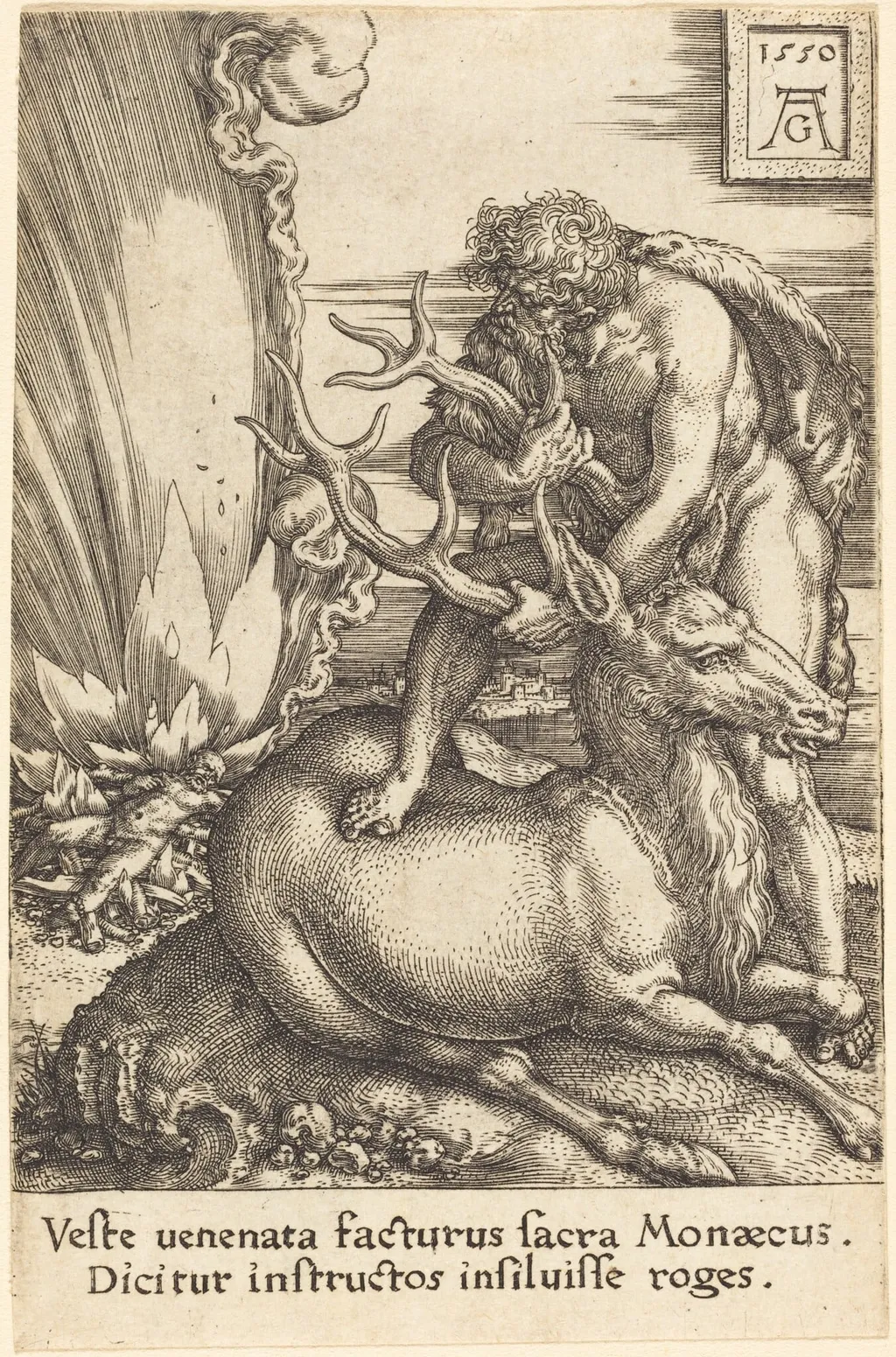
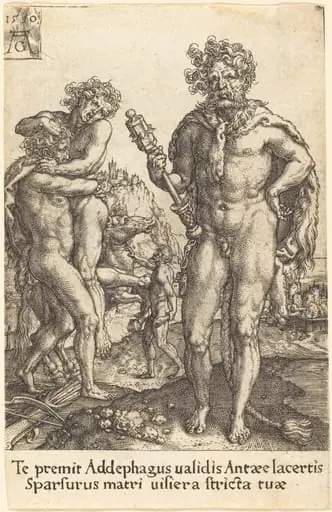
Hercules and the Hind is a print by the Northern Renaissance artist Heinrich Aldegrever. It dates from 1550 and is held in the collection of the National Gallery of Art.
About this work
Hercules kneels in a forest. A sleek hind—a deer with golden horns—stands calm beside him. Its legs look almost human.
This isn’t a Greek statue. It’s a tiny metal engraving, just two inches tall. German artist Heinrich Aldegrever cut it with a graver in 1550. He loved tiny, detailed prints.
Look up Aldegrever, Heinrich if you want to see more like it.
Overview
Heinrich Aldegrever's engraving, Hercules and the Hind, is a small-scale print created around 1550. It measures just two inches tall and showcases the artist's skill in intricate detail.
Subject & Meaning
The engraving depicts a scene from classical mythology, showing Hercules kneeling in a forest beside the Ceryneian Hind, a deer with golden horns. The hind's calm demeanor and almost human-like legs add to the scene's serenity.
Technique & Style
Aldegrever, a German engraver associated with the 'Little Masters,' used a graver to cut the intricate design into metal. His work is characterized by its small scale and detailed execution, reflecting the influence of his predecessor, Albrecht Dürer.
Artist & collection

Artist
Heinrich Aldegrever or Aldegraf was a German painter and engraver. He was one of the "Little Masters", the group of German artists making small old master prints in the generation after Albrecht Dürer.