Artwork
Hercules and the Nemean Lion
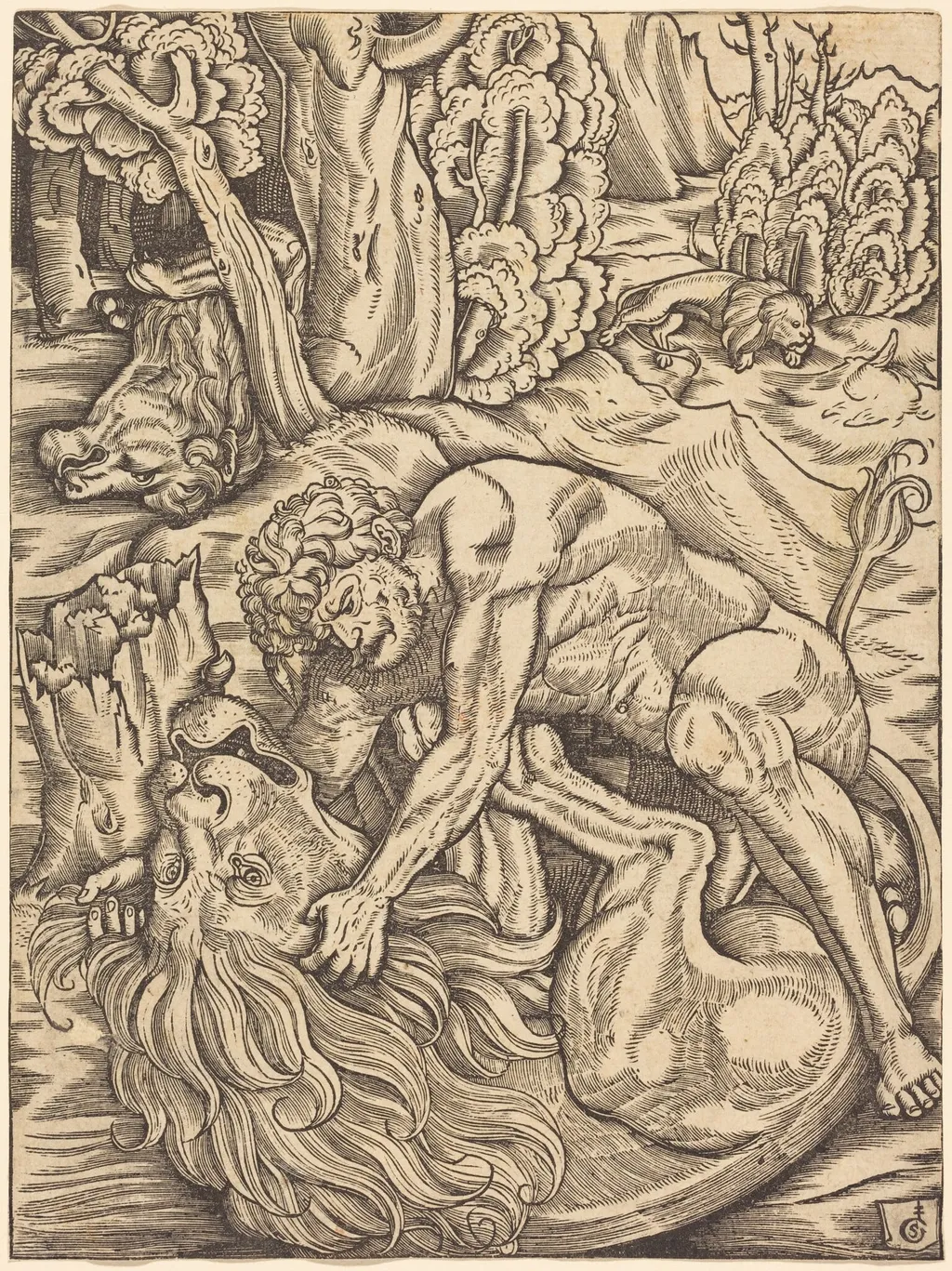
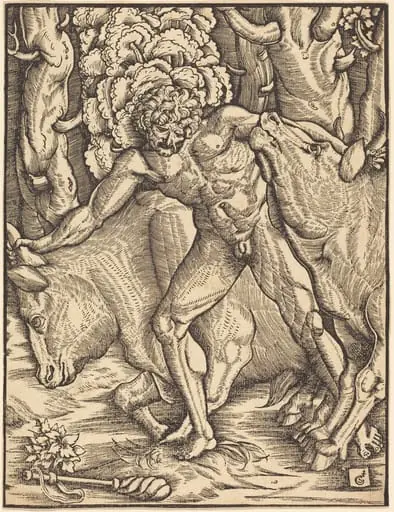
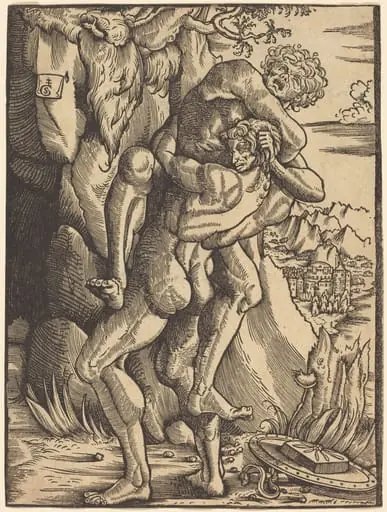
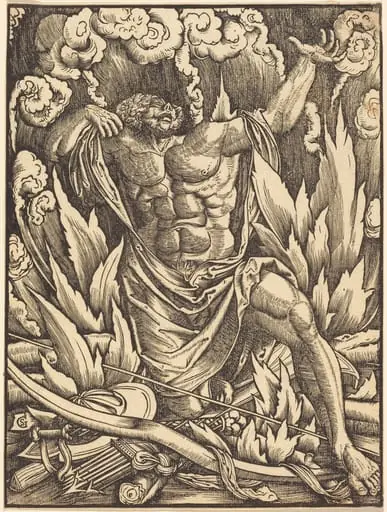
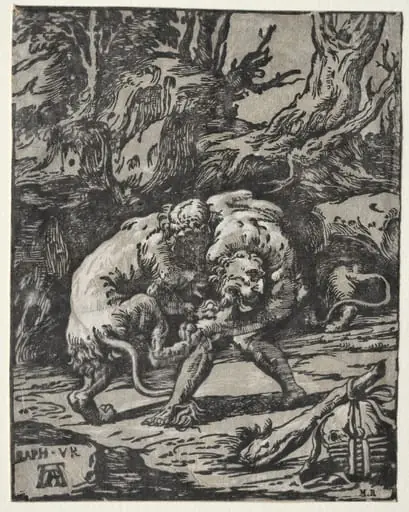
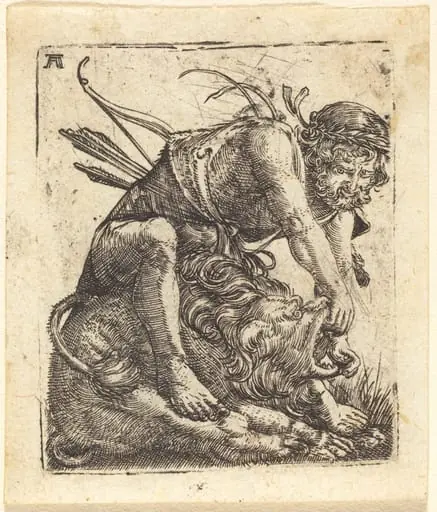
Hercules and the Nemean Lion is an ink print by the Renaissance artist Gabriel Salmon. It dates from 1528 and is held in the collection of the National Gallery of Art.
About this work
Overview
The composition emphasizes physical tension through bold, incised lines and high contrast, characteristic of early 16th-century Northern European printmaking.
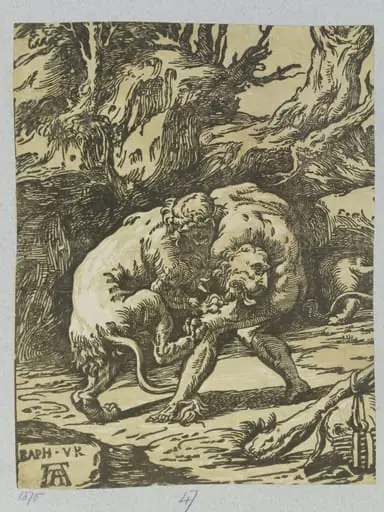
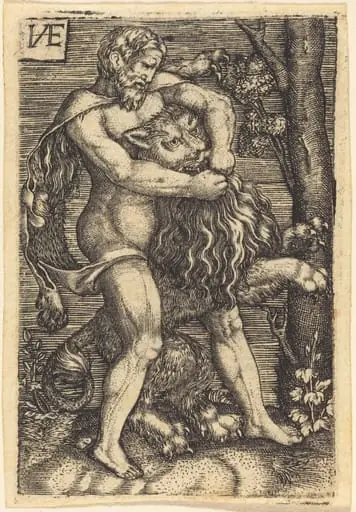
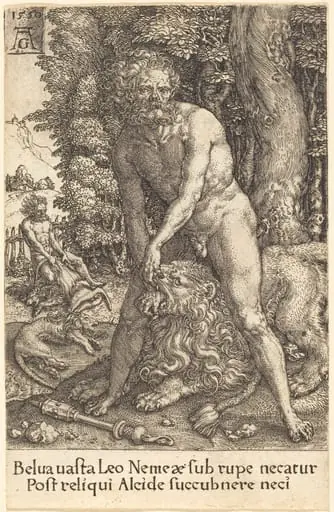
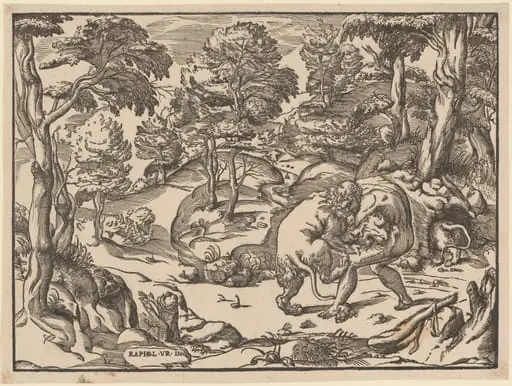
Created around 1528, this woodcut by Gabriel Salmon depicts a scene from Greek myth: Hercules engaged in combat with the Nemean Lion. Executed on laid paper, the print uses the woodcut technique to render the struggle in stark black and white. The composition emphasizes physical tension through bold, incised lines and high contrast, characteristic of early 16th-century Northern European printmaking.
Subject & Meaning
The image illustrates the first of Hercules’ Twelve Labors, in which he must slay an invulnerable lion. Salmon captures the moment of direct physical confrontation, showing Hercules strangling the beast with his bare strength. The lion’s open mouth and digging claws convey its desperate resistance. The scene symbolizes human endurance against overwhelming natural force, a theme central to classical heroism.
Technique & Style
Salmon employed the woodcut method, carving lines into a wooden block to create the image, then inking and pressing it onto paper. The design relies on sharp, angular strokes and dense shadows to define form and motion. The absence of gradation heightens the drama, with the lion’s fur and Hercules’ musculature rendered through rhythmic, incised marks rather than subtle tonal shifts.
History & Provenance
The print dates to the early 1520s, a period when mythological subjects were increasingly popular in Northern European prints. While Salmon’s oeuvre is limited, this work survives in several institutional collections, suggesting it was circulated among collectors and scholars. Its survival indicates a demand for classical imagery in print form during the Reformation era.
Context
In early 16th-century Europe, woodcuts served as affordable, reproducible images for disseminating religious, moral, and classical narratives. Salmon’s depiction aligns with a broader trend of reviving ancient myths through print, often for educational or decorative purposes. The wild, untamed background reflects contemporary interest in nature as a realm of challenge and transformation.
Legacy
Though not widely known today, Salmon’s woodcut contributes to the visual tradition of Hercules’ labors in print culture. Its emphasis on raw physicality influenced later illustrators of classical themes. The work remains a tangible example of how mythological stories were translated into accessible visual formats before the rise of mass reproduction technologies.
Artist & collection