Artwork
Portrait of a Bearded Man with a Beret
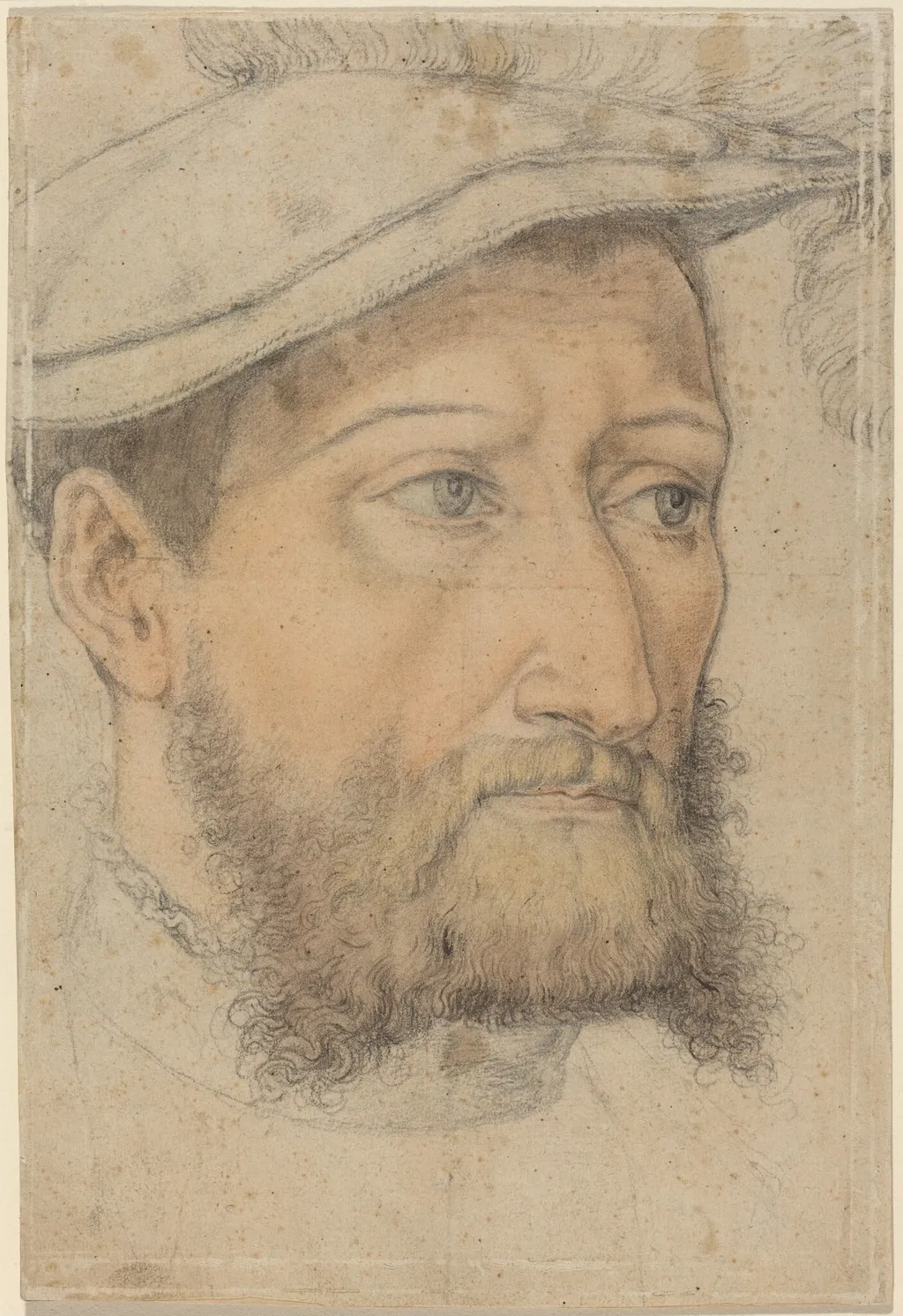
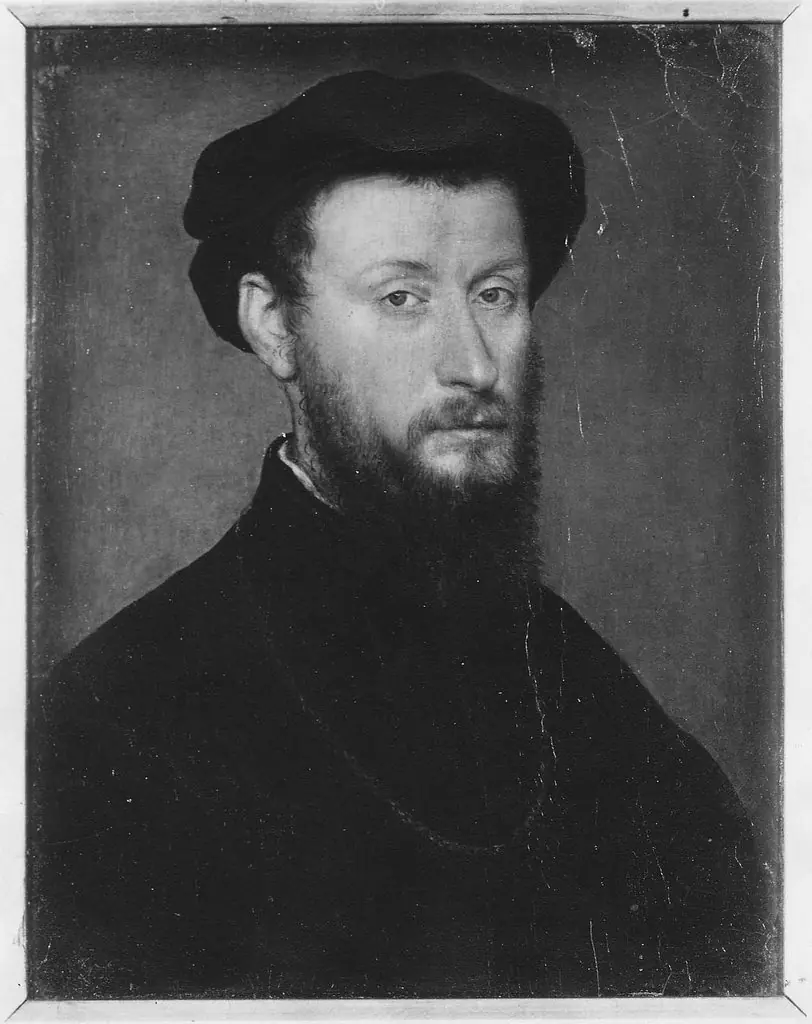
Portrait of a Bearded Man with a Beret is a chalk drawing by the Northern Renaissance artist Heinrich Aldegrever. It dates from 1540 and is held in the collection of the National Gallery of Art.
About this work
Overview
Created around 1540 by the German artist Heinrich Aldegrever, this drawing portrays a bearded man in a beret using colored chalks on laid paper.
Created around 1540 by the German artist Heinrich Aldegrever, this drawing portrays a bearded man in a beret using colored chalks on laid paper. The work was later mounted onto a support, a common conservation practice of the time. Aldegrever, known for his intricate small-scale engravings, applied similar precision to this portrait, demonstrating his command of a medium that demanded finesse and control.
Subject & Meaning
The subject is a man with a calm, direct gaze, his identity unknown. His simple attire and unadorned beret suggest modest status, yet the focused rendering of his face conveys individuality. The absence of symbolic objects or elaborate context invites quiet contemplation, emphasizing presence over narrative. The portrait functions as a study of character rather than a statement of rank or profession.
Technique & Style
Colored chalks were used with restraint to model form through subtle tonal shifts rather than bold lines. The artist avoided dramatic contrasts, relying instead on soft gradations to define the contours of the face and the fold of the beret. This restrained approach reflects the Northern Renaissance preference for intimate observation over theatrical expression, highlighting texture and volume with minimal means.
History & Provenance
The drawing was likely made during Aldegrever’s active years in Paderborn, where he produced numerous prints and drawings. Its later mounting onto a support indicates it was valued enough to be preserved, though its early ownership remains undocumented. The work entered institutional collections in the modern era, where its material fragility and historical significance prompted careful conservation.
Context
Aldegrever belonged to the group of Northern artists known as the 'Little Masters,' who refined detailed, small-format works following Dürer’s influence. In an era dominated by woodcuts and engravings, this portrait stands as a rare example of colored chalk drawing, reflecting a growing interest in personal portraiture among educated elites and artists seeking to explore human expression beyond print.
Legacy
Though Aldegrever is better known for his engravings, this drawing illustrates his versatility and sensitivity to the human form. It contributes to the broader understanding of 16th-century drawing practices, where chalks served as a bridge between preparatory sketches and finished works. The portrait remains a quiet testament to the value placed on individual likeness in Renaissance Germany.
Artist & collection

Artist
Heinrich Aldegrever or Aldegraf was a German painter and engraver. He was one of the "Little Masters", the group of German artists making small old master prints in the generation after Albrecht Dürer.

 Portrait of a Man
 Portrait of a Man
 Self-Portrait
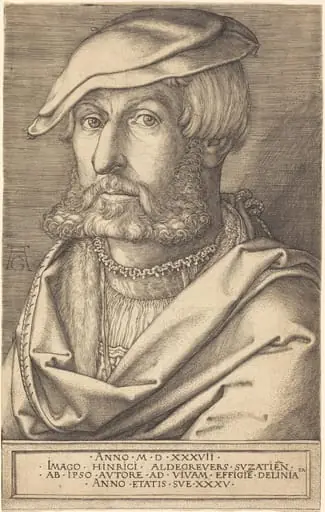 Self-Portrait
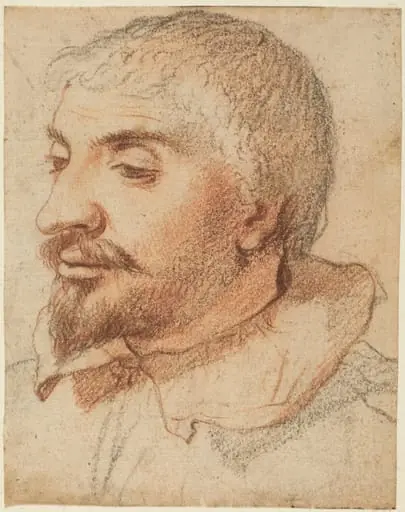 Head of a Man
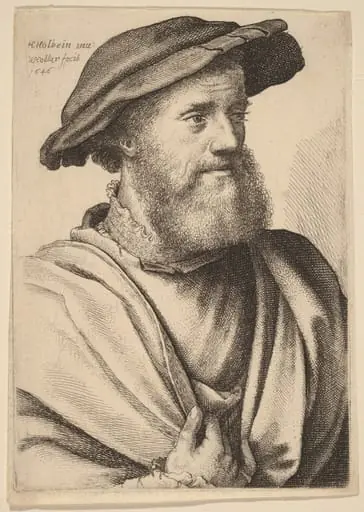 Man with Beard Looking Right (Hans Holbein?)
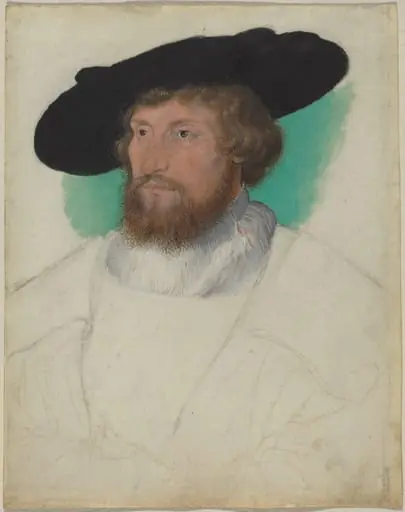 Christian II of Denmark and Norway
 Pfalzgraf Friedrich III
 Charles de Cossé (1506–1563), Comte de Brissac
 Portrait of a Man Wearing a Hat with a Medallion
 Albert van der Helle
 Portrait of a Bearded Man