Artwork
Albert van der Helle
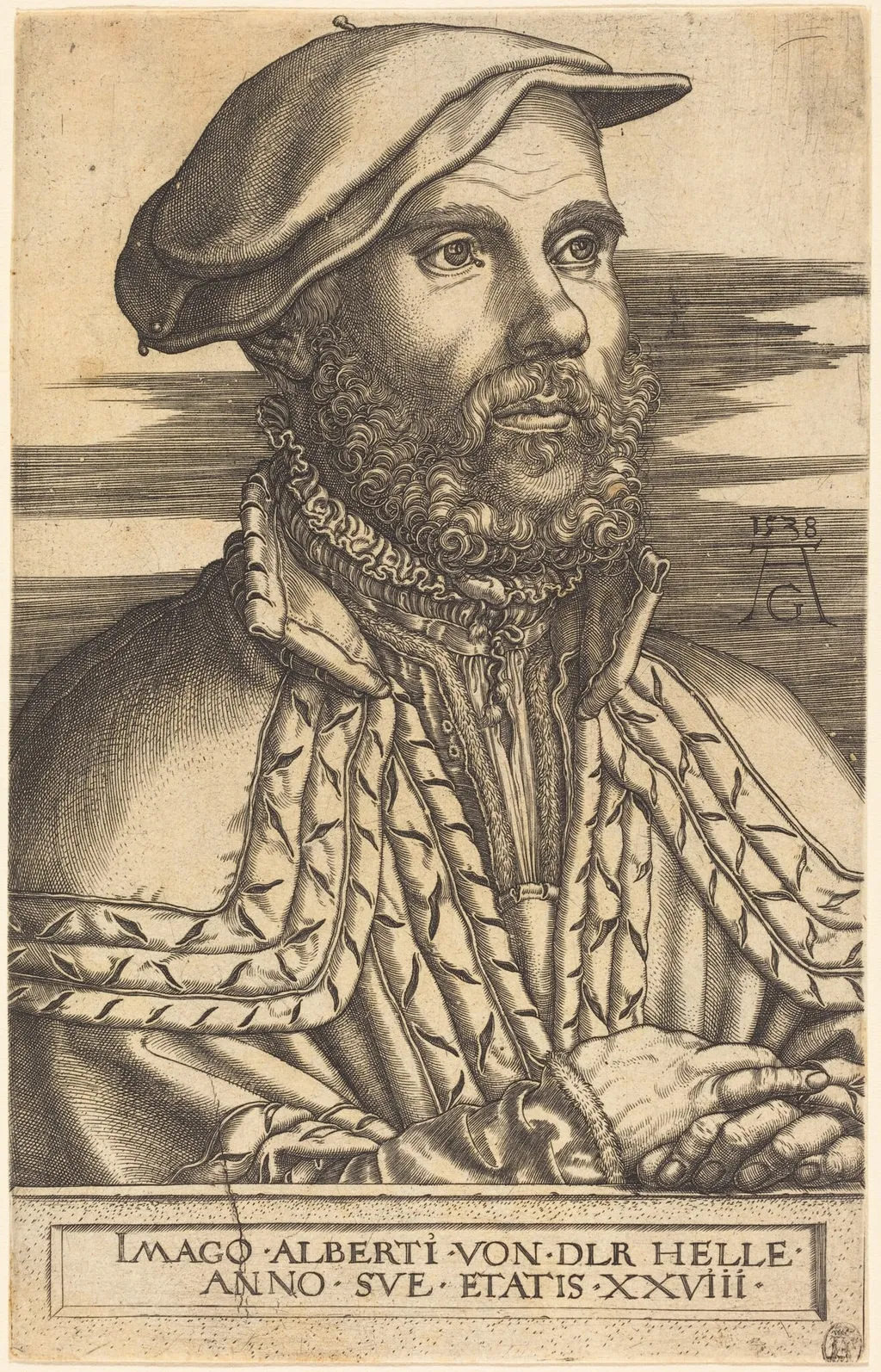
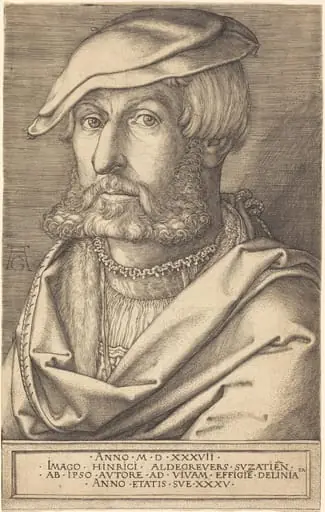
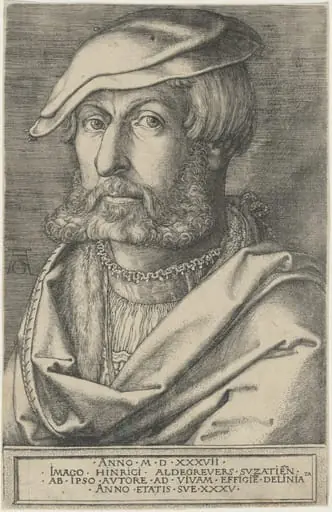
Albert van der Helle is a print by the Northern Renaissance artist Heinrich Aldegrever. It dates from 1538 and is held in the collection of the National Gallery of Art.
About this work
Overview
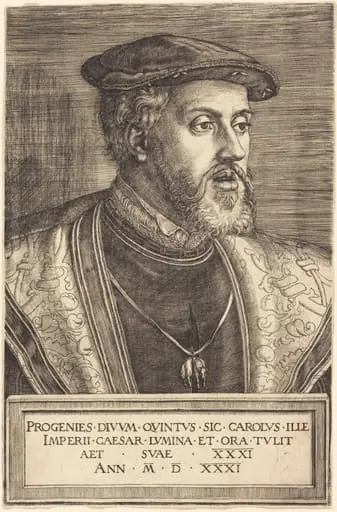
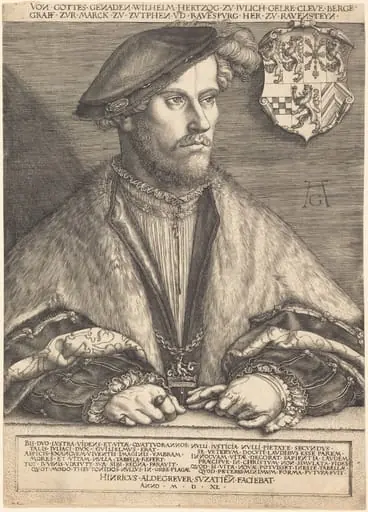
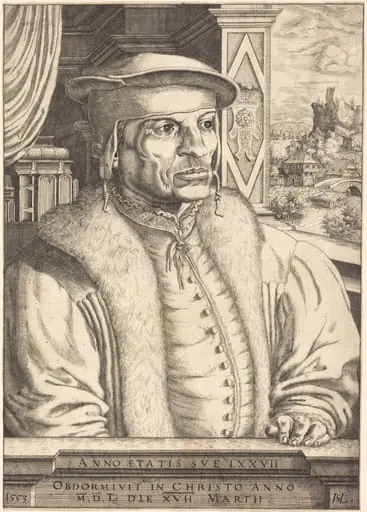
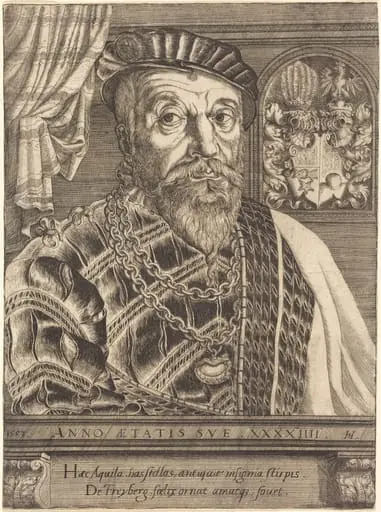
Heinrich Aldegrever, a German engraver linked to the early‑17th‑century “Little Masters,” produced a small portrait print in 1538. Executed in the Renaissance tradition that followed Albrecht Dürer, the work presents a single figure against an unadorned backdrop, rendered entirely in black and white.
Subject & Meaning
The sitter is identified by an inscription at the bottom as Albert van der Helle. He appears as a middle‑aged man with a tightly curled beard and hair, wearing a dark cap and a ruffled collar. The intimate scale and focused composition suggest a personal or commemorative purpose rather than a public display.
Technique & Style
Aldegrever employs fine, incisive lines to model light and shadow, creating a subtle chiaroscuro effect that gives the face a three‑dimensional presence. The folds of the clothing, especially around the neck and hands, are rendered with meticulous cross‑hatching, highlighting the artist’s skill in translating texture within a compact format.
History & Provenance
Created during the height of Aldegrever’s output as a printmaker, the portrait reflects the period’s interest in individualized portraiture for a limited audience. While the original print’s ownership trail is not fully documented, it remains a representative example of the “Little Masters” oeuvre, illustrating the diffusion of Dürer’s engraving techniques across northern Europe.
Artist & collection

Artist
Heinrich Aldegrever or Aldegraf was a German painter and engraver. He was one of the "Little Masters", the group of German artists making small old master prints in the generation after Albrecht Dürer.