Artwork
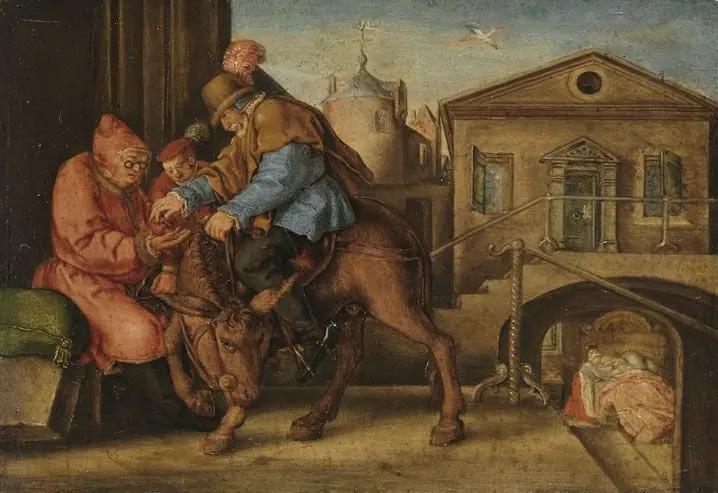
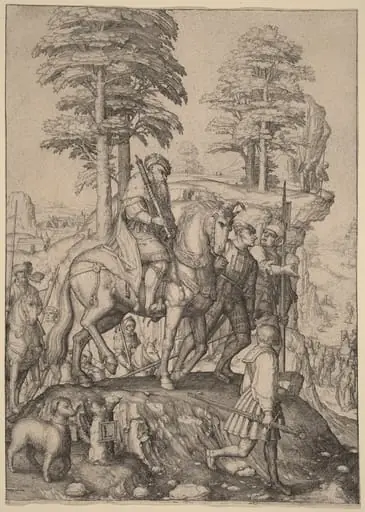
The Good Samaritan Placing the Traveler on a Mule
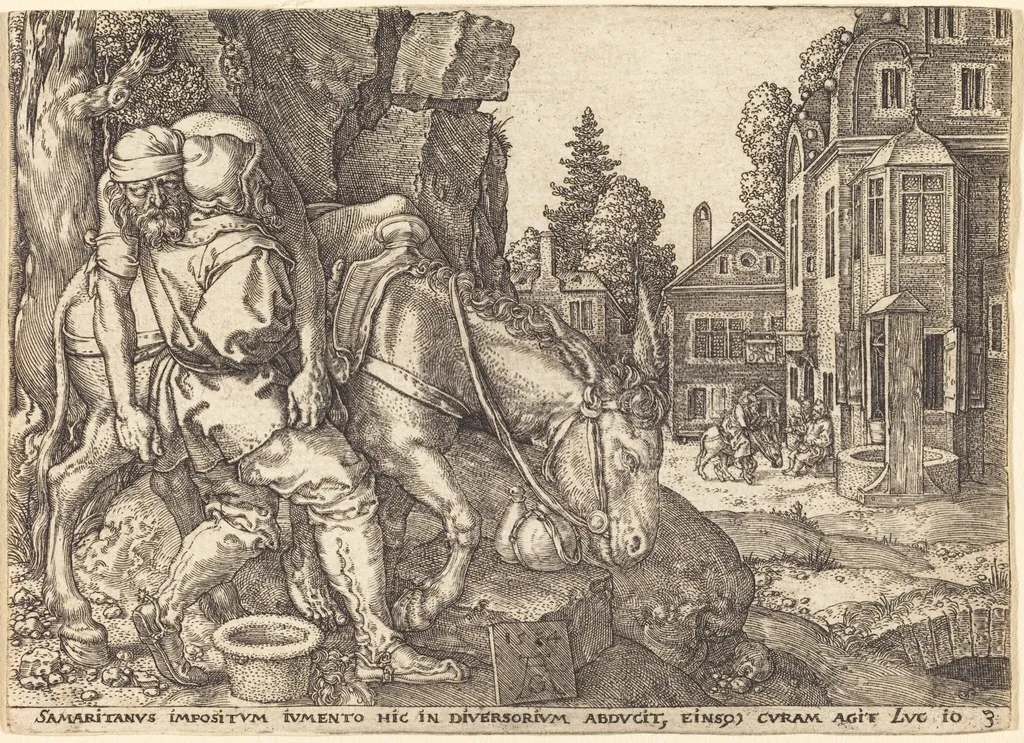
The Good Samaritan Placing the Traveler on a Mule is an ink print by the Northern Renaissance artist Heinrich Aldegrever. It dates from 1554 and is held in the collection of the National Gallery of Art.
About this work
Overview
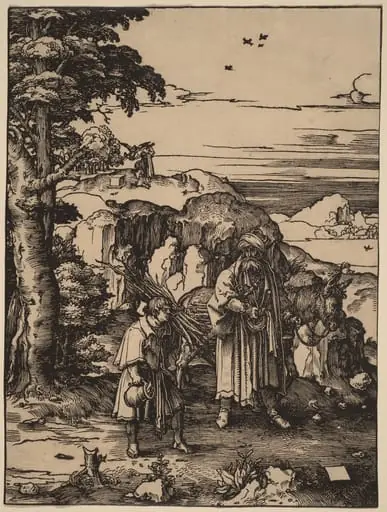
Heinrich Aldegrever’s 1554 etching, *The Good Samaritan Placing the Traveler on a Mule*, presents a compact, meticulously rendered scene from the biblical parable. The composition centers on a wounded wayfarer being assisted onto a mule by a kindly figure, while a modest village and church recede in the distance under a clear sky.
Subject & Meaning
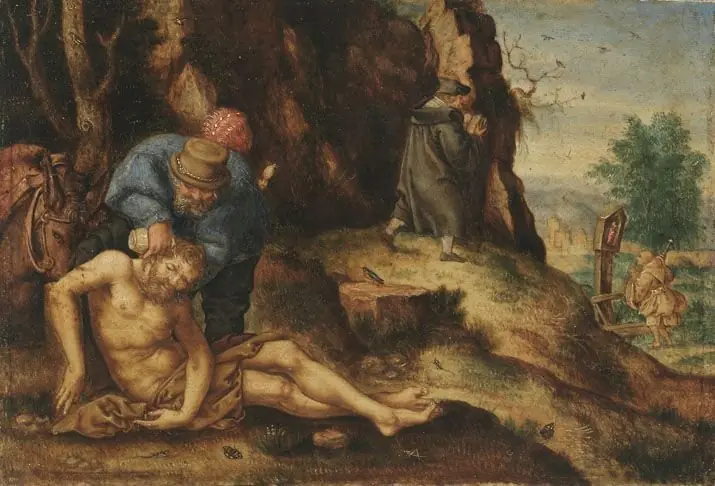
The work visualizes the moral lesson of the Good Samaritan, emphasizing compassion across social boundaries. The Samaritan, identifiable by his simple robe and gentle gesture, aids the injured stranger, highlighting the theme of charitable aid regardless of status, a common didactic motif in Reformation-era art.
Technique & Style
Executed in fine etching, the image relies on delicate line work and subtle hatching to model flesh, fabric, and foliage. Aldegrever’s characteristic precision yields a dense network of lines that delineate every fold of clothing and leaf, while tonal shading separates the figures from the relatively flat architectural backdrop.
History & Provenance
Aldegrever, a member of the so‑called “Little Masters” who followed Albrecht Dürer, specialized in small‑scale prints for a growing market of collectors. This 1554 plate reflects his mature period, and surviving impressions are held in several European museum collections, attesting to its continued circulation among connoisseurs of Northern Renaissance prints.
Artist & collection

Artist
Heinrich Aldegrever or Aldegraf was a German painter and engraver. He was one of the "Little Masters", the group of German artists making small old master prints in the generation after Albrecht Dürer.