Artwork
The Temptation of St Benedict
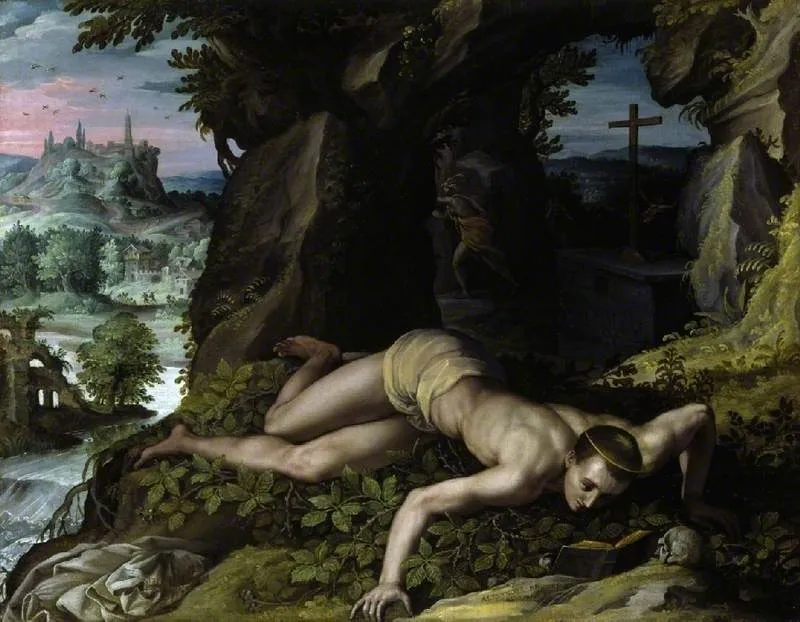
The Temptation of St Benedict is an oil painting by the Mannerist artist Alessandro Allori. It dates from 1594 and is held in the collection of the Fitzwilliam Museum.
About this work
Overview
The painting is part of the Fitzwilliam Museum’s collection, where it remains a quiet example of Counter-Reformation religious imagery from central Italy.
Painted in 1594 by Alessandro Allori, this oil-on-panel work illustrates a moment from the life of Saint Benedict of Nursia. A product of the late Florentine Mannerist tradition, it reflects the artist’s mature style, characterized by refined detail and controlled emotional expression. The painting is part of the Fitzwilliam Museum’s collection, where it remains a quiet example of Counter-Reformation religious imagery from central Italy.
Subject & Meaning
The scene captures Saint Benedict at a moment of spiritual trial, as described in hagiographic accounts. His reclining form, clutching a skull, symbolizes mortality and inner contemplation. Surrounding him are phantom figures of temptation—often implied rather than rendered—evoking the saint’s resistance to worldly desires. The tranquil landscape behind him contrasts with the internal struggle, reinforcing the theme of ascetic victory over sin.
Technique & Style
Allori employs subtle chiaroscuro to model the saint’s body, lending volume and a sense of physical presence against the soft, atmospheric background. The palette is restrained yet rich, with warm earth tones balanced by delicate sky hues. Brushwork is precise, particularly in the rendering of foliage and fabric, reflecting the Florentine emphasis on draftsmanship. Compositionally, the figure is nestled within the landscape, creating a harmonious, almost meditative balance.
History & Provenance
Commissioned during the final phase of Allori’s career, the painting likely originated in a monastic or private devotional context in Tuscany. It entered the Fitzwilliam Museum’s collection in the 19th century, having passed through European private holdings. Its survival in good condition offers insight into the continued demand for religious imagery in post-Tridentine Italy, even as artistic trends shifted toward Baroque dynamism.
Context
Created during the height of the Counter-Reformation, the painting aligns with Church efforts to promote models of piety and monastic discipline. Saint Benedict, as founder of Western monasticism, was a favored subject for spiritual instruction. Allori’s approach—calm, introspective, and visually refined—reflects the Florentine preference for intellectualized devotion over theatrical spectacle, distinguishing it from contemporary Roman or Venetian treatments.
Legacy
Though not widely exhibited, the painting remains a representative example of late Mannerist religious art in Florence. It preserves the stylistic continuity of the Medici court tradition, even as newer movements gained prominence. Scholars value it for its quiet intensity and technical precision, offering a counterpoint to the more dramatic religious scenes of the early Baroque period.
Artist & collection

Artist
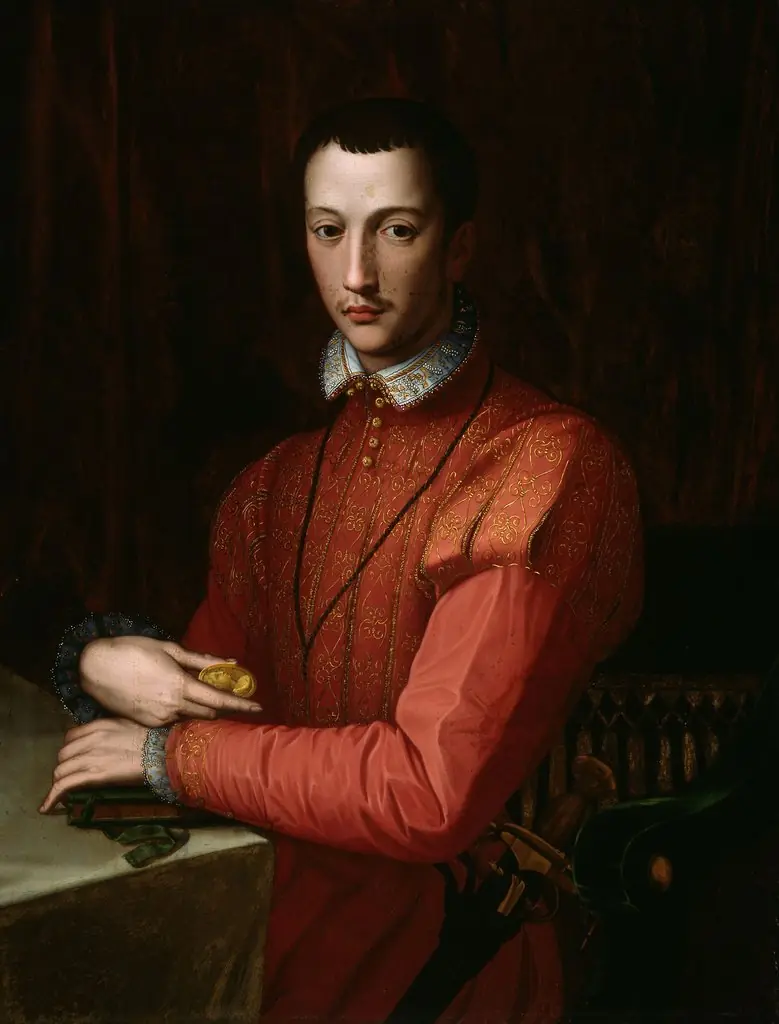
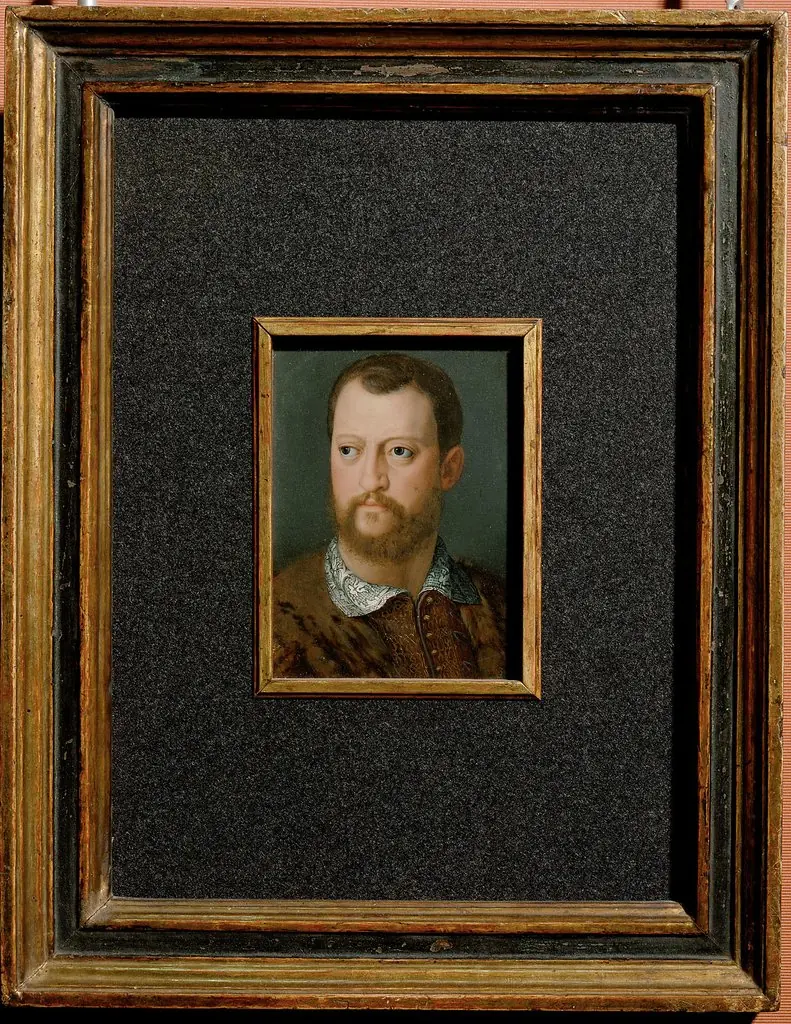
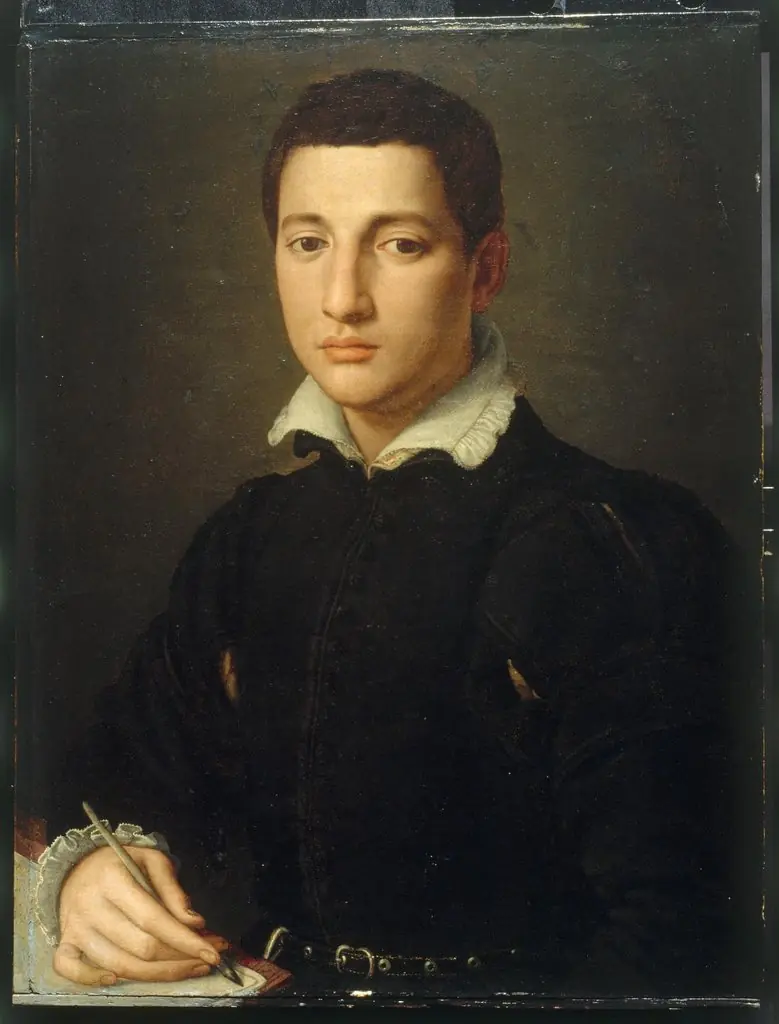
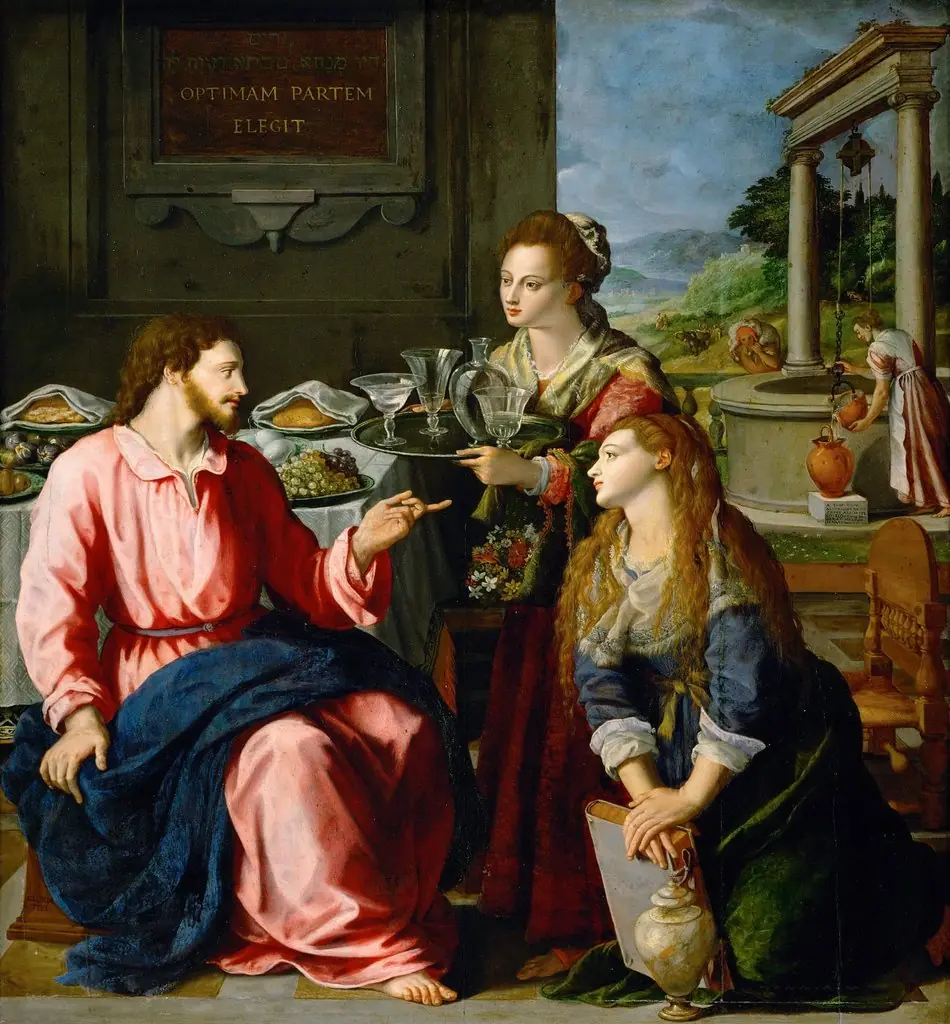
Alessandro di Cristofano di Lorenzo del Bronzino Allori (Florence, 31 May 1535 – 22 September 1607) was an Italian painter of the late Mannerist Florentine school.


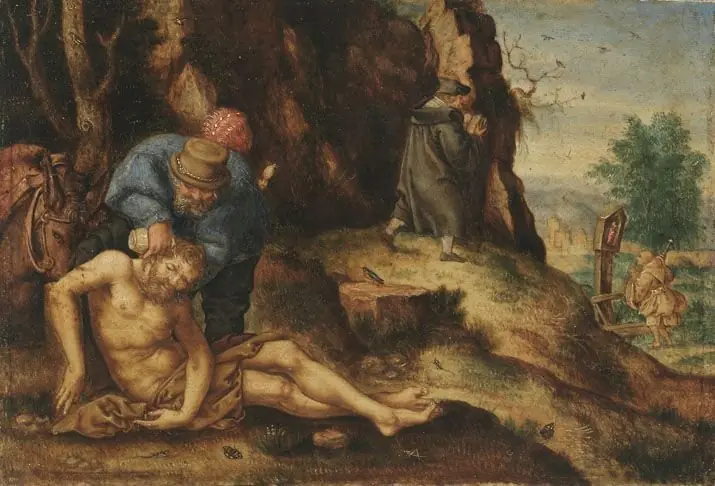 Der barmherzige Samariter pflegt den Verletzten (nach)
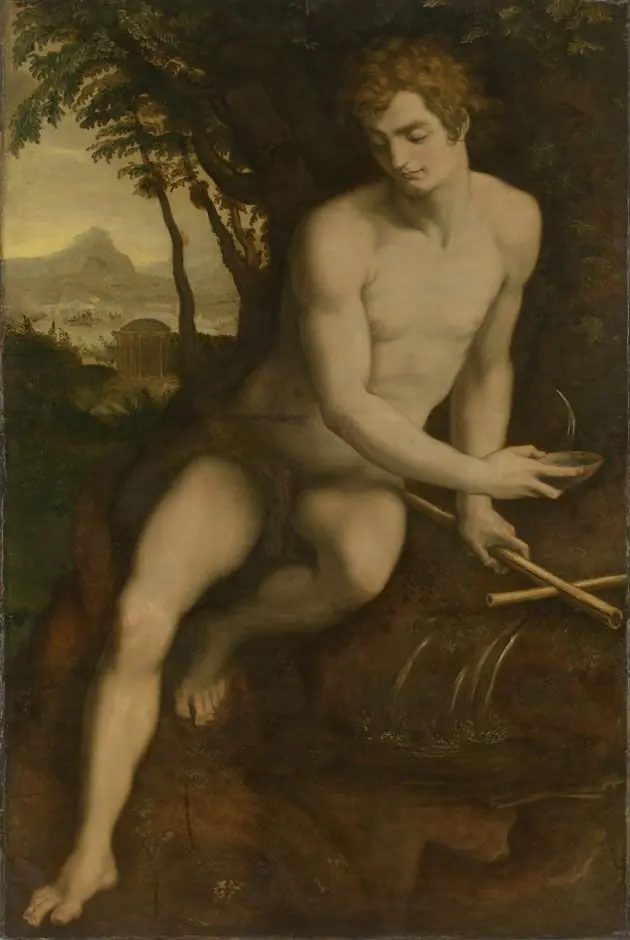 Johannes der Täufer
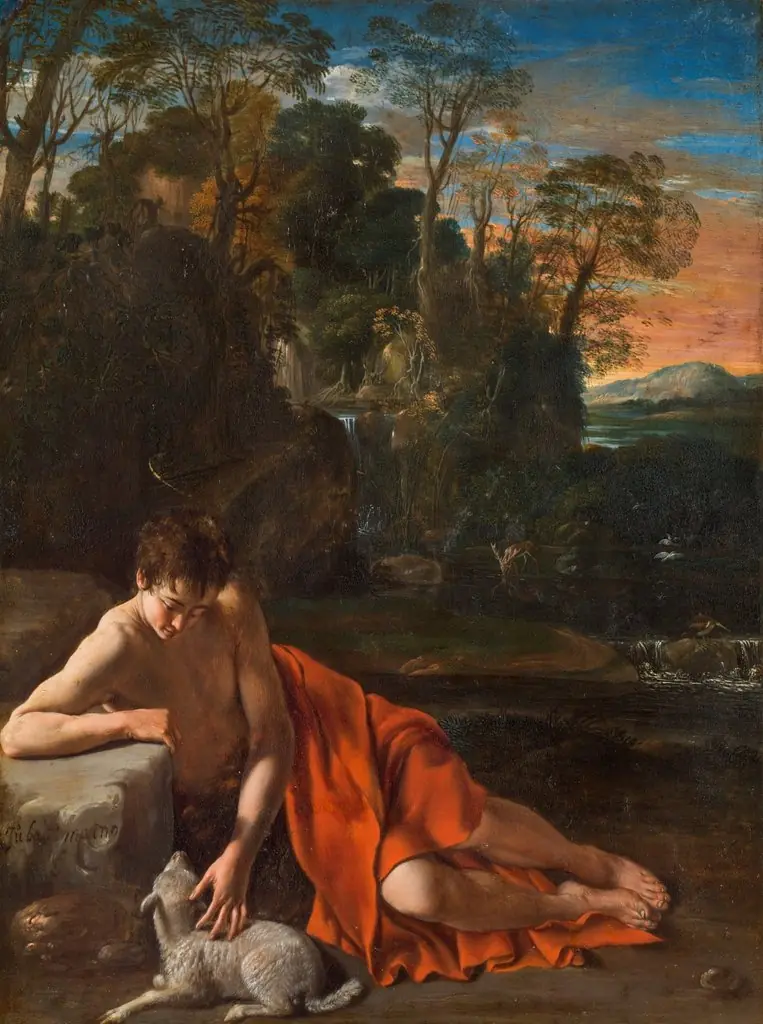 Saint John the Baptist
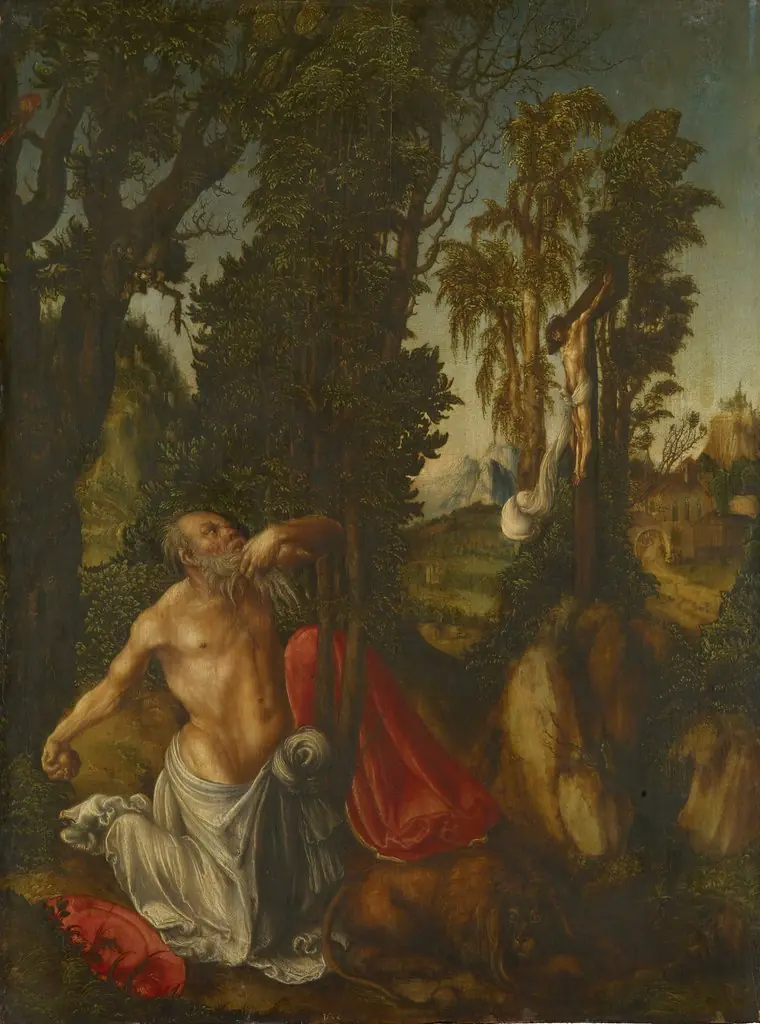 Penitent Saint Jerome
 The Entombment of Christ (after Titian)
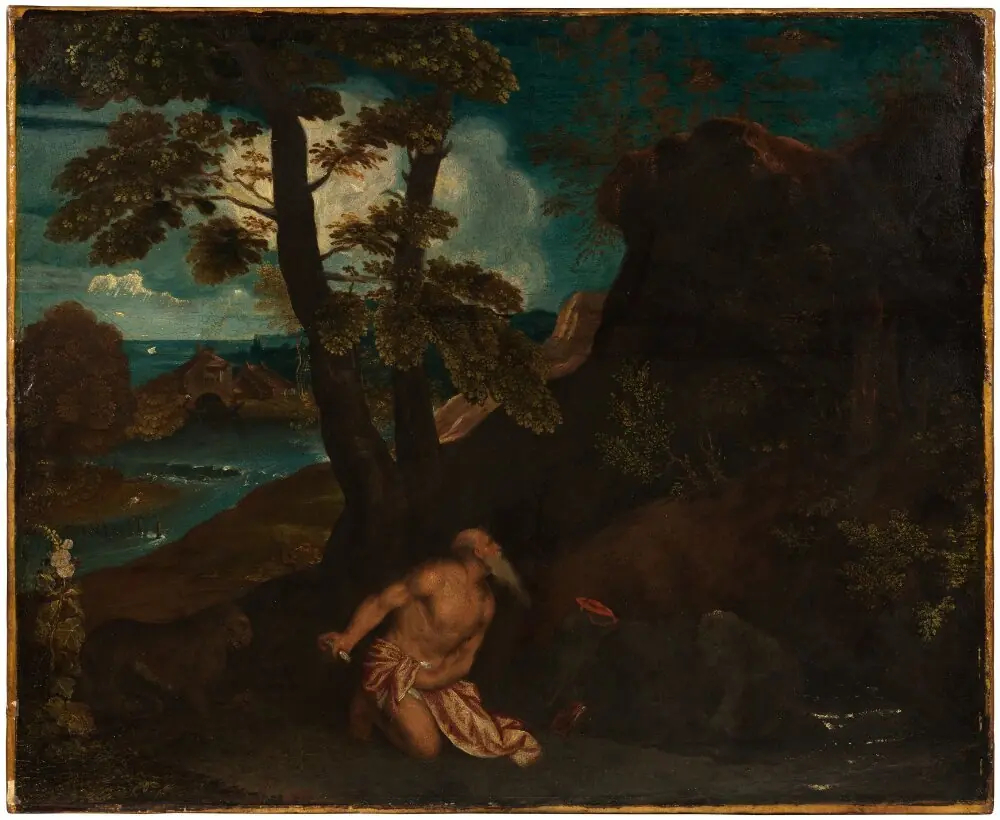 The Penitent St Jerome in the Moonlight
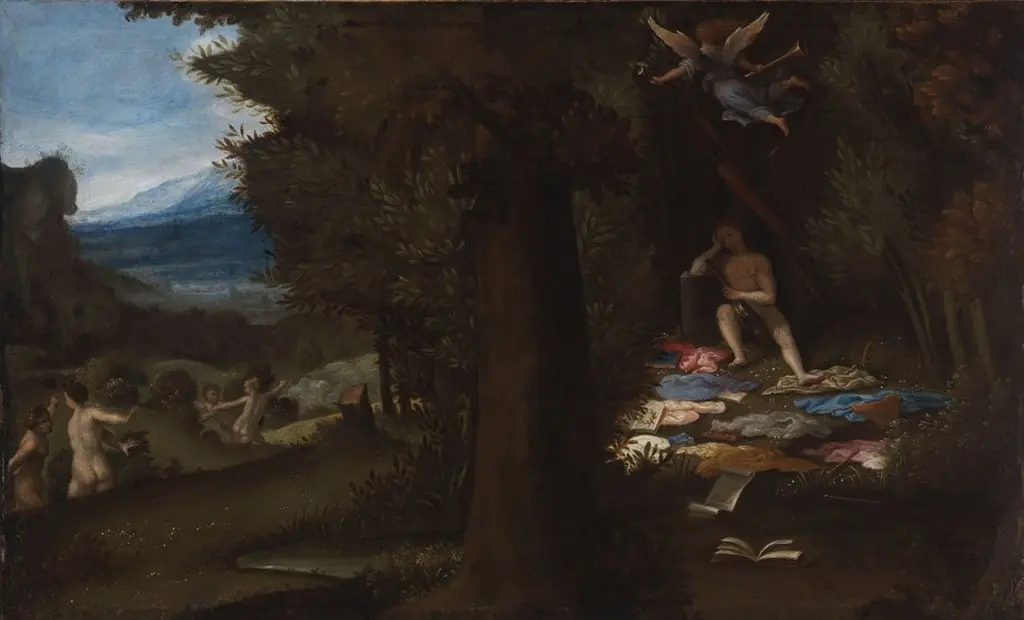 Sleeping Apollo and the Muses with Fame
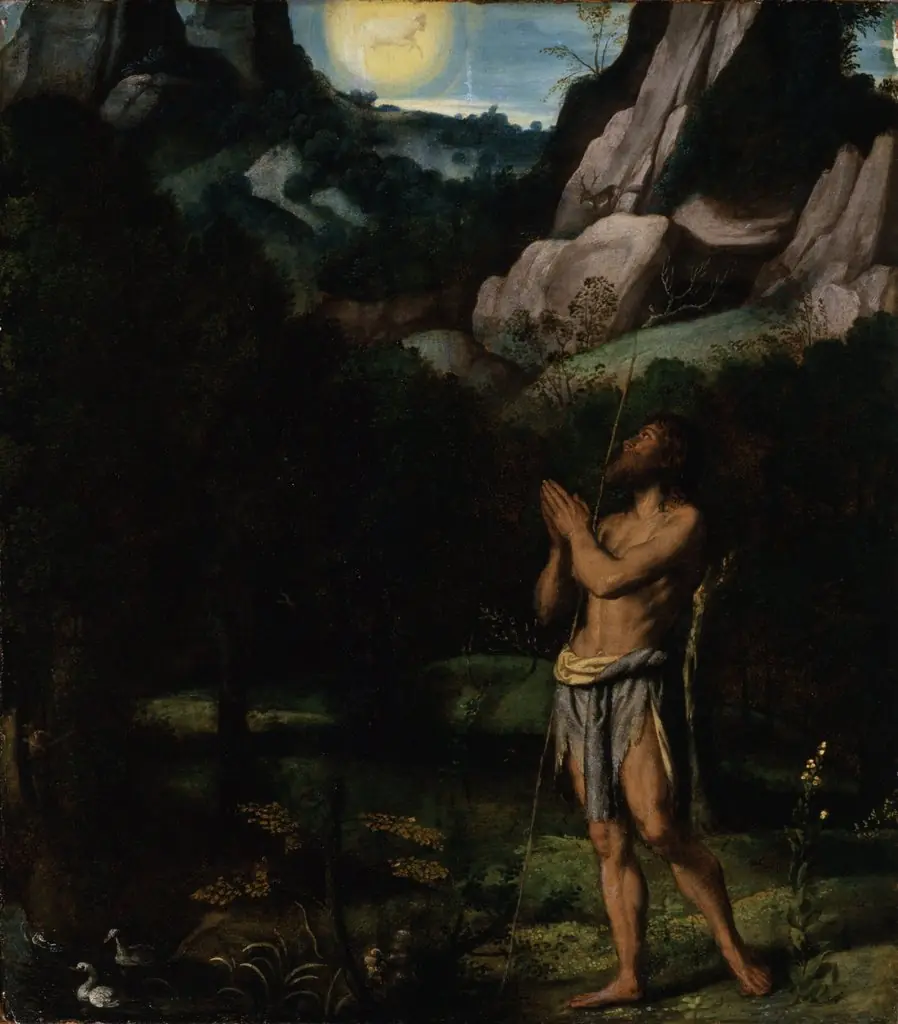 St. John the Baptist in the Wilderness
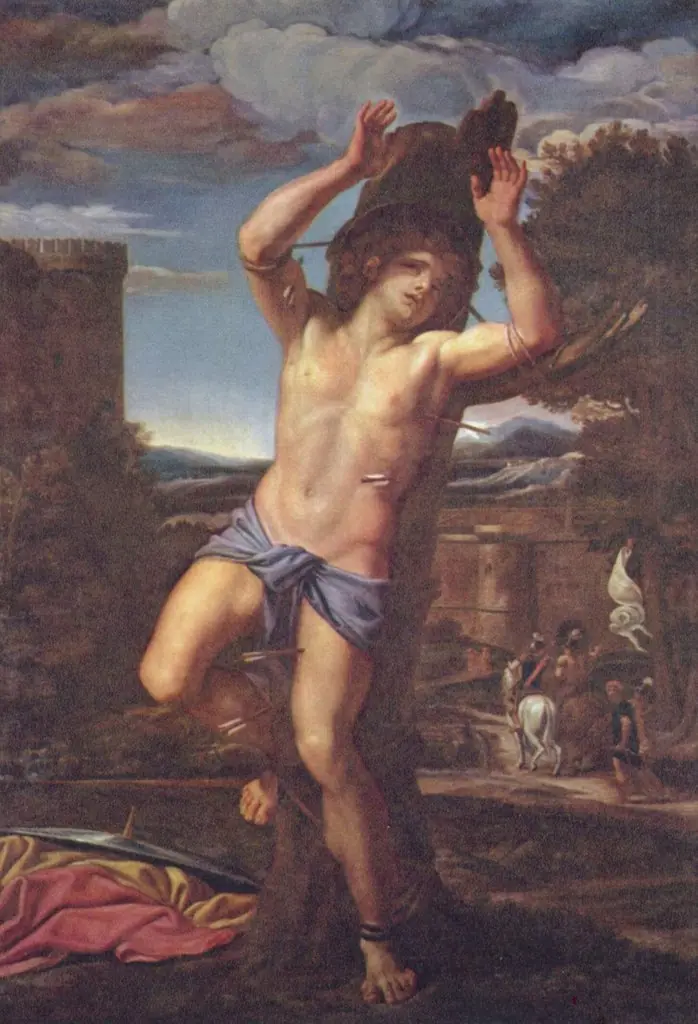 S Sebastian
 Bacchus and Ariadne
 David Contemplating the Head of Goliath
 The Flight of Achior from the Camp of Holofernes