Artwork
Landscape with the Temptation of Christ
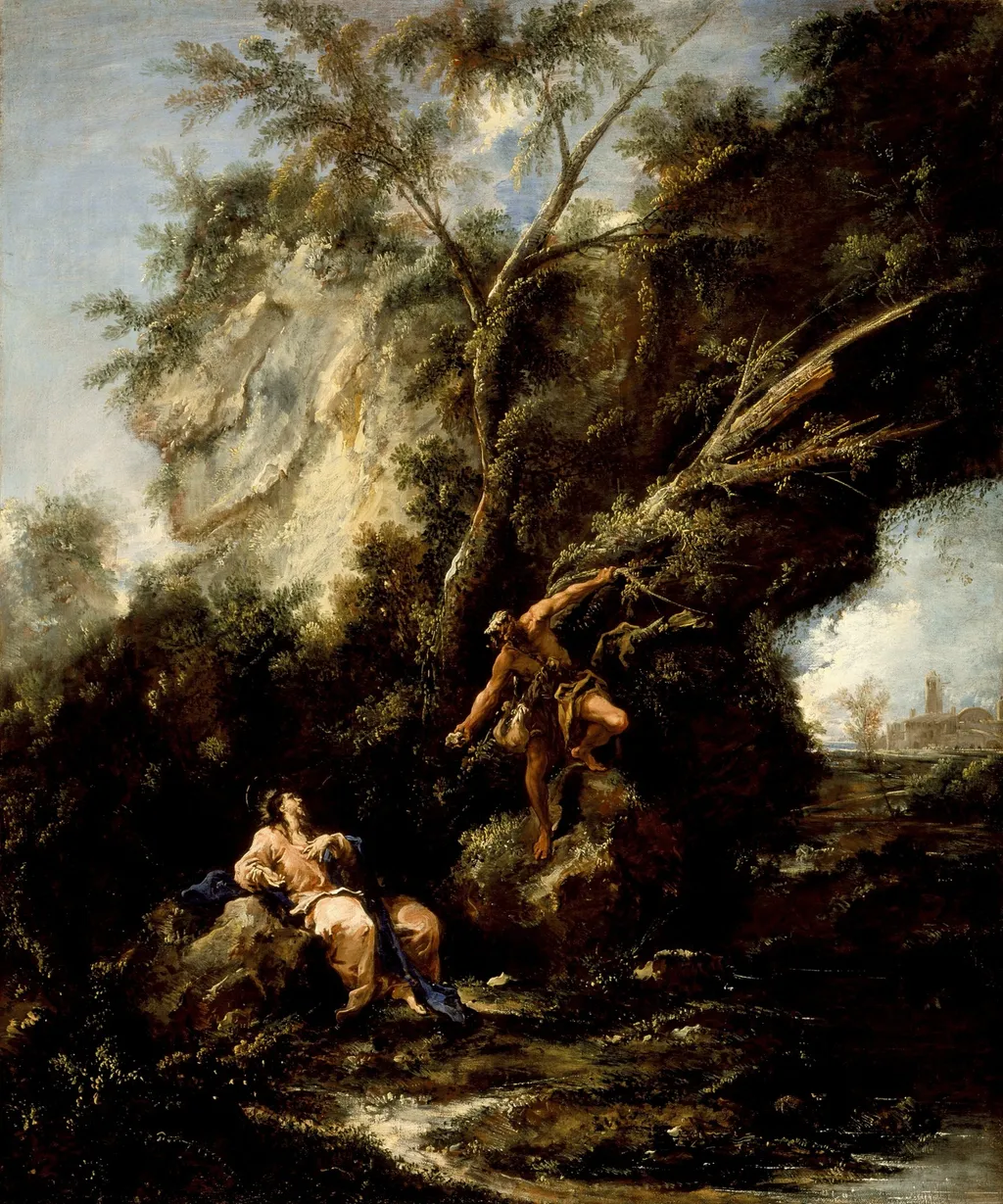
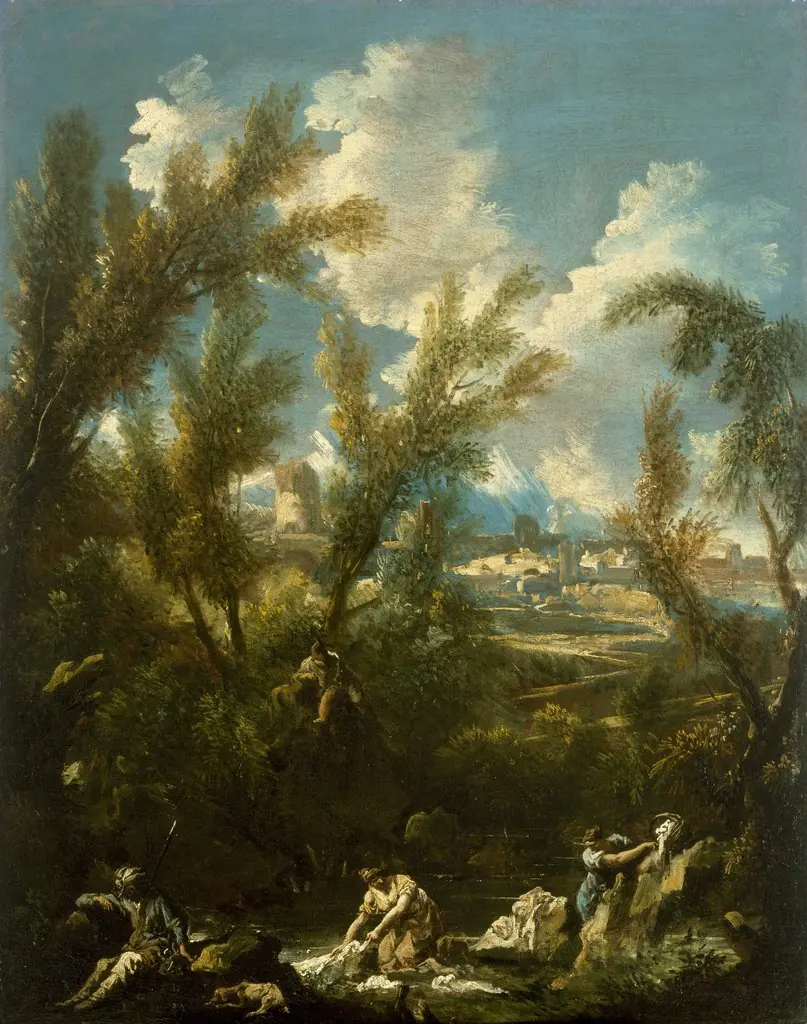
Landscape with the Temptation of Christ is an oil painting by the Early Baroque Italian artist Alessandro Magnasco. It dates from 1715 and is held in the collection of the Los Angeles County Museum of Art.
About this work
Overview
Painted in 1715 by Alessandro Magnasco, this oil-on-canvas work depicts a biblical scene within an unconventional natural setting.
Painted in 1715 by Alessandro Magnasco, this oil-on-canvas work depicts a biblical scene within an unconventional natural setting. Magnasco, active in northern Italy, favored atmospheric landscapes over classical composition. His approach diverged from the grandeur typical of the Baroque, instead emphasizing mood and fragmented forms. The painting resides in the collection of the Los Angeles County Museum of Art.
Subject & Meaning
The scene illustrates Christ’s temptation in the wilderness, as described in the Gospels. A solitary figure in brown, likely Christ, stands on a rocky outcrop, staff in hand, gazing upward. To his left, a robed figure—possibly Satan—observes from a distance. The isolation of the figures within the wild terrain underscores spiritual trial, though the narrative is rendered obliquely, without dramatic gesture or divine intervention.
Technique & Style
Magnasco employed rapid, textured brushwork to suggest foliage, rock, and sky rather than define them precisely. Forms are loosely rendered, with edges blurred by overlapping strokes. Light filters unevenly through the atmosphere, casting soft shadows that deepen the sense of space. The palette is muted—earthy browns, pale blues, and muted greens—enhancing the painting’s introspective tone.
History & Provenance
Created during Magnasco’s mature period, the painting reflects his time in Genoa and Milan, where he developed his idiosyncratic style. It entered the Los Angeles County Museum of Art’s collection in the 20th century, though earlier ownership records are sparse. Its survival and preservation reflect its niche appeal among collectors drawn to unconventional Baroque expression.
Context
While contemporaries like Carlo Maratta pursued idealized religious imagery, Magnasco turned to the irregularities of nature and the psychological weight of solitude. His landscapes often omitted clear narrative cues, favoring emotional resonance over doctrinal clarity. This work aligns with a broader trend in late Baroque Italy toward personal, almost melancholic interpretations of sacred themes.
Legacy
Magnasco’s style influenced later artists drawn to expressive brushwork and atmospheric ambiguity, including 19th-century Romantics. Though not widely celebrated in his lifetime, his rejection of academic norms earned posthumous recognition for his unique vision. This painting remains a quiet example of how spiritual subjects could be rendered through landscape, not doctrine.
Own this work as a print
Artist & collection
Artist
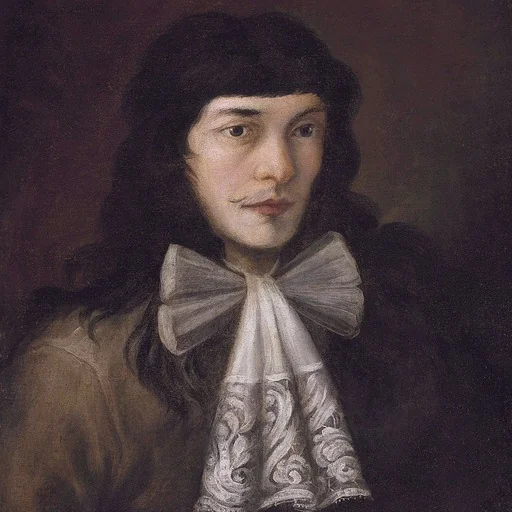
Alessandro Magnasco (February 4, 1667 – March 12, 1749), also known as il Lissandrino, was an Italian late-Baroque painter active mostly in Milan and Genoa.

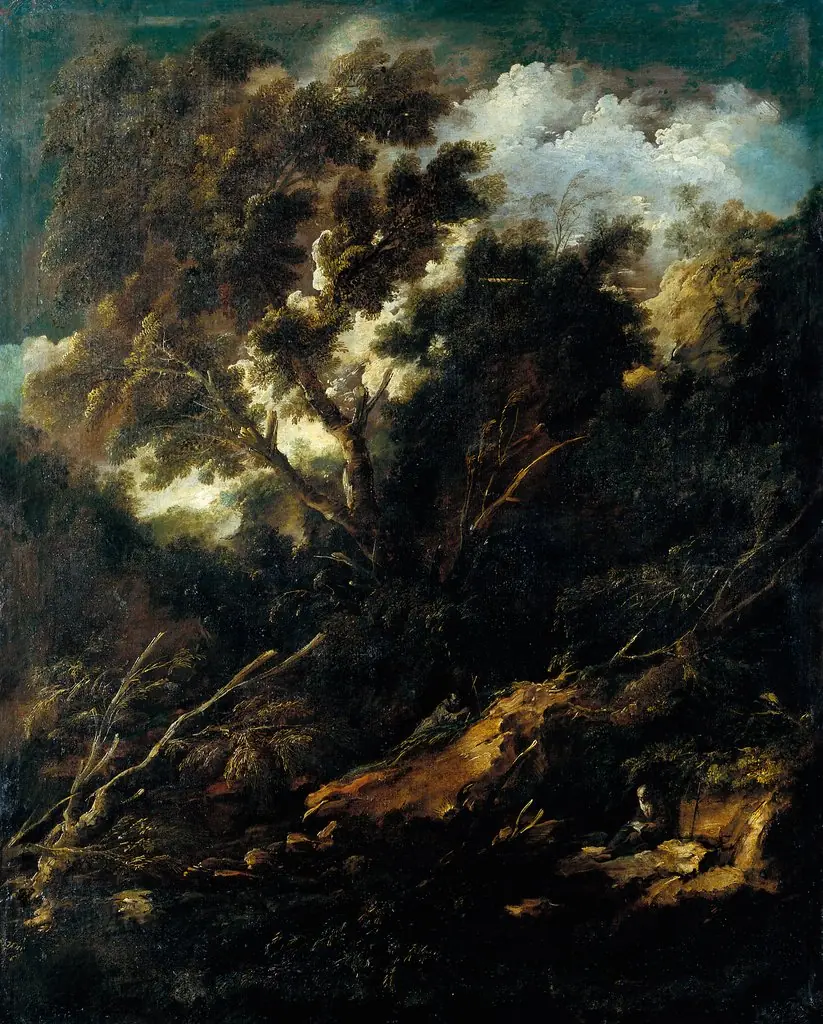 Landscape with a Reading and a Praying Franciscan
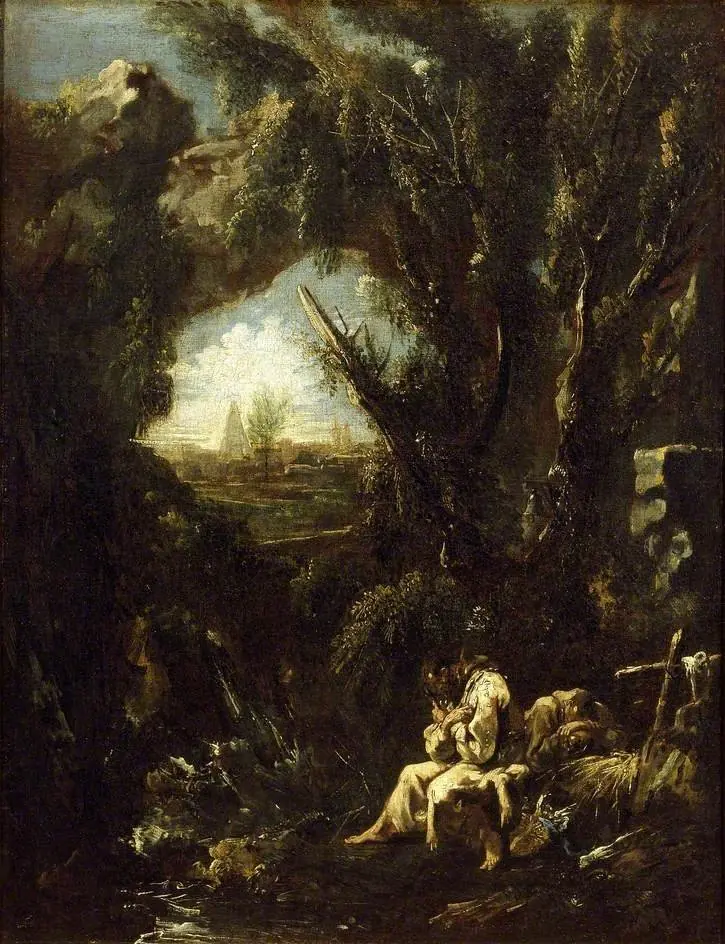 Landscape with two Hermits in meditation
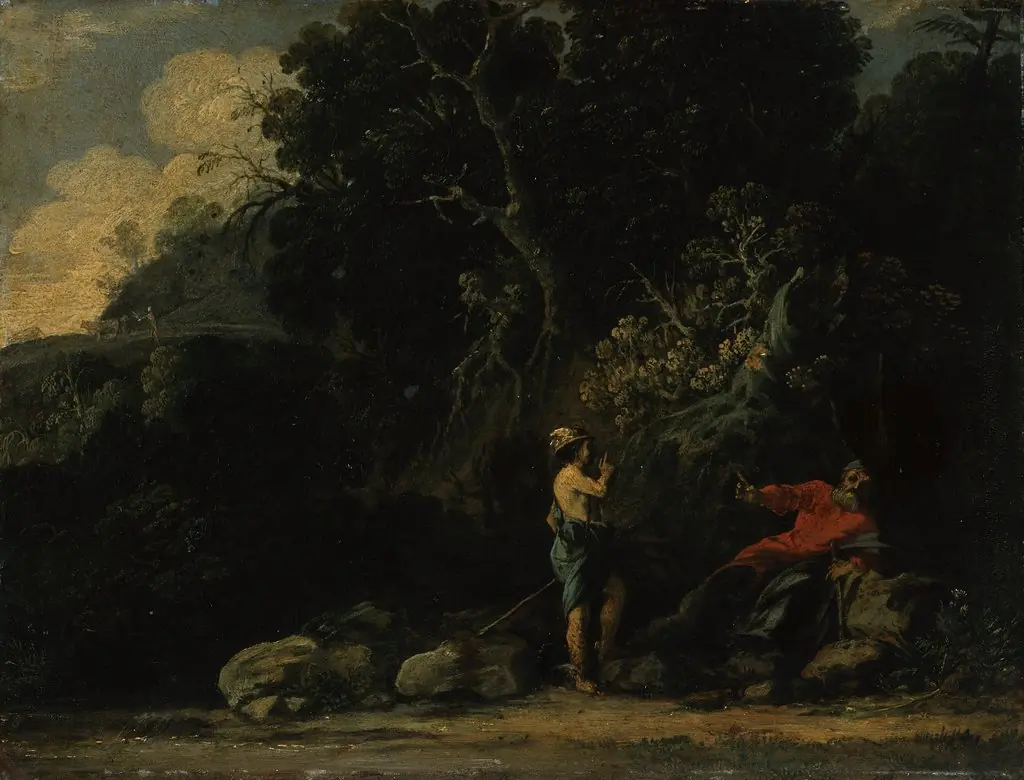 Forest Landscape with Mercury and Battus
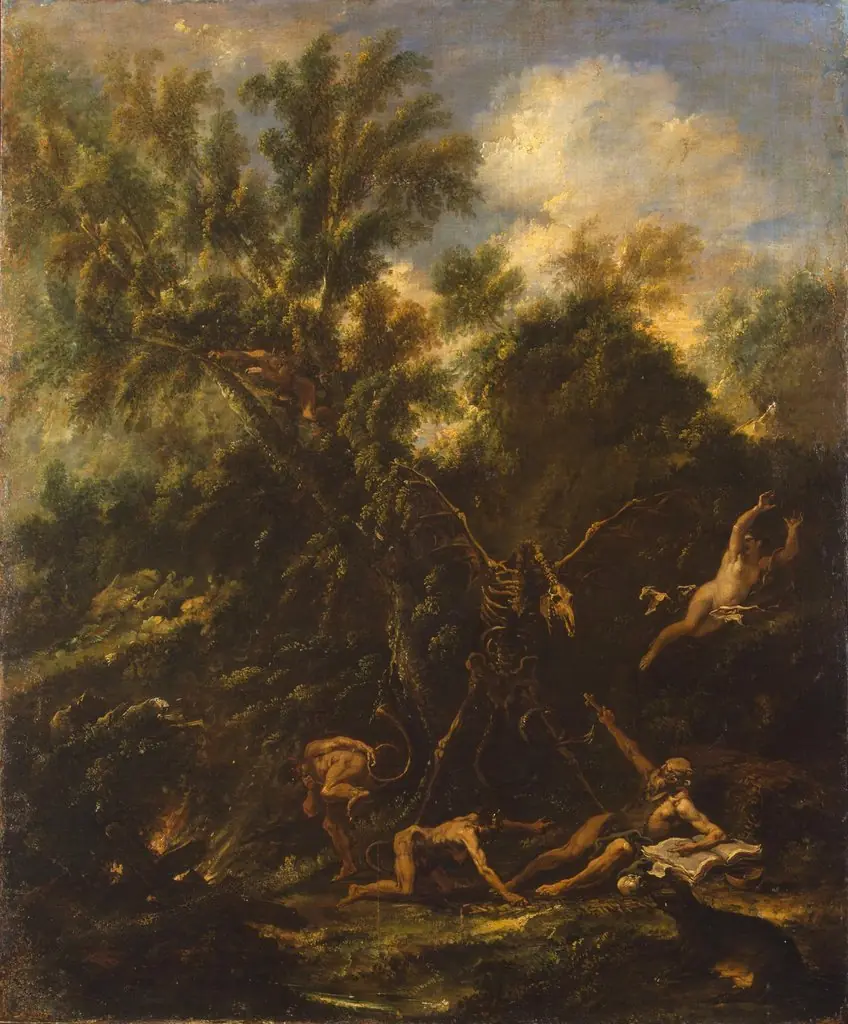 Temptation of St Anthony
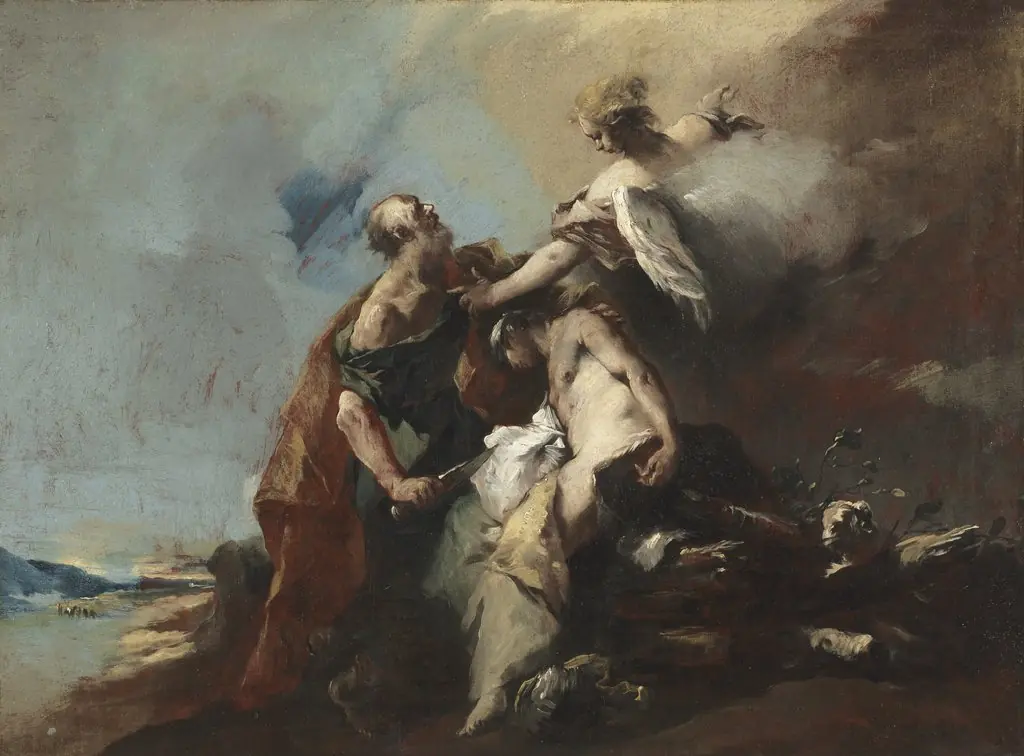 The Sacrifice of Isaac
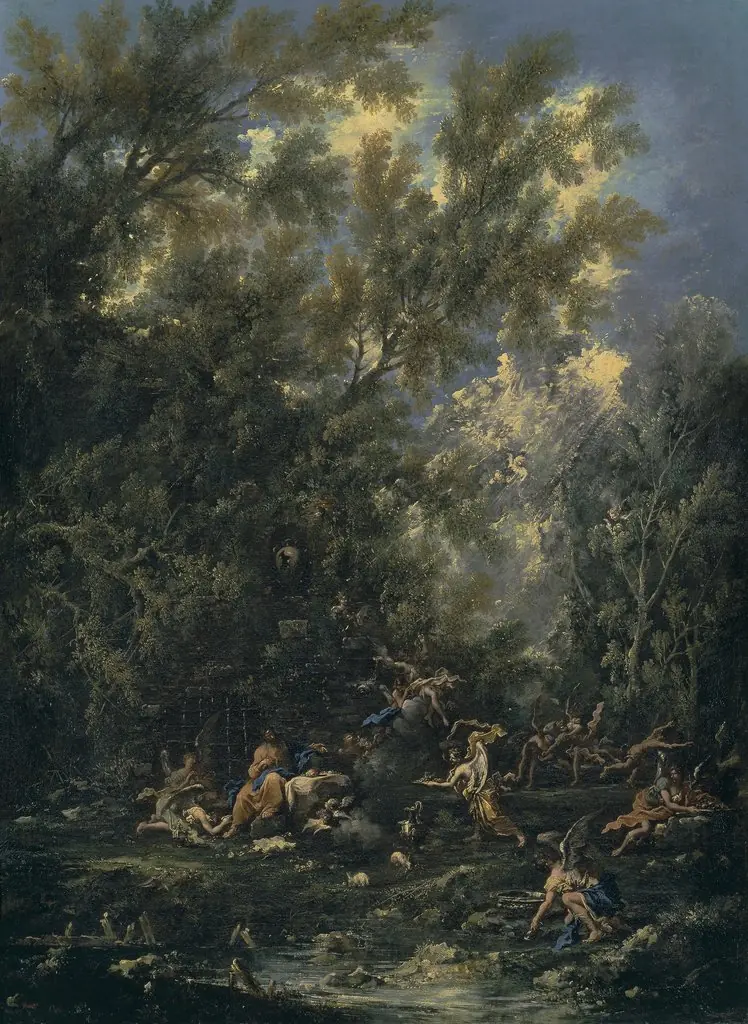 Christ attended by Angels
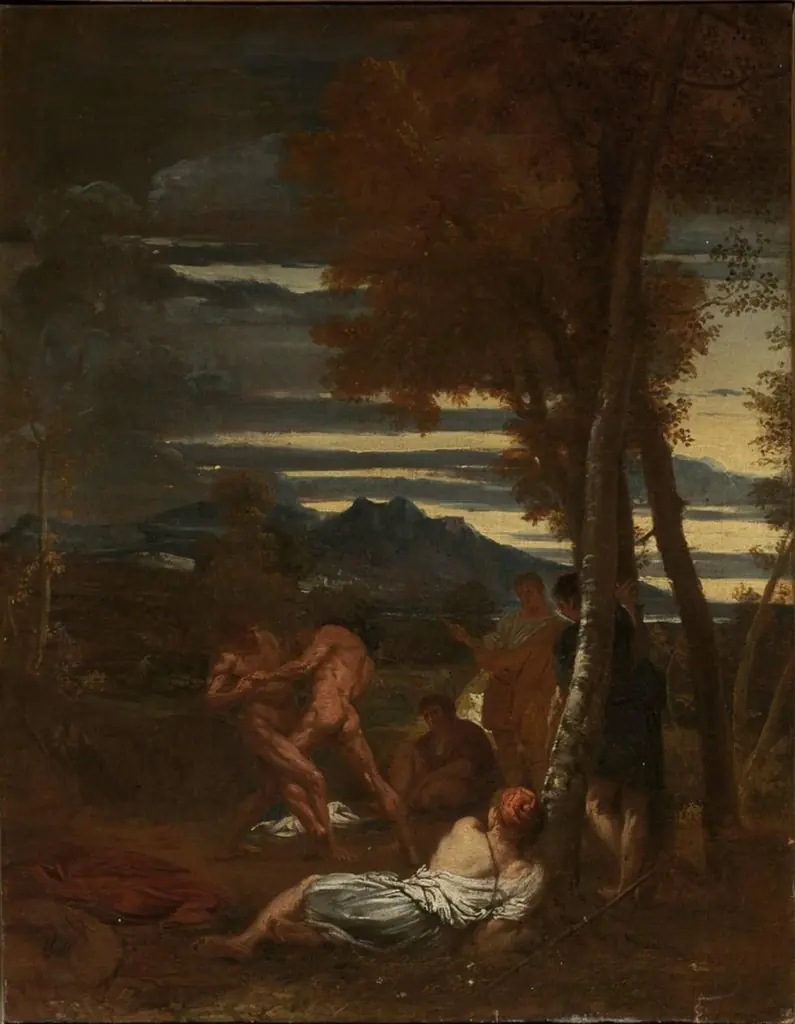 Wrestlers in a Landscape
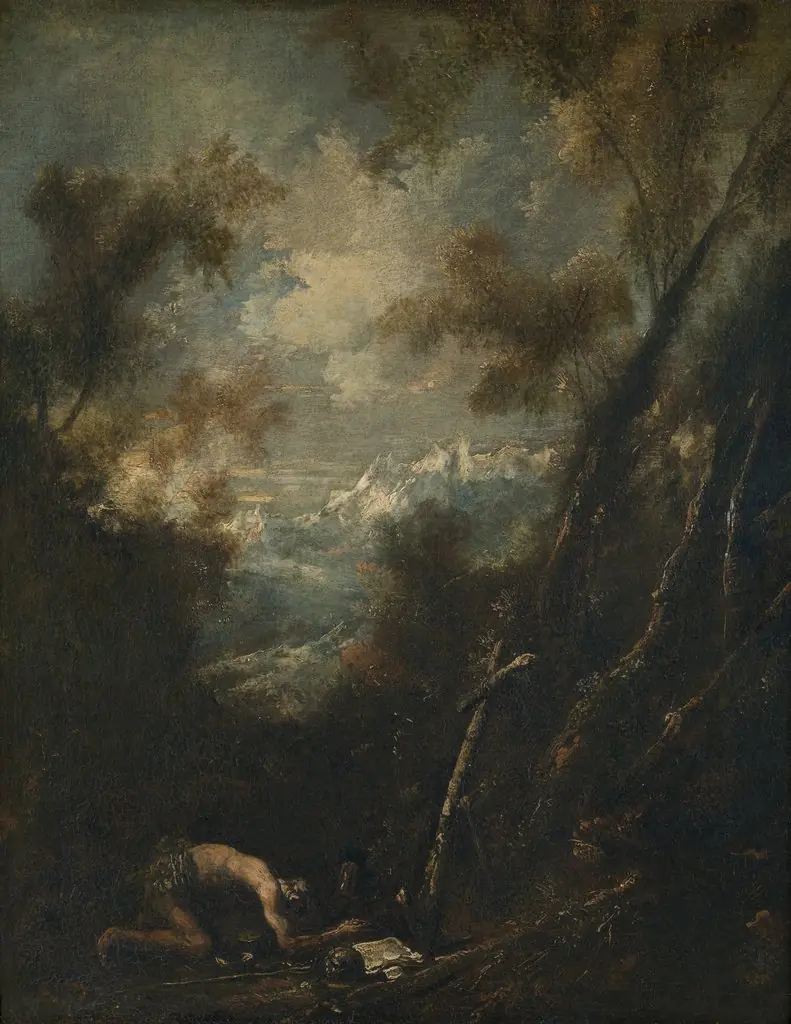 Saint Jerome in a Landscape
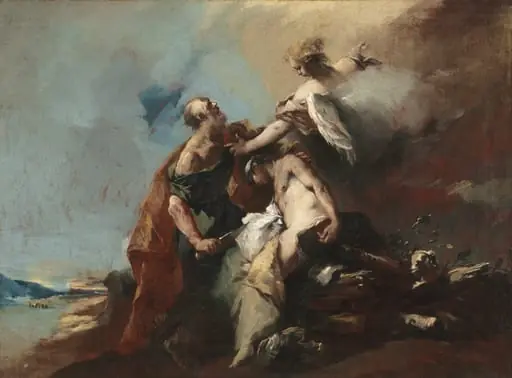 The Sacrifice of Isaac
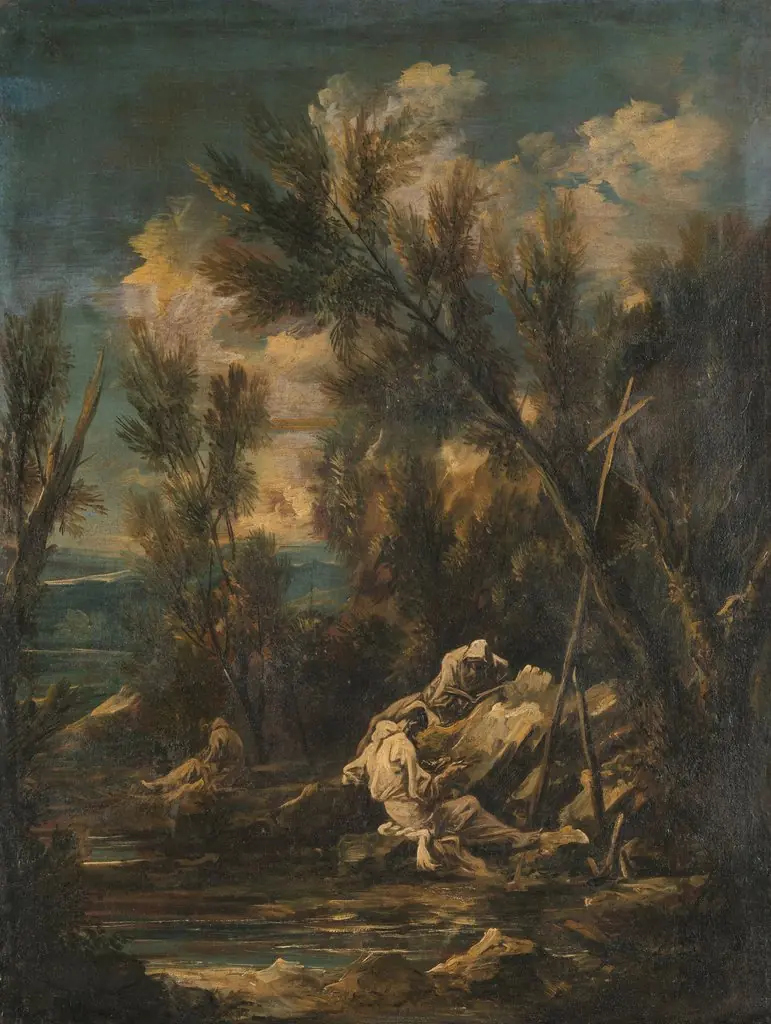 Carthusian Monks in a Landscape
 Landscape with Washerwoman