Artwork
Saint Jerome in a Landscape
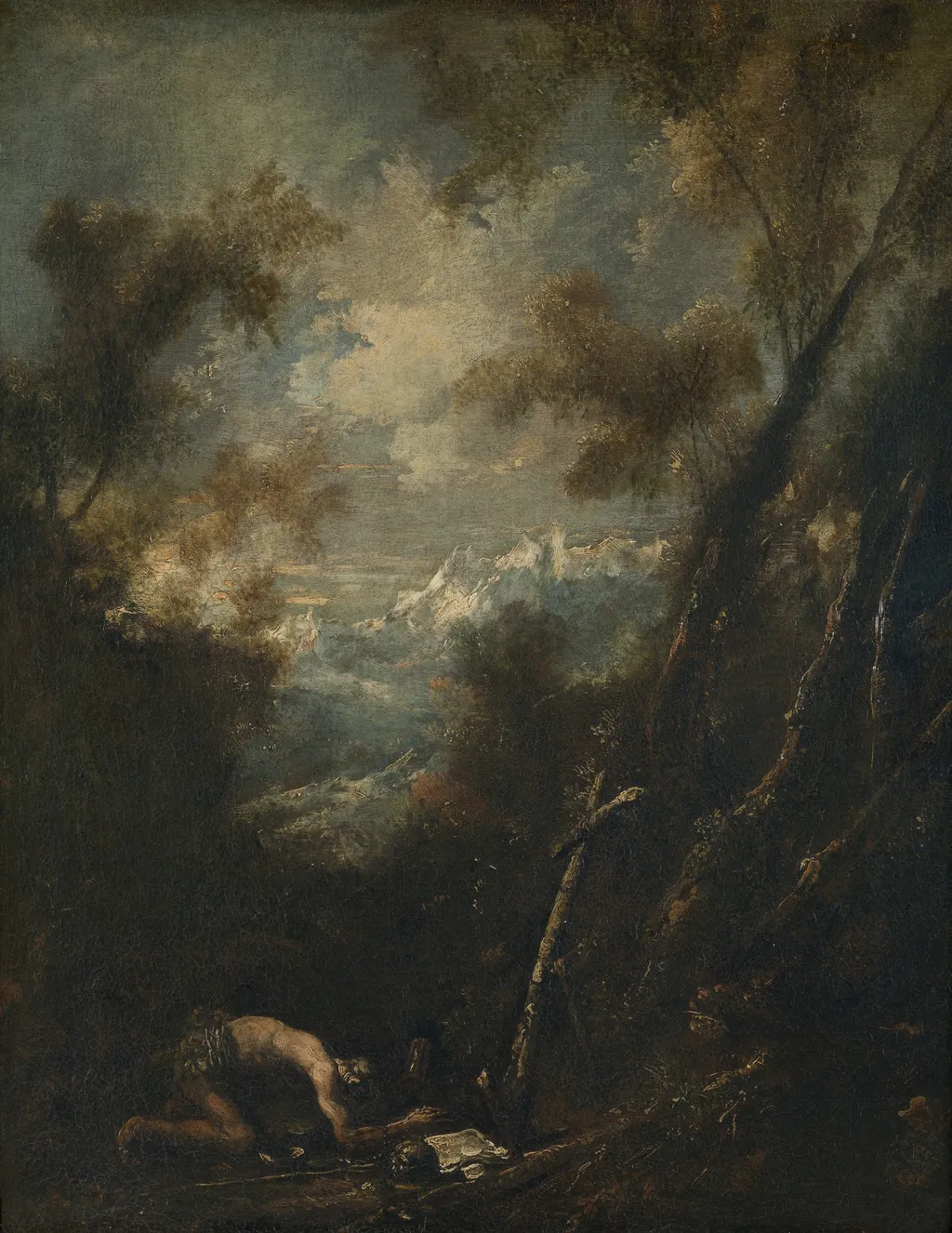
Saint Jerome in a Landscape is an oil painting by the Rococo painting artist Alessandro Magnasco. It dates from 1725 and is held in the collection of the Royal Museum of Fine Arts Antwerp.
About this work
Overview
Painted in 1725 by Alessandro Magnasco, known as il Lissandrino, this oil-on-canvas work portrays Saint Jerome amid a wild, dreamlike landscape.
Painted in 1725 by Alessandro Magnasco, known as il Lissandrino, this oil-on-canvas work portrays Saint Jerome amid a wild, dreamlike landscape. Magnasco, active in Milan and Genoa, developed a distinctive style marked by energetic brushwork and dramatic lighting. Though rooted in late-Baroque traditions, the painting’s fluid forms and emotional tone align with early Rococo sensibilities. It is now part of the Royal Museum of Fine Arts Antwerp’s collection.
Subject & Meaning
The figure of Saint Jerome, a Church Father known for translating the Bible into Latin, is shown in quiet contemplation, surrounded by a rugged, untamed environment. His scholarly attributes—book, cardinal’s hat, and crucifix—are present but subdued, emphasizing solitude over doctrine. The setting suggests spiritual retreat, not literal geography, reinforcing the theme of inner devotion amid nature’s chaos.
Technique & Style
Magnasco applied oil paint with swift, almost restless strokes, creating texture through layered impasto and abrupt tonal shifts. The landscape lacks classical order; trees twist, rocks jut irregularly, and light fractures unpredictably across the scene. This expressive handling diverges from academic norms, favoring mood over precision. Figures are small yet emotionally resonant, dwarfed by the atmospheric turmoil around them.
History & Provenance
The painting was completed in 1725 during Magnasco’s mature period, when his reputation for unconventional religious scenes was established. It entered the Royal Museum of Fine Arts Antwerp’s collection in the 19th century, likely through acquisition or donation. No significant alterations or documented restorations are recorded, preserving its original surface and tonal dynamics.
Context
In early 18th-century Italy, religious subjects were often rendered with heightened drama or idealized beauty. Magnasco resisted both, instead infusing sacred themes with psychological unease and natural unpredictability. His work stood apart from contemporaries, reflecting a personal vision that anticipated Romanticism’s fascination with emotion and the sublime.
Legacy
Magnasco’s approach influenced later artists drawn to expressive landscapes and introspective religious imagery. Though not widely celebrated in his lifetime, his distinctive style gained recognition in the 19th and 20th centuries as scholars reevaluated Baroque eccentricity. This painting remains a key example of his ability to merge spiritual themes with visceral, non-idealized nature.
Own this work as a print
Artist & collection
Artist
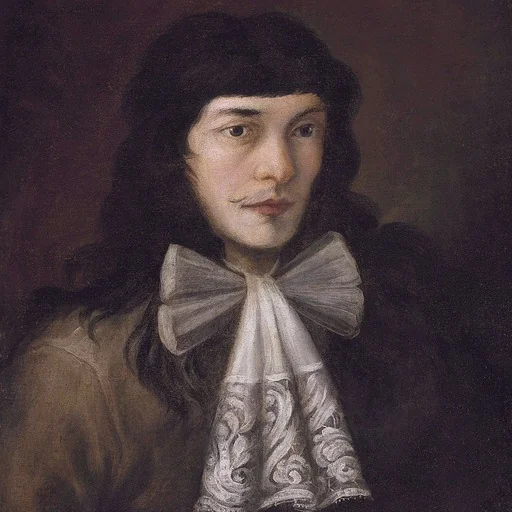
Alessandro Magnasco (February 4, 1667 – March 12, 1749), also known as il Lissandrino, was an Italian late-Baroque painter active mostly in Milan and Genoa.

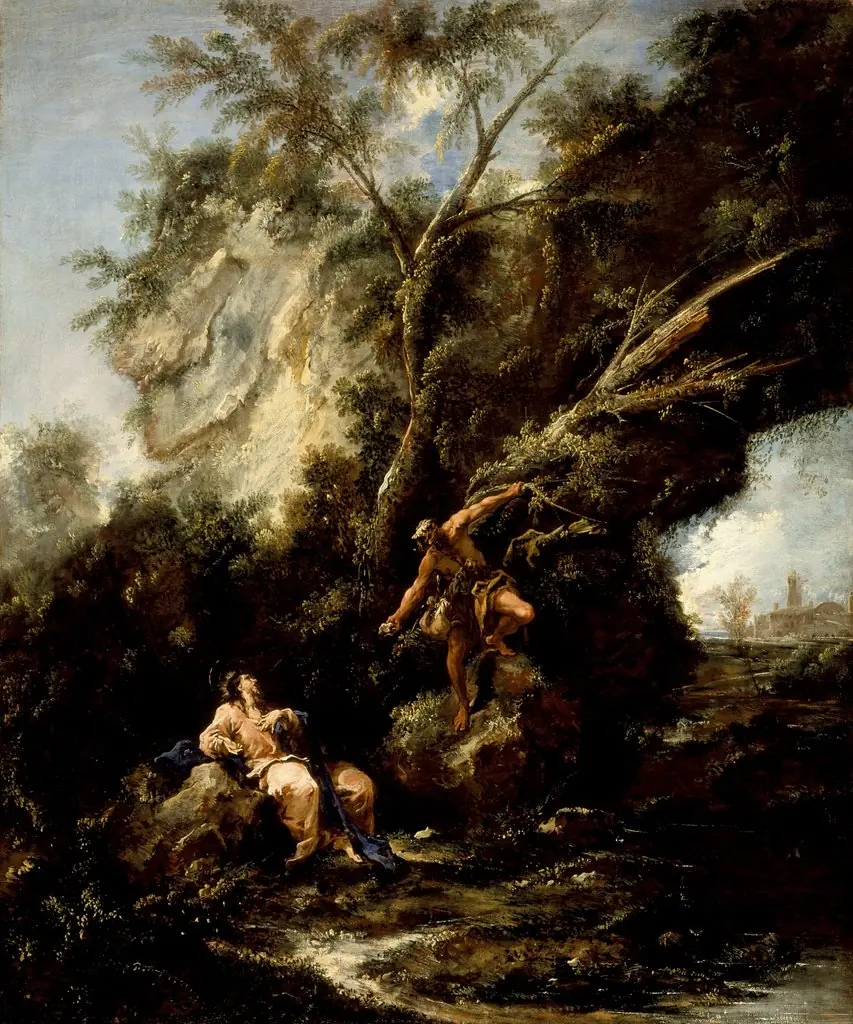 Landscape with the Temptation of Christ
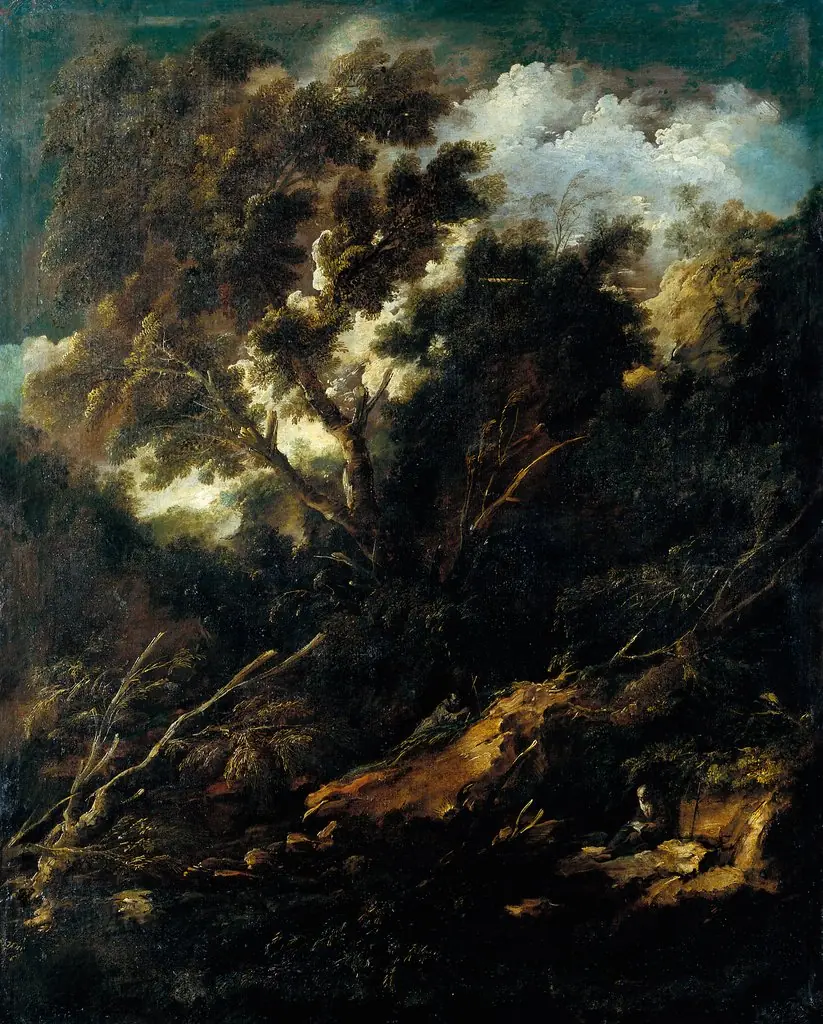 Landscape with a Reading and a Praying Franciscan
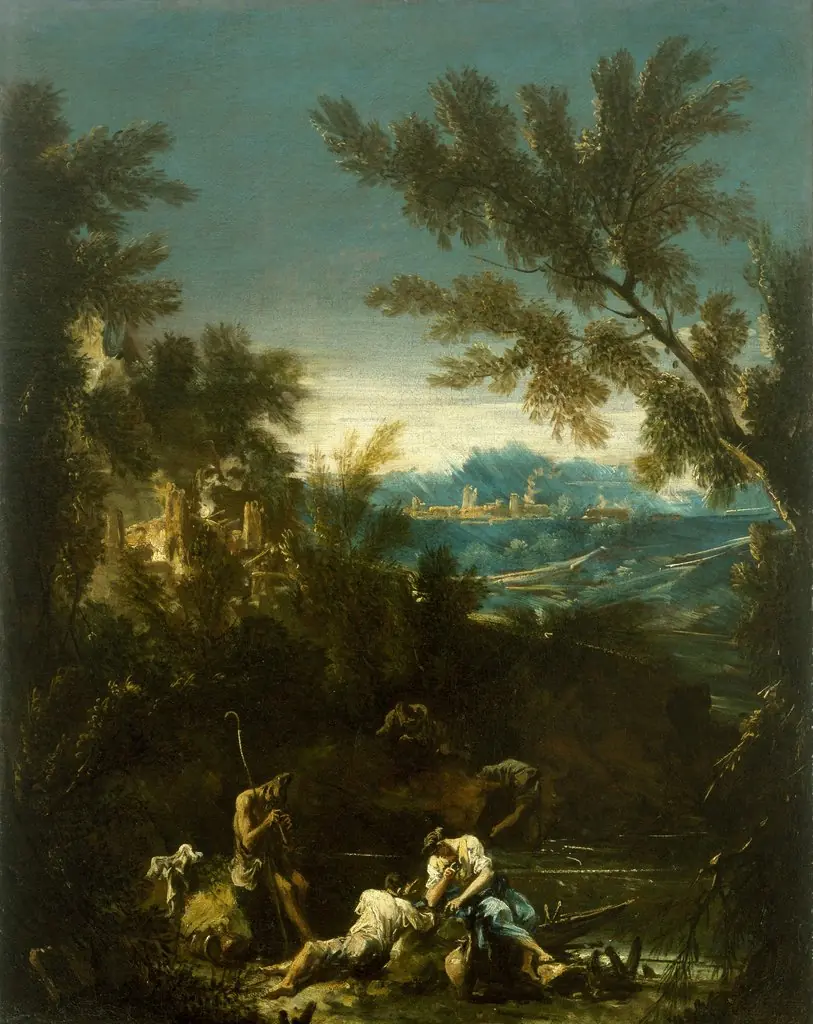 Landscape with Figures
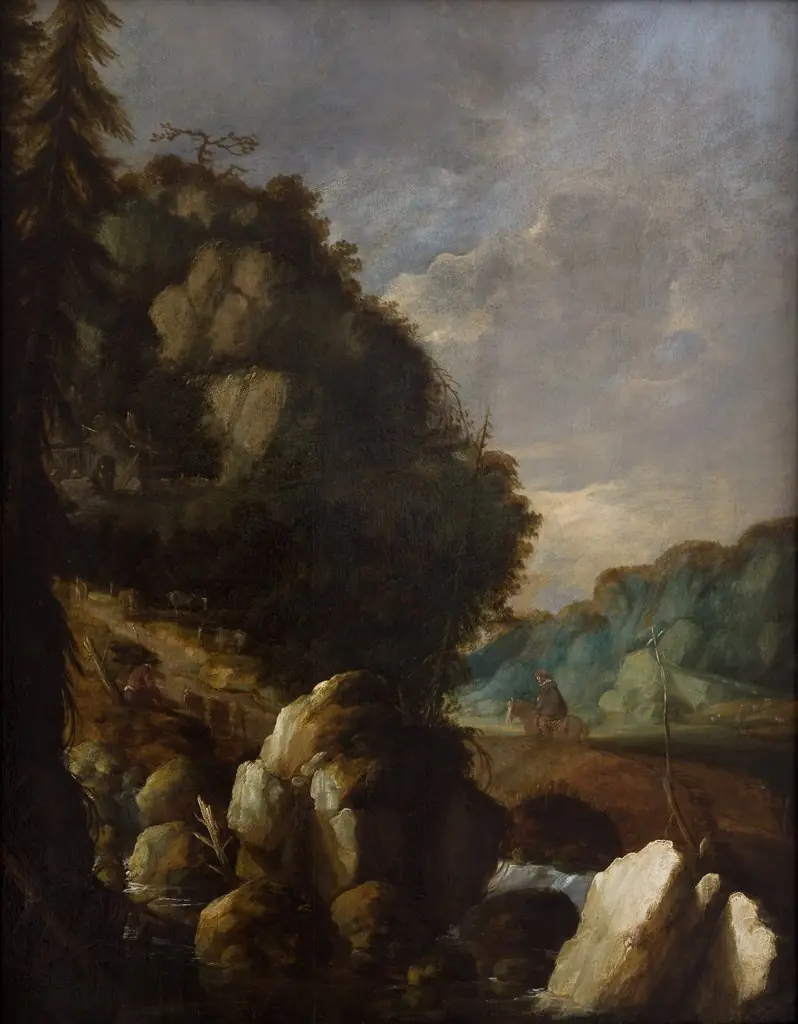 Mountain Landscape (Horseman on a Mountain Path)
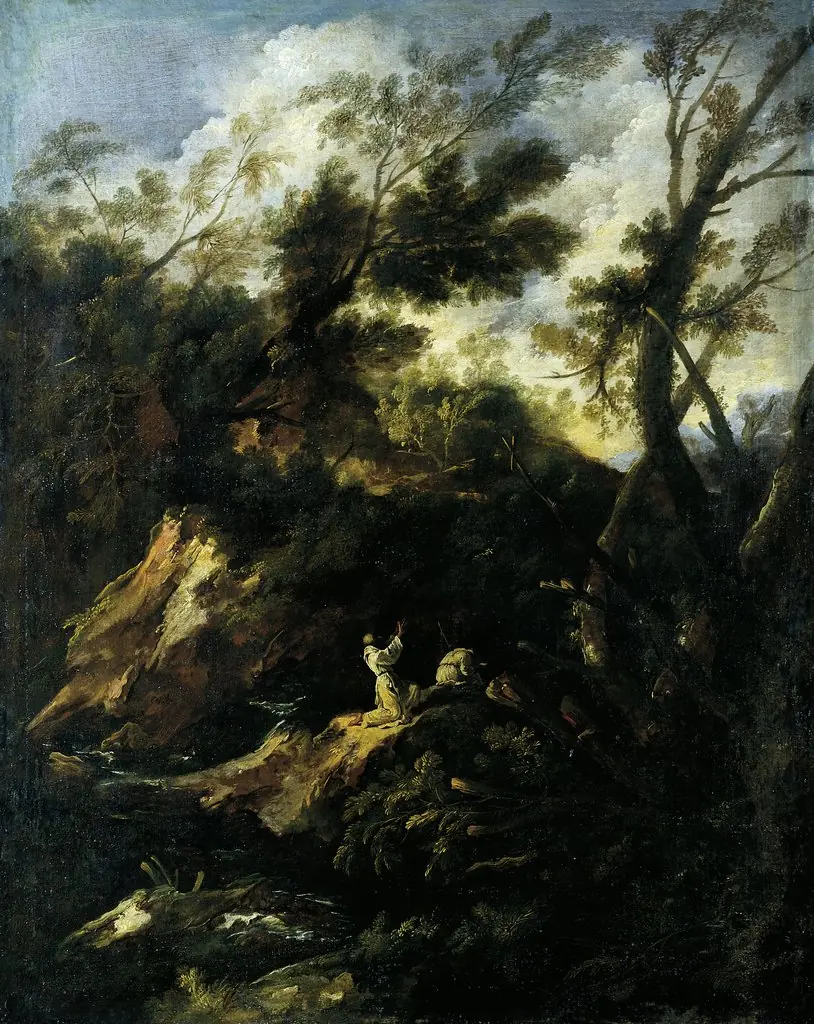 Landscape with Two Praying Monks
 Peisaj cu stânci
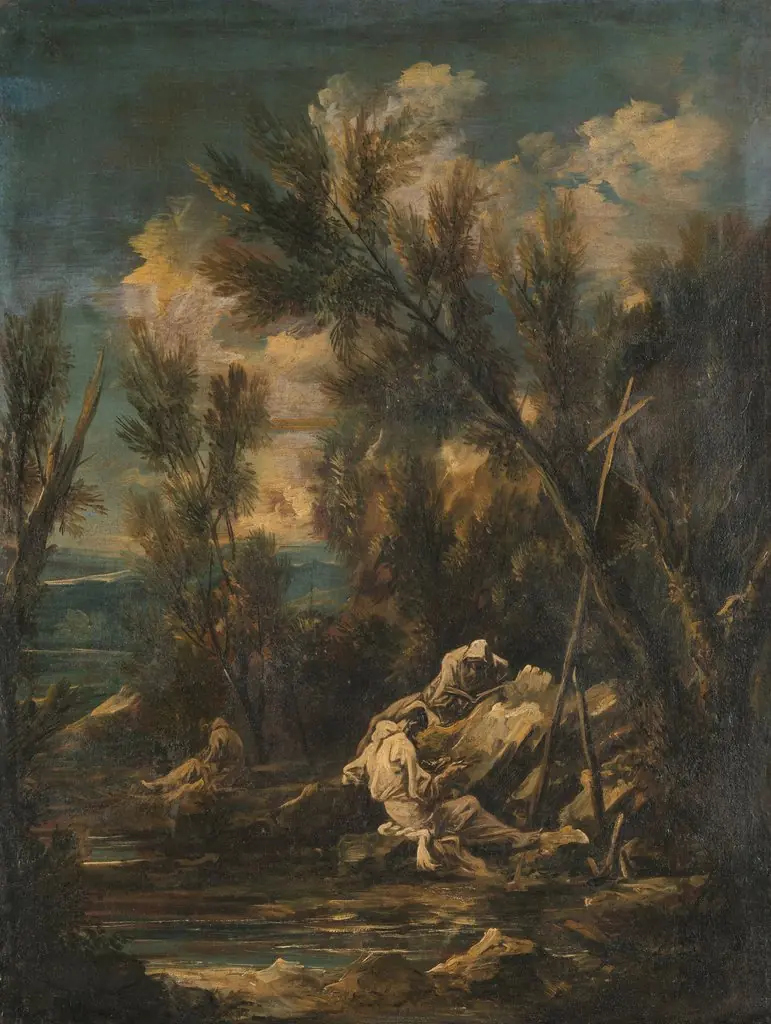 Carthusian Monks in a Landscape
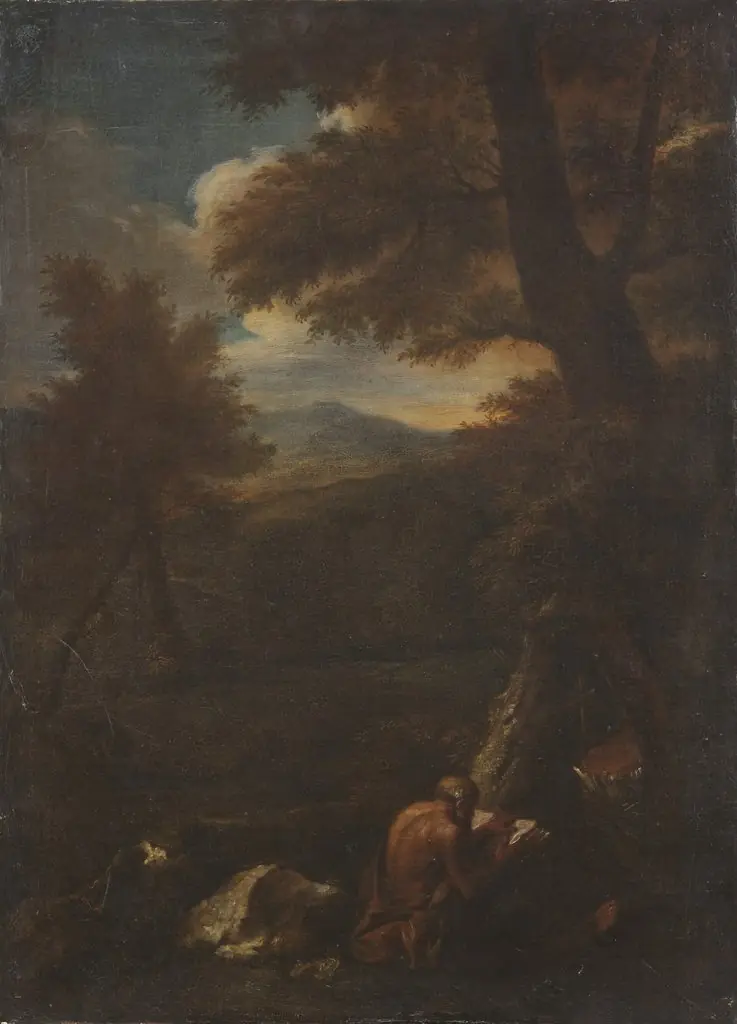 St Jerome in the Wilderness
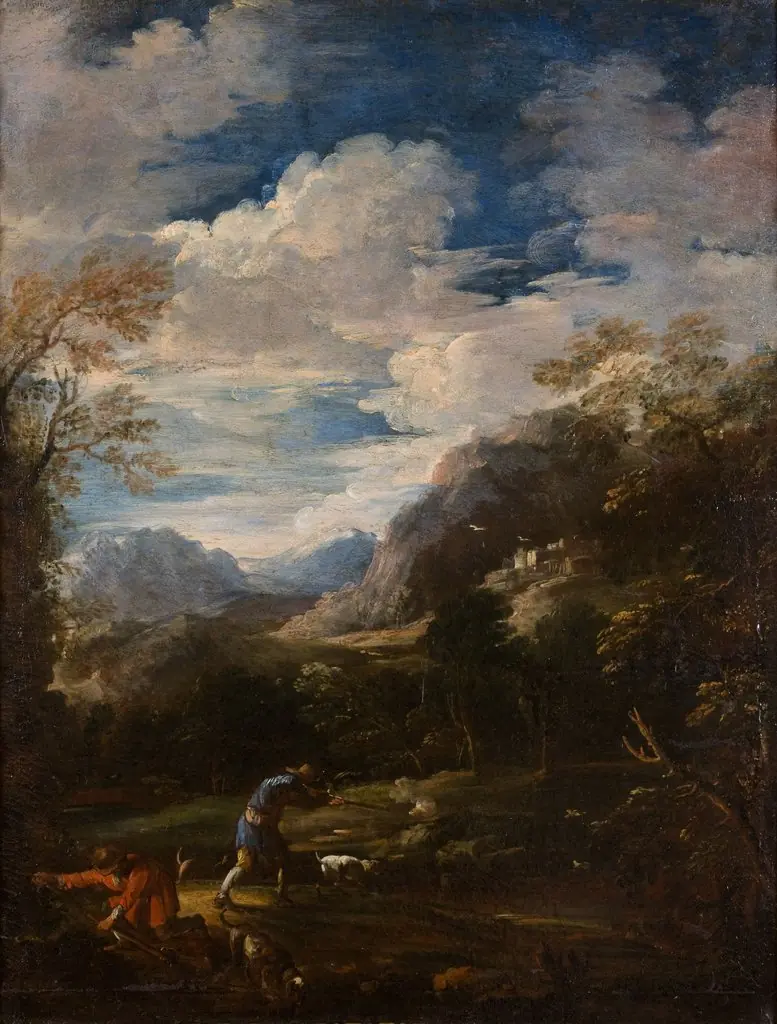 A Hunt
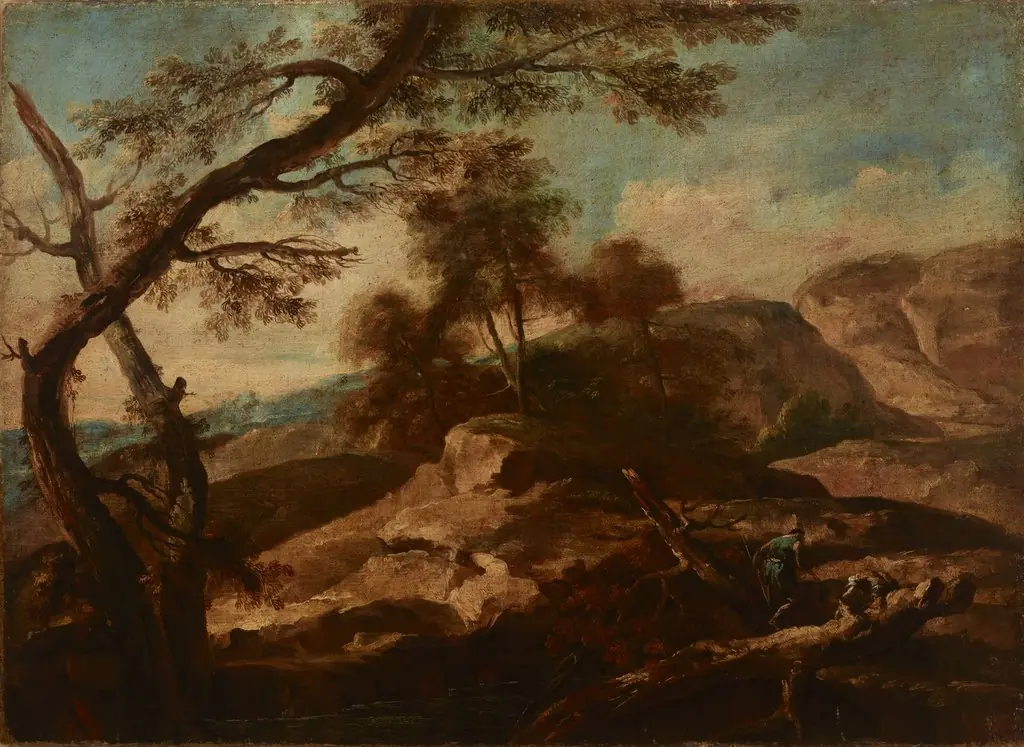 Landscape
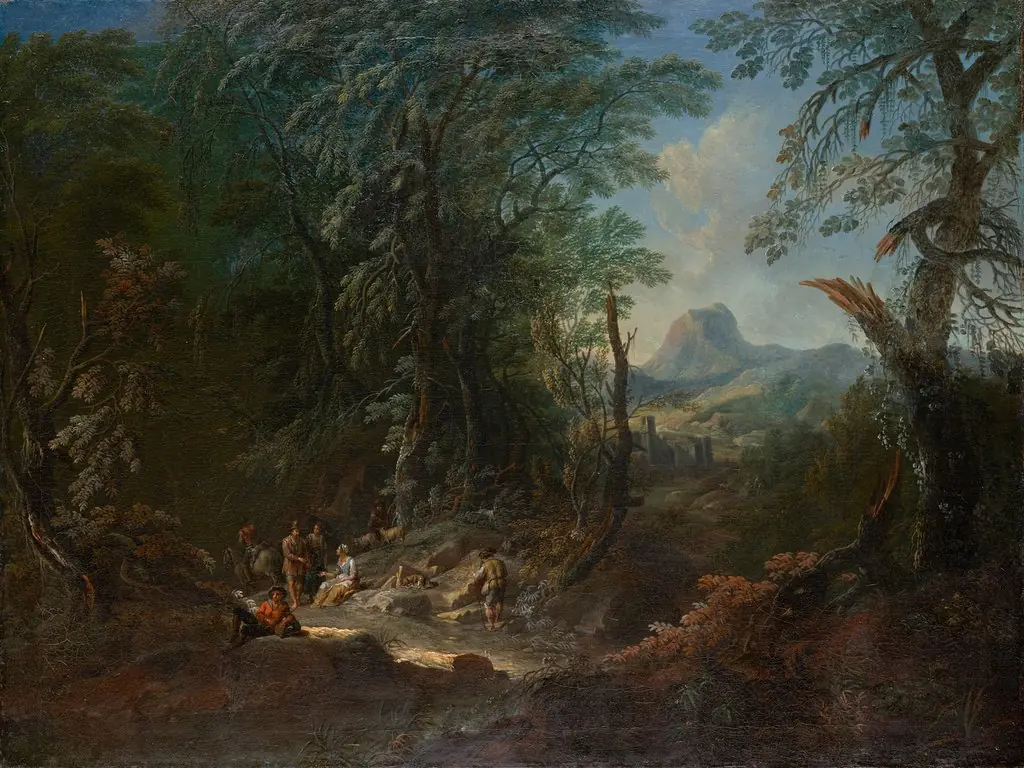 Forest Landscape "Morning"
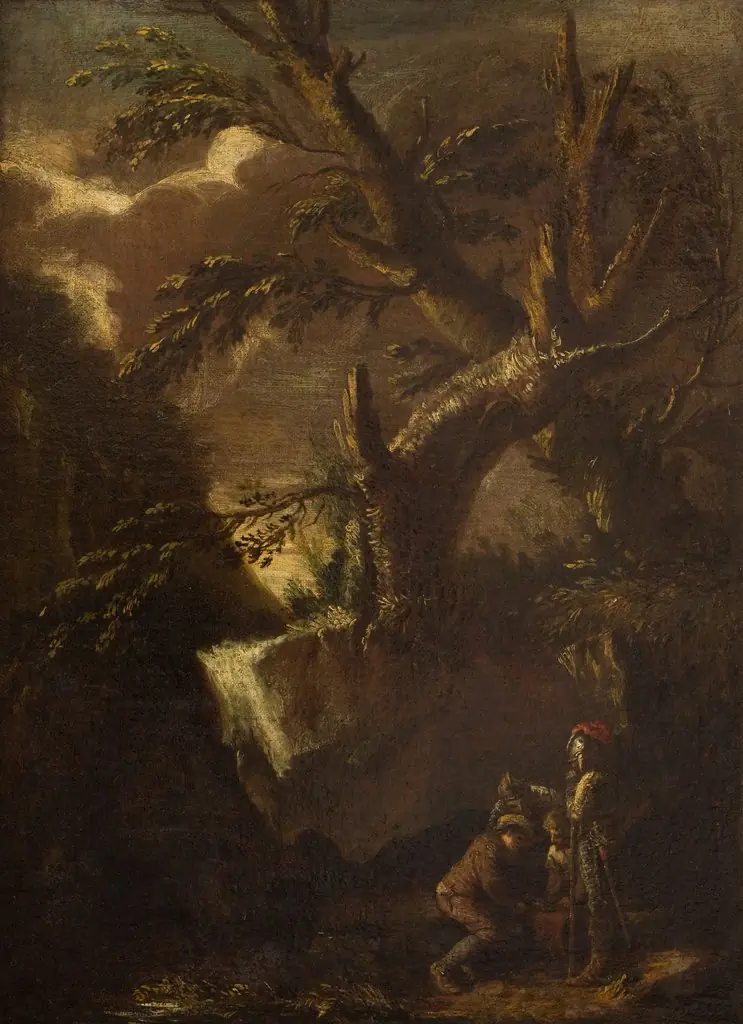 Landscape with Dice Players