Artwork
Untitled
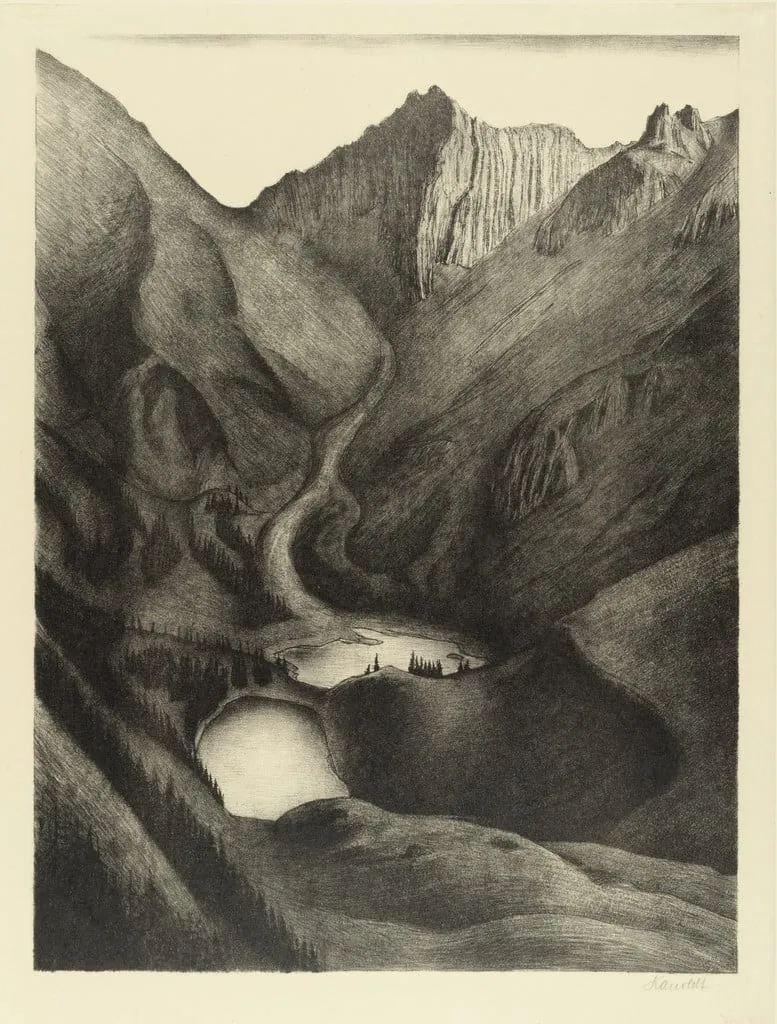
Untitled is an ink print by Alexander Kanoldt. It dates from 1934 and is held in the collection of the Museum of Modern Art.
About this work
Overview
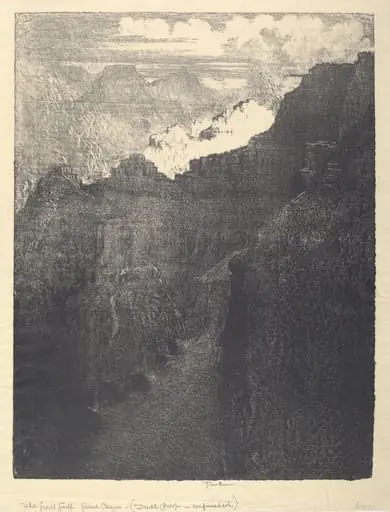
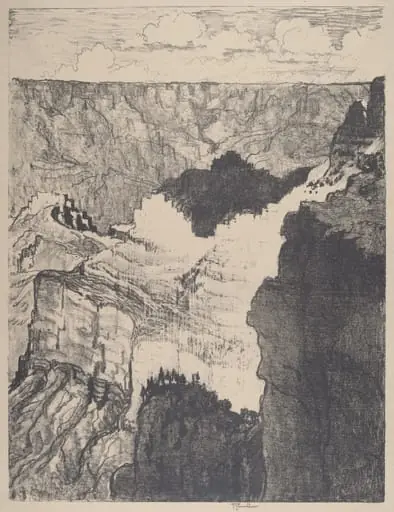
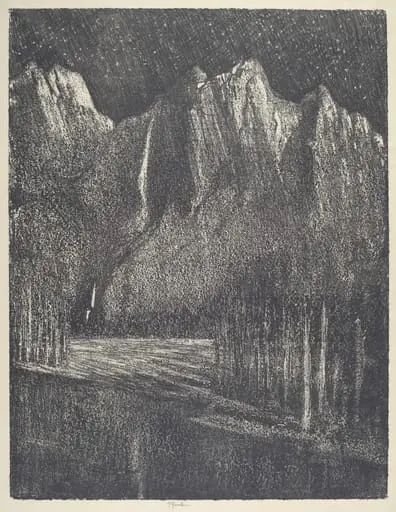
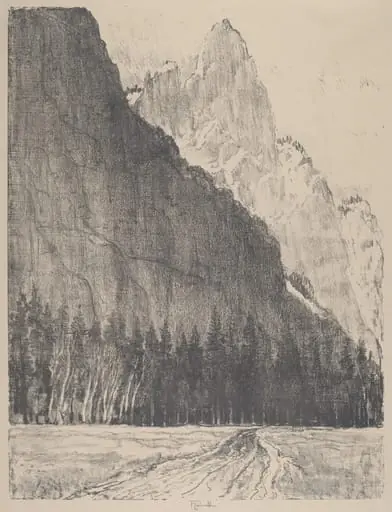
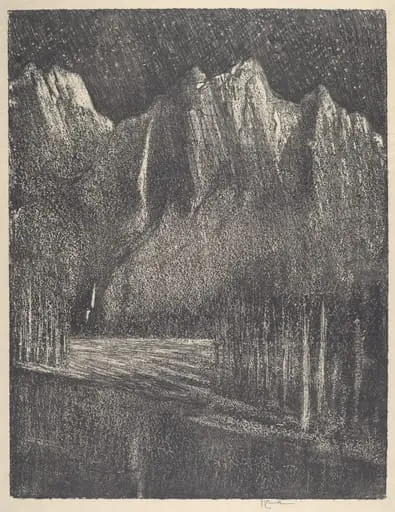
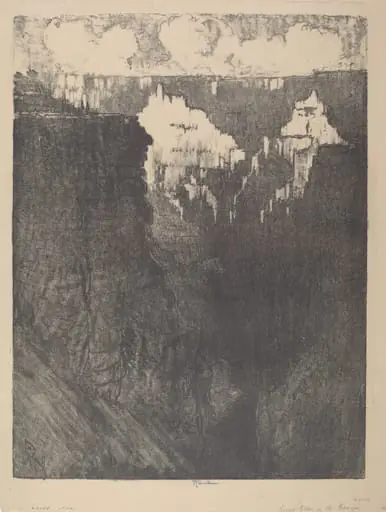
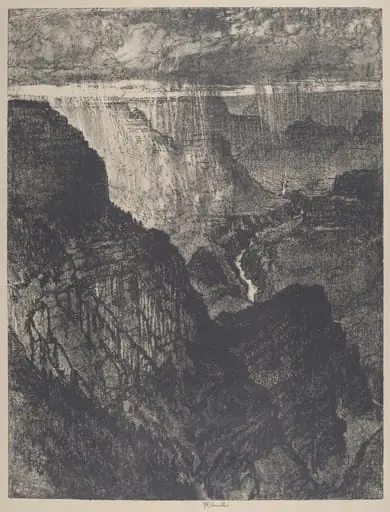
Rendered in black and white, the work captures a narrow valley with steep, shadowed cliffs and a winding river leading to a still pool at its base.
Created in 1934, this lithograph by Alexander Kanoldt departs from his better-known still lifes to present a dramatic alpine landscape. Rendered in black and white, the work captures a narrow valley with steep, shadowed cliffs and a winding river leading to a still pool at its base. The image reflects Kanoldt’s engagement with natural forms, though executed with a precision that contrasts with the wildness of the terrain.
Subject & Meaning
The scene portrays a remote mountain valley, devoid of human presence, emphasizing geological form over narrative. The river’s path and the reflective lake suggest a quiet, enduring rhythm in nature. The absence of figures or signs of habitation evokes isolation and timelessness, aligning with the introspective tone often found in New Objectivity works, even when the subject shifts from the domestic to the wild.
Technique & Style
Kanoldt employed lithography, a process where ink is drawn onto a stone surface and transferred to paper under pressure. He used dense, textured shading and rough, angular lines to convey the ruggedness of rock and water. The contrast between sharp ridges and smooth reflections creates a tactile sense of depth, while the monochrome palette heightens the sculptural quality of the landscape.
History & Provenance
The lithograph was produced in 1934 during Kanoldt’s later years, when he increasingly turned to landscape subjects. It entered the collection of The Museum of Modern Art in New York, where it remains part of its prints and drawings holdings. Its acquisition reflects institutional interest in German interwar printmaking beyond the urban themes typically associated with New Objectivity.
Context
While Kanoldt was linked to the New Objectivity movement, this work diverges from its usual focus on urban realism. In 1934, Germany’s cultural climate was shifting under Nazi influence, which favored idealized nature over modernist abstraction. This lithograph’s unembellished depiction of wilderness may reflect a quiet retreat from political pressures, offering a space of visual stillness amid social upheaval.
Legacy
This lithograph illustrates Kanoldt’s versatility within the broader framework of interwar German art. Though less studied than his still lifes, it contributes to understanding how artists of the New Objectivity engaged with landscape as a site of formal and emotional resonance. Its presence in MoMA’s collection ensures its role in the international discourse on printmaking between the wars.
Artist & collection
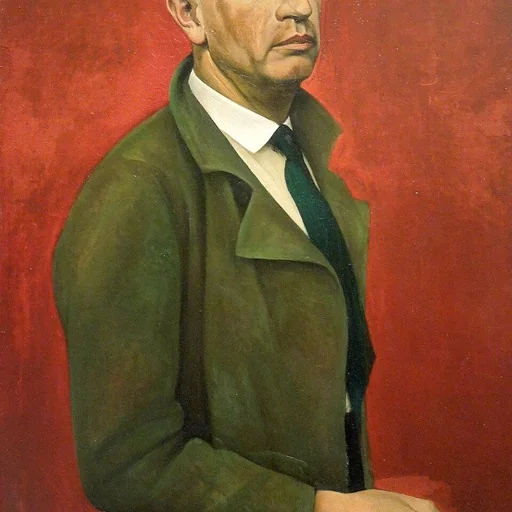
Artist
Alexander Kanoldt (29 September 1881 – 24 January 1939) was a German magic realist painter and one of the artists of the New Objectivity.