Artwork
Blind Man's Bluff
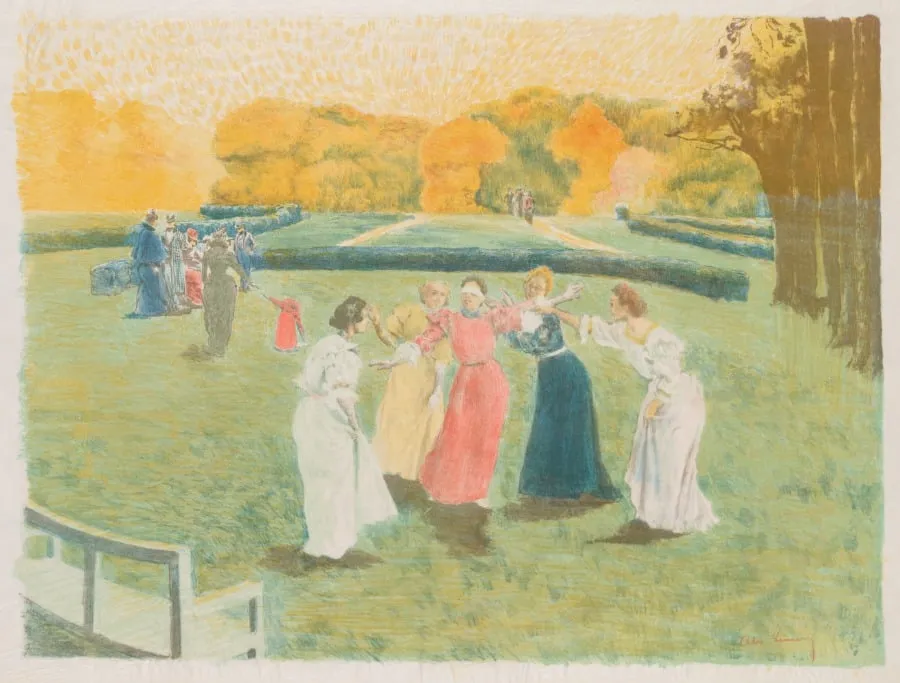
Blind Man's Bluff is a print by the Impressionist artist Alexandre Lunois. It dates from 1897 and is held in the collection of the Cleveland Museum of Art.
About this work
Overview
The scene reflects the growing cultural practice of urban leisure, where public green spaces became venues for informal recreation.
This color lithograph captures a group of women playing blind man's bluff in a Parisian park during the 1890s. The scene reflects the growing cultural practice of urban leisure, where public green spaces became venues for informal recreation. The artist, Lunois, employed the emerging technique of color lithography to render the moment with a sense of immediacy and luminosity, moving beyond commercial applications into fine art.
Subject & Meaning
The women are engaged in a childhood game, but their setting and attire suggest adult social ritual. The blindfolded figure, reaching uncertainly, is surrounded by others who laugh and taunt, creating a dynamic of playful tension. The scene is not merely recreational; it reflects the shifting social freedoms of Parisian women, who increasingly participated in public life outside domestic spheres.
Technique & Style
Lunois used color lithography to achieve a luminous, sun-dappled effect, with layered greens and yellows mimicking natural daylight rather than artificial studio lighting. The technique allowed for soft transitions and subtle tonal variations, characteristic of the medium’s rise among artists seeking alternatives to traditional printmaking. Lines are loose, compositions informal, reinforcing the spontaneity of the moment.
History & Provenance
Created in the 1890s, the print emerged during a period when color lithography transitioned from advertising to fine art. Lunois, like contemporaries such as Toulouse-Lautrec, exploited its potential for vibrant, accessible imagery. The work likely circulated as a limited edition, possibly distributed through art dealers or exhibitions focused on modern printmaking, aligning with broader movements in Belle Époque visual culture.
Context
Paris in the 1890s saw the expansion of public parks as democratic spaces for all classes. The Tuileries, Luxembourg, and others became stages for everyday life—strolling, reading, and playing. This print documents that shift, portraying leisure not as aristocratic pastime but as a shared urban experience, where social boundaries blurred in the open air.
Legacy
Lunois’s work contributes to a broader recognition of color lithography as a legitimate artistic medium. While not widely known today, his approach influenced later printmakers who valued the medium’s capacity to capture fleeting moments of modern life. The print remains a quiet testament to the everyday rituals that defined urban sociability in late 19th-century France.
Artist & collection

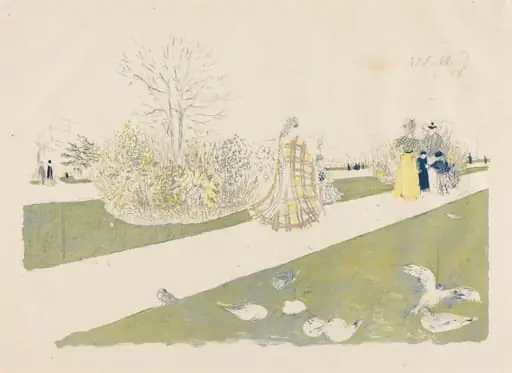 The Tuileries Garden (Le jardin des Tuileries)
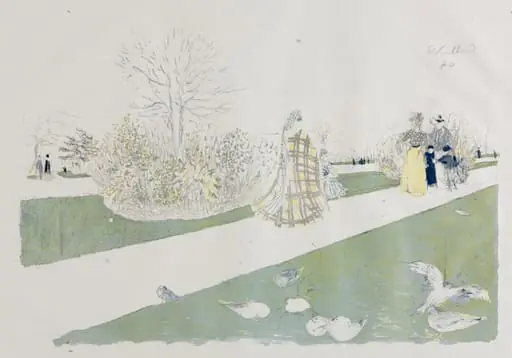 The Tuileries Garden
 Tennis
 The Tuileries Garden (Le jardin des Tuileries)
 Children's Games
 Across the Fields
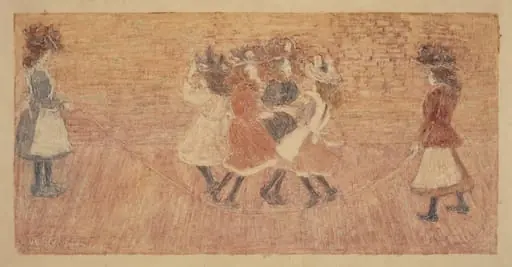 Skipping Rope
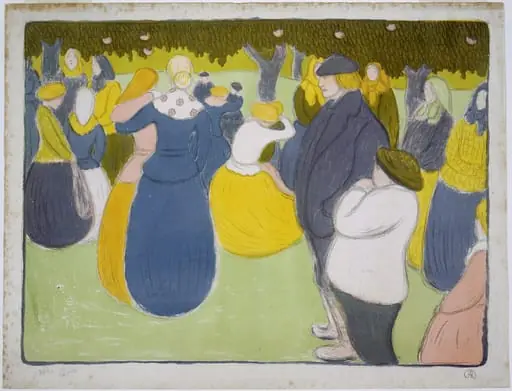 La fête de village (Village Festival)
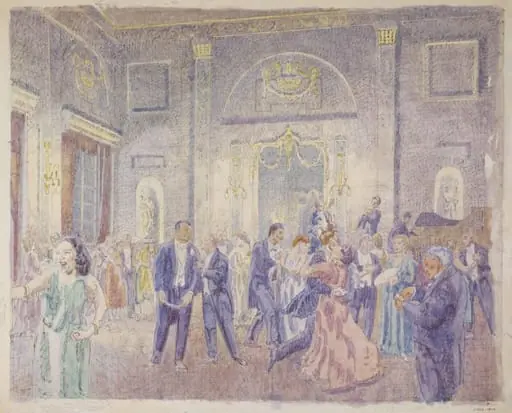 Ballroom at the Shire Hall, Chelmsford
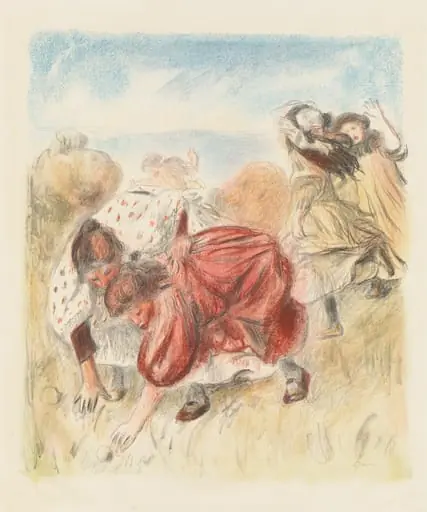 Children Playing Ball (Enfants jouant a la balle)
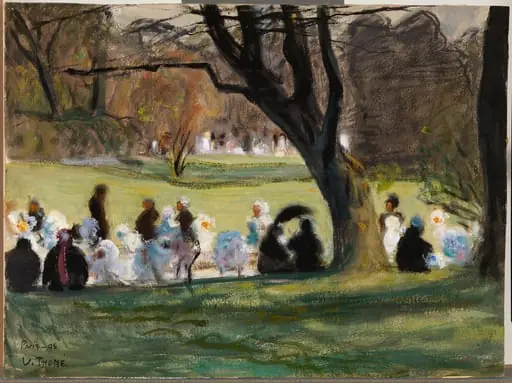 Puistokuva Pariisista
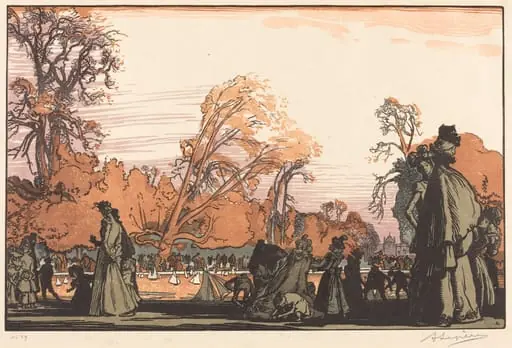 Pond in the Tuileries (Le bassin des Tuileries)