Artwork
Puistokuva Pariisista
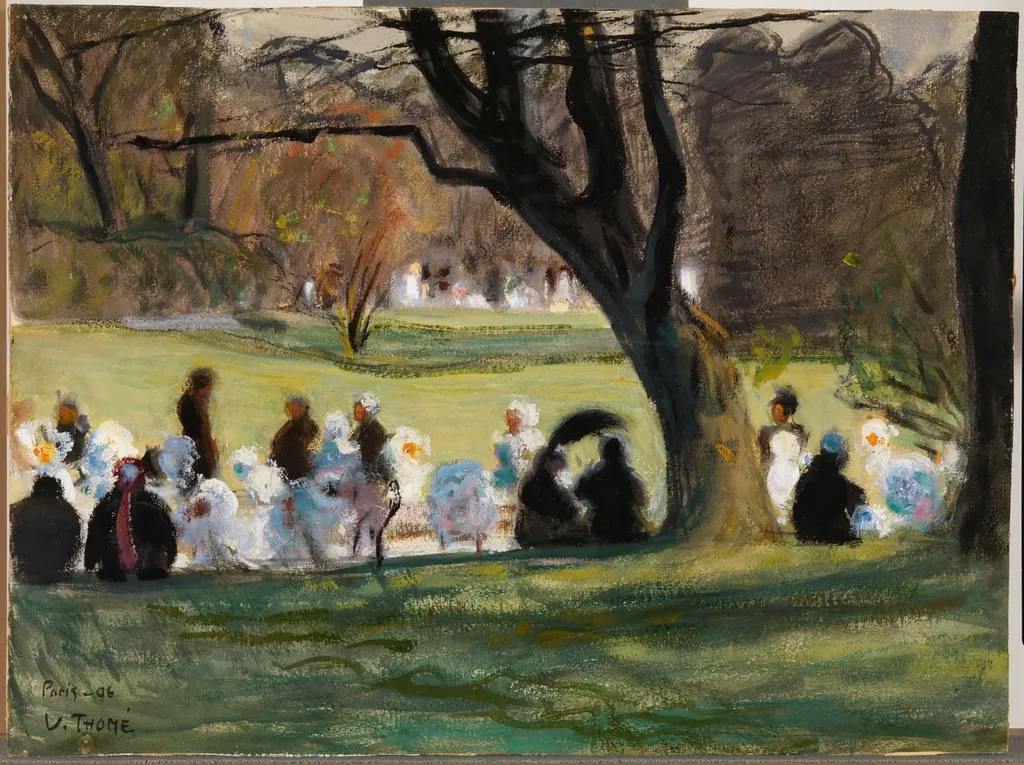
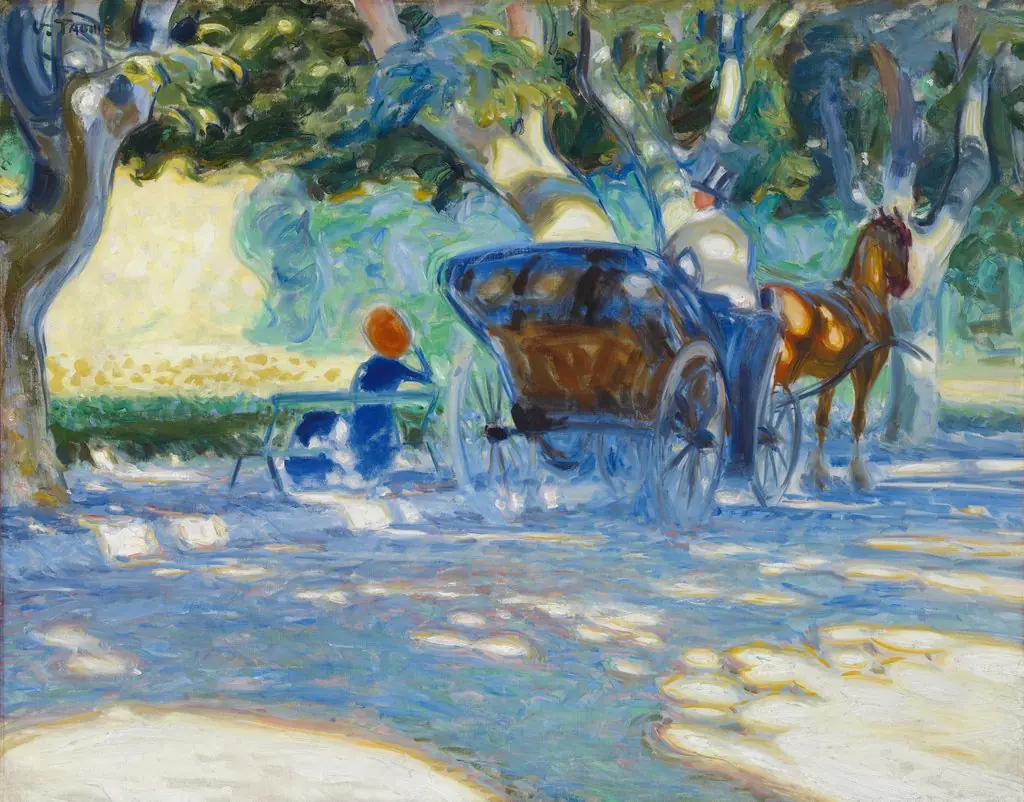
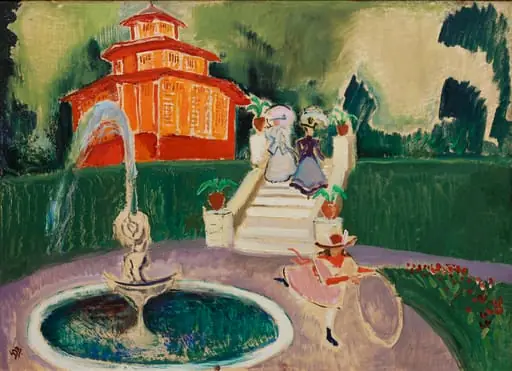
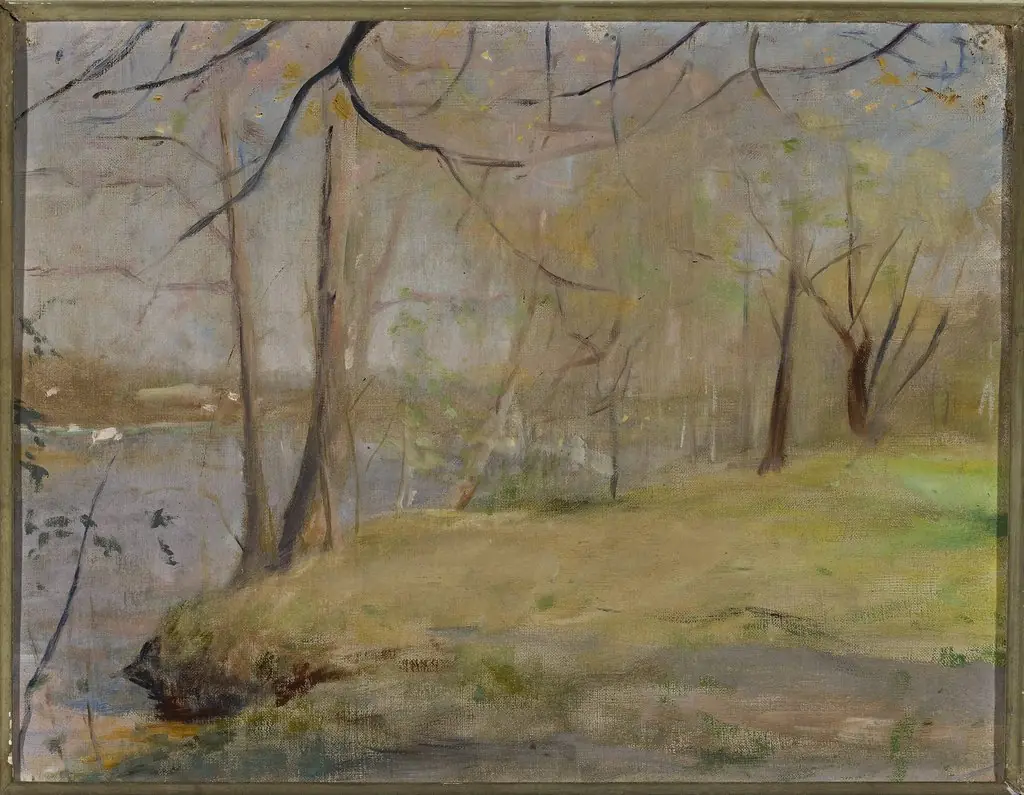
Puistokuva Pariisista is an unspecified painting by Verner Thomé. It is held in the collection of the Finnish National Gallery.
About this work
Overview
The work carries the hallmarks of plein air practice, with loose forms and a restrained palette of greens, browns, and pale blues.
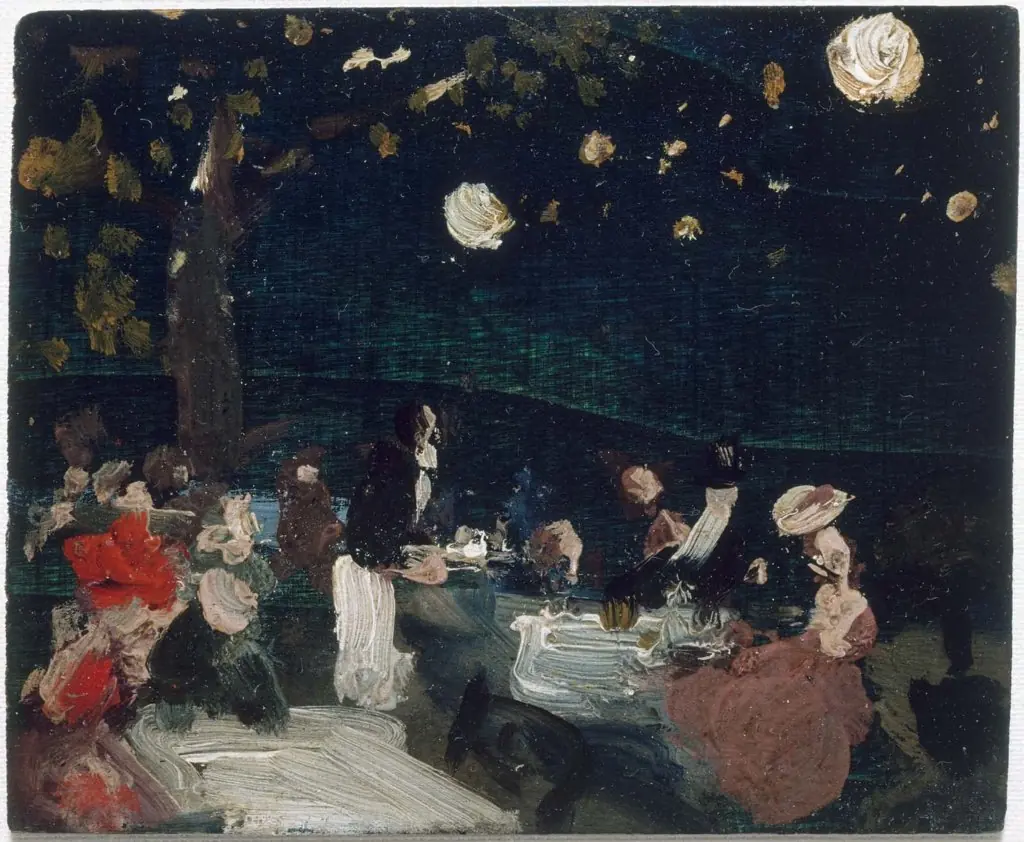
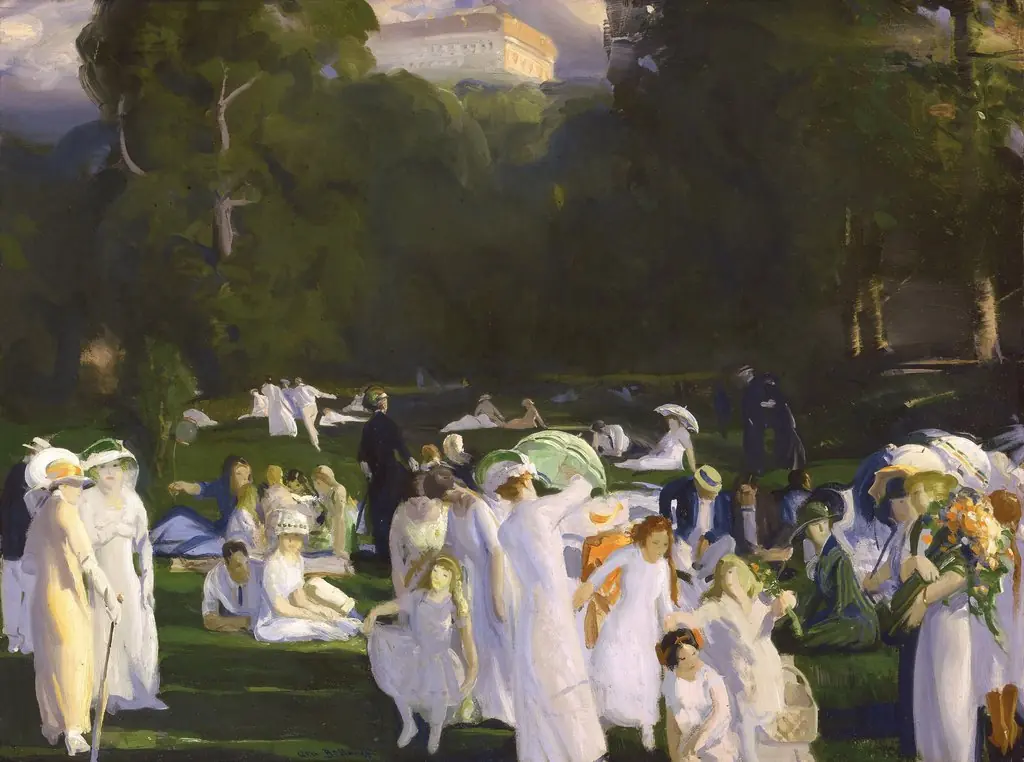
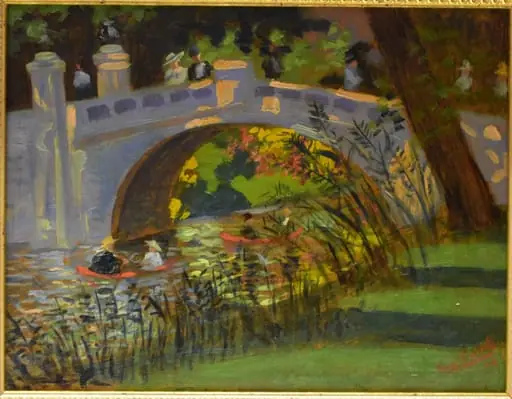
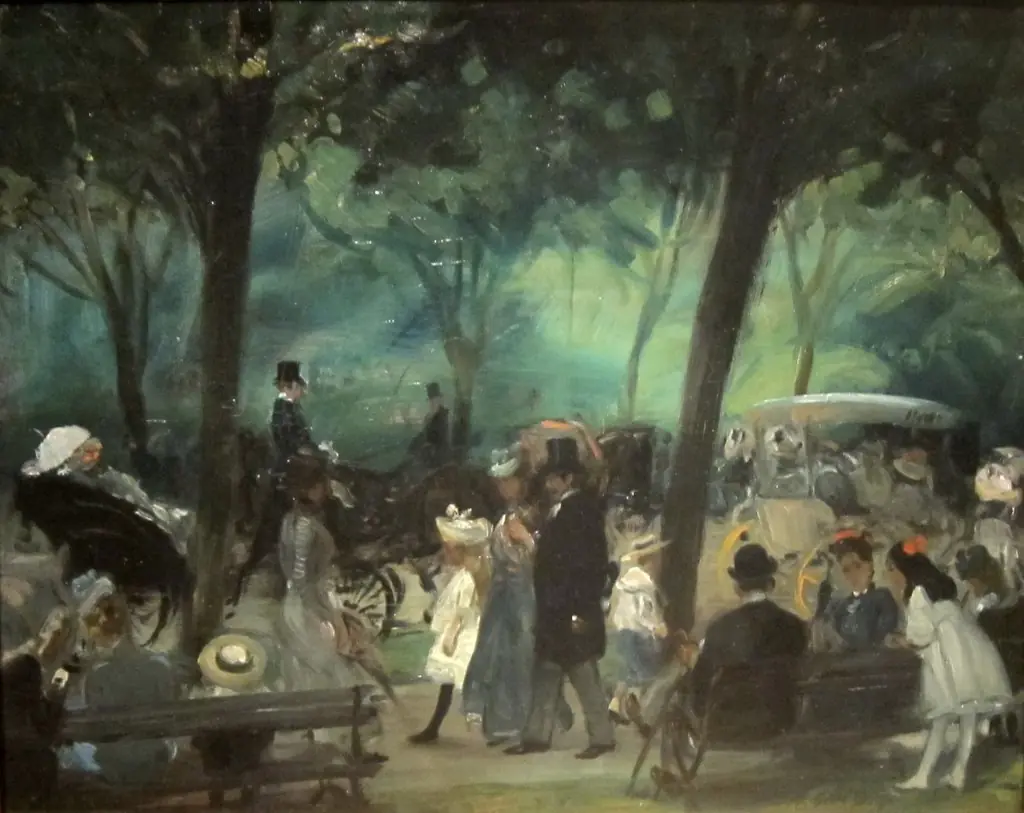
This Finnish oil painting, titled *Puistokuva Pariisista*, depicts a quiet urban park scene in Paris. Executed with visible, textured brushwork, it captures a group of figures beneath leafy trees under soft, muted light. The artist, V. Thomé, applied paint thickly in places, creating a tactile surface that suggests immediacy and direct observation. The work carries the hallmarks of plein air practice, with loose forms and a restrained palette of greens, browns, and pale blues.
Subject & Meaning
The painting portrays ordinary Parisians strolling or pausing in a public garden, their figures rendered with minimal detail but clear postures. No single narrative dominates; instead, the scene conveys a sense of quiet urban routine. The dim path and faint lights in the background suggest twilight, reinforcing a mood of calm observation rather than dramatic event. The absence of grandeur emphasizes everyday life as worthy of artistic attention.
Technique & Style
Thomé employed impasto techniques, layering paint to build texture in foliage and clothing, giving the surface a physical presence. Brushstrokes are rapid and unrefined, indicating direct outdoor painting. Color is applied with restraint, avoiding sharp contrasts in favor of atmospheric harmony. The sketch-like quality suggests spontaneity, aligning the work with late 19th-century trends that valued perceptual immediacy over polished finish.
History & Provenance
Signed 'V. Thomé,' the painting is attributed to the Finnish artist Väinö Thomé, active in the late 1800s. While little is documented about its early ownership, its Finnish title and the artist’s background suggest it was created during his time in Paris, likely in the 1880s or 1890s. It reflects the common practice among Nordic artists of the era who traveled to France to study and sketch, bringing back observations of European urban life.
Context
Thomé painted during a period when Finnish artists increasingly engaged with French artistic movements, particularly Impressionism and its offshoots. Though not formally aligned with any school, his work echoes the interest in light, atmosphere, and transient moments seen in Parisian plein air painting. His choice of a modest park scene over monumental subjects reflects a broader shift toward intimate, observational art among Nordic painters abroad.
Legacy
The painting remains a quiet example of Finnish engagement with French urban life in the late 19th century. It contributes to a lesser-known body of work by Nordic artists who documented everyday scenes abroad, offering a counterpoint to more celebrated national narratives. Its unassuming character and technical honesty preserve a personal, unidealized view of Paris, valued today for its sincerity rather than its fame.
Artist & collection
Artist
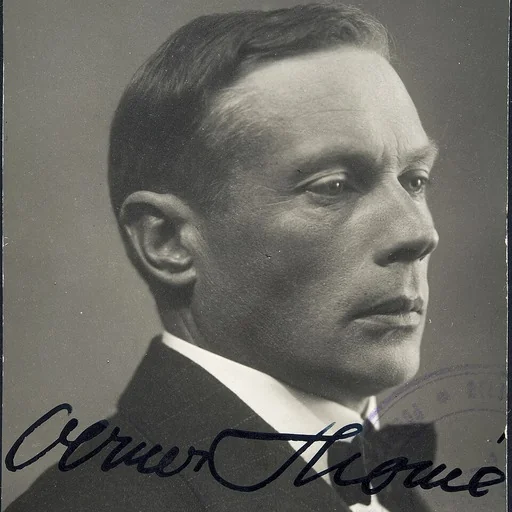
Verner Thomé (4 July 1878 – 1 June 1953) was a Finnish Post-Impressionist graphic artist. He was influenced by Vitalism a German-Scandinavian movement that incorporated Nietzsche's philosophy.