Artwork
Priam Begging the Body of Hector from Achilles
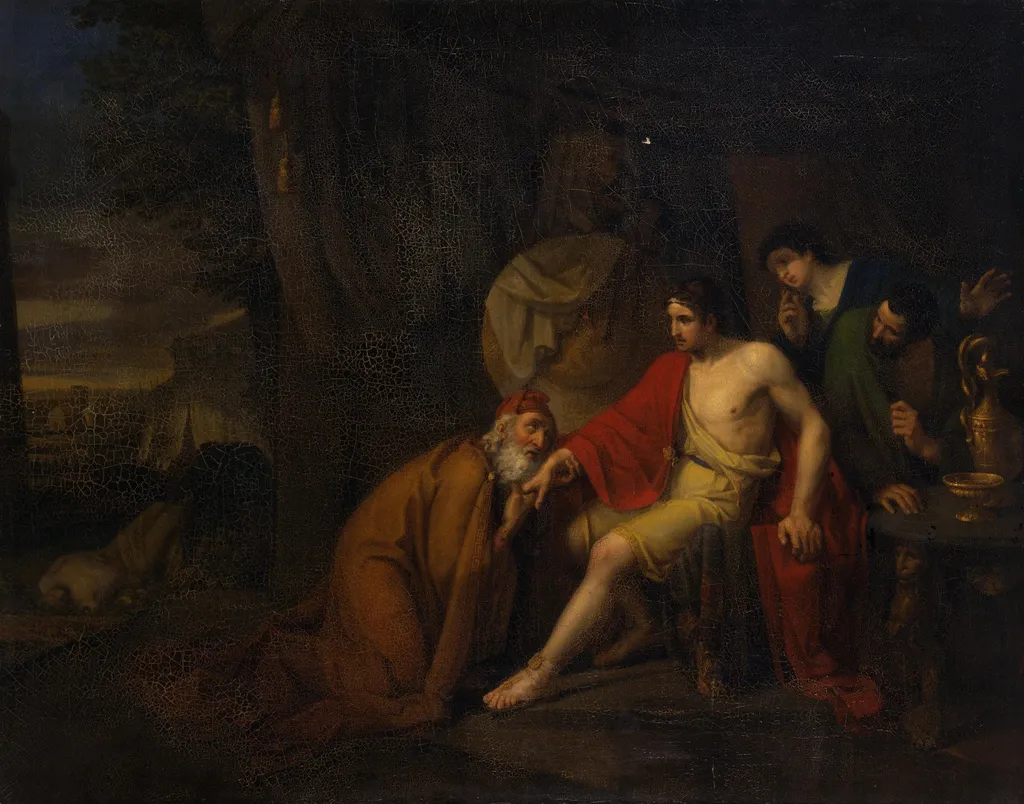
Priam Begging the Body of Hector from Achilles is an oil painting by the Neoclassicist artist Alexey Tarasovich Markov. It dates from 1824 and is held in the collection of the Hermitage Museum.
About this work
Overview
Priam Begging the Body of Hector from Achilles is a historical painting created by Alexey Tarasovich Markov in 1824, executed in oil paint in the Neoclassical style.
Subject & Meaning
The painting illustrates a poignant scene from Homer's Iliad: King Priam of Troy, kneeling in supplication, begs Achilles to return his son Hector's body for proper burial, conveying themes of grief, humility, and the human cost of war.
Technique & Style
Markov employed strong chiaroscuro, contrasting deep shadows with illuminated faces and arms, particularly highlighting Achilles' features. This dramatic lighting, characteristic of Neoclassical painting, emphasizes the emotional intensity of the moment.
History & Provenance
Created in 1824 by Alexey Tarasovich Markov, the painting reflects the artist's activity during the reigns of Tsars Nicholas I and Alexander II in St. Petersburg, though specific ownership or exhibition histories are not detailed here.
Context
As a Neoclassical work, it aligns with the early 19th-century revival of classical themes and aesthetics, often used to explore moral and emotional depth through ancient narratives.
Own this work as a print
Artist & collection
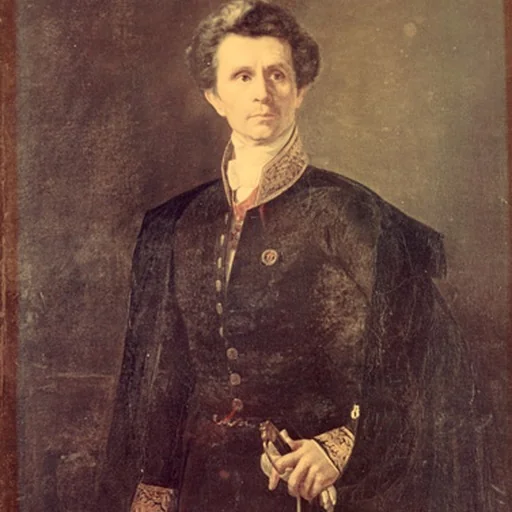
Artist
Alexey Tarasovich Markov (Russian: Алексей Тарасович Марков, 24 March 1802 - 12 March 1878) was a Russian painter, active in St.

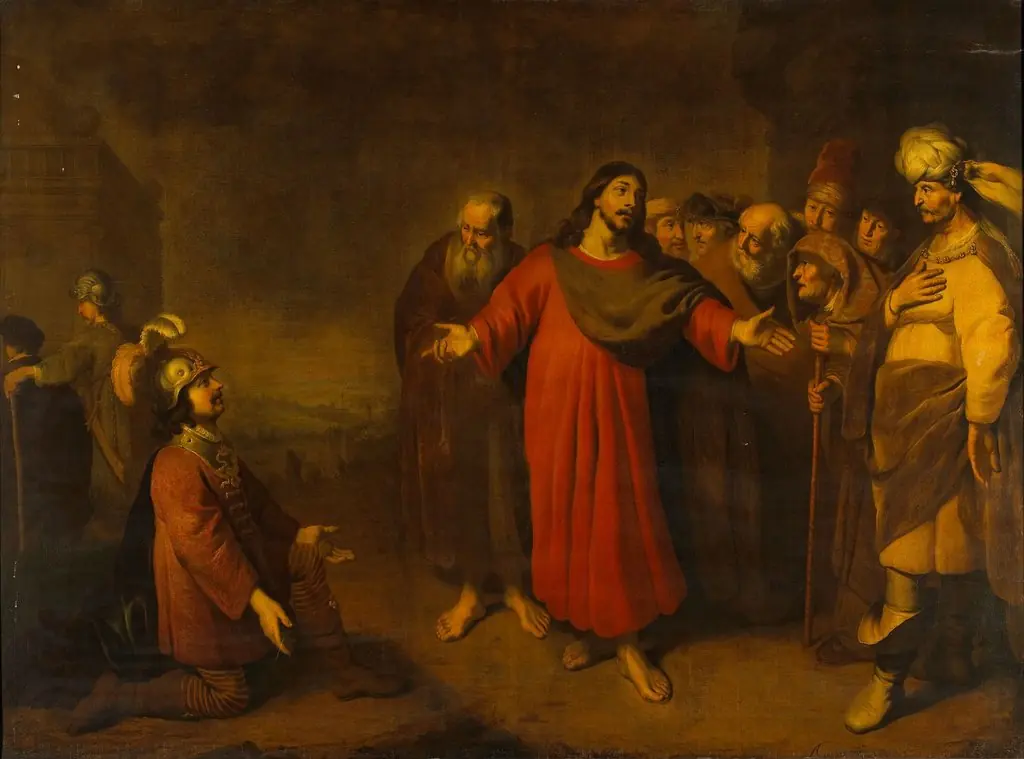 Christ and the Centurion
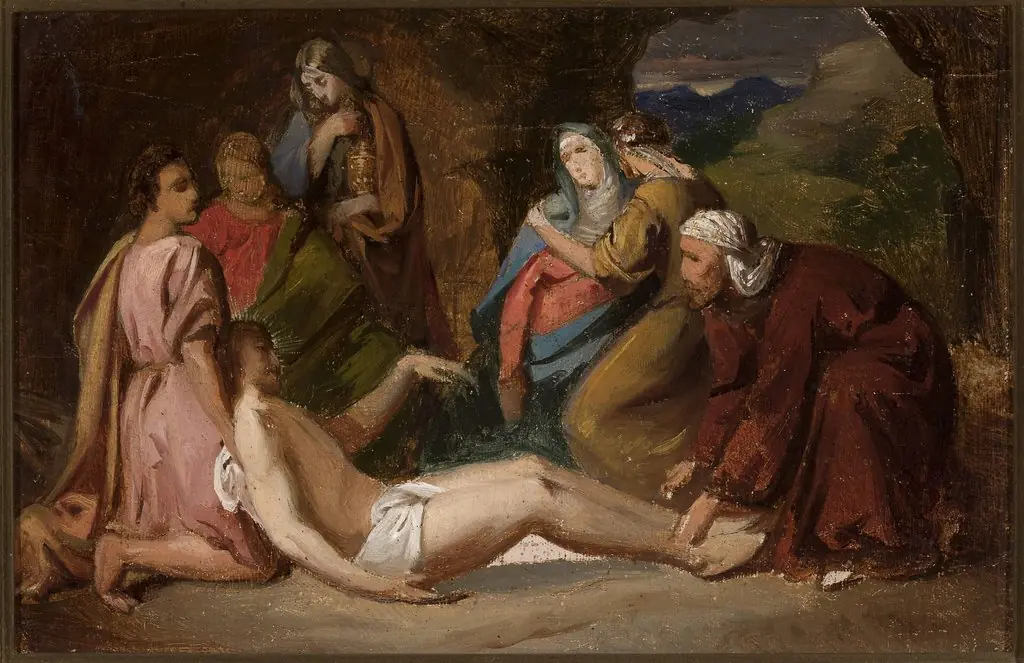 Entombment of Christ, sketch for a painting
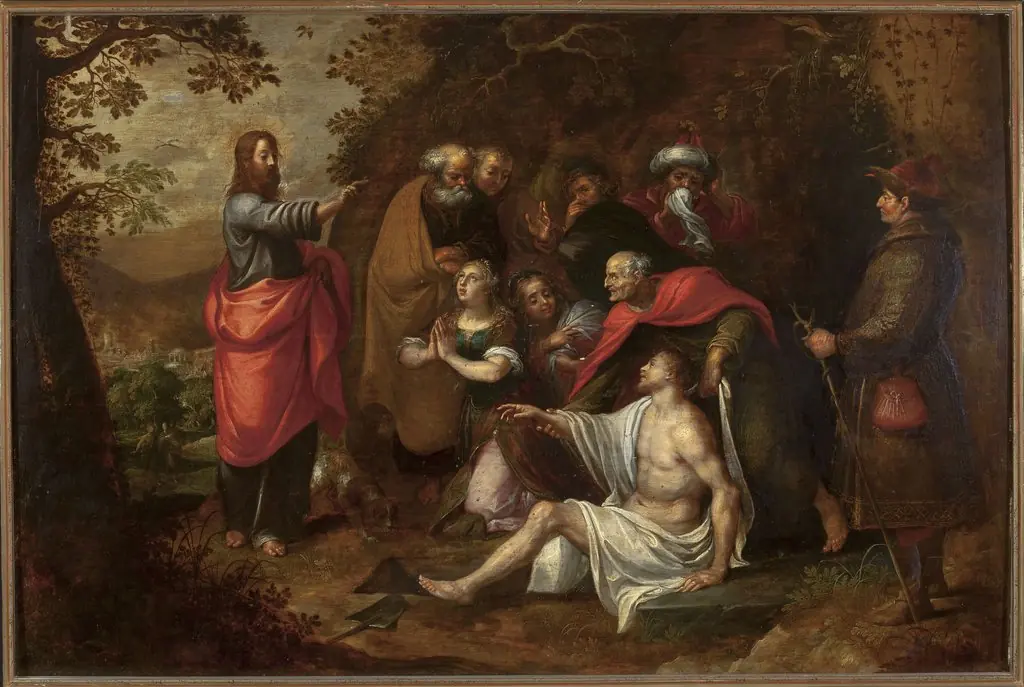 Raising o Lazarus
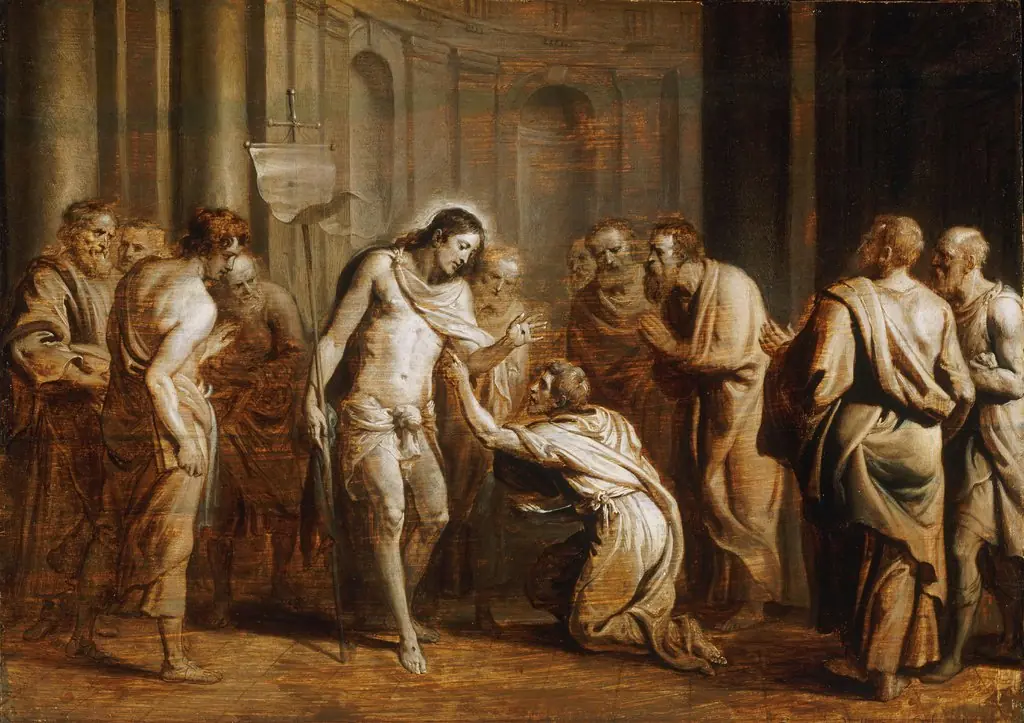 Saint Thomas Touching Christ's Wounds
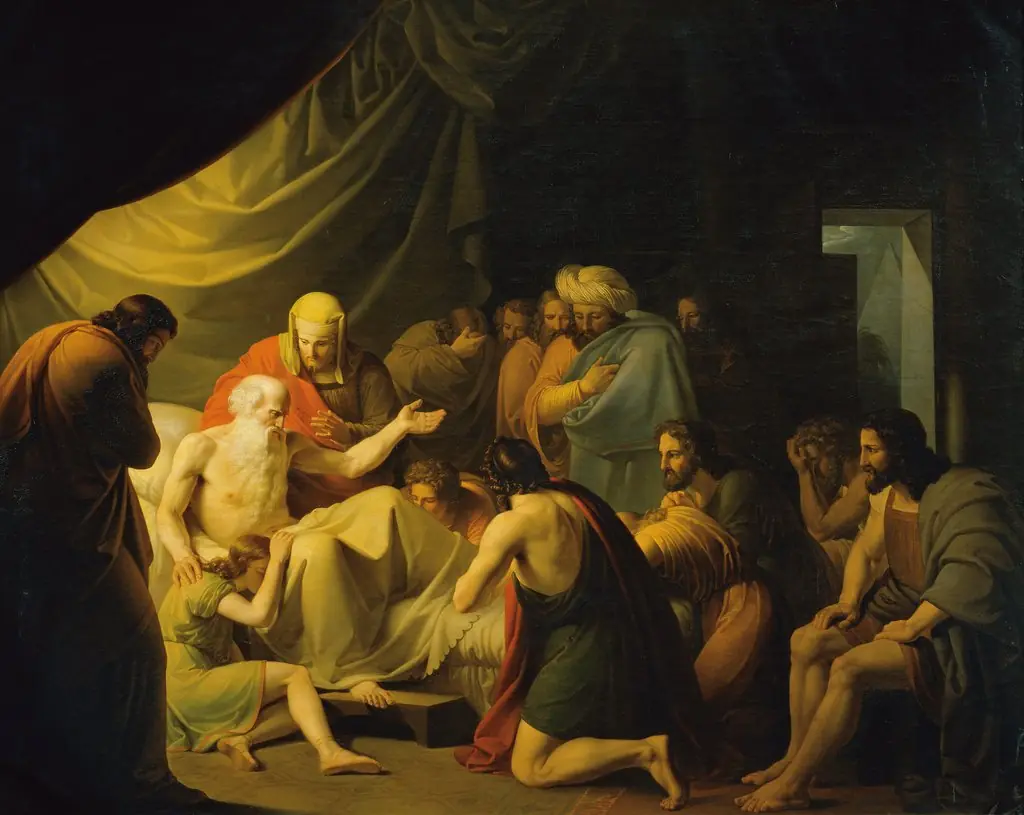 Jacob blesses the sons of Joseph
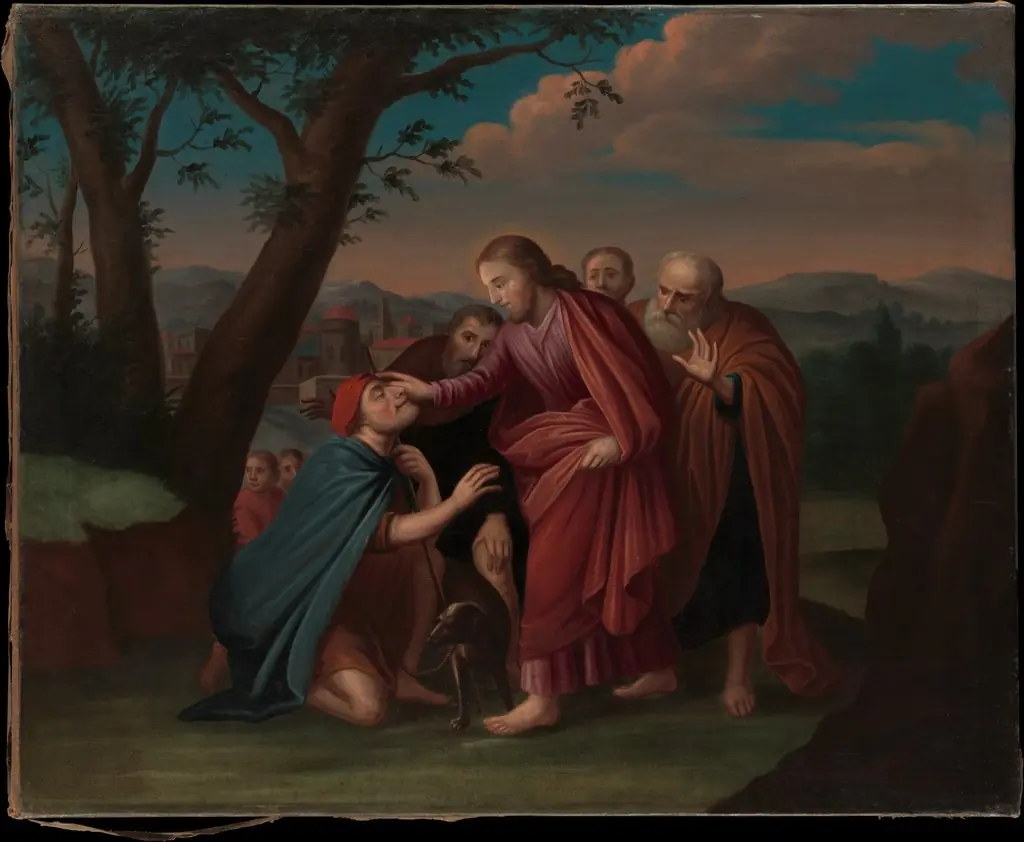 Christ Healing the Blindman
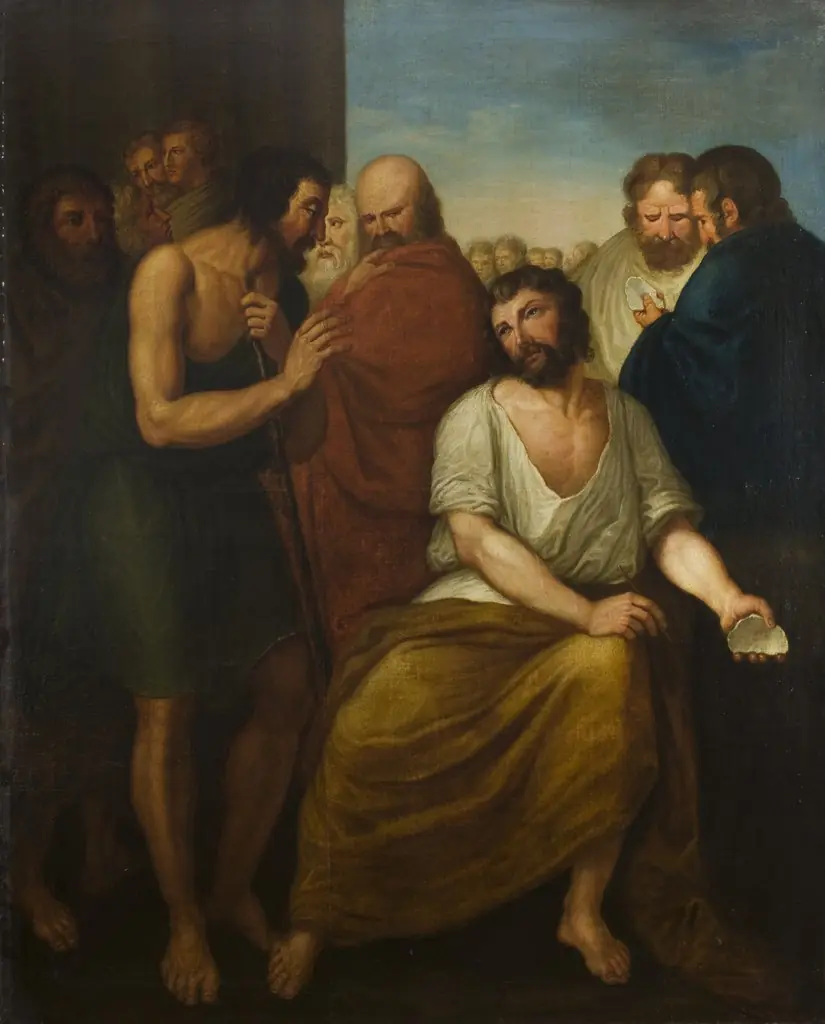 Ostracism over Aristides
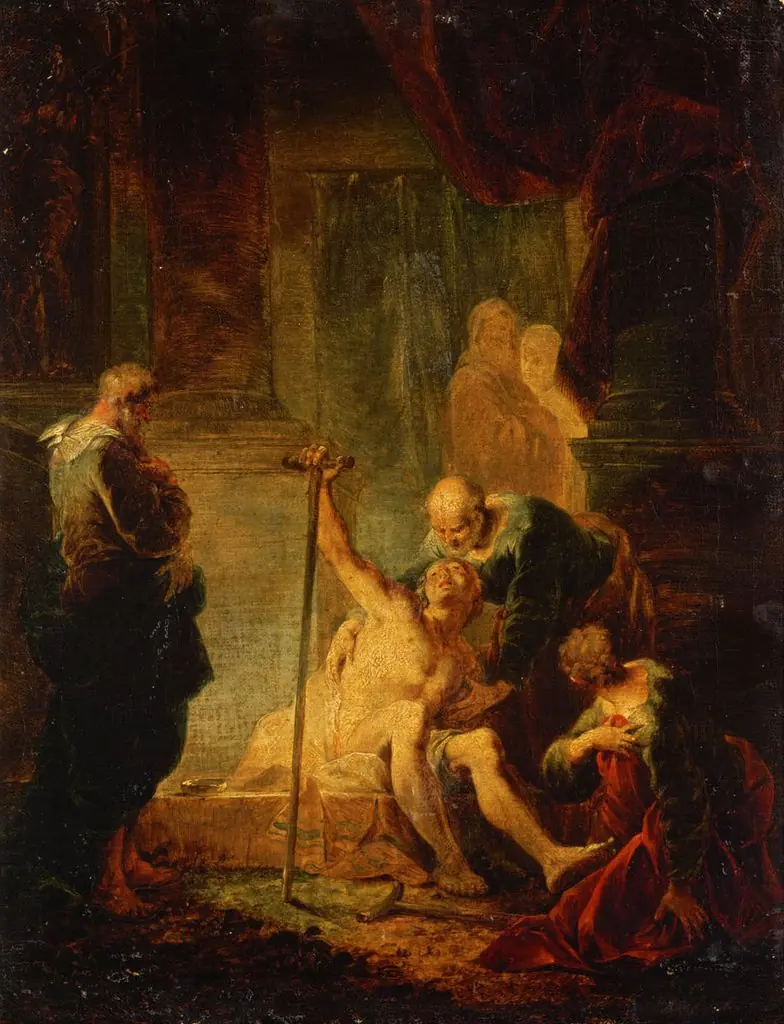 Petrus und Johannes heilen den Lahmgeborenen im Tempel
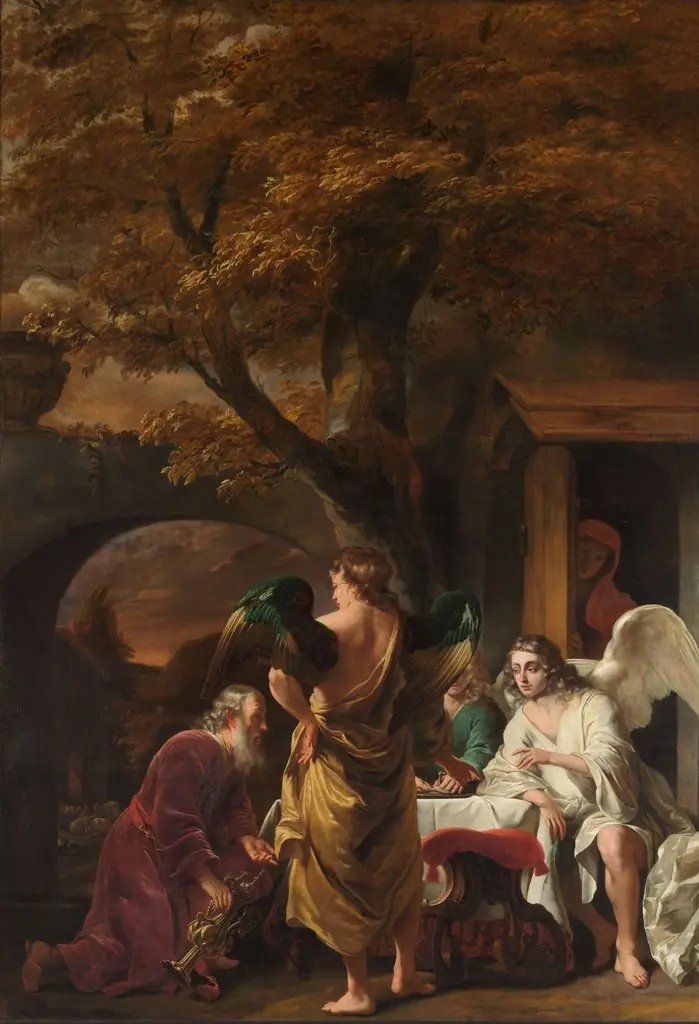 Abraham entertaining the three angels
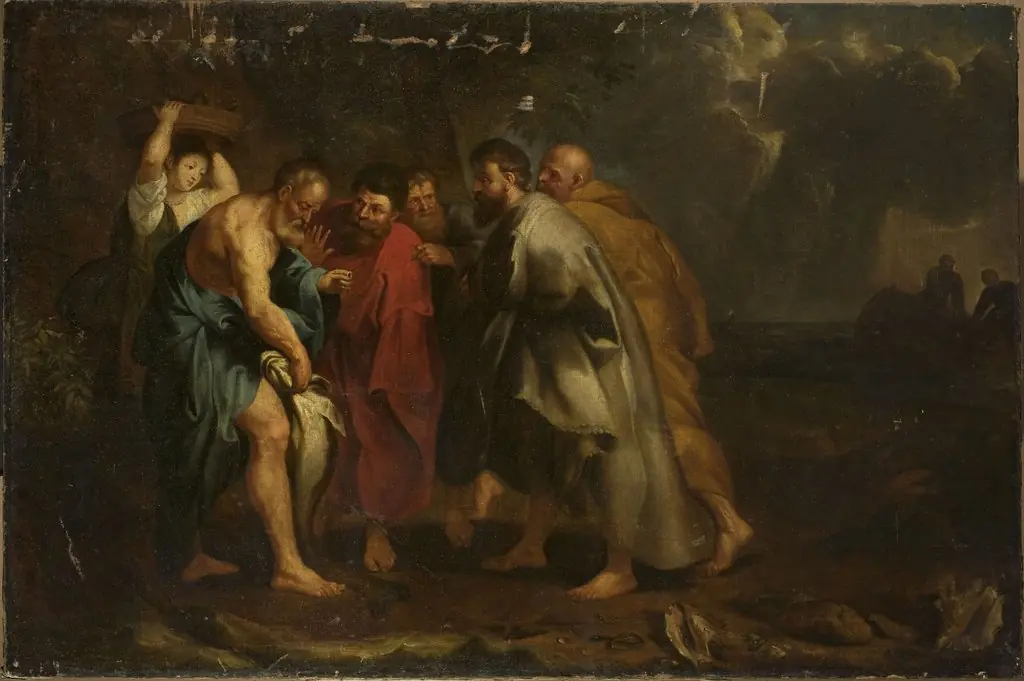 Apostles finding a coin inside a fish (Matthew 17:27)
 Democritus among the Abderitans
 The Baptism of Christ