Artwork
Psiquis en la fuente

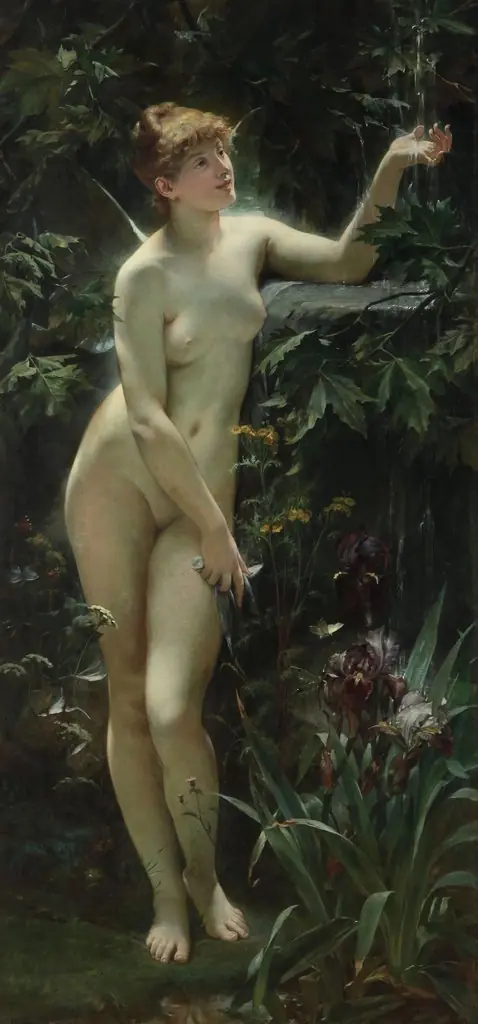
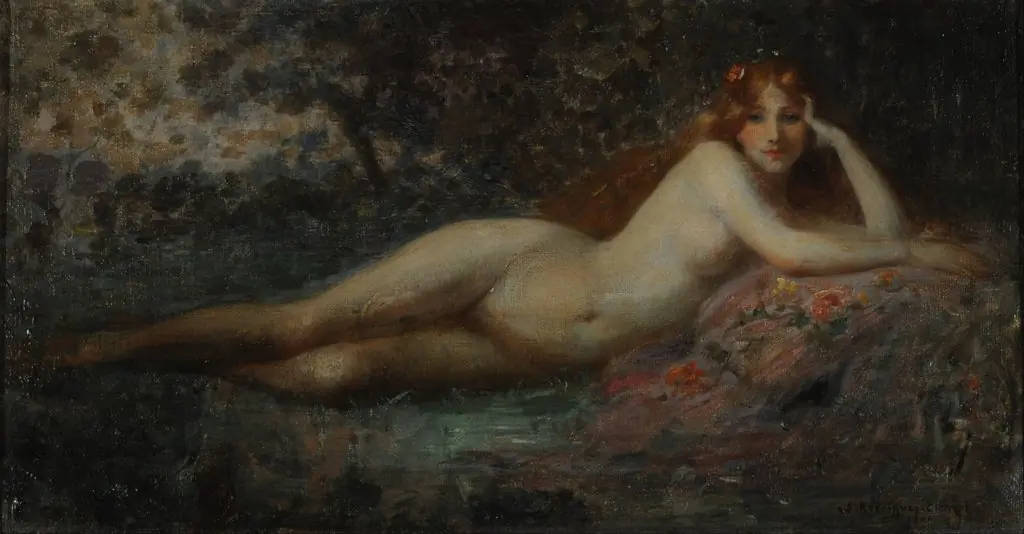
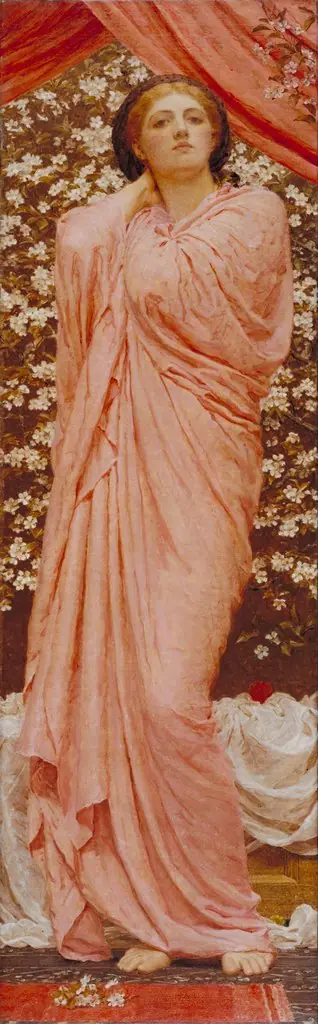
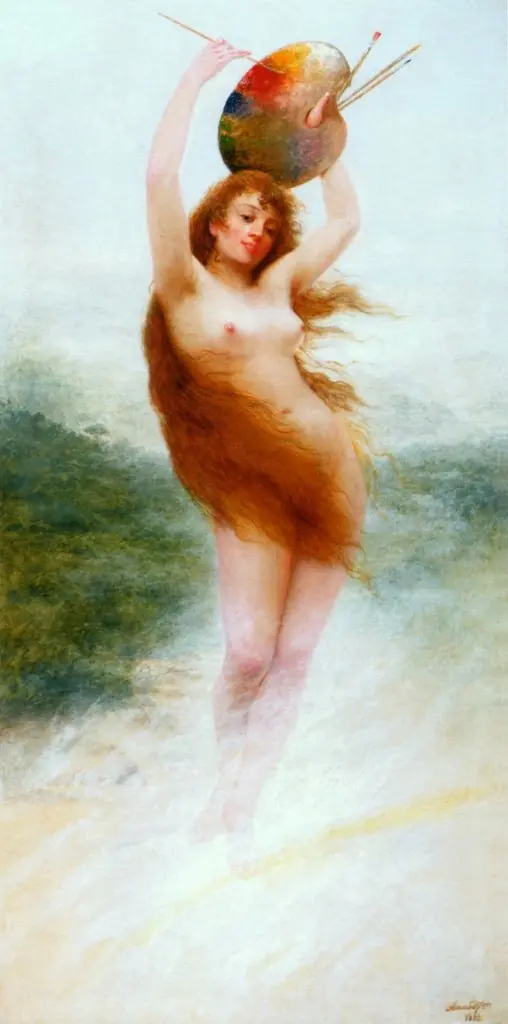
Psiquis en la fuente is an oil painting by the Impressionist artist Alexis-Joseph Mazerolle. It is held in the collection of the National Museum of Fine Arts, Argentina.
About this work
Overview
Painted in 1894 by Alexis-Joseph Mazerolle, this oil on canvas work portrays a nude female figure in a secluded garden setting.
Painted in 1894 by Alexis-Joseph Mazerolle, this oil on canvas work portrays a nude female figure in a secluded garden setting. The painting is part of the permanent collection at the National Museum of Fine Arts in Buenos Aires. Its composition centers on a solitary woman, rendered with attention to naturalistic detail and quiet emotional tone, reflecting late 19th-century academic traditions in figure painting.
Subject & Meaning
The figure is interpreted as Psyche, the mythological soul personified, drawn from classical narratives of love and transformation. Her stillness and introspective posture suggest a moment of private contemplation, possibly after a trial or revelation. The surrounding flora implies an enchanted, otherworldly space, reinforcing the allegorical nature of the scene without overt symbolism.
Technique & Style
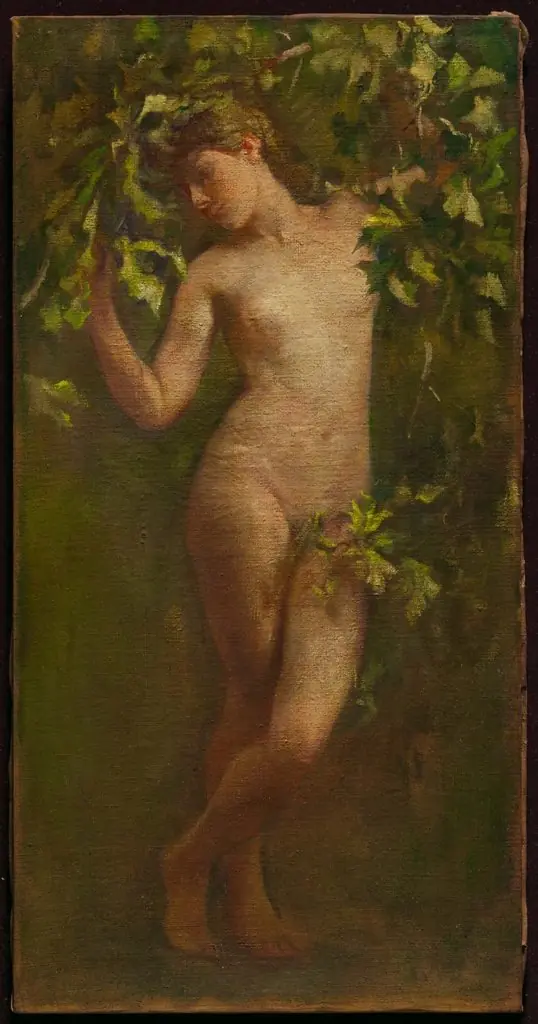
Mazerolle employs soft transitions between light and shadow to model the figure’s form, emphasizing the smoothness of skin against the textured foliage. The palette is restrained, with warm tones for the body contrasting against a muted, dark background. Brushwork is precise yet unobtrusive, favoring atmospheric harmony over dramatic contrast, aligning with academic ideals of the period.
History & Provenance
The painting was completed in 1894 and entered the collection of the National Museum of Fine Arts in Buenos Aires shortly thereafter. Its acquisition reflects the museum’s early commitment to European academic art. No significant records of prior ownership or exhibition history are documented beyond its presence in the museum’s holdings since the late 19th century.
Context
Created during a time when mythological and allegorical subjects remained central to European academic training, the work reflects the enduring influence of French salon painting. Mazerolle, though less known than his contemporaries, operated within established conventions, blending classical themes with naturalistic observation favored by late-century academies.
Legacy
The painting remains a representative example of academic figure painting in Latin American collections, illustrating the transnational circulation of European artistic models. While not widely studied outside institutional contexts, it contributes to understanding how classical narratives were adapted in regional museums during the late 1800s.
Artist & collection

Museum
National Museum of Fine Arts, Argentina
Continue through works from the same source collection.