Artwork
Painting (Allegory)

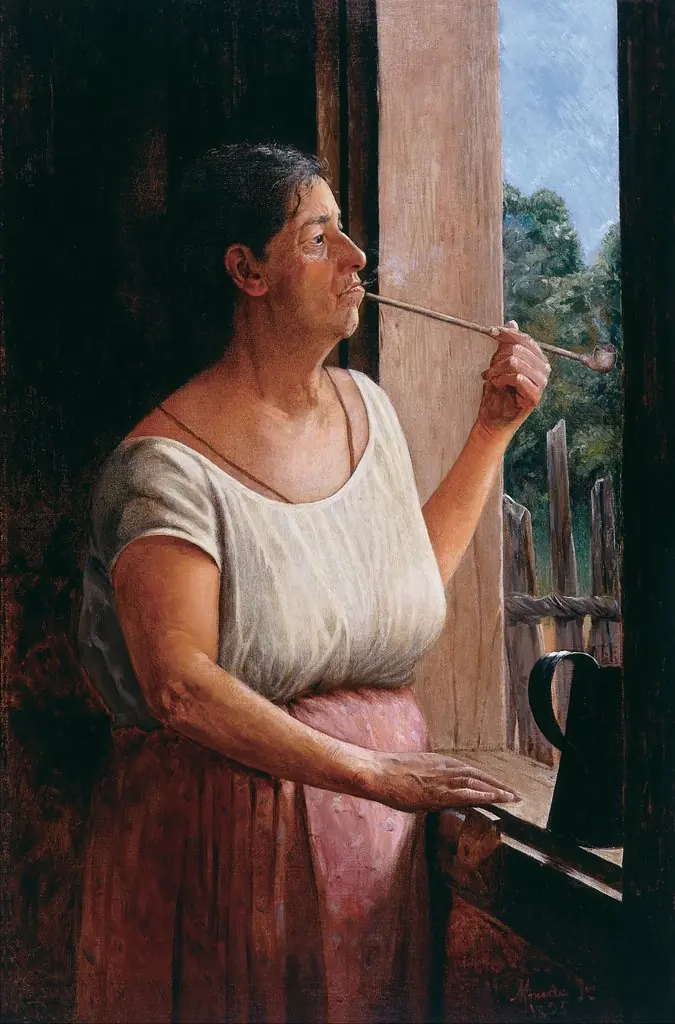
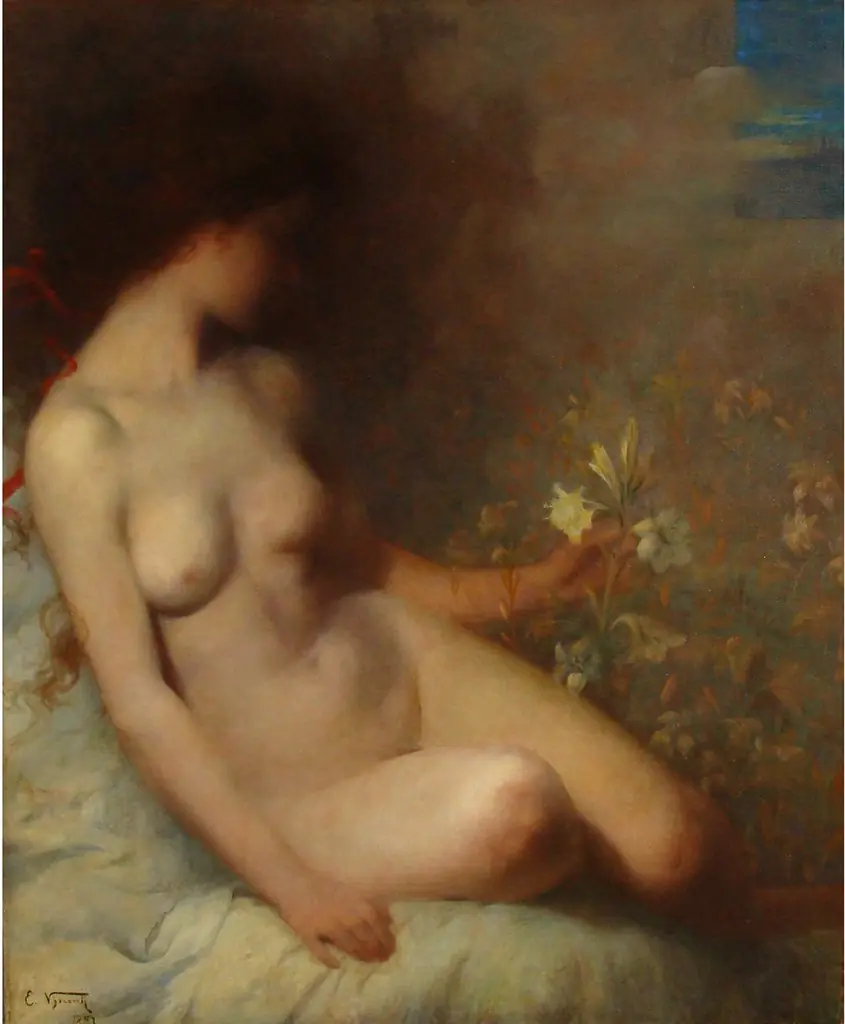
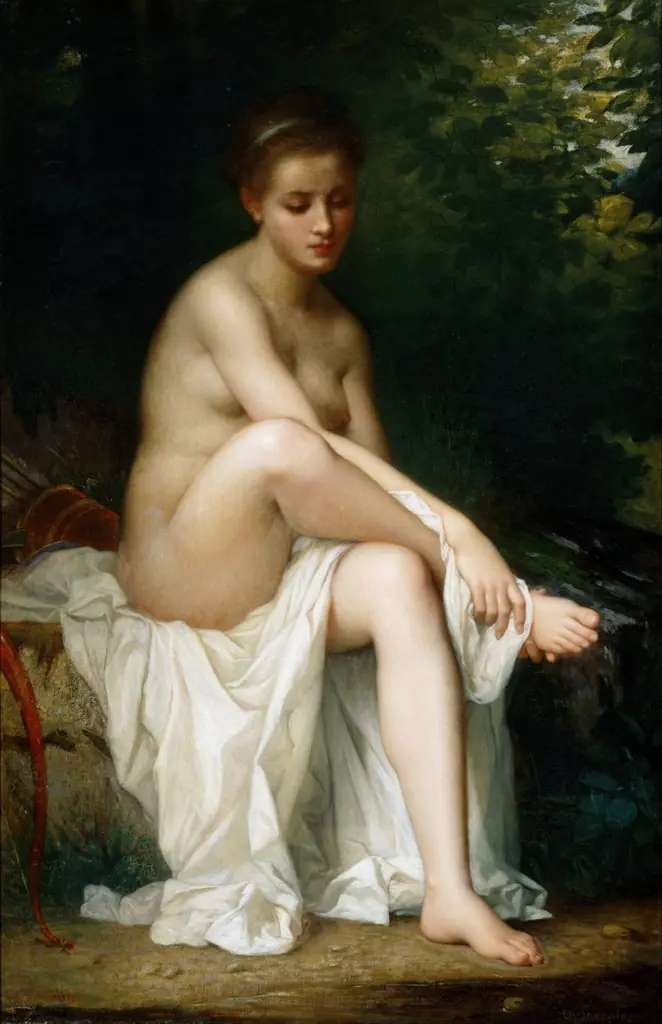
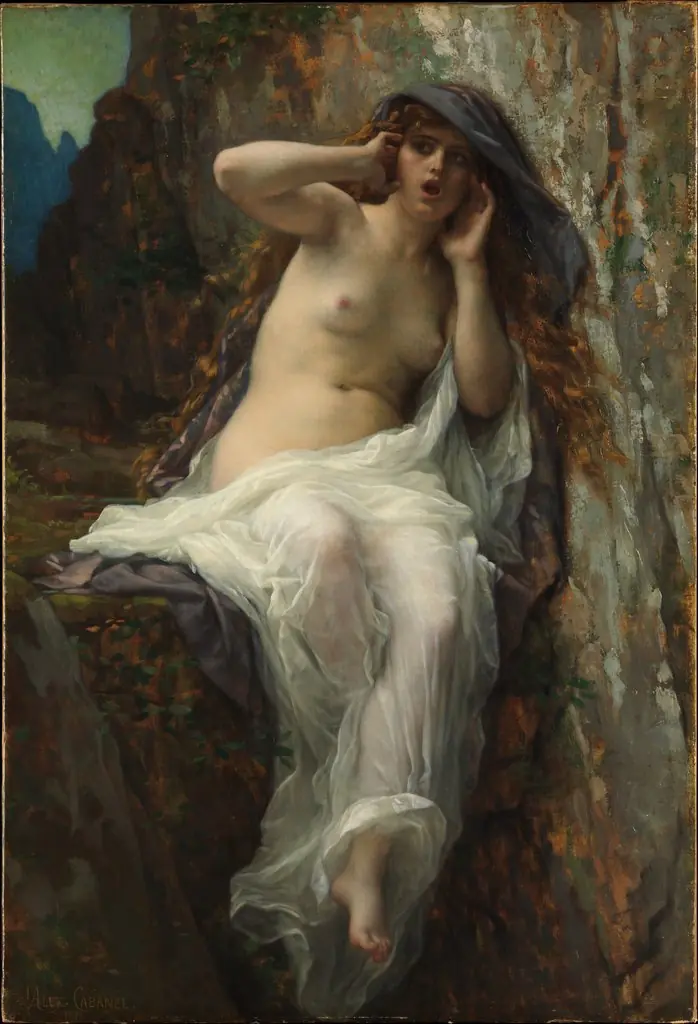
Painting (Allegory) is an oil painting by the Realist artist José Ferraz de Almeida Júnior. It dates from 1896 and is held in the collection of the Pinacoteca de São Paulo.
About this work
Overview
Created in 1896 by Brazilian artist José Ferraz de Almeida Júnior, this oil painting presents an allegorical figure within a natural landscape.
Created in 1896 by Brazilian artist José Ferraz de Almeida Júnior, this oil painting presents an allegorical figure within a natural landscape. It belongs to the Realist movement in Brazil, reflecting influences from French painters like Courbet and Millet. The work is part of the Pinacoteca do Estado de São Paulo’s collection and exemplifies the artist’s commitment to depicting symbolic subjects through observed reality.
Subject & Meaning
The central figure is a nude woman, representing the personification of Painting itself. She holds a palette and brush, her posture suggesting both creation and contemplation. Her red hair and the vivid colors of the palette evoke artistic vitality, while the rural setting grounds the allegory in the physical world. The composition implies that art arises from nature and human labor, not idealized fantasy.
Technique & Style
Almeida Júnior employs chiaroscuro to model the figure’s form, using sharp contrasts between light and shadow to enhance volume and spatial presence. The brushwork is deliberate and restrained, aligning with Realist principles. The landscape behind her is rendered with soft, atmospheric detail, balancing the figure’s solidity with a sense of depth and environmental harmony.
History & Provenance
Painted in 1896, the work emerged during a period when Brazilian artists were redefining national identity through secular, locally grounded subjects. It entered the Pinacoteca do Estado de São Paulo’s collection early in the 20th century and has remained a key example of the institution’s foundational holdings in Brazilian Realism.
Context
In late 19th-century Brazil, academic traditions favored mythological or historical themes. Almeida Júnior’s choice to depict Painting as a real, earthly woman—rather than a classical goddess—reflected a broader shift toward realism and national self-representation. His work contributed to a visual language that valued observation over idealization.
Legacy
The painting stands as an early and influential example of allegory rooted in Brazilian Realism. It helped establish a precedent for representing artistic practice as a tangible, human endeavor. Later generations of Brazilian artists looked to this work as a model for integrating symbolic content with direct, unembellished observation.
Artist & collection

Artist
José Ferraz de Almeida Júnior (8 May 1850 – 13 November 1899) was a Brazilian artist and designer; one of the first there to paint in the Realistic tradition of Gustave Courbet and Jean-François Millet.