Artwork
Ubu Roi
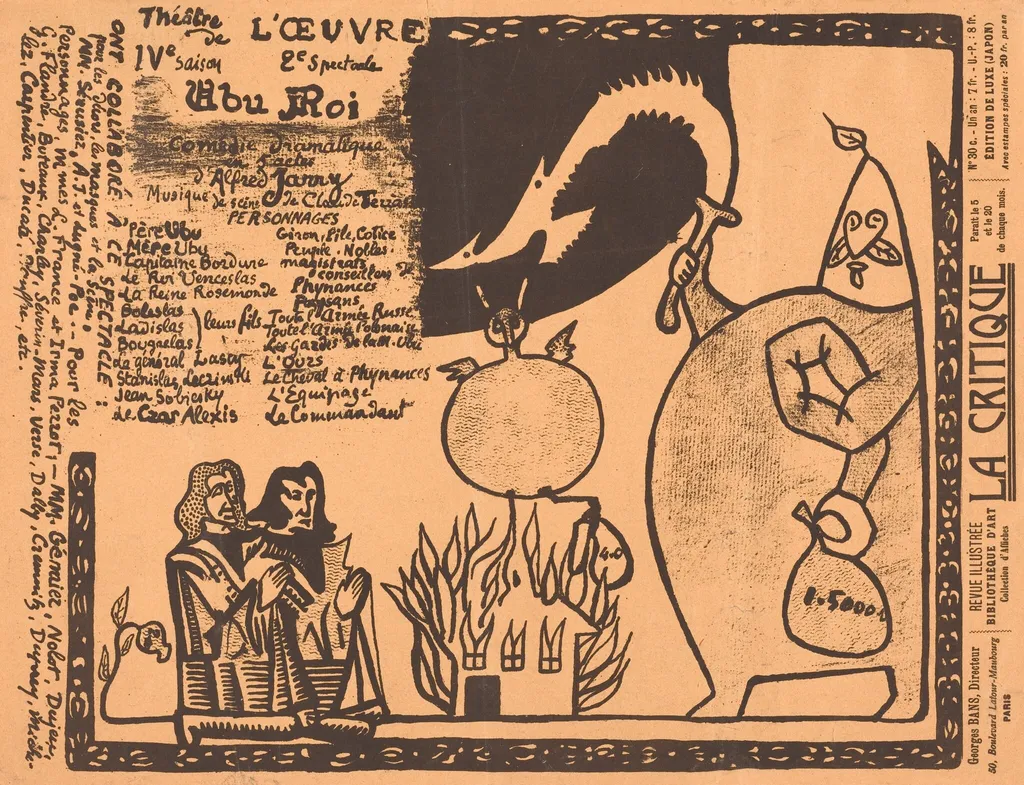
Ubu Roi is an ink print by the Impressionist artist Alfred Jarry. It dates from 1896 and is held in the collection of the National Gallery of Art.
About this work
The image is a photomechanical print, created using a process that involves transferring an image onto paper using a machine.
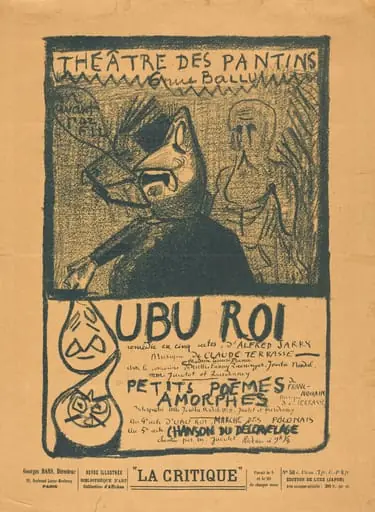
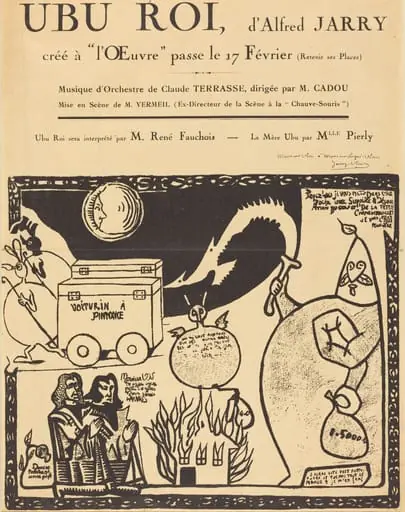
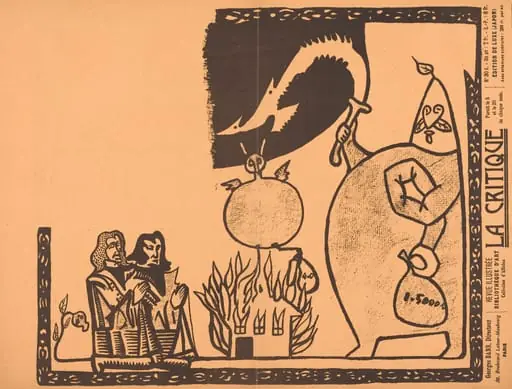
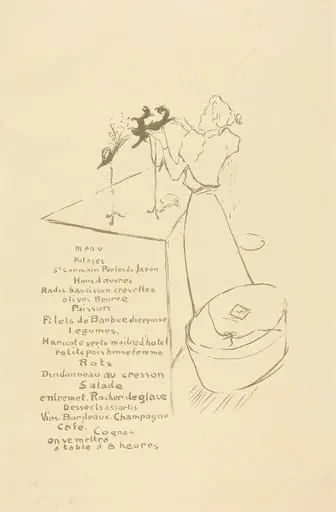
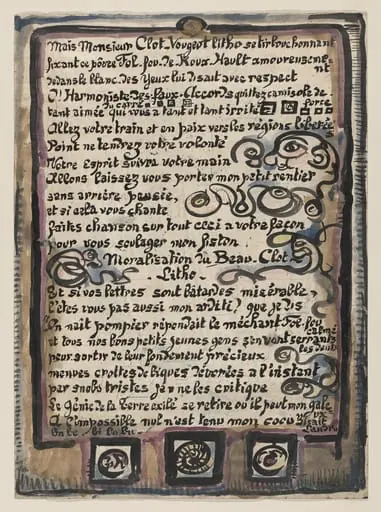
This image shows a black illustration on pink paper. In the foreground, a man with long hair sits in a chair, holding a paper. To his right, a large figure with a bird on its head stands behind a table with a round object and a plant. The background is filled with French text, including the title "Ubu Roi" at the top. The illustration features bold lines and simple shapes, with a focus on texture and pattern.
The image is a photomechanical print, created using a process that involves transferring an image onto paper using a machine. This technique was commonly used in the late 19th century, and is characteristic of the Impressionist and Realist movements.
For more information on this style of art, look up the Impressionism movement.
Overview
Ubu Roi is a print created by Alfred Jarry in 1896 using a photomechanical process on pink wove paper.
Subject & Meaning
The print depicts a scene with a seated figure holding a paper, accompanied by a large figure with a bird-adorned head. The background is filled with French text, including the title 'Ubu Roi'. The illustration's bold lines and simple shapes emphasize texture and pattern.
Technique & Style
The image was produced using a photomechanical process, a technique that transfers images onto paper mechanically, characteristic of late 19th-century printmaking.
Context
The work is associated with Alfred Jarry, a figure known for his avant-garde endeavors, and its style reflects the influences of late 19th-century art movements.
Artist & collection