Artwork
Gilet décor Didon en promenade sur un char, projets de broderies de gilet, XVIIIème siècle
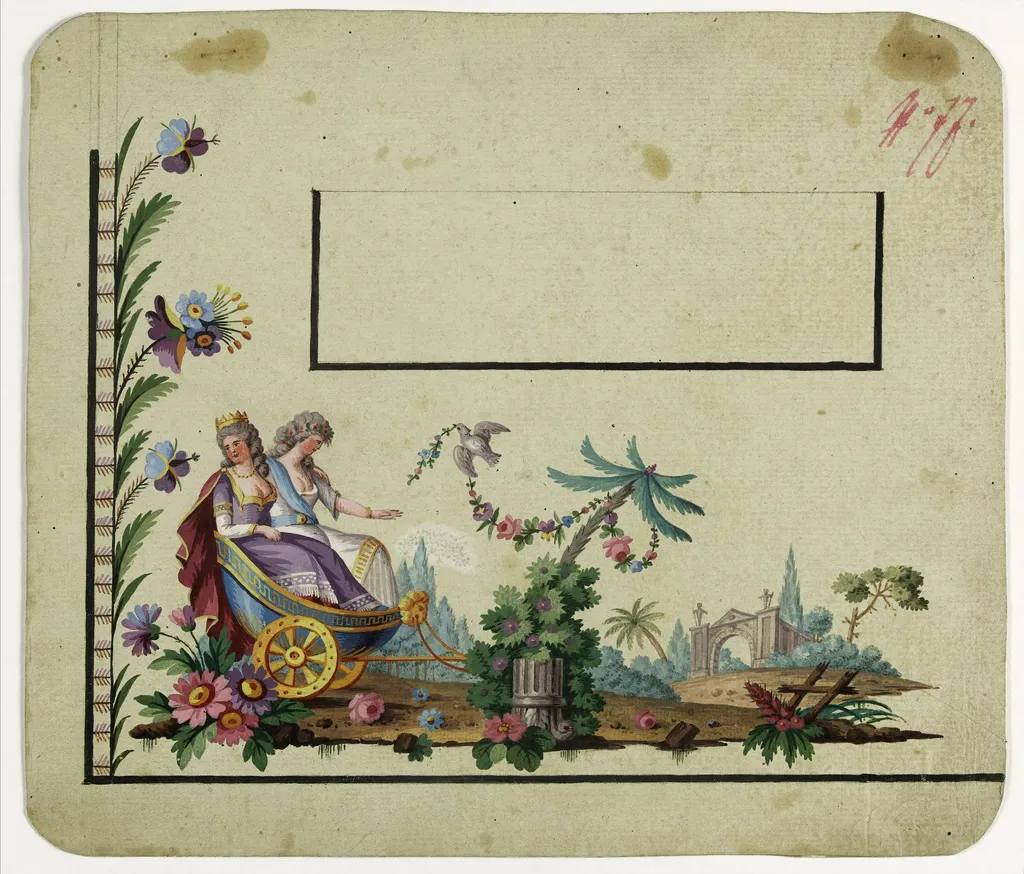
Gilet décor Didon en promenade sur un char, projets de broderies de gilet, XVIIIème siècle is a drawing by the Romanticist artist Anonyme. It dates from 1785 and is held in the collection of the Palais Galliera - Musée de la Mode de la Ville de Paris. This 18th-century design sheet, dated circa 1785, presents a decorative motif intended for embroidery on a waistcoat.
About this work
Overview
This 18th-century design sheet, dated circa 1785, presents a decorative motif intended for embroidery on a waistcoat.
This 18th-century design sheet, dated circa 1785, presents a decorative motif intended for embroidery on a waistcoat. Executed in delicate ink and watercolor, it depicts a mythological scene of Dido riding in a gilded chariot, surrounded by ornamental flora and distant architecture. The composition leaves ample blank space above, suggesting it was part of a larger pattern sequence. The work is attributed to an anonymous artist and resides in the collection of the Museum of Ethnography.
Subject & Meaning
The scene illustrates Dido, the legendary queen of Carthage, seated in a chariot amid a lush, idealized landscape. Her companion gestures gracefully, while a bird soars overhead, reinforcing themes of movement and elegance. The inclusion of a distant temple and palm trees evokes an exoticized antiquity, common in Rococo interpretations of classical narratives. The imagery served not as historical representation but as a refined fantasy suited to aristocratic fashion.
Technique & Style
The design employs fine linear detail and soft, luminous washes to render textures: ruffled fabric, delicate petals, and the gilded chariot’s ornate curves. Colors are muted yet vivid, with pale pinks, greens, and golds suggesting embroidery threads. The composition is carefully balanced, with rhythmic repetition of floral elements guiding the eye. The absence of shading and flat perspective reflect its function as a textile pattern, prioritizing clarity over depth.
History & Provenance
Created in the late 1780s, the sheet was likely produced in a Parisian atelier specializing in fashion designs for elite clients. It was preserved as a pattern template, not a finished artwork, and entered the Museum of Ethnography’s collection through documented acquisitions of textile design materials from the 19th century. Its survival is uncommon, as such working drawings were often discarded after use.
Context
During the late 18th century, embroidered waistcoats were status symbols among French aristocracy, often featuring mythological or pastoral scenes. Designers drew from engravings, tapestries, and operatic sets to create fashionable motifs. This sheet reflects the intersection of classical revival, decorative arts, and the growing specialization of fashion illustration, where artists translated visual narratives into stitchable patterns.
Legacy
As a surviving example of textile design practice, the sheet offers insight into the collaborative nature of fashion production—where illustrators, embroiderers, and tailors worked in sequence. It underscores how elite dress was shaped by artistic conventions beyond the studio, embedding myth and landscape into the intimate fabric of daily wear. Such documents remain vital to understanding the material culture of pre-revolutionary France.
Artist & collection
Artist
A French designer from the 1700s made delicate flower drawings meant to decorate vests.
Museum
Palais Galliera - Musée de la Mode de la Ville de Paris
Continue through works from the same source collection.
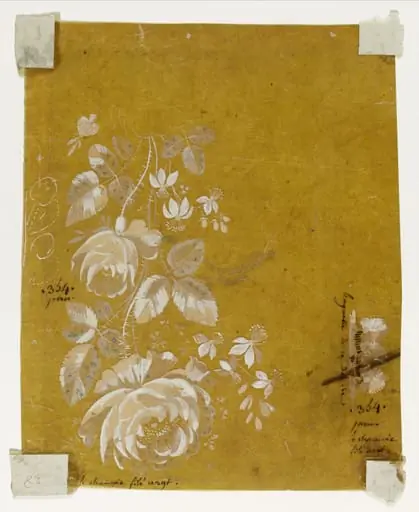 Bouquet de roses blanches pour étoffe, projets de broderies de gilet, XVIIIème siècle
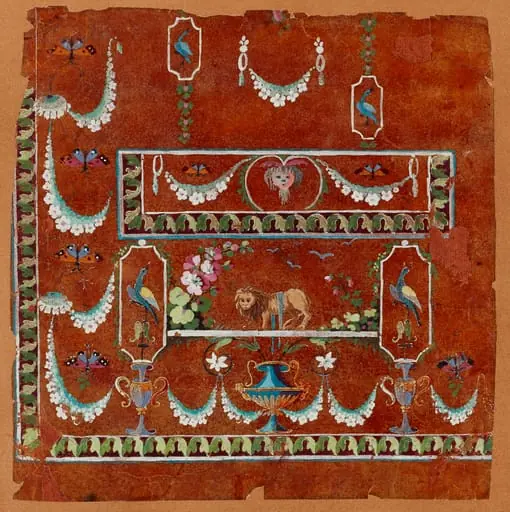 Gilet décor à grotesques, projets de broderies de gilet, XVIIIeme siècle
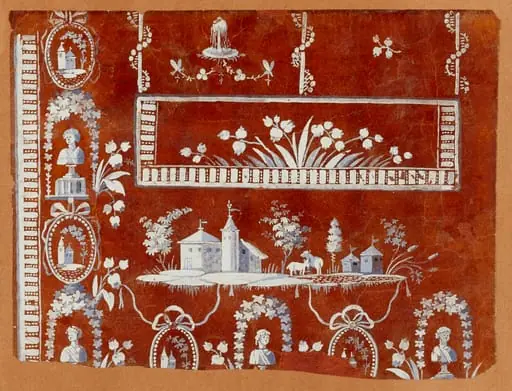 Gilet décor architectures rurales, projets de broderies de gilet, XVIIIème siècle
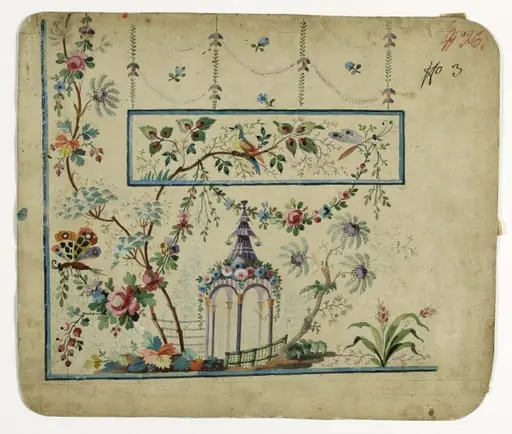 Gilet décor pagode, projets de broderies de gilet, XVIIIème siècle
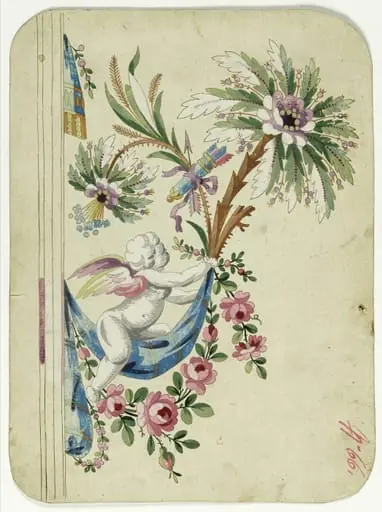 Décor de putti sur palmier, projets de broderies de gilet, XVIIIème siècle
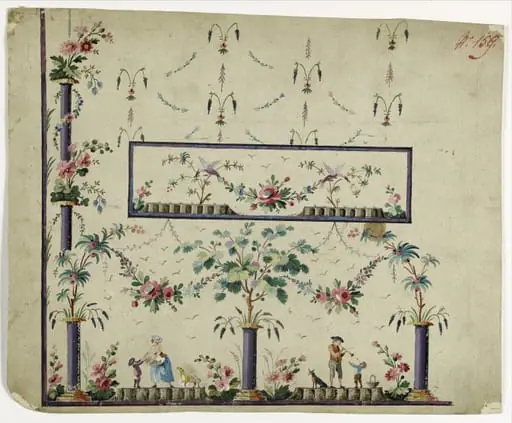 Gilet décor couple avec enfants, projets de broderies de gilet, XVIIIème siècle
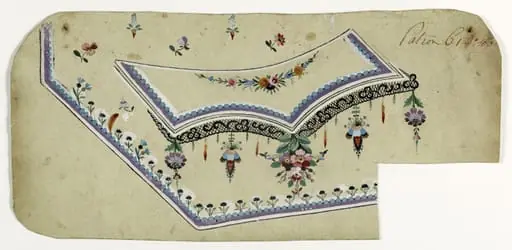 Gilet à la dentelle noire, projets de broderies de gilet, XVIIIème siècle
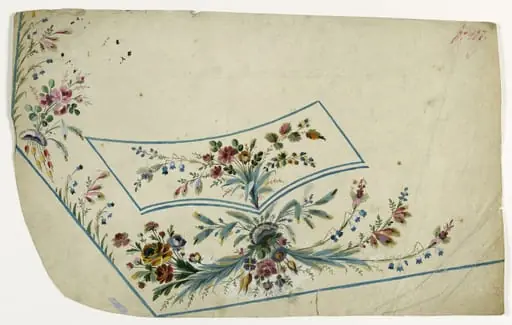 Gilet aux feuilles bleu-gris, projets de broderies de gilet, XVIIIème siècle
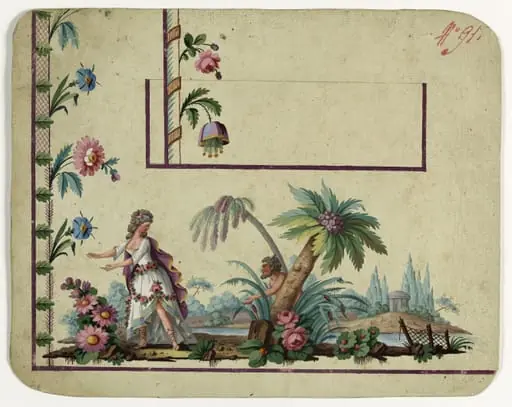 Gilet décor Flore et le faune, projets de broderies de gilet, XVIIIème siècle
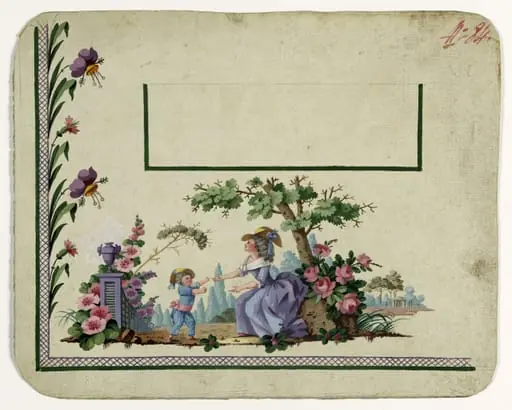 Gilet décor amour filial, projets de broderies de gilet, XVIIIème siècle
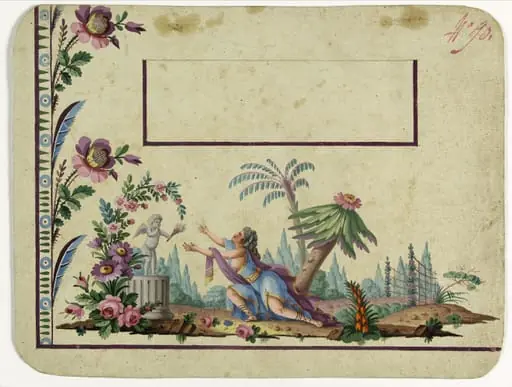 Gilet décor la déesse Flore avec un putti en pierre, projets de broderies de gilet, XVIIIème siècle
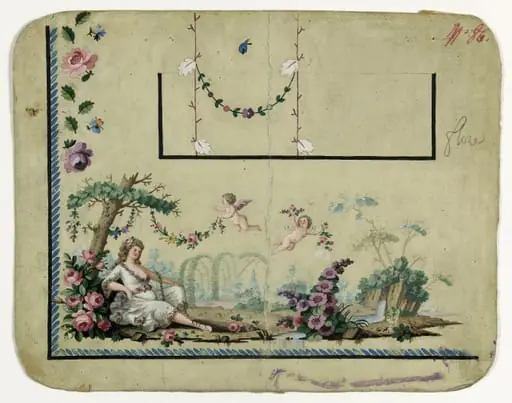 Gilet décor la déesse Flore dans un paysage, projets de broderies de gilet, XVIIIème siècle
![Gilet décor Enée aborde en Afrique ou en Italie [ ? ], projets de broderies de gilet, XVIIIème siècle, by Anonyme](https://artifactworldgallery.com/img/anonyme--gilet-decor-enee-aborde-en-afrique-ou-en-italie-projets-de-b--71103e9e9849fdb0-w320.webp) Gilet décor Enée aborde en Afrique ou en Italie [ ? ], projets de broderies de gilet, XVIIIème siècle
Gilet décor Enée aborde en Afrique ou en Italie [ ? ], projets de broderies de gilet, XVIIIème siècle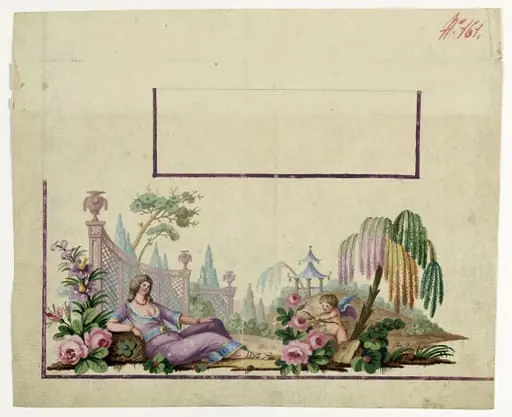 Gilet décor la déesse Flore dans un paysage de treillage, projets de broderies de gilet, XVIIIème siècle
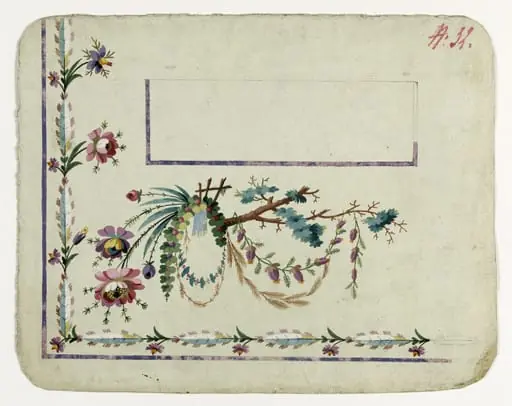 Gilet décor guirlande de branchage et de fleurs, projets de broderies de gilet, XVIIIème siècle