Artwork
Jardin des Amoureux
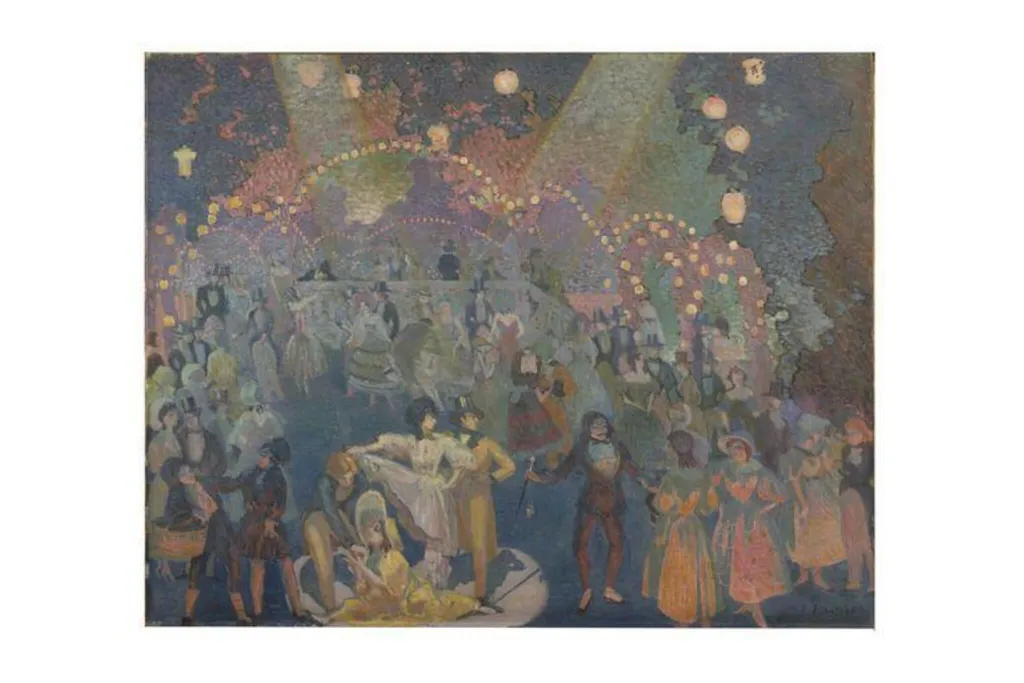
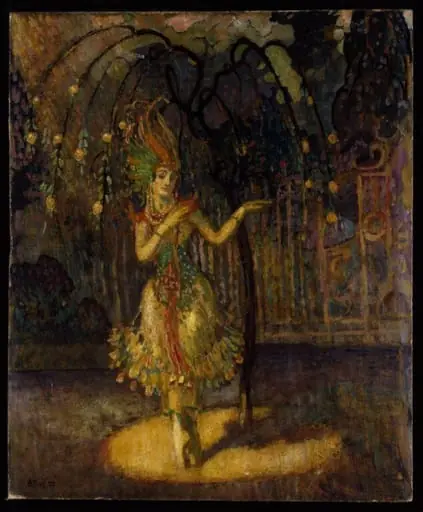
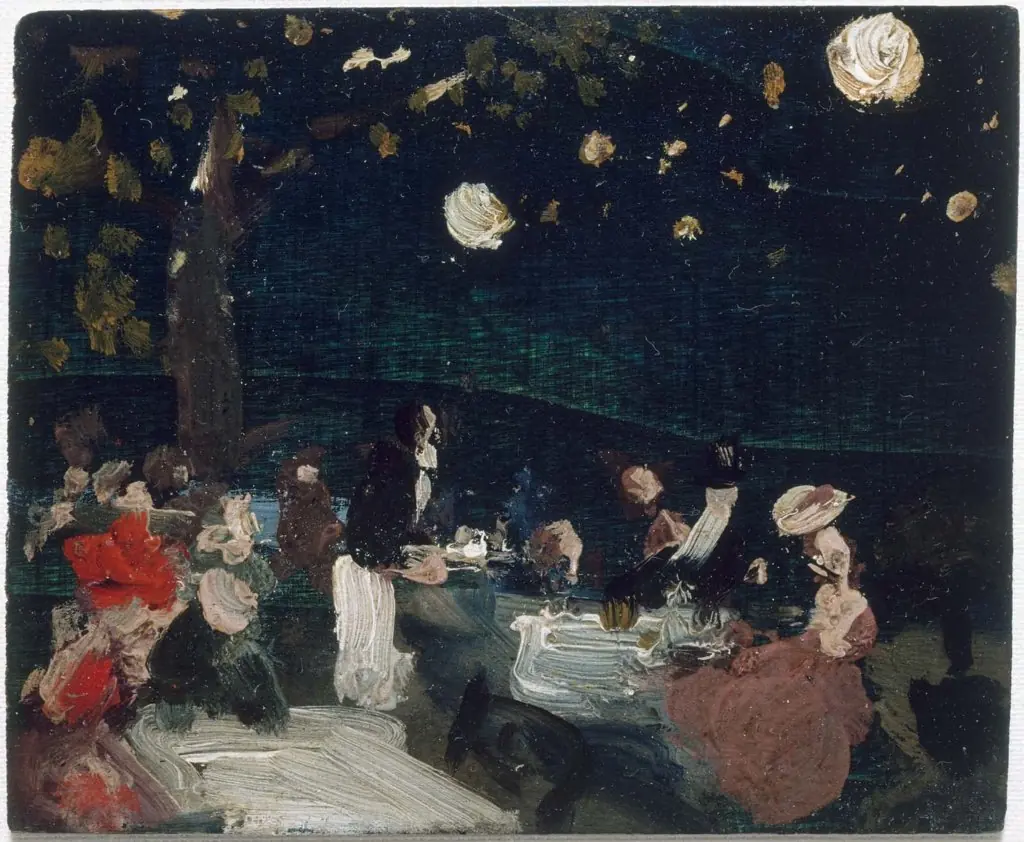
Jardin des Amoureux is a paint painting by the Art Nouveau artist Adrian Paul Allinson. It dates from 1911 and is held in the collection of the Victoria and Albert Museum.
About this work
Overview
A woman in white, a girl in a wide‑brimmed bonnet, and several gentlemen are arranged around a spotlight, suggesting the final dance of the production.
Jardin des Amoureux portrays a nocturnal garden scene drawn from the 1830 ballet of the same name. The composition centers on a illuminated balustrade surrounded by lantern‑lit trees, while a crowd of elegantly dressed figures mingles beneath a star‑filled sky and fireworks. A woman in white, a girl in a wide‑brimmed bonnet, and several gentlemen are arranged around a spotlight, suggesting the final dance of the production.
Subject & Meaning
The painting captures the climactic Quadrille Eccentrique, the ballet’s concluding group dance. Performers identified as Misses Purzini and Annie Clarke, together with dancers R. Vallis and Victor Andre, are depicted among the revelers, emphasizing the social spectacle of public pleasure gardens as venues for both entertainment and courtship in the early nineteenth century.
Technique & Style
Executed with a pronounced impasto, the artist applies thick, textured brushstrokes that intensify the luminous palette of blues, greens, and yellows. The tactile paint surface conveys the electric quality of the garden’s lighting and fireworks, while the busy arrangement of figures creates a sense of kinetic energy typical of theatrical genre painting.
History & Provenance
Signed in the lower right with the name ALLINSON, the work is attributed to an artist active in the mid‑nineteenth century, though little is recorded beyond this signature. It appears to have been produced shortly after the ballet’s premiere, likely intended for a patron interested in documenting contemporary stage productions.
Context
Public pleasure gardens were fashionable gathering places in 1830s Europe, offering music, dance, and illuminated spectacles. By situating the ballet’s finale within such a setting, the painting reflects contemporary cultural intersections between theatrical performance and leisure architecture.
Legacy
Jardin des Amoureux serves as a visual record of early‑nineteenth‑century performance practice and social customs, offering scholars insight into costume, lighting technology, and the popular appeal of balletic entertainments within public spaces.
Artist & collection