Artwork
Tamara Karsavina as Columbine in 'Le Carnaval' by Mikhail Fokine
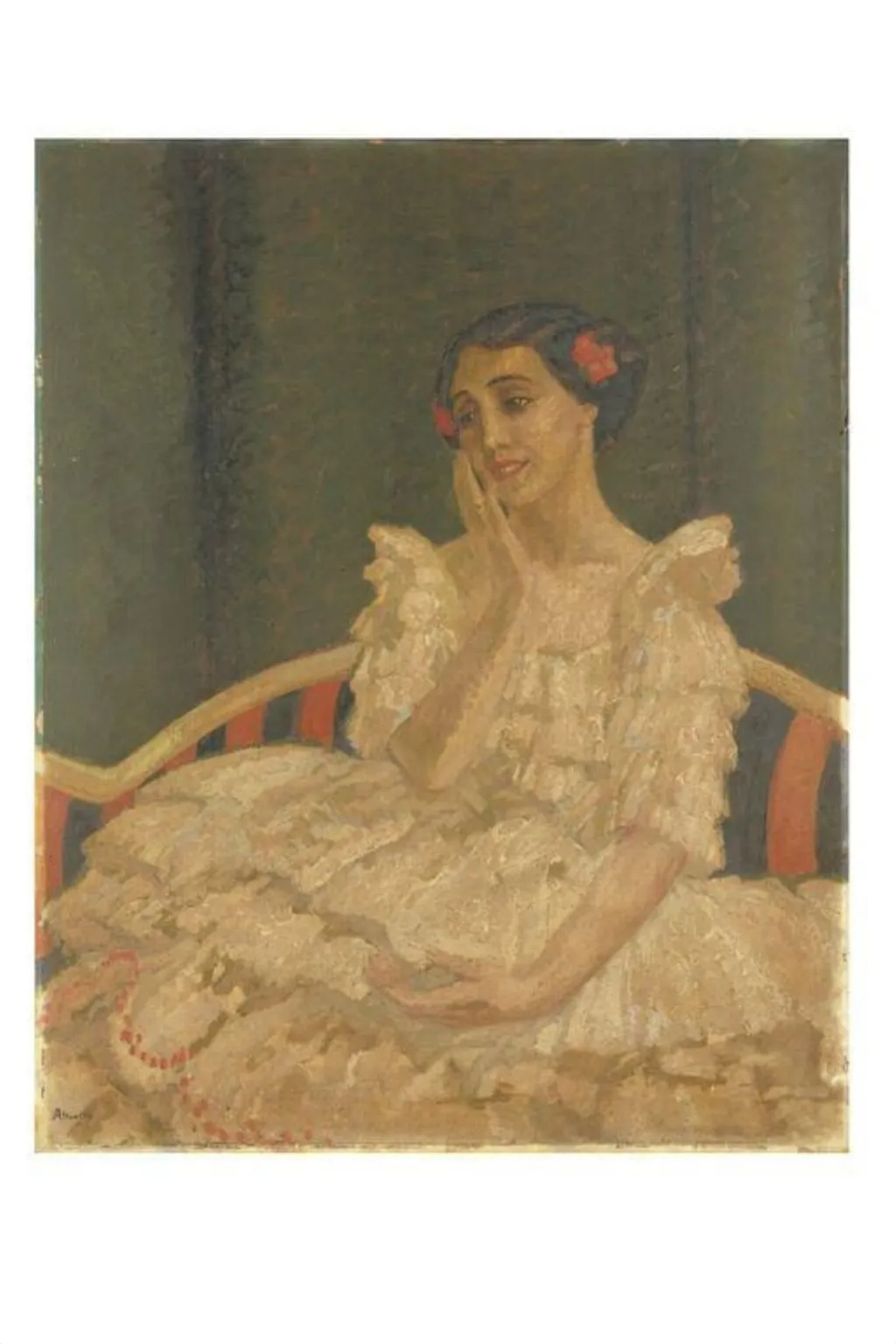
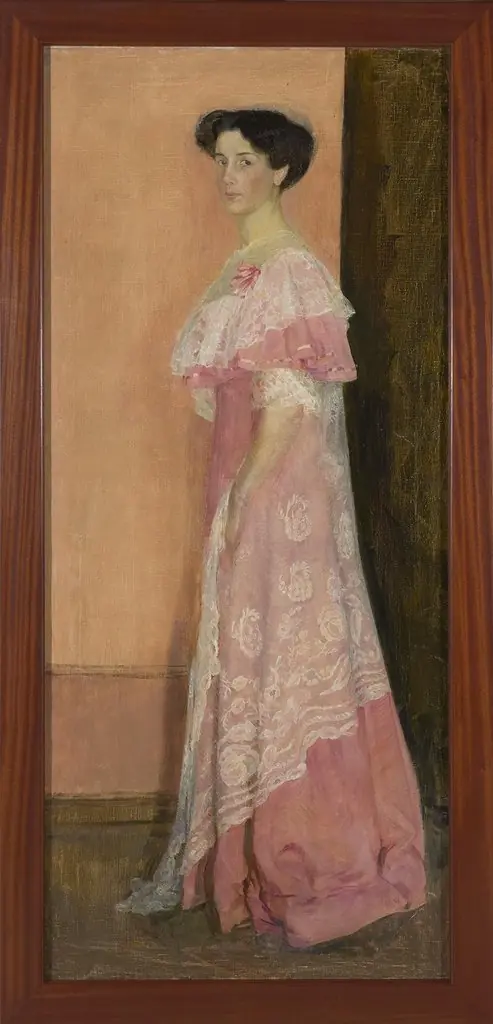
Tamara Karsavina as Columbine in 'Le Carnaval' by Mikhail Fokine is a paint painting by the Impressionist artist Adrian Paul Allinson. It dates from 1918 and is held in the collection of the Victoria and Albert Museum. A portrait of dancer Tamara Karsavina in character as Columbine from the 1910 ballet Le Carnaval, painted by Mikhail Fokine.
About this work
Overview
A portrait of dancer Tamara Karsavina in character as Columbine from the 1910 ballet Le Carnaval, painted by Mikhail Fokine. The work captures her seated on a bench, dressed in a costume designed by Leon Bakst, with a delicate cherry-patterned gown in white, pink, blue, and red. The background is muted and indistinct, directing attention to her expression and the textured fabric of her attire.
Subject & Meaning
Her poised posture—one hand near her cheek, the other resting open in her lap—conveys quiet anticipation rather than overt performance.
Karsavina portrays Columbine, a flirtatious, playful figure from the Commedia dell’arte tradition. Her poised posture—one hand near her cheek, the other resting open in her lap—conveys quiet anticipation rather than overt performance. The cherry motifs and ruffled edges of the costume reinforce the character’s whimsical, romantic nature, aligning with the ballet’s lighthearted, carnival-inspired narrative.
Technique & Style
Fokine employs thick, visible brushstrokes to render the costume’s fabric, creating a tactile sense of lace and ruffles. The impasto technique gives the dress a sculptural quality, contrasting with the soft, blurred background. Facial features are rendered with precision, while the dress retains a rough, unfinished texture, emphasizing materiality over idealized smoothness.
History & Provenance
The painting was likely commissioned by Cyril Beaumont, a dance historian and critic, around 1918. It remained in his collection until his death, after which it entered a museum through his bequest. Its creation coincided with a period of renewed interest in documenting Russian ballet’s early 20th-century innovations, particularly those associated with the Ballets Russes.
Context
Created during the aftermath of World War I and the Russian Revolution, the painting preserves a fleeting moment from a vibrant pre-war theatrical world. Le Carnaval, with its playful characters and Bakst’s vivid designs, represented a departure from classical ballet’s rigidity. Fokine’s portrait serves as both a personal tribute and a record of a transformative era in dance.
Legacy
The painting stands as a rare visual document of Fokine’s work beyond choreography, illustrating his engagement with the visual arts. It also anchors Karsavina’s legacy as a defining interpreter of Columbine, preserving the aesthetic of Bakst’s costume and the expressive nuance of early Ballets Russes performances for future generations.
Artist & collection

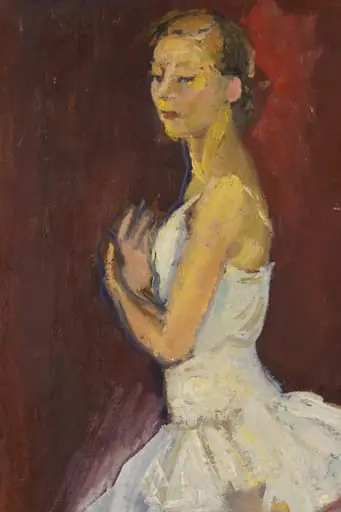 Balerina
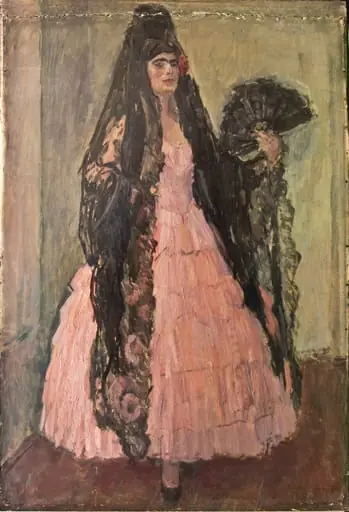 Letiția Lucasievici
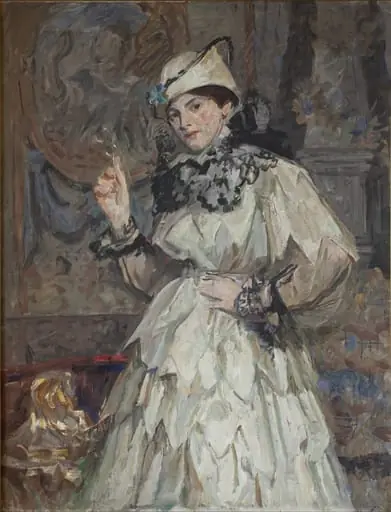 The Artist’s Daughter in Fancy Dress
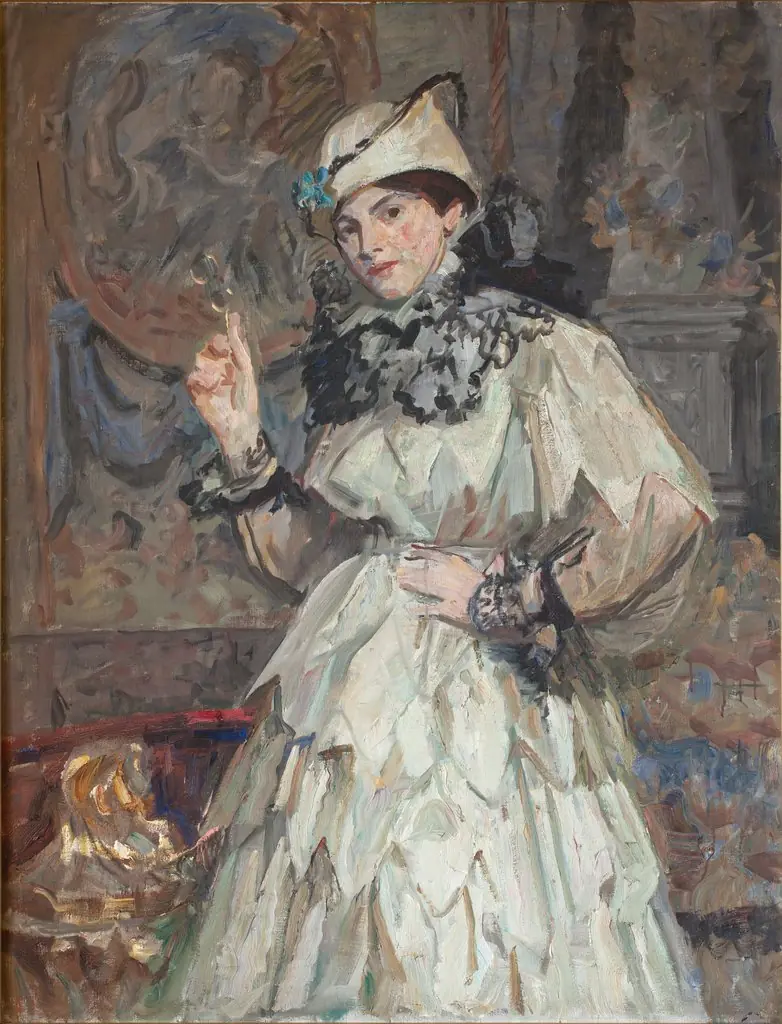 The Artist’s Daughter in Fancy Dress
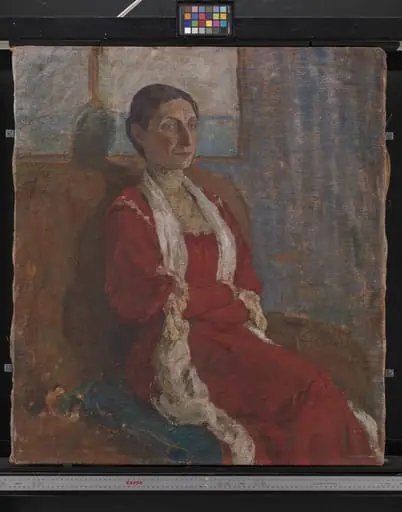 Portrait of Mrs. Bertha Brandstrup
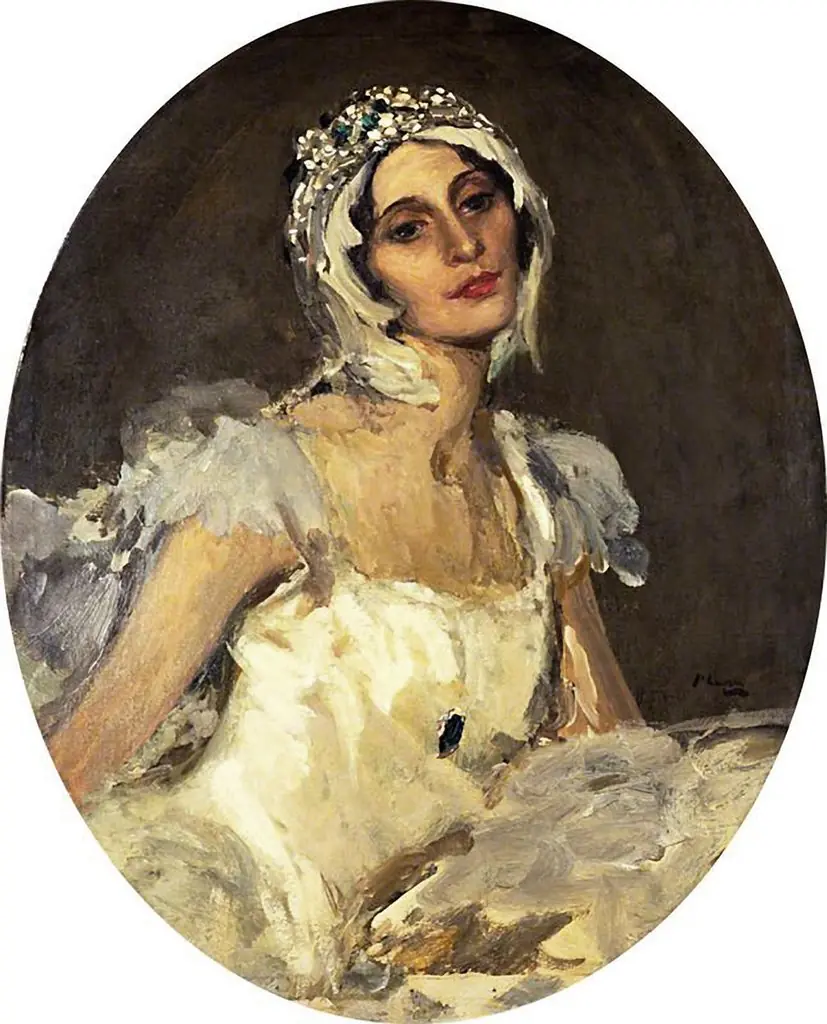 Anna Pavlova (1881–1931), as 'The Dying Swan'
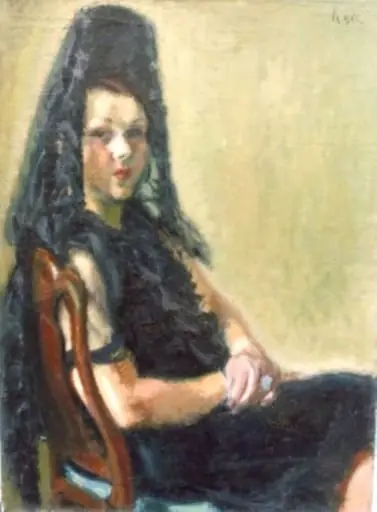 Spaniolă
 Portret de femeie
 Femeie (Balerină)
 Portret de femeie
 Turcoaică cu ilic roșu
 Society in the Restaurant. Revers: Study of a Lady in Pink