Artwork
Scene from <i>Petrushka</i>
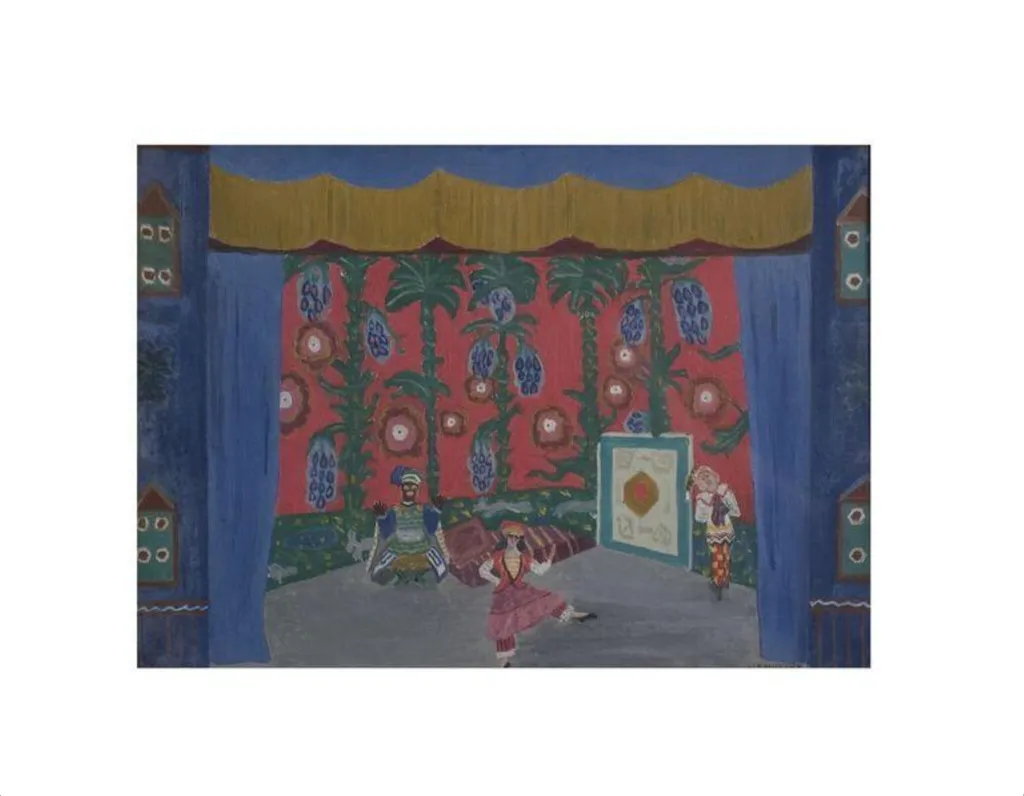
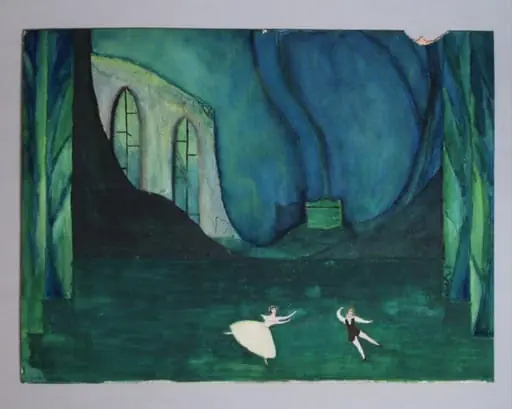
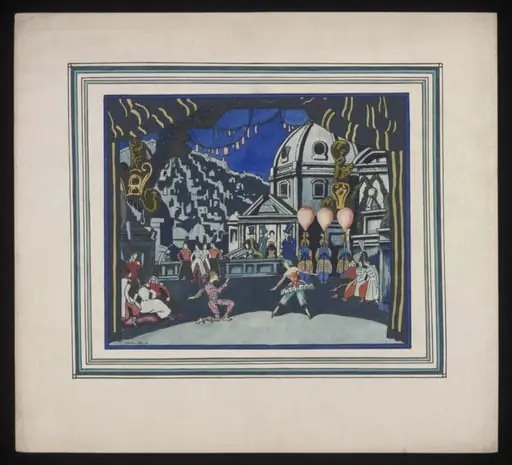
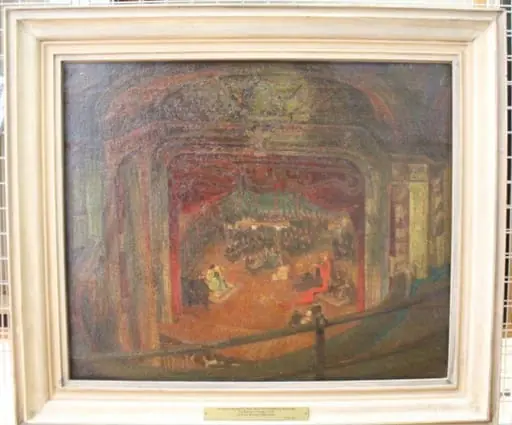
Scene from <i>Petrushka</i> is a paint painting by the Art Nouveau artist Cyril William Beaumont. It dates from 1913 and is held in the collection of the Victoria and Albert Museum. This painting captures a moment from the 1911 ballet Petrushka, choreographed by Mikhail Fokine and produced by Sergei Diaghilev.
About this work
You see a colorful scene from a ballet, with a ballerina dancing.
The ballet is Petrushka, and it was first performed in Paris in 1911. This painting shows a specific moment in the story, with the Moor and Petrushka watching the ballerina.
The artist used bold colors to depict this scene, and you can learn more about this style by looking at the work of artist: Beaumont, Cyril William.
Overview
This painting captures a moment from the 1911 ballet Petrushka, choreographed by Mikhail Fokine and produced by Sergei Diaghilev.
This painting captures a moment from the 1911 ballet Petrushka, choreographed by Mikhail Fokine and produced by Sergei Diaghilev. It portrays the Moor, the Ballerina, and Petrushka in the Moor’s cell, a key scene of emotional tension. The artist, Cyril Beaumont, rendered the scene not as a commissioned work but as a personal response to the ballet’s visual and emotional impact, informed by reproductions and his immersion in early 20th-century ballet culture.
Subject & Meaning
The scene isolates the ballet’s tragic triangle: the Ballerina dances oblivious, the Moor watches with possessive admiration, and Petrushka, puppet-like and tormented, observes in despair. Beaumont’s focus on their static postures and contrasting expressions underscores the characters’ emotional isolation. The painting does not illustrate narrative progression but crystallizes a moment of unspoken longing and psychological fracture central to the ballet’s themes.
Technique & Style
Beaumont employed vivid, non-naturalistic color and simplified forms to evoke the stage design of Léon Bakst, whose work for Diaghilev’s company influenced him. Brushwork is deliberate but not refined, prioritizing emotional resonance over technical polish. The composition is tightly framed, drawing attention to the figures’ gestures and the claustrophobic intimacy of the Moor’s cell, echoing the theatricality of the original production.
History & Provenance
Created in the 1910s during Beaumont’s brief pursuit of visual art, the painting emerged from his fascination with ballet designs and his studio visits with Adrian Allinson. Though he sold his first painting, a scene from Scheherazade, Allinson’s dismissive remark—'he paints' rather than 'he is an artist'—marked the limits of Beaumont’s artistic ambitions. The work remained a personal artifact, never entering major collections.
Context
Beaumont’s painting reflects a wider trend among early 20th-century Londoners who engaged with Russian ballet through reproductions and live performances. The 1913 London premiere of Petrushka, featuring Nijinsky and Karsavina, ignited public fascination. As a bookseller and later historian, Beaumont channeled this passion into writing, making his painting a rare, ephemeral trace of his earlier artistic aspirations amid a career defined by scholarship.
Legacy
Though Beaumont never pursued art professionally, this work stands as a document of how ballet’s visual language resonated beyond the stage. His painting, like his later writings, contributed to the popularization of Diaghilev’s productions in Britain. It remains a quiet testament to the cross-pollination between performance, reproduction, and personal interpretation in early modernist culture.
Artist & collection
Artist
Cyril Beaumont kept a tiny bookshop in London’s Soho that doubled as a backstage pass to the ballet—dancers and designers dropped by between matinees to gossip over ink and stage lights.

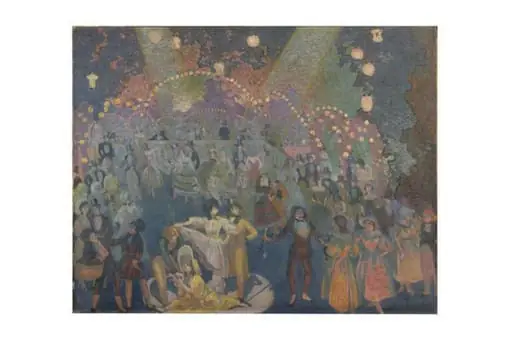 Jardin des Amoureux
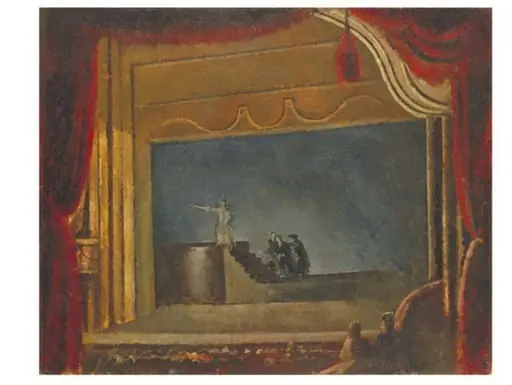 <i>Hamlet</i> at the New Theatre
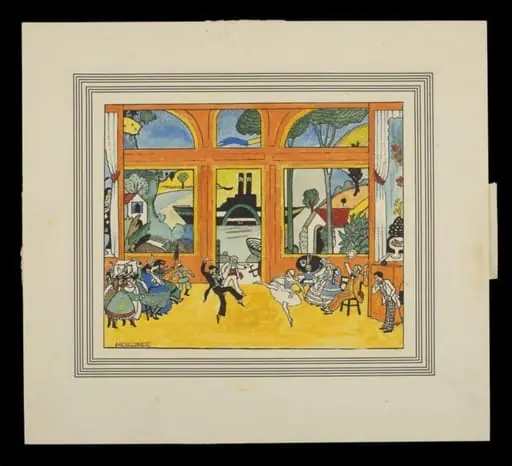 H Beard Print Collection
 Untitled
 Interior, showing a box and the stage, of the Old Grand Theatre, now the Gaumont Hippodrome, Colchester
 Fairground
 Theater-spielen
 Sir Herbert Beerbohm Tree rehearsing 'Henry VIII' by William Shakespeare at His Majesty's Theatre